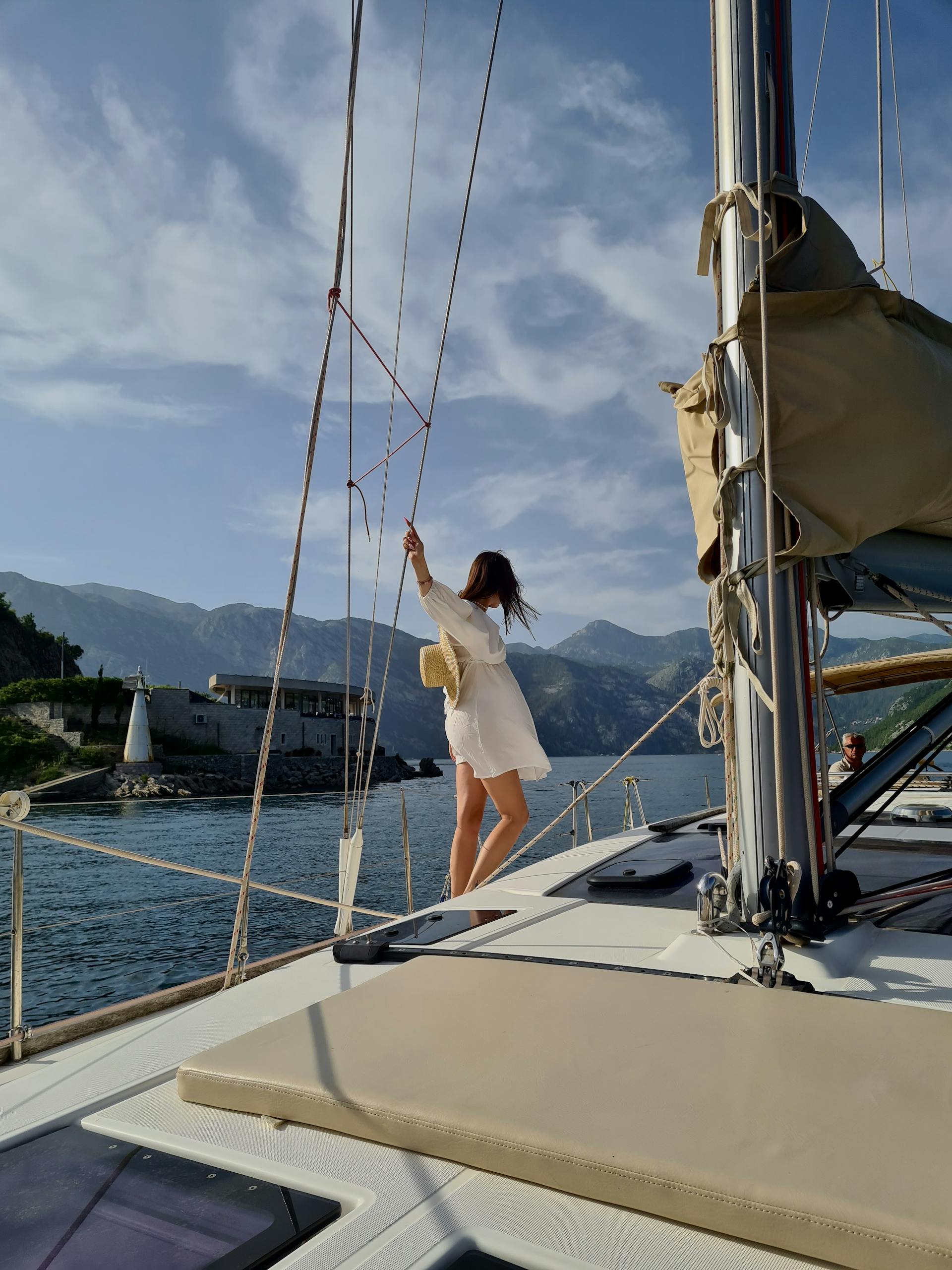
Gulet charter Turkey: the Blue Cruise explained
A gulet charter in Turkey is not bareboat sailing with a Turkish accent. It is a crewed wooden motor-sailer, a cook in the galley, and a week of short hops along the Turquoise Coast that the locals still call a Blue Cruise. You do not need a licence. You barely need to know a sheet from a halyard.
That is why the search term is so specific, and why Turkey dominates it. This guide covers what a gulet actually is, what a week costs with real quotes, which routes work, and when a gulet is a better choice than a bareboat or catamaran.
What is a gulet?
A gulet is a traditional Turkish wooden yacht, broad in the beam, with a generous aft deck for eating and sleeping under the stars. Most charter gulets run from about 20 to 40 metres, carry 6 to 16 guests in private cabins, and motor more than they sail. The sails are there; the timetable usually is not built around them.
Crew is the point. A typical week includes a captain, cook and deckhand. Cabins are made up, meals come from the galley, and the itinerary flexes around weather and the group. It is closer to a small private cruise than to skippering a 45-foot bareboat.
If you want to helm, trim and anchor yourself, charter a bareboat. If you want the coast without the work, charter a gulet.
Why Turkey owns the gulet charter
Gulets are built and based along the southwest Turkish coast. The same water that suits them also suits a first Blue Cruise: pine-backed gulfs, short distances between coves, warm water from May into October, and a shoreside culture that has been hosting these trips for decades.
The main hubs are Bodrum, Marmaris, Göcek and Fethiye, with Kaş and Kekova further east for ruins and flat water. You can moor under Bodrum Castle one week and snorkel over Lycian remains at Kekova the next. Full detail on winds, bases and formalities sits in our Turkey sailing guide and on the commercial Turkey yacht charter page.
What a gulet charter in Turkey costs
Published starting prices for crewed charters in Turkey run from about EUR 7,500 a week in low season to EUR 14,500 in July and August. Real gulet quotes in our proposal set for September 2026 land between EUR 6,000 and EUR 7,700 for the yacht and crew, before food.
| Item | Typical figure | Notes |
|---|---|---|
| Gulet + crew (shoulder) | EUR 6,000 to 7,700 / week | Captain, cook and deckhand included |
| Full board (breakfast, lunch, dinner) | About EUR 1,400 / week for the yacht | Often quoted as a package for the group |
| Soft drinks package | About EUR 400 / week | Beer and wine usually extra |
| Half board option | About EUR 300 / week | Where offered instead of full board |
| Editorial crewed “from” (high season) | EUR 14,500 / week | From our Turkey charter pricing table |
So a realistic all-in week for a mid-size gulet in shoulder season sits around EUR 8,000 to 9,500 before flights and any alcohol package. Split across 8 to 12 guests, that is often EUR 700 to 1,200 per person for a crewed, cooked holiday. That is a different number from bareboat: our wider quote set puts a median monohull week at EUR 3,542 and a catamaran at EUR 7,120, but those prices do not include a cook or a captain. See how much a yacht charter costs for the bareboat picture.
Gulet vs bareboat vs catamaran
| Gulet | Bareboat / skippered sailboat | Catamaran | |
|---|---|---|---|
| Who drives | Professional crew | You, or a hired skipper | You, or a hired skipper |
| Licence needed | No | Yes for bareboat | Yes for bareboat |
| Food | Cook on board | Self-catered | Self-catered unless crewed |
| Daily rhythm | Short hops, long lunches | You set the pace | You set the pace |
| Best for | Non-sailors, multi-gen groups, hands-off weeks | Sailors who want the helm | Families wanting space and stability |
Families who want to sail themselves often do better on a catamaran in the Ionian or Croatia. Groups who want Turkey without learning the boat do better on a gulet. Our family sailing holidays guide covers the self-sail version of that decision.
Best Blue Cruise routes
Göcek and Fethiye bays
The classic sheltered week. Pine coves, short hops, no-wake zones and swim stops that never need an early start. Ideal for first-timers, older guests and anyone who wants flat water. Fly into Dalaman.
Bodrum and the Gulf of Gökova
More of an Aegean feel, with Bodrum Castle at one end and quiet Gökova anchorages at the other. Afternoons can be breezier in high summer; shoulder season is kinder. Fly into Bodrum-Milas.
Kaş, Kalkan and Kekova
Lycian ruins, sunken harbour walls and glassy roads in settled weather. A strong second or third Blue Cruise once you have done Göcek. Often combined with a Fethiye or Kaş embarkation.
A week is the standard product. Two weeks lets you link Göcek with Kekova, or Bodrum with Hisarönü, without rushing. Day sails on a gulet are usually shorter than a keen bareboat crew would choose: that is deliberate.
When to go
May to mid-June and mid-September to October are the sweet spot: warm sea, fewer boats, easier restaurant quays, and lower charter rates. Late June to early September is peak: hotter, busier, and the afternoon breeze in the Aegean approaches is more decided.
Sea temperatures on the southwest coast typically run about 24 to 28°C in peak summer and stay inviting into October. Winter gulet charters exist but are a different holiday: fewer swim stops, more weather windows.
What is usually included
- Yacht, captain, cook and deckhand
- Fuel for the agreed itinerary, port and marina fees inside Turkish waters on many contracts (confirm in writing)
- Bed linen and bath towels
- Use of the aft deck, snorkels and often a dinghy or paddleboards
Food is often a separate full-board or half-board package. Alcohol is almost always extra. Greek island hops, where offered, can add harbour taxes that dwarf a soft-drinks package, so treat cross-border days as a deliberate upgrade rather than a free bonus.
Who a Turkish gulet charter is for
- Groups who do not sail, and do not want to learn this week
- Multi-generational families who need a cook and short transfer days
- Celebrations and reunions that want a private boat without a superyacht price
- Anyone who prefers swimming, eating and talking to winching and watch-keeping
It is the wrong product if your group’s idea of a good day is a 40-mile beat to windward. Hire a performance bareboat for that.
How to book without regrets
- Fix the embarkation hub around the airport you prefer: Dalaman for Göcek and Fethiye, Bodrum-Milas for Bodrum and Gökova.
- Match cabin count to the group honestly. A “12 berth” gulet with six cabins is not the same experience as six couples who actually want privacy and storage.
- Get the food package in writing: full board, half board, what drinks are included, and how special diets are handled.
- Ask what “fuel included” covers. A gentle Göcek week and a restless island-hopping week are not the same burn.
- Prefer shoulder season unless school holidays force July or August.
If you want current availability rather than averages, our charter concierge can shortlist gulets for your dates, or start from yacht charter Turkey for the wider bareboat and crewed picture.
FAQs
How much does a gulet charter in Turkey cost?
Expect roughly EUR 6,000 to 7,700 a week for a mid-size gulet and crew in shoulder season, plus about EUR 1,400 for a full-board food package and around EUR 400 for soft drinks on typical quotes. High-season crewed starting prices on our Turkey page run up to about EUR 14,500. Alcohol and optional Greek harbour taxes are usually extra.
Do I need a sailing licence for a Turkish gulet?
No. Gulet charters are fully crewed. The captain holds the tickets and runs the boat. You need a licence only if you switch to a bareboat yacht instead.
What is a Blue Cruise?
Blue Cruise (Mavi Yolculuk) is the Turkish name for a crewed coastal cruise on a gulet along the southwest Aegean and Turquoise Coast: short day hops, swim stops in pine coves, and nights at anchor or on a quiet quay. It is a holiday format, not a single fixed itinerary.
Where is the best place to start a gulet charter in Turkey?
Göcek and Fethiye for the most sheltered first week, Bodrum for Gökova and town life under the castle, Marmaris as a large full-service hub, and Kaş or Kekova for ruins and flat water. Fly into Dalaman for Göcek/Fethiye or Bodrum-Milas for Bodrum.
Is a gulet better than a bareboat in Turkey?
Better for non-sailors, multi-generational groups and anyone who wants a cook. Worse if your group wants to sail the boat themselves. Keen sailors usually prefer a bareboat or skippered monohull or catamaran from Göcek, Fethiye, Marmaris or Bodrum. Compare options on Yacht Charter Turkey.
When is the best time for a gulet charter in Turkey?
May to mid-June and mid-September to October balance warm water, quieter bays and better rates. Late June to early September is hottest and busiest. The sea often stays pleasant for swimming into October.
Is food included on a Turkish gulet?
Crew is included; food is often a separate full-board or half-board package. On recent Bodrum quotes, full board sat around EUR 1,400 per week for the yacht, with soft drinks about EUR 400. Confirm exactly what is in the package before you pay a deposit.
How many people can share a gulet?
Most charter gulets sleep roughly 6 to 16 guests in private cabins. Match cabin count to couples and families rather than maximising berths. A comfortable week usually means every couple or family unit has its own cabin, not that every bunk is filled.
Can you sail to Greek islands on a Turkish gulet?
Sometimes, on agreed itineraries near Bodrum, Marmaris or Kaş. It adds formalities and can add substantial harbour taxes. Many first-time Blue Cruises stay inside Turkish waters around Göcek, Gökova or Kekova and are better for it.
Is a gulet charter good for families?
Yes, especially multi-generational groups who want a cook, short transfer days and no licence pressure. For families who want to helm themselves, a catamaran in the Ionian or Croatia is usually a better fit. See family sailing holidays.
Want options for specific dates? Ask the concierge, or browse Turkey yacht charters and the wider Turkey sailing guide.