
Sailing in Malta: routes, winds and safe harbours
Malta, nestled in the heart of the Mediterranean just beneath Sicily, is a compact, maritime nation where deep history meets clear, cobalt water. For sailors, the archipelago of Malta, Gozo and Comino offers dense rewards within short distances: grand natural harbours, sun‑lit limestone bays, and a network of marinas that are well set up for visiting yachts. You can circle the islands at an unhurried pace in a week, or use Malta as a launchpad for a blue‑water hop to south‑east Sicily.
Expect straightforward pilotage in predominantly fair summer conditions, minimal tide, and reliable shore support. The east and north coasts offer numerous stops; the west remains wild and dramatic with few all‑weather refuges. Valletta’s fortified skyline frames your landfalls and departures, and quiet anchorages lie only a morning’s sail away. With planning, you can balance lively day stops like the Blue Lagoon with sheltered overnights in Mgarr (Gozo) or the creeks of Valletta.
This guide distils the sailing areas, seasonal winds, harbour options and charter practicalities so you can choose routes that fit your crew, experience and ambitions.
Quick links
- Why Sail in Malta?
- Itineraries
- When to Go
- Wind and Weather
- Getting There
- Anchorages and Marinas
- Chartering in Malta
- Licences and Formalities
- FAQs
- References
Why Sail in Malta?
Malta concentrates variety into a small sailing ground. In under 25 nautical miles you can move from UNESCO‑listed bastions to sandy anchorages and high‑cliff coastlines. The short legs make it accessible to new skippers, while afternoon sea breezes and open‑water channels keep confident crews engaged.
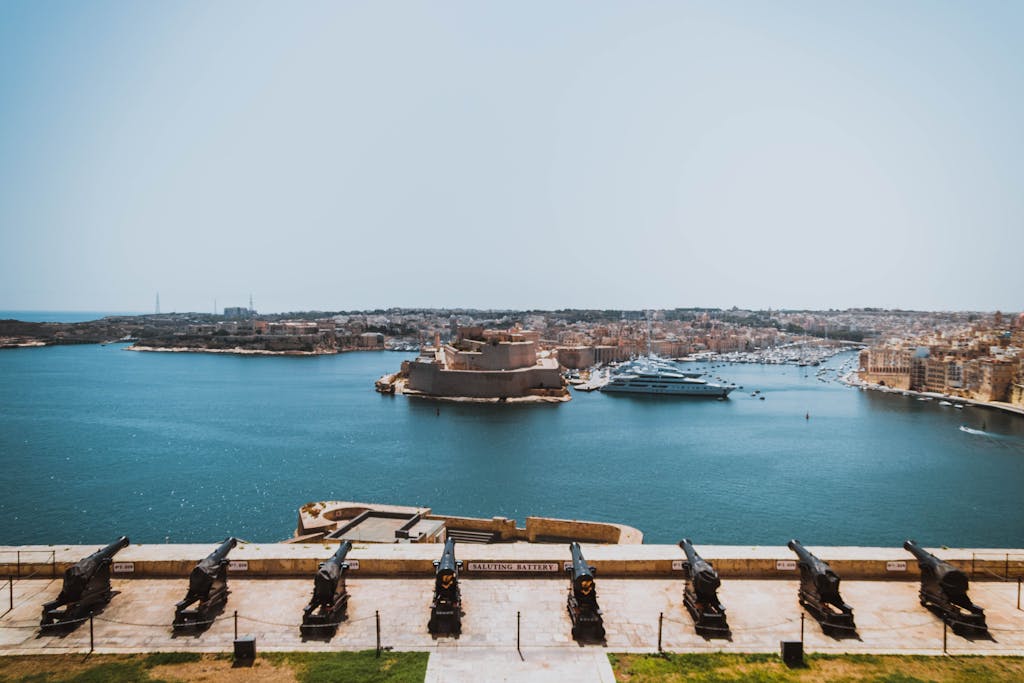
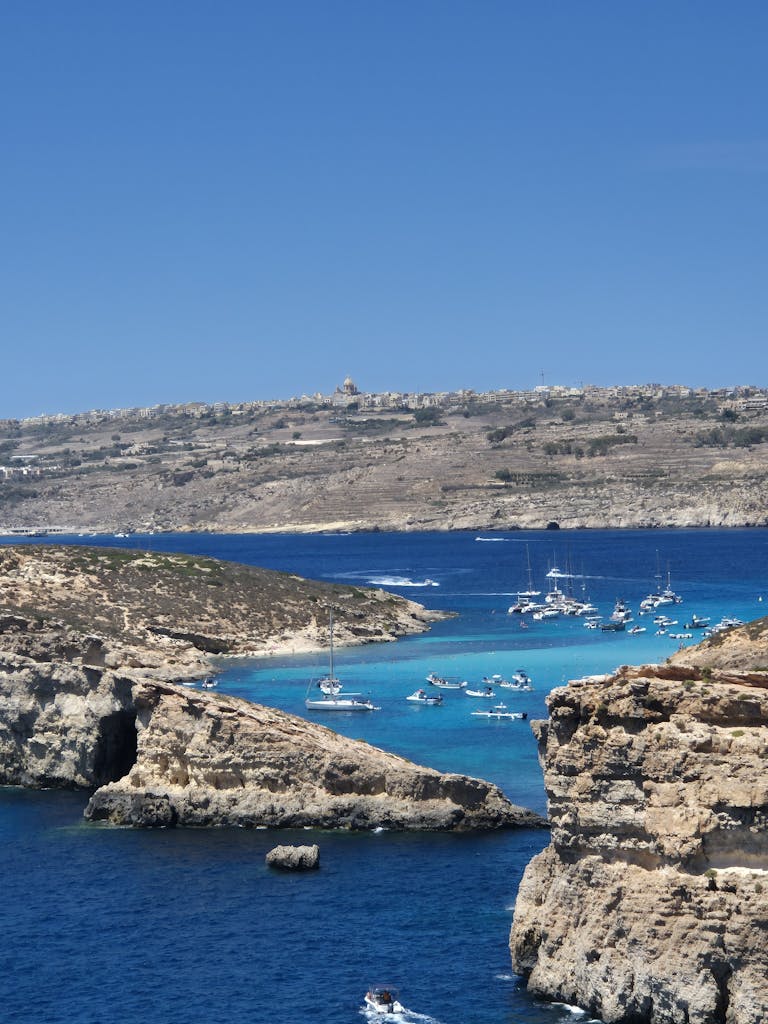
The setting is distinctly seafaring. Valletta’s twin harbours—Grand Harbour and Marsamxett—are among the Mediterranean’s finest natural havens, ringed by marinas, boatyards and chandlers. Beyond the city, Gozo brings slower rhythms, limestone coves and friendly waterfronts; Comino’s Blue Lagoon adds gin‑clear swimming (best visited early or late).
Malta’s climate is forgiving, with a long season from April to October. Summer brings stable high pressure and predictable sea breezes; shoulder months mix warm water with fewer crowds. For those seeking a taste of passage‑making, Sicily sits across a 50–70 NM channel, putting Siracusa and Marzamemi within a single daylight hop from Comino or Valletta.
Itineraries
These sample routes show how to make the most of Malta’s short hops and dependable summer breezes. The first is a relaxed island loop ideal for mixed crews and first‑time visitors; the second adds a well‑timed blue‑water leg to south‑east Sicily for experienced teams. Adjust day lengths to suit conditions and crew energy.
Malta–Gozo–Comino easy loop (7 days, short legs)
A 7-day route. Adjust legs to forecast, moorings and crew preferences.
A relaxed clockwise or counter‑clockwise circuit linking Valletta’s marinas with Marsaxlokk, Comino and Gozo. Expect 5–25 NM legs, plentiful swim stops, and the option to tuck into marinas if wind or sea state freshens. It suits families and crews looking to balance city heritage with clear‑water anchorages.
Day 1 – Valletta/Msida to Marsaxlokk
Cast off from Marsamxett or Grand Harbour for a counter‑clockwise loop. Keep well clear of port fairways and call Valletta Port Control when departing/arriving. Head south past Delimara Point for a first night in Marsaxlokk, Malta’s traditional fishing harbour. Anchor clear of fairways or take a berth if available. In settled weather, visit St Peter’s Pool for a late swim. Plan 2–4 hours under sail depending on breeze.
- Stops: Msida & Ta’ Xbiex Marina; Grand Harbour (transit); Marsaxlokk Harbour; St Peter’s Pool (day stop)
Day 2 – Marsaxlokk to Comino (Blue Lagoon)
Route east of Delimara then north along Malta’s east coast. Pause at the Blue Grotto (settled weather only) before continuing to Comino. The Blue Lagoon is best visited late afternoon when day boats thin. Overnighting is possible outside the swim zones, but many skippers prefer the calmer Santa Maria Bay or Mgarr (Gozo). Expect a sociable day with multiple swim breaks and straightforward pilotage.
- Stops: Blue Grotto (Wied iż-Żurrieq); Blue Lagoon (Comino); Santa Maria Bay (Comino)
Day 3 – Comino to Mgarr (Gozo)
A short relocation secures all‑weather shelter and shore services. Mgarr Marina is friendly and functional, with ferries running regularly—mind their wash. Explore Gozo’s inland villages or take a taxi to Victoria (Rabat) for Citadel views. Keep an eye on the Gozo Channel for gusts as you re‑position.
- Stops: Cominotto Channel; Mgarr Marina (Gozo)
Day 4 – Gozo west coast (settled weather) and return
In calm conditions, round Gozo’s western cliffs for dramatic scenery. Xlendi offers a narrow, scenic inlet; Dwejra provides a daytime amphitheatre in light airs. Overnight back in Mgarr or, if conditions suit, at Ramla Bay on the north coast. Have an early exit plan as swell can build quickly on this side.
- Stops: Xlendi Bay; Dwejra Bay; Ramla Bay; Mgarr Marina (Gozo)
Day 5 – Gozo to Mellieħa or St Paul’s Bay (Malta)
Cross the Gozo Channel—watch for acceleration in the breeze and Gozo Channel ferries. Choose Mellieħa Bay for a broad sandy anchorage, or St Paul’s Bay for proximity to shore amenities (mind moorings and fish farms). The leg is short but can be lively in the afternoon maestral.
- Stops: Mellieħa Bay (Għadira); St Paul’s Islands
Day 6 – St Paul’s Bay to St Julian’s/Marsamxett
Amble south along the NE coast with options to pause off Qawra or in St Julian’s Bay (settled weather). Enter Marsamxett for a city anchorage off Manoel Island, or secure a berth in Msida/Ta’ Xbiex or Roland Marina. Evening ashore in Sliema or Valletta is easy from here.
- Stops: St Julian’s Bay; Marsamxett Harbour (Manoel Island anchorage); Msida & Ta’ Xbiex Marina
Day 7 – Valletta’s creeks and return
Take a scenic circuit of Valletta’s creeks if permitted and conditions allow. Grand Harbour’s bastions reward a slow tour—obey speed limits and fairways, and liaise with Port Control. Return to base, refuel, and debrief. Allow time for check‑out and any fuel dock queues.
- Stops: Grand Harbour (Birgu/Three Cities); Kalkara Creek; Return base
Malta to SE Sicily taster (7 days, experienced crew)
A 7-day route. Adjust legs to forecast, moorings and crew preferences.
A compact blue‑water adventure linking Comino with Marina di Ragusa, Siracusa and the SE Sicilian coast. Passages of 50–80 NM demand settled forecasts, early starts and conservative margins. Ideal for crews comfortable with watch‑keeping, traffic separation schemes and night‑sailing contingencies.
Day 1 – Valletta to Comino
Shake down to Comino via the NE coast. Use the afternoon sea breeze for a lively reach and stage for the channel crossing. Treat today as a systems check: reefing lines, nav lights, fuel and spares.
- Stops: Msida & Ta’ Xbiex Marina; Blue Lagoon (Comino); Santa Maria Bay (Comino)
Day 2 – Comino to Marina di Ragusa (Italy)
An early departure secures daylight arrival across the Malta Channel. Expect a helpful NW–W sea breeze in summer; plot to avoid traffic separation schemes and fishing gear. Clear with the marina on approach and have ship’s papers ready. Make generous allowances for the Gozo Channel acceleration zone on departure.
- Waypoints: Comino Channel; Marina di Ragusa
Day 3 – Marina di Ragusa to Siracusa
Coast east along Sicily to Siracusa’s vast natural harbour. Historic Ortigia offers excellent shelter and shore leave. Mind coastal traffic off Pozzallo and local afternoon thermals rounding capes.
- Waypoints: Pozzallo (passing); Siracusa
Day 4 – Siracusa lay day
Rest, reprovision, and explore Ortigia. Check forecasts for the return crossing and plan conservative margins. Use the day to refuel, sort any snag list and book your staging marina for the southbound leg.
- Stop: Ortigia (Siracusa old town)
Day 5 – Siracusa to Marzamemi/Portopalo
Short hop south to stage for the return crossing. Both Marzamemi and Portopalo offer transient berths; book ahead in high season. Choose based on wind angle for an efficient departure next morning.
- Stops: Marzamemi; Portopalo di Capo Passero
Day 6 – Sicily to Gozo (Mgarr)
Cross back to Gozo aiming for Mgarr’s secure marina. Expect acceleration in the Gozo Channel as you approach. Time your arrival for good light and to avoid ferry peaks.
- Stop: Mgarr Marina (Gozo)
Day 7 – Gozo to Valletta
A relaxed final sail along Malta’s NE coast returns you to base. Refuel and complete formalities. Build in buffer for check‑in and any weather‑related delays from the previous day.
- Waypoints: Mellieħa Bay (passing); Marsamxett Harbour
When to Go
Peak sailing season runs from May to October. Summer is hot, dry and settled, with sea temperatures typically 23–27 °C from June to September and afternoon sea breezes most days. July and August bring the strongest, most reliable sea breezes (often F4–5 in the afternoon) and the busiest anchorages. Shoulder months—late April to early June, and September to mid‑October—offer warm water, fewer crowds and easier berthing.
Winter (November to March) is mild but more unsettled. Lows can bring strong NE (Gregale) or SE (Sirocco) episodes with heavy seas on exposed coasts; many visiting charterers avoid this period unless seeking experience in variable weather. Notable events include the Rolex Middle Sea Race in October, which brings international fleets to Valletta.
For the best balance of breeze, warmth and availability, late May–June and September are stand‑out months. UV is strong in high summer; plan early starts, long lunch swims and late‑afternoon hops to keep crews comfortable.
Wind and Weather
Overview
Malta sits near the centre of the Mediterranean, with modest tidal range and predominantly fair‑weather summer sailing. The meteorology blends synoptic patterns with a consistent local sea‑breeze cycle.
Seasonal pattern
- Late spring to early autumn: Expect regular afternoon onshore/alongshore sea breezes building to F3–5, most commonly from W–NW (locally called the maestral). Mornings are often light, freshening after midday and easing near sunset. Nights can bring gentle land breezes.
- Autumn to winter: Winds become more variable. Strong Gregale (NE) events can produce steep seas and surge in exposed anchorages and even inside Marsamxett. Sirocco (SE) brings hot, dusty air and low visibility at times, with swell on E and S coasts. Tramontana (N), Ponente (W) and Libeccio (SW) also occur.
Through summer, plan passages to make the most of the building afternoon breeze while ensuring arrivals with good light. In the cooler months, flexibility and harbour‑to‑harbour plans are sensible.
Local effects and sea state
- Gozo Channel acceleration: Wind funnels between Malta and Gozo, adding 5–15 knots above the general wind at times and kicking up short seas. Time your crossings accordingly.
- Swell: With sustained NW or NE winds, wrap‑around swell reaches otherwise fair‑weather bays; the Blue Lagoon can be choppy in NW flows, and north‑facing bays uncomfortable in NE.
- Visibility and storms: Fog is rare. Autumn sometimes brings thunderstorms; monitor radar and lightning forecasts.
Expect the most fetch‑affected water along north and east coasts during strong onshore flows. Comfort improves markedly by tucking into the well‑indented bays or opting for a marina berth when gradients rise.
Tides and currents
Tidal range is small (typically 0.2–0.3 m). Currents are generally weak but may reach 1–2 knots in the Gozo Channel with strong gradient winds. Plan manoeuvres and close‑quarters work as if non‑tidal, but allow for set and ferry wash in constricted waters.
Forecasting and communications
Reliable sources include the Malta International Airport Met Office coastal forecast, NAVTEX (518 kHz), and local VHF broadcasts. Valletta Port Control monitors VHF 12/16 and provides traffic information within the Valletta approaches. Many charter bases share daily briefings—use them alongside your own checks.
Getting There
By air
Malta International Airport (MLA) at Luqa is the island’s sole airport, with year‑round links to major European hubs. Transfer times are short: roughly 15–25 minutes by taxi to Valletta’s marinas (Grand Harbour, Marsamxett/Msida, Ta’ Xbiex) and 45–60 minutes to Mgarr (Gozo) via the ferry at Ċirkewwa. Pre‑booked taxis and ride‑hailing apps are widely available, and provisioning stops en route are easy to arrange.
By sea
Yachts approaching Valletta must call Valletta Port Control on VHF 12 before entering Grand Harbour or Marsamxett. From Sicily, the shortest hops are from Marina di Ragusa, Pozzallo, Portopalo or Marzamemi. The high‑speed Ro‑Ro ferry connects Ċirkewwa (Malta) with Mgarr (Gozo) for crew changes if you base the yacht in Gozo.
Base marinas and services
- Marsamxett Harbour: Msida & Ta’ Xbiex Marina and Roland Marina serve most charters, with easy provisioning in Gżira/Sliema.
- Grand Harbour: Grand Harbour Marina (Birgu) and Kalkara Marina offer full‑service berths close to historic waterfronts.
- Gozo: Mgarr Marina is a practical stop with fuel, water and shore facilities. Expect regular ferry movements.
All bases offer shore power, water and fuel. Technical support, rigging and lifts cluster around Marsamxett and Grand Harbour, making Malta an efficient place to resolve snags before or after your cruise.
Provisioning and spares
Large supermarkets and chandleries cluster around Msida/Gżira and Birgu. Fuel docks exist at major marinas; call ahead for hours. Yard support (lifts, rigging, engineering) is available around Msida, Manoel Island and Grand Harbour. Many crews book a first‑night marina and arrange grocery delivery to the pontoon for a smooth start.
Anchorages and Marinas
Valletta’s twin harbours
- Grand Harbour: Awe‑inspiring setting and robust shelter. Berths at Grand Harbour Marina (Birgu) and Kalkara Marina. Anchoring is restricted—observe fairways and local rules. Excellent base in NE blows when Marsamxett can surge.
- Marsamxett Harbour: Home to Msida & Ta’ Xbiex and Roland Marina. Manoel Island offers a convenient city anchorage in settled weather outside swim zones and traffic lanes. Some surge in strong NE.
Navigation within Valletta is orderly and well‑managed by Port Control; keep speeds under 6 knots and give commercial traffic a wide berth. Shore leave here is superb, with easy access to historic streets, restaurants and chandlers.
North and north‑east Malta
- Mellieħa Bay (Għadira): Broad, shallow sand with good holding; busy with swimmers in high season. Best in light to moderate offshore (W–NW) or settled conditions.
- St Paul’s Bay: Extensive moorings and fish farms; limited anchoring opportunities—check charts and keep clear of cages.
- St Julian’s and Spinola Bays: Short day stops possible in settled weather only; exposed and busy.
These bays are convenient for swim‑and‑lunch stops while stepping south towards Valletta. In NE winds, expect a rolly motion and consider Marsamxett or Grand Harbour instead.
Comino
- Blue Lagoon: Spectacular water clarity; intensely crowded by day in summer and choppy in NW winds. Overnighting is possible just outside swim zones and ferry routes, but most prefer Santa Maria Bay or Mgarr in anything but calm.
- Santa Maria Bay: Smaller, quieter anchorage with some shelter from W–SW. Watch depths and swimming areas.
Arrive early or late for the best experience, post a proper anchor watch in peak season, and respect swim lines which change seasonally.
Gozo
- Mgarr Marina: Secure, friendly and well‑serviced; ideal base for exploring Gozo. Ferry wash at times.
- Ramla Bay: Beautiful sandy bight open to N–E; only in settled weather.
- Xlendi Bay: Narrow, picturesque inlet with limited room; good lunch stop if calm.
- Dwejra Bay: Dramatic amphitheatre; day stop only and strictly in light airs with swell awareness.
Gozo rewards an unhurried approach—mix marina nights with selective anchorages based on wind and swell direction.
South and south‑east Malta
- Marsaxlokk: Large, working harbour with space to anchor clear of fairways; excellent provisioning in town. Can be rolly in strong SE swell.
- St Thomas Bay (Marsascala): Useful lunch stop or short overnight in settled conditions; open to E/SE.
- Delimara/Il-Ħofriet coves and St Peter’s Pool: Attractive day anchorages in fair weather; exposed in onshore winds.
These southern options pair well with a counter‑clockwise loop and reward early starts before afternoon sea breezes pipe up.
West coasts of Malta and Gozo
High limestone cliffs with very limited shelter. In the right conditions, Golden Bay and Għajn Tuffieħa offer rewarding day stops, but have little protection from swell. Treat the west coasts as fair‑weather cruising only, with an early exit plan.
Berthing notes
Book ahead in season, rig long stern lines for Med‑moor with lazy lines, and keep a fendered passerelle ready. Fuel, water and power are widely available at major marinas; pump‑out facilities are limited—plan holding‑tank use accordingly. Expect cross‑winds on outer pontoons in the afternoon maestral and brief ferry wash near ferry routes.
Chartering in Malta
Where to charter
Most fleets are based in Msida & Ta’ Xbiex (Marsamxett), Roland Marina (Ta’ Xbiex), Grand Harbour Marina (Birgu) and Kalkara Marina. A smaller number operate out of Mgarr (Gozo) in season. Yachts range from 32–55 ft monohulls and popular 38–50 ft catamarans; performance options and skippered packages are widely available.
Typical plans
For first‑timers, an easy island loop—Malta–Comino–Gozo—offers 5–25 NM legs and a mix of anchorages and marinas. Experienced crews often add a return hop to south‑east Sicily, planned conservatively around forecasts and daylight with staging in Comino or Valletta.
Booking tips
- Summer weekends are busy; secure berths ahead of time, especially in Mgarr and Valletta’s marinas.
- Blue Lagoon is a day stop in high season; plan overnights in Santa Maria Bay or a marina instead.
- Depths and Med‑moor: expect stern‑to with lazy lines. Prep fenders and stern lines before entering.
Consider a first‑night berth near your base to sort provisions and a last‑night berth to simplify refuelling and check‑out. If you intend to cross to Sicily, discuss paperwork and experience requirements with your operator in advance.
Skippered vs bareboat
Skippered charters unlock trickier weather windows and remove port permissions from your to‑do list. Bareboat is straightforward for Day Skipper‑level skippers with recent coastal experience. Many operators request a first and second qualified crew for night passages or channel crossings.
Costs and practicalities
High‑season rates peak in July–August; better value is often found in May–June and September–October. Expect security deposits, outboard and linen packages as optional add‑ons, and fuel charged on consumption. Berthing fees vary by marina and LOA; anchor whenever conditions allow to balance the budget.
Licences and Formalities
Skipper certification
For bareboat charters, operators typically require an ICC (Sail) or RYA Day Skipper Practical (or higher). A VHF/SRC radio operator’s certificate is commonly requested. Minimum skipper age is usually 18–21 depending on provider, with a brief sailing CV to evidence recent experience.
Entry, port control and speeds
- Valletta approaches: Call Valletta Port Control on VHF 12 before entering or departing Grand Harbour or Marsamxett; observe traffic directions and 6‑knot speed limits within harbours.
- International hops: Malta and Italy are in the Schengen Area; keep passports, vessel registration, insurance and crew list ready and follow local reporting procedures at marinas.
Carry a working mobile phone for marina coordination alongside VHF, and monitor 12/16 when operating near Valletta’s approaches.
Anchoring and protected areas
- Filfla: A no‑go/anchoring exclusion zone applies around Filfla islet (nature reserve; check current radius before approach).
- Fish farms: Numerous farms off the NE and SE coasts—give wide berth and avoid transiting between cages.
- Seagrass: Posidonia meadows are protected; anchor on sand patches and use laid moorings where provided.
Local notices to mariners change seasonally; verify swim‑zone locations and any temporary restrictions before you depart.
Environmental rules
Use holding tanks; never discharge in harbours, swimming areas or within the coastal zone. Waste reception is available at marinas. Reduce wake near swimmers and small craft, particularly around Comino and Marsamxett.
Documents to carry
Passport/ID, skipper licence, VHF/SRC, crew list, insurance certificate, ship’s registration, and charter contract. Keep both paper and digital copies and have them to hand when calling at marinas or communicating with Port Control.
FAQs
Is Malta suitable for beginner skippers?
Yes—short legs, minimal tides and clear water make it approachable. Choose a conservative route on the east and north sides, avoid the exposed west coasts in unsettled weather, and consider a skipper for your first visit.
When is the best time to avoid crowds at the Blue Lagoon?
Go early morning or late afternoon, especially outside July–August. For overnights, consider nearby Santa Maria Bay or Mgarr (Gozo) instead.
How strong are winds in summer?
Most days see a building sea breeze to F3–5 from W–NW, easing after sunset. Gusts and acceleration occur in the Gozo Channel; plan crossings with margin.
Are there tides and currents to worry about?
Tides are small (about 0.2–0.3 m). Currents are generally weak but can reach 1–2 knots in the Gozo Channel with strong winds. Ferry wash and traffic are often more relevant than tide.
Can I sail to Sicily on a week’s charter?
Yes, for experienced crews with an early start and settled forecasts. The Comino–Ragusa or Valletta–Siracusa legs are 50–80 NM; plan daylight arrivals and carry proper documents.
Do I need a licence to charter?
Bareboat skippers are typically asked for an ICC (Sail) or RYA Day Skipper Practical plus a VHF/SRC certificate. Operators may also request a sailing CV and a competent second crew member.
Where do I clear in when arriving by yacht?
Contact Valletta Port Control on VHF 12 before entering Grand Harbour or Marsamxett. If arriving from outside the EU/Schengen, follow instructions for customs and immigration—Grand Harbour and Mgarr are the usual gateways.
Are there any no‑go areas?
Yes—observe the exclusion around Filfla islet, keep clear of fish farms, and respect swimming zones and fairways. Local notices to mariners provide current restrictions.
References
- https://www.cruiserswiki.org/wiki/Malta
- https://www.maltairport.com/weather/coastal-forecast/
- https://www.transport.gov.mt/ports-maritime/ports-and-yachting/
- https://www.cnimarinas.com/marinas/grand-harbour-marina/
- http://www.creekdevelopments.com/
- https://www.rolandmarina.com/
- https://www.kalkaramarina.com/
- https://www.mgarrmarina.com/
- https://www.rya.org.uk/knowledge/abroad/icc
- https://www.rmyc.org/
Charter a Yacht
Compare crewed & bareboat charters, learn the best months to sail, and get a custom shortlist from 500+ providers.