Sailing in the Saronic Gulf & Peloponnese: routes, conditions and practicalities
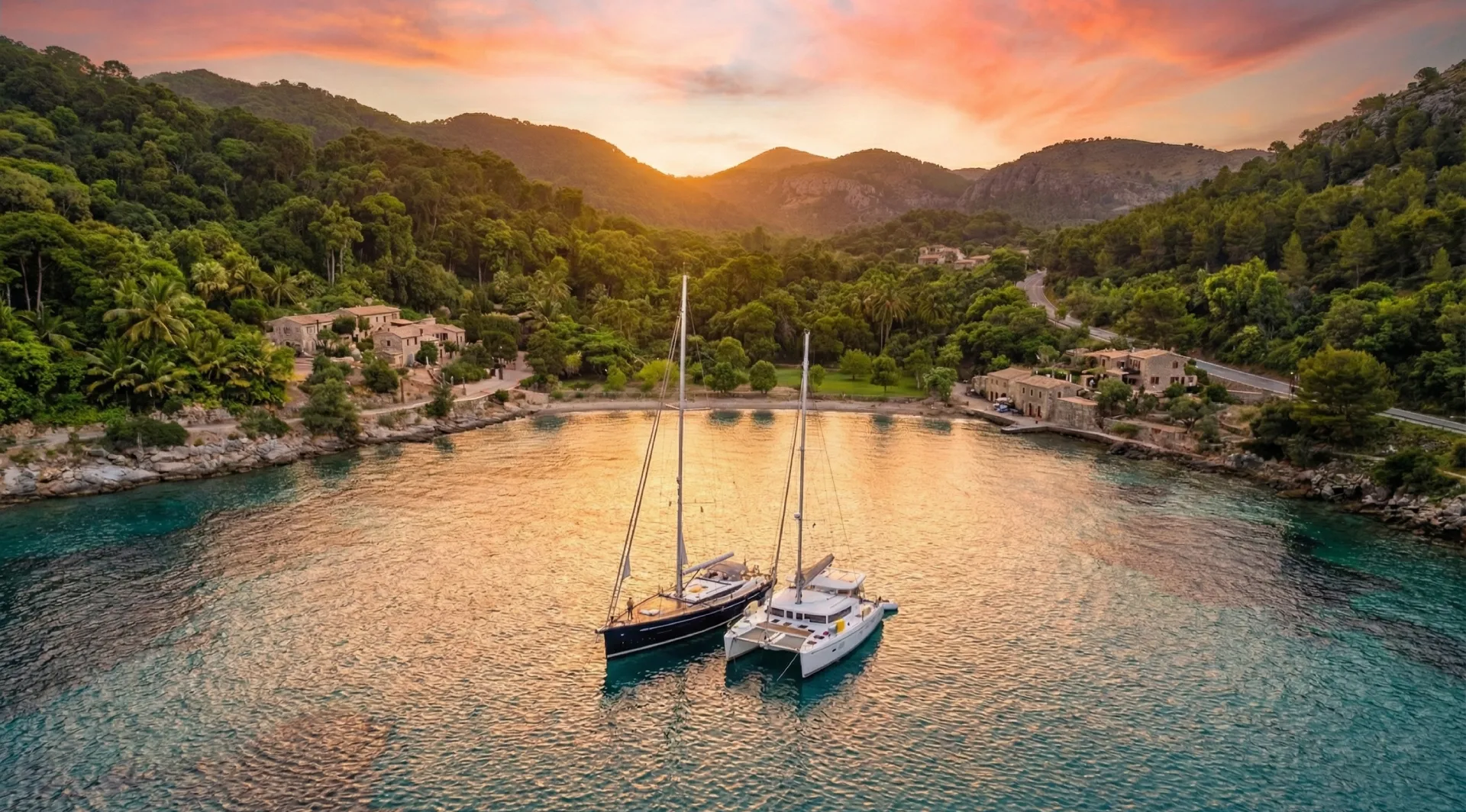
Close to Athens yet far from routine, the Saronic Gulf and the North-East Peloponnese in Greece deliver sheltered passages, elegant island towns, amphitheatres above orange groves, and bays that hold well when the Aegean is friskier. This guide sets out how the winds really behave, where to find reliable harbours and anchorages, and how to build itineraries that feel ambitious without overreaching. If you're weighing up a Greek charter and want easy logistics, dependable afternoon breezes and a refined shoreside scene, this region is deliberately designed for you.
Quick links
- Why sail in the Saronic Gulf & Peloponnese?
- Itineraries
- When to go
- Wind & weather
- Getting there
- Chartering
- Licences & formalities
- Anchorages & marinas
- FAQs
- References
Why sail in the Saronic Gulf & Peloponnese?
The Saronic and Argolic waters offer Aegean character without Aegean jeopardy. Summer etesian winds are moderated by the Attica landmass, producing predictable Force 3-5 sea breezes instead of the full-blooded meltemi. That makes pilotage more about judgement than endurance, and keeps passages short enough to allow unhurried arrivals at the region's famously tight harbours.
The cultural density is exceptional. Within a week you can thread the lemon-scented channel at Poros, time your approach into Hydra between fast ferries, and wake in Porto Heli's inland lagoon before taxiing to a Bronze Age citadel or the theatre at Epidavros. The East Peloponnese shoreline adds mountain-backed ports such as Tiros, Leonidio and Kyparissi, where katabatic evenings follow warm, glassy afternoons.
Logistics are kind. Athens International funnels you straight to major charter bases at Alimos and Zea; crew changes are painless thanks to frequent ferries to Aegina, Poros, Hydra and Spetses. Mooring fees remain modest on municipal quays, fuel is delivered by mini-tanker, and the tidal range is negligible. For first-timers and skippers stepping up to busier Med-mooring, there are few better classrooms.
Itineraries
Below are suggested routes that balance satisfying sailing with stress-free arrivals. They build in swim stops, cultural highlights and realistic daily distances, with contingency notes for busier harbours. Adjust timings to the day's breeze, and plan to be moored by mid-afternoon in July and August.
7-day Classic Saronic Loop (Athens to Athens)
A compact circuit that threads Aegina, Poros, Hydra and Spetses, this loop showcases the Saronic's best-loved harbours with straightforward legs and plenty of places to pause. It is ideal for mixed-experience crews looking to practise Med-mooring without committing to long, exposed passages.
Day 1: Alimos Marina to Perdika (Aegina)
Shake down across the Saronic, keeping a sensible watch for fast ferries leaving Piraeus and for fishing markers near Aegina. If time allows, drop the hook off Moni islet for a first swim in clear water with sandy patches. Perdika offers simple stern-to mooring, friendly quay staff and sunset tavernas lining the waterfront; rig long stern lines to soften any ferry wash.
Day 2: Perdika to Poros Town
A short, scenic hop along Aegina's lee before you shape up for Poros. Mind the current in the Poros channel and the frequent ferry movements; approach with a positive angle and prepare the anchor early for a confident set. Russian Bay just west is a reliable lunch anchorage in sand, with an easy return to the town quay for dinner and provisions.
Day 3: Poros to Hydra
Leave Poros after the morning lull for a relaxed reach. Aim to arrive at Hydra by late morning as space is limited and crosswinds gust in the entrance. Expect to anchor-stern-to with crossed chains and occasional rafting; generous fendering and clear crew roles keep the manoeuvre calm. Mandraki Bay round the corner is a quieter fallback in settled weather.
Day 4: Hydra to Ermioni via Dokos
Pause in Skindos Bay (Dokos) for lunch; seek pale sand patches between rock and weed and back down firmly to confirm your set. Continue to Ermioni, choosing between the north and south quays to suit the wind angle - each has a different feel, with evening promenades and good shelter if the breeze fades.
Day 5: Ermioni to Spetses
Enjoy a relaxed reach into the Argolic entrance. Choose Dapia quay for the heart-of-town buzz or the Old Harbour for atmosphere; both are busy in high summer and exposed to ferry wash, so double up stern lines and consider a bow snubber. If berths are scarce, sheltered coves around the island make pleasant alternatives.
Day 6: Spetses to Poros via Dokos
A longer leg with glassy-blue swim stops around the Hinitsa islets. The open stretch back towards Poros can bring a playful afternoon breeze; reef early to keep the boat balanced. Return to Poros for easy mooring, a stock-up and an unhurried evening ashore.
Day 7: Poros to Palaia Epidavros to Alimos
Depart early and shape a course for Palaia Epidavros. Anchor for lunch and a quick visit to the small theatre - taxis are readily available - before continuing across the gulf. Allow time for refuelling outside Alimos and a tidy return by mid-afternoon.
10-day Argolic Gulf & East Peloponnese Explorer
This itinerary stretches into the Argolic Gulf and along the dramatic East Peloponnese, where red cliffs meet deep water and evening katabatics ruffle calm bays. Expect welcoming small ports, clear water, and a satisfying variety of mooring options, with culture layered in at Nafplio and easy shelter at Porto Heli.
Day 1: Athens (Alimos) to Korfos
A gentle first leg to reset the crew and settle the boat. Korfos' deep bay is well protected with several tavern quays offering lazy lines, water and a warm welcome. It is a handy bolt-hole if the Attic breeze pipes up in the afternoon.
Day 2: Korfos to Nafplio
A longer passage into the head of the Argolic Gulf. The old Venetian harbour usually has space and a fine view of Bourtzi fort; choose between the town quay or the marina area. In southerlies a low swell can work in - long bow lines and a stern snubber help.
Day 3: Nafplio to Paralio Astros
A short hop along a low, sandy coast with easy pilotage. Good holding in mud makes for relaxed arrivals, though keep an eye on fetch if a southerly sets in. Stroll the seafront or swim straight off the stern.
Day 4: Paralio Astros to Tiros
The coastline steepens and the water clears to a cobalt sheen. Tiros' quay is straightforward with room to manoeuvre; after dusk, katabatic puffs can descend from the mountains, so set ample chain and snug the stern lines.
Day 5: Tiros to Leonidio (Plaka)
A short and scenic run beneath red limestone cliffs to Plaka's small harbour. Berths are welcoming but fill quickly in season; arrive by early afternoon and enjoy the beach or a taxi up to the dramatic village of Leonidio.
Day 6: Leonidio to Kyparissi
A favourite for many skippers. Crystal water, tiered quays and excellent holding make for a restful stop. Avoid in strong easterlies; otherwise it is a near-perfect spot for a lazy swim and dinner ashore.
Day 7: Kyparissi to Spetses
Reach back across the outer Argolic, keeping an eye on the afternoon sea breeze. Spetses offers lively evenings and dependable shelter. If Dapia is full, the Old Harbour often has a berth later in the day.
Day 8: Spetses to Porto Heli
A half-day sail with time to swim at the Hinitsa islets or explore inland. Porto Heli's lagoon has excellent mud holding, plentiful services and room to anchor if the quays are busy - ideal for a relaxed lay-day.
Day 9: Porto Heli to Hydra
Time approaches carefully at Hydra; space is rationed and rafting is common. Mandraki Bay provides a quieter alternative in settled weather, with an easy walk or water taxi into town for dinner.
Day 10: Hydra to Poros to Athens
Stop at Poros for lunch and fuel if needed, then lay a course across the gulf to Alimos. Allow a margin for meltemi-driven chop off Cape Sounion and plan your refuel on the outer mole before check-in.
4-day Saronic Taster (Athens return)
Perfect for a long weekend or a first charter, this compact loop delivers classic Saronic scenery, simple harbour entries and short legs. It pairs historic Aegina and lively Poros with a final night in clear-water Agistri before an unhurried return to Athens.
Day 1: Athens to Aegina Town
An easy first hop with broad quays and dependable holding. Once settled, take a taxi to the Temple of Aphaia for island-wide views, then sample Aegina's famed pistachios on the quay at sunset.
Day 2: Aegina to Poros
A short sail with time for multiple swim stops along the way. Arrive early for a choice of berths on Poros' waterfront, then wander the lanes above the clocktower and dine by the water.
Day 3: Poros to Agistri (Skala or Megalochori)
Choose between sandy-bottomed anchorages for a swim day or a spot on the town quay. Water clarity is excellent and logistics are simple; Skala's beachy vibe contrasts with Megalochori's quieter charm.
Day 4: Agistri to Athens
A final passage across open water with Athens' skyline ahead. Call the bunker boat to refuel on approach to Alimos and return by mid-morning checkout, leaving time for a tidy hand-back.
When to go
May to October is the core season. In late spring (May-June) you'll find Force 3-4 sea breezes, cooler nights and quieter quays; blossom in the hills makes the Peloponnese particularly attractive, and water temperatures are already comfortable for swimming. Crowds build towards late June as schools break up across Europe.
July and August are warmest, with the etesian flow feeding more robust afternoon winds yet remaining a grade easier here than in the central Aegean. Town harbours such as Hydra, Spetses and Poros fill by mid-afternoon, so plan earlier arrivals or have a nearby bay in reserve. Evenings are lively, and shore services are in full swing.
September and early October bring warm seas (22-26 °C), settled mornings and occasional late-day thunderstorms. It's a sweet spot for relaxed sailing and easy berthing, with enough breeze for rewarding reaches. Winters can be blustery with southerlies and rain; most charter fleets pause from November to March.
Wind & weather
Headline winds
The summer etesians blow predominantly N to NE in the central Aegean. In the Saronic Gulf this is moderated by Attica's landmass, yielding regular N-NE sea breezes at 10-20 knots (Beaufort 3-5), often easing overnight. In the Argolic Gulf the pattern flips: local S-SE sea breezes build late morning and can top 18-22 knots mid-afternoon before fading around sunset.
Local effects
Expect gust acceleration in the Hydra and Spetses channels, with sharp crosswinds on final approach to Hydra harbour. Katabatic puffs descend off the Peloponnese ranges in the evening, especially around Tiros, Leonidio and Kyparissi. The Poros channel may run at 1-2 knots with frequent ferry wash; keep a positive angle of approach when mooring on the town quay. In strong southerlies, swell can work into Nafplio and Astros.
Sea state, tide and visibility
Offshore seas are typically slight to moderate, with short Aegean chop when the gradient wind sets up against local sea breezes. Tidal range is minimal (often under 0.3 m) but allow for barometric set-up in prolonged southerlies. Visibility is generally excellent, though summer haze can reduce contrast near sunset.
Shoulder season and squalls
In September-October, isolated thunderstorms can bring abrupt gusts and heavy rain. Anchor with suitable scope, add snubbers and chafe protection, and avoid exposed outer quays if a squall line is forecast. Winter lows drive stronger S-SW winds and rain.
Temperatures
Air temperatures average 26-34 °C in high summer, with sea temperatures at 24-27 °C in August. UV is intense; plan earlier arrivals to avoid mooring manoeuvres in the hottest window, keep crews hydrated and rig biminis for shade under way.
Getting there
Athens International Airport (ATH) is the primary gateway. Road transfers take roughly 35-50 minutes to Alimos Marina (Kalamaki) and 50-70 minutes to Zea Marina (Piraeus), depending on traffic. Lavrion, the launch point for Cape Sounion and the Cyclades, is 40-60 minutes from the airport but sits outside the core Saronic circuit. Kalamata Airport (KLX) serves the south-west Peloponnese and is useful only if you plan to cruise farther south or arrange a repositioning charter.
Ferries for crew changes run frequently from Piraeus to Aegina (40-75 minutes), Agistri (55-100 minutes), Poros (1-2 hours), Hydra (1.5-2 hours) and Spetses (2-3 hours), making mid-week swaps painless. Taxis meet most ferries; hire cars are limited on Hydra and Spetses where cars are restricted. Within Athens, trams and taxis reach Alimos easily, while Zea sits a short ride from central Piraeus rail links.
Provisions and services are straightforward. Large supermarkets and chandlers service Alimos and Zea; fuel is delivered dockside by mini-tanker at most town quays. Water and shore power are available in main ports via cards or the harbour attendant. It is wise to top up before the weekend rush of returning fleets.
Chartering
You can charter bareboat or skippered yachts from Athens (Alimos/Kalamaki and Zea) and, less commonly, from Poros or Porto Heli. Fleets include 34-55 ft monohulls and 38-50 ft catamarans, with most operating Saturday-Saturday. Check-in typically starts from 17:00; check-out is around 08:30-09:00 with fuel top-up on the final morning. Build in time for a thorough handover: test windlass and bow thruster, verify anchor chain markings, and confirm the passerelle set-up used on town quays.
Route planning should balance ambition with the realities of popular harbours. Hydra, Spetses and Poros fill quickly in July-August; arrive by early afternoon or hold a fallback (Mandraki for Hydra; sheltered coves on Dokos; bays around Spetses and Porto Heli). Distances are modest, so add purposeful swim stops and cultural visits - Epidavros theatre or Mycenae from Nafplio - rather than stringing together late arrivals.
Expect a refundable security deposit or a damage-waiver alternative. Outboard engines, gennakers and SUPs are optional extras. Many operators disallow night sailing and require adherence to local no-anchoring zones, ferry lanes and protected areas. TEPAI (the Greek cruising tax) and the vessel's transit paperwork are usually handled by the charter company and incorporated into your contract.
Licences & formalities
Bareboat skippers in Greece must hold an ICC (International Certificate for Operators of Pleasure Craft) for coastal waters or a national equivalent. RYA Day Skipper Practical (or higher) generally satisfies the requirement; ASA 104 Bareboat Cruising is commonly accepted for US-trained sailors. Licences must be in Latin characters. A second crew member aged 18+ must be designated as co-skipper and may be asked for evidence of competence; where this is unavailable, a signed self-declaration is often accepted at base discretion. A Short Range Certificate (VHF) is advisable and sometimes requested.
Carry passports, the charter contract, crew list and your original certificates. Within the Saronic and Argolic area you no longer routinely clear with Port Police between ports, but you will pay modest mooring fees on municipal quays and may need a card for water or power. The charter company typically manages TEPAI; private vessels should arrange payment online before or upon entry. Observe local regulations on protected anchorages, speed limits in harbour approaches and waste disposal.
Anchorages & marinas
Key bases and marinas
Alimos (Kalamaki), Athens
Greece's largest charter base with full services, fuelling on the outer mole and rapid access to open water. Expect brisk Saturday turnarounds and helpful staff; refuel on return before entering your berth.
Zea Marina, Piraeus
A modern marina with excellent amenities and restaurants. The exit to the gulf is slightly longer amid commercial traffic, so plan your departure window and monitor VHF for port movements.
Porto Heli
A sheltered lagoon that hosts a few fleets and many visiting yachts. Holding is excellent in mud, with shore services and easy taxi links to Spetses and the wider Argolid.
Saronic Islands and Attica
Aegina Town
A wide harbour with dependable mud and sand holding. Exposure to W-NW can bring a light surge; Perdika on the south-west tip offers a smaller, convivial alternative with sunset views.
Agistri (Skala and Megalochori)
Simple quays and sandy anchorages in clear water. Both settlements are convenient for a last-night stop before Athens, with straightforward getaways and good swimming.
Poros
The channel's cross-set and ferry wash demand positive boat-handling. The town quay is classic Med-moor on your own anchor; Russian Bay nearby offers easy anchoring in sand for lunch or overnight in settled weather.
Hydra
No laid moorings and very limited space. Expect anchor-stern-to with crossed chains, frequent rafting and strong cross-gusts on approach. Mandraki Bay provides overflow options when the harbour is full.
Methana & Vathi
Quiet, characterful options with nearby hot springs. Vathi is snug with good shelter and makes a restful pause between busier ports.
Palaia Epidavros
A small harbour with good anchor holding and easy access to the ancient theatre. Weed can be patchy - hunt for pale sand and back down to confirm the set.
Korfos
A deep inlet with multiple tavern quays and lazy lines; a useful all-weather refuge convenient to Athens.
Argolic Gulf and East Peloponnese
Ermioni
Two faces: the north quay can see a little fetch in northerlies while the south quay gets some ferry wash. Choose to suit the day's breeze and your plan for shore time.
Spetses
Dapia and the Old Harbour are lively but tight, with constant movement in season. In settled weather, the bays around the island offer calmer alternatives with easy dinghy runs ashore.
Porto Heli
An expansive, sheltered basin with excellent mud holding. Ideal for lay-days, light maintenance and crew changes, with ample space to swing at anchor if quays are busy.
Dokos
Skindos Bay is a favourite lunch stop with sand patches amid rock and weed. Set carefully and leave space for swinging; enjoy crystal-clear water and a quiet backdrop.
Nafplio
Town quay and marina options with a handsome old town to explore. Some surge in southerlies - snubbers and adequate distance off the quay keep things comfortable.
Paralio Astros, Tiros, Leonidio (Plaka), Kyparissi
Mountain-backed ports with clear water, straightforward Med-mooring and evening katabatics. Kyparissi is superb in settled weather but should be avoided in strong easterlies.
Monemvasia (edge of range)
A spectacular medieval rock town just beyond a typical week's range. The small harbour and nearby anchorage are exposed to E/SE and require settled conditions.
General mooring notes
Techniques
Med-moor on your own anchor is standard at town quays. Lay ample chain at roughly 4-5:1, motor back decisively, and rig long bow snubbers to soften ferry wash. Prepare lines and fenders early and brief the crew before committing.
Depth and holding
Sand and mud dominate, but weed beds are common - seek pale sand patches and verify the set by gently increasing astern power. In deeper basins such as Porto Heli, mud holding is excellent.
Services
Fuel is delivered by mini-tanker; water and shore power are provided via cards or the harbour attendant. Fees are modest and often collected in the evening; carry some cash for smaller harbours.
Hazards
Watch ferry traffic and wash at Hydra, Poros and Spetses. Anticipate afternoon gusts in narrows and night katabatics along the East Peloponnese. Tides are minimal, but Poros channel current and barometric effects merit attention.
FAQs
Is the Saronic Gulf suitable for first-time Mediterranean skippers?
Yes. Distances are short, winds are moderated compared with the central Aegean, and there are plentiful bolt-holes. The main challenge is busy Med-mooring in tight harbours such as Hydra and Poros, which makes it an excellent training ground.
How strong is the meltemi here?
The etesian flow reaches the Saronic as a tempered N-NE breeze, typically 10-20 knots. In the Argolic Gulf, local S-SE sea breezes dominate. Prolonged strong meltemi spells can still create short, steep chop in open fetches.
Do I need to book berths in advance?
Most town quays operate on a first-come, first-served basis. A few marinas (Zea, Flisvos) accept reservations. In July-August arrive early at Hydra, Spetses and Poros or plan overflow anchorages close by.
What qualifications do I need to charter a yacht?
An ICC (coastal) or recognised national equivalent is required; RYA Day Skipper Practical or ASA 104 are commonly accepted. A co-skipper aged 18+ must be named. A VHF SRC is advisable.
Are there mooring buoys?
Outside private hotel fields and a handful of local schemes, expect to anchor and go stern-to, or use lazy lines on tavern quays. Carry a trip line in case of fouls.
Where can I shelter in bad weather?
Porto Heli, Korfos, Poros (inside) and Aegina Town offer good shelter. Avoid exposed outer quays in strong southerlies and be cautious with easterlies along the East Peloponnese.
Can I visit the theatre at Epidavros from the boat?
Yes. Berth at Palaia Epidavros and take a short taxi ride to the ancient theatre. Performances run on summer weekends; enquire locally for schedules.
What about fuel and water?
Fuel is delivered by mini-tanker to most quays; water and shore power are available in main ports via tokens or the harbour office. Refill before popular weekend returns to Athens to avoid queues.
References
Charter a Yacht
Compare crewed & bareboat charters, learn the best months to sail, and get a custom shortlist from 500+ providers.