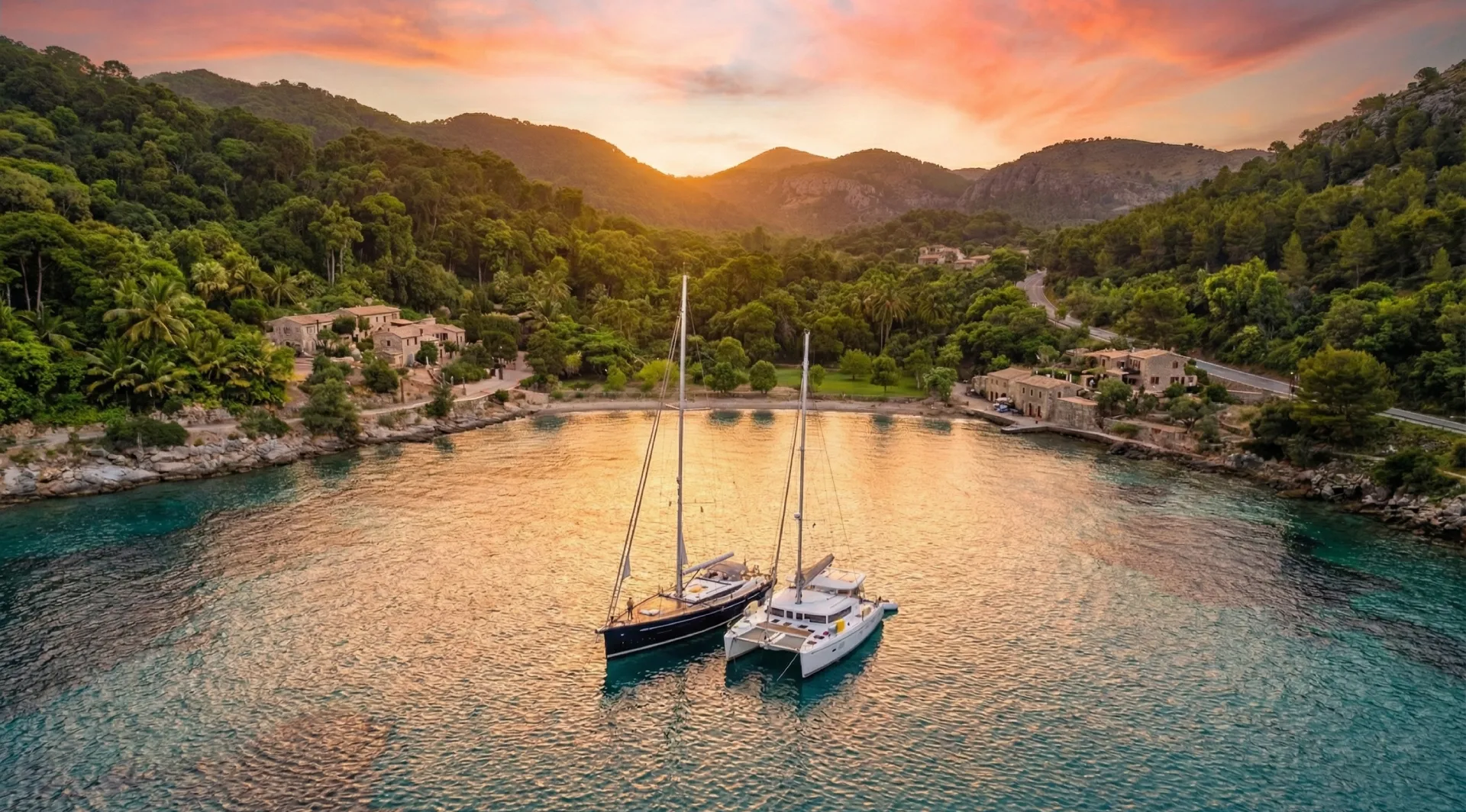
Sailing in Andalusia: routes, winds, seasons and harbours
Andalusia on the south-east coast of Spain gives you two seas in one region: the open, tidal Atlantic of the Costa de la Luz and the sun-drenched, mostly tide-free Mediterranean from Gibraltar Bay to Cabo de Gata. Expect characterful historic ports, reliable summer sea breezes, and some of Europe's most dramatic coastal scenery around the Strait of Gibraltar and the volcanic coves of Cabo de Gata. With modern marinas spaced sensibly along the coast and pockets of excellent, clear-water anchorages, it's a rewarding choice for skippers who want more than a cookie-cutter Med charter. Plan with the Levante and Poniente in mind, choose your coast to suit the forecast, and Andalusia delivers exceptional passages, confident pilotage, and a real sense of place.
Quick links
- Why Sail in Andalusia?
- Itineraries
- When to go
- Wind & weather
- Getting there
- Chartering
- Licences and formalities
- Anchorages & marinas
- FAQs
- References
Use these shortcuts to jump straight to planning sections and sample routes. You can tailor your week to the forecast - west for Atlantic tide and longer legs, east for shorter hops and classic Med conditions.
Why Sail in Andalusia?
Andalusia uniquely blends Atlantic and Mediterranean sailing within a day's run. To the west, the Costa de la Luz offers big-sky sailing, ocean swell and proper tidal thinking, balanced by welcoming fishing towns and the handsome, historic Bay of Cádiz. To the east, the Costa del Sol and Costa Tropical provide classic Med cruising with dependable summer sea breezes, sheltered marinas, and clear-water calas that invite you to anchor and swim.
Few areas concentrate so much meteorology and geography into a compact chart. The Strait of Gibraltar funnels the famous Levante and Poniente, giving exhilarating downwind days and sharp pilotage challenges around Tarifa. By contrast, Cabo de Gata's volcanic headlands create an amphitheatre of anchorages where you can play the wind and swell, moving a few miles to find perfect shelter.
Add culture and cuisine that are genuinely on your doorstep. Moor beneath Cádiz's baroque skyline, stroll Málaga's old town from the quay, or swim in La Herradura before tapas on the beach. Logistics are straightforward, bases are well-connected, and you can tailor difficulty to your crew: choose the Atlantic for tide and longer legs, or keep to the Mediterranean for shorter stages and kinder seas.
Andalusia Sailing Itineraries
Below are three seven-day routes that showcase Andalusia's two seas. Each itinerary balances time under sail with worthwhile stops ashore. Distances are achievable for a holiday pace, but always plan with the week's dominant wind - Levante or Poniente - in mind.
7-day Atlantic & Strait circuit (La Línea - Cádiz Bay - La Línea)
A 7-day route. Adjust legs to forecast, moorings and crew preferences.
A rewarding, varied week for confident skippers who enjoy pilotage and pace. Expect proper tide and stream decisions in the Strait, low Atlantic swells on exposed legs, and calmer water within Cádiz Bay. This loop works best with a Poniente pattern; in strong Levante, shorten days or keep east of Tarifa.
Day 1: La Línea (Alcaidesa Marina) to Estepona (18-22 nm)
A relaxed shakedown along the lee of the Sierra Bermeja. Expect a building afternoon Poniente sea breeze from the west in summer. Keep half a mile off to avoid the worst of pot lines, and call Estepona Marina on VHF 9 for berth allocation; the entrance is straightforward with excellent shelter and provisions on the quay.
Day 2: Estepona to Barbate via Tarifa (45-50 nm)
Round Europa Point outside the Gibraltar TSS and time the Strait for fair stream. In Poniente you'll have a fast reach; in Levante the acceleration around Tarifa can be severe - reef early and keep clear of wind-over-tide overfalls. Cross traffic lanes at right angles if required and monitor VHF 16/12; Barbate is a practical, all-weather stop with fuel and space even in peak weeks.
Day 3: Barbate to Cádiz Bay (Puerto Sherry) (32-35 nm)
A coastal leg past Trafalgar and the low sands of the Bahía de Cádiz. Give Cabo Trafalgar an ample offing to avoid shoals and any residual swell; seasonal tuna nets may be laid - follow buoyage if present. Ocean swell eases inside the bay. Puerto Sherry sits opposite Cádiz old town and makes a convenient base to explore and reprovision.
Day 4: Cádiz Bay potter (10-15 nm)
Short hops within the bay: cross to Cádiz's Puerto América to walk the city, then on to Rota or back to Puerto Sherry. Mind local tides and strong cross-sets in the channel, watch for ferries, and anticipate brisk afternoon sea breezes funnelled between the quays.
Day 5: Cádiz Bay to Sancti Petri/Conil anchorage or Barbate (14-30 nm)
In settled weather and with suitable tide, enter Sancti Petri for a tidal creek anchorage and dunes. Attempt the bar in daylight on a rising tide, line up the transits and post a bow lookout for breaking surf. If the bar is unsafe or swell is up, continue to Barbate for a secure marina berth and fuel.
Day 6: Barbate to Sotogrande (35-38 nm)
Choose your tide for Tarifa again and avoid wind-against-stream overfalls. Sotogrande is a neat halfway-house with restaurants and sheltered basins; it's also a sensible diversion if Levante or swell builds. Call ahead on VHF 9 and expect good shelter from easterlies deep inside the marina.
Day 7: Sotogrande to La Línea (10-12 nm)
A final leg into Gibraltar Bay. Keep clear of shipping, bunkering zones and the airport exclusion; give anchored tankers a wide berth and monitor port traffic channels. Alcaidesa Marina is well run with wide fairways and an easy hand-back process.
7-day Cabo de Gata explorer (Almerimar - San José - Carboneras - Almerimar)
A 7-day route. Adjust legs to forecast, moorings and crew preferences.
A gentle, scenery-soaked week ideal for crews who value swimming bays and short passages. The Cabo de Gata-Níjar coast offers some of mainland Spain's clearest water and a choice of calas to match the day's wind and swell. Marinas are well spaced for secure nights when conditions freshen.
Day 1: Almerimar to Aguadulce (22 nm)
Ease into the week with a coastal leg. Expect a reliable afternoon sea breeze in summer. Give fish farms off Roquetas a respectful berth and call Aguadulce on VHF 9; the marina sits under the cliffs with good shelter, fuel, and supermarkets close by.
Day 2: Aguadulce to San José (30-32 nm)
Round Cabo de Gata's headland with acceleration zones near the capes - keep a sensible offing for easier water. San José is the gateway to the marine park with a friendly harbour, clear berthing instructions, and handy provisioning on the quay.
Day 3: Cabo de Gata calas day (8-15 nm)
Day-sail between Genoveses, Mónsul and Isleta del Moro. Choose coves to suit wind and swell; water is clear and snorkelling excellent. Anchor on sand patches to avoid posidonia, take a long scope for comfort, and return to San José or stay at anchor in calm conditions.
Day 4: San José to Carboneras via Cala San Pedro (18-20 nm)
Hop east with a swim-stop at Cala San Pedro's turquoise pool before continuing to Carboneras for a secure night alongside. Cala San Pedro holds well in sand at 5-8 m; arrive early in peak season for space before the day boats.
Day 5: Carboneras to Almería (35-38 nm)
Retrace west with a fair sea breeze. Watch for afternoon gusts off the arid hills and give commercial traffic a wide berth on approach. Almería's Club de Mar gives urban convenience, a friendly welcome, and easy access to the Alcazaba above the port.
Day 6: Almería to Roquetas or direct to Almerimar (12-23 nm)
A short leg to break the return, or carry straight on to Almerimar depending on breeze and crew. Expect afternoon thermals from the southeast in summer. If returning direct, call Almerimar for a berth - wide fairways, good yards and an easy entry by day or night.
Day 7: Lay day or weather buffer at Almerimar
Use the spare day for maintenance, a local sail, or to absorb a blow. The marina has yards, chandlery and wide berths for an easy hand-back, plus beaches and cafés to keep the crew happy if you stay alongside.
7-day Costa del Sol sampler (Benalmádena - La Herradura - Marbella loop)
A 7-day route. Adjust legs to forecast, moorings and crew preferences.
A classic Mediterranean week with short hops, reliable thermals and time to explore ashore. Anchorages are limited along much of the Costa del Sol itself, but La Herradura's bay and the coves east of Málaga deliver the swim stops - plan for mostly marina nights elsewhere.
Day 1: Benalmádena to Málaga (10-12 nm)
Short coastal hop to settle the crew and visit Málaga's old town and galleries. Afternoon sea breezes typically 10-15 knots. The Real Club Mediterráneo marina is well sheltered; call ahead for a visitor berth and enjoy an easy stroll into the city.
Day 2: Málaga to Caleta de Vélez or Marina del Este (20-38 nm)
Slide east with the thermal. Caleta is handy and low-key; push on to Marina del Este for access to La Herradura's clear-water anchorage. Mooring buoys are sometimes laid near Cerro Gordo in season - observe local notices and keep an eye out for swimmers and kayaks.
Day 3: La Herradura day-sail and swim (6-12 nm)
Anchor in La Herradura bay under the Cerro Gordo cliffs in westerlies, or tuck nearer Marina del Este if easterly swell arrives. Excellent snorkelling and paddle-boarding; set plenty of scope on sand and check holding before going ashore.
Day 4: Marina del Este to Benalmádena (38-40 nm)
Retrace west with an afternoon breeze. Keep an eye out for katabatic gusts from the Sierras in the evening and give fishing skiffs a wide berth near harbour approaches.
Day 5: Benalmádena to Marbella / Puerto Banús (22-25 nm)
A gentle leg to the glamour marinas. Depths shelve steeply off the coast; anchorages are sparse, so plan for marina nights. Book Puerto Banús ahead in July-August and be ready for stern-to mooring with lazy lines.
Day 6: Puerto Banús to Estepona (12-14 nm)
Short hop with time ashore. Estepona is friendlier on the wallet, lively at night and a good bunker stop; expect afternoon crosswinds on approach if thermals are established.
Day 7: Estepona to Benalmádena (28-30 nm)
Finish with a satisfying coastal run. In Poniente you'll make quick time; in Levante expect a fetch and a reef or two. Return fuel and berth checks are straightforward at Puerto Marina Benalmádena.
Andalusia: When to go
April to October is the prime season. Spring brings fresher westerlies on the Atlantic side and comfortable temperatures ashore. From late May to September, the Mediterranean coast benefits from a dependable afternoon sea breeze and long, dry days; July and August are hottest and the busiest in marinas. Autumn remains settled and warm, with sea temperatures peaking in September.
Winter can be excellent for experienced crews chasing breeze and empty berths, but Atlantic lows bring swell to the Costa de la Luz and gales are more likely around the Strait. Many charter fleets reduce availability from November to March and some resort marinas run limited services out of season.
For easy weeks with warm water and lighter winds, aim for late May-June or September on the Mediterranean side. If you want livelier sailing and don't mind cooler seas, target April-May or October, particularly around Cádiz Bay. Book marinas in advance for July-August and plan your days to avoid peak afternoon heat.
Wind & Weather in Andalusia
Two synoptic winds shape Andalusia's sailing. Levante is an easterly that accelerates through the Strait of Gibraltar; it can blow for days and reach gale force near Tarifa, with short, steep seas and significant gusts. Poniente is a westerly that brings cooler, clearer air and often gives fast downwind runs east of Gibraltar. In summer, both are moderated on the Costa del Sol by a regular thermal sea breeze, typically 8-15 knots from late morning to evening.
On the Atlantic Costa de la Luz you will often find ocean swell even in fair weather, and a modest but relevant tide. Tidal range in the Bay of Cádiz is commonly 2-3 metres and streams in the Strait can exceed 3 knots near the headlands, so timing matters. Within Cádiz Bay, cross-sets and eddies build on springs. In the Mediterranean, tides are negligible but local accelerations occur near capes such as Cabo de Gata and Punta de Calaburras. Katabatic evening gusts can descend from the Sierras onto the Costa del Sol.
Summer weather is predominantly settled and dry with excellent visibility, but expect occasional calima (dust haze) during Levante. Thunderstorms are uncommon but possible over the interior in late summer. Fog is more likely on the Atlantic side in spring. Sea temperatures range from about 16-18°C in early season on the Atlantic to 22-26°C in late summer in the Mediterranean.
Practical planning tips: in strong Levante, avoid the Tarifa acceleration zone by staying east of Gibraltar or shorten hops with early starts. In Poniente, plan rewarding west-to-east runs and time your Tarifa transit for slack or fair stream. Build in a weather buffer day on Atlantic itineraries and keep an eye on local capes for gust zones.
Getting there
Access is straightforward. Málaga (AGP) is the main hub for the Costa del Sol with frequent European flights and easy transfers to Benalmádena, Marbella and Estepona. Gibraltar (GIB) sits beside La Línea's Alcaidesa Marina; walking across the border to your berth is common. Jerez de la Frontera (XRY) serves Cádiz Bay and Rota/Puerto Sherry. Seville (SVQ) connects well to western bases via road. For the eastern itinerary, Almería (LEI) and Granada (GRX) serve Almerimar, Aguadulce and Marina del Este.
Road access along the coast is via the A-7 Autovía del Mediterráneo and AP-7 toll sections near Málaga and Marbella. Rail links bring you to Málaga and Seville, with onward transfers by bus or taxi to marinas.
Most marinas have on-site parking and accept late arrivals by arrangement. Supermarkets and fuel are easy to find near all major bases; arrange larger provisioning in Málaga, Cádiz/El Puerto de Santa María or Almería if sailing more remote stretches.
Chartering in Andalusia
Charter fleets are concentrated around La Línea/Alcaidesa and Sotogrande for Strait access, on the Costa del Sol around Benalmádena, Málaga and Marbella/Estepona, and on the eastern side at Almería/Almerimar and Marina del Este. Monohulls in the 34-45 ft range are most common; catamarans are available but fewer and often book early for peak months.
One-way charters are occasionally offered between Málaga area bases and Almerimar or La Línea, but they are limited and weather-dependent. For first-time Andalusia charters, choose your coast to suit the forecast: the Mediterranean side gives shorter hops and fewer variables; the Atlantic side rewards skippers comfortable with tide, swell and the Strait. If Levante is entrenched, plan a Mediterranean itinerary and avoid the Tarifa acceleration zone; if Poniente is set, it's a superb week to run west to Cádiz.
Mooring costs and availability vary. July-August require advance reservations in popular marinas such as Puerto Banús, Benalmádena and Puerto Sherry. Outside peak, you can usually call ahead on VHF for a berth. Fuel is widely available; note that bunkering is also available in Gibraltar (outside Spain) but observe customs formalities if entering/exiting the Rock. When choosing a boat, favour biminis, decent ground tackle, reliable windlass and a passerelle for Med stern-to berths; check for shore-power adapters and that the tender is large enough if you plan to anchor in Cabo de Gata.
Licences and formalities
For bareboat charter in Spain you will usually be asked for an ICC (International Certificate of Competence) or a recognised national equivalent. RYA Day Skipper (Practical) with ICC is widely accepted for sailing yachts up to 24 m on coastal itineraries. A VHF operator's licence (SRC or equivalent) is required by law for the skipper. For catamarans or more exposed routes (e.g., Strait of Gibraltar), many operators prefer evidence of experience or RYA Coastal Skipper.
Carry passports, the charter contract, crew list and insurance papers. If you plan to enter Gibraltar, expect normal border checks between Spain and Gibraltar; keep ship's documents and IDs to hand. The Strait of Gibraltar has a Traffic Separation Scheme - small craft should keep clear, cross at right angles where necessary, and avoid bunkering zones. In Cádiz Bay, respect naval and commercial port restrictions (notably near Rota). In the Cabo de Gata-Níjar Marine Park, anchoring is controlled in places to protect seagrass; use designated zones or moorings where provided and check local notices.
Local practicalities: most marinas monitor VHF 9 or 16 for visitors; payment is typically at the office with passports and boat papers. Carry lines and fenders ready for lazy-line stern-to berths. AIS is recommended for the Strait, and check current advisories for orca interactions if planning Atlantic passages.
Anchorages & marinas
The Atlantic Costa de la Luz mixes solid marinas with selective anchorages. Barbate is the key all-weather stop west of Tarifa. Cádiz Bay offers Puerto Sherry, Cádiz Puerto América and Rota; each is well-equipped and a good base for exploring ashore. Sancti Petri provides a memorable tidal creek anchorage but its bar requires settled weather, daylight and a rising tide for entry. Bolonia and Zahara de los Atunes can be idyllic in calm conditions but are exposed to swell and unsafe in strong Levante.
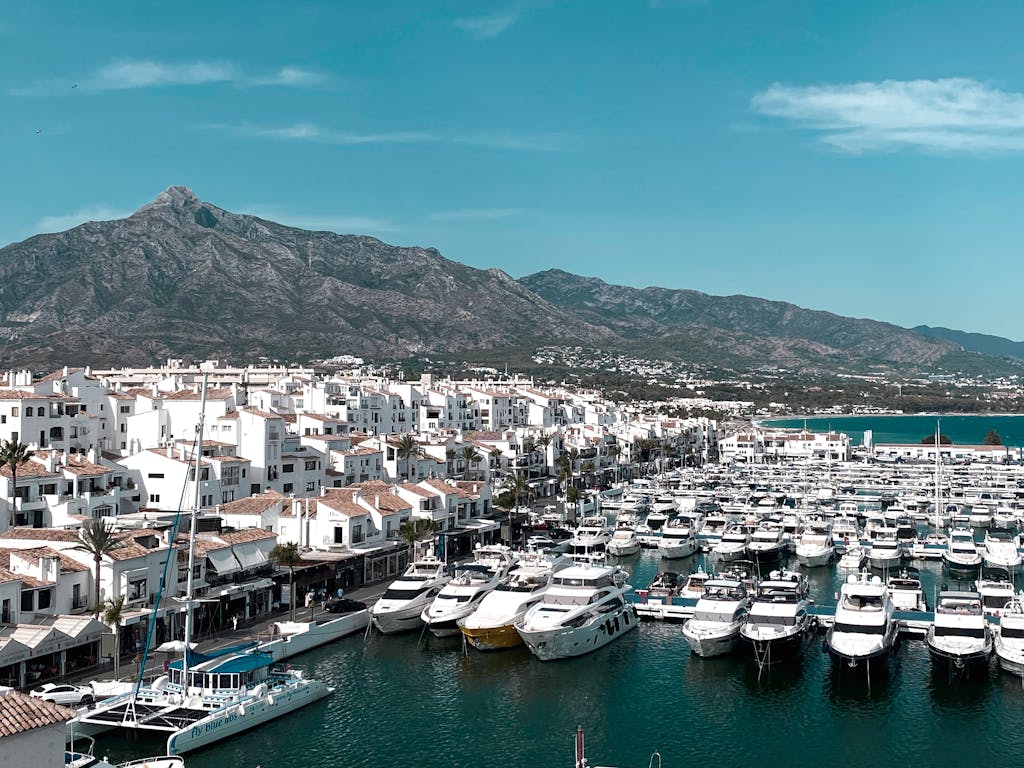
Around Gibraltar Bay, Alcaidesa Marina (La Línea) is convenient and well run, with shelter from most directions; Sotogrande is a quiet, secure alternative. The Costa del Sol relies on marinas for overnighting as natural anchorages are scarce and depths shelve steeply: Puerto Banús (Marbella), Estepona, Benalmádena and Málaga are the main calls, each with visitor berths and full services.
Further east, anchoring becomes part of the experience. La Herradura bay gives good shelter from westerlies and is close to Marina del Este. The Cabo de Gata coast (San José, Genoveses, Mónsul, Isleta del Moro, Cala San Pedro) offers multiple scenic calas. Choose your cove by wind and swell - the north-easterly Levante opens some bays and closes others - and respect marine park regulations. Almería, Aguadulce, Almerimar, Carboneras and Garrucha provide secure berths and reliable fuel and water along this stretch.
Berthing is mostly stern-to with lazy lines; keep long spring lines ready and mind crosswinds in afternoon thermals. Surge can develop on exposed marinas after a blow - ask for inner berths where possible. Water and electricity are widely available, and fuel berths are clearly signposted; in Sancti Petri, seek recent bar waypoints and local advice before committing.
FAQs
.faq-accordion details{border:1px #cccccc solid;border-radius:4px;margin:8px 0;}.faq-accordion summary{padding:10px 15px;cursor:pointer;display:flex;align-items:center;gap:8px;list-style:none;}.faq-accordion summary::-webkit-details-marker{display:none;}.faq-accordion summary::before{content:'▸';color:#12305c;font-weight:700;display:inline-block;transform:rotate(0deg);transition:transform .2s ease;}.faq-accordion details[open] summary::before{transform:rotate(90deg);}.faq-accordion p{padding:10px 15px;margin:0;}
Is Andalusia suitable for beginners?
Yes - if you choose your coast to match experience. The Mediterranean side between Benalmádena, Málaga and Marina del Este offers short legs, minimal tide and plentiful marinas. The Atlantic side and the Strait of Gibraltar suit skippers comfortable with tide, streams and strong winds.
What are Levante and Poniente?
Levante is an easterly that accelerates through the Strait of Gibraltar and can reach gale force near Tarifa, sometimes for days. Poniente is a westerly bringing cooler air and often easier sea states. Your weekly plan should flex around which is dominant.
Are there tides to worry about?
On the Atlantic Costa de la Luz, yes - expect 2-3 m range and significant streams in the Strait, plus cross-sets in Cádiz Bay. In the Mediterranean, tides are negligible but local wind-driven set and cape accelerations matter.
Where are the best anchorages?
Cabo de Gata's calas - Genoveses, Mónsul, Isleta del Moro and Cala San Pedro - are highlights in settled weather. La Herradura is a fine bay under westerlies. On the Atlantic, Sancti Petri creek is memorable if the bar is safe; otherwise rely on marinas such as Barbate and Cádiz Bay.
Can I visit Gibraltar by yacht?
Yes. Many skippers berth at La Línea (Spain) and day-sail in Gibraltar Bay, or take a berth in Gibraltar's marinas. Bring passports for border formalities, keep clear of bunkering operations, and respect the TSS and exclusion zones.
What certification do I need to charter?
Most companies ask for an ICC (sail) plus a VHF/SRC. RYA Day Skipper Practical with ICC is widely accepted. For larger boats, catamarans or Strait passages, RYA Coastal Skipper or evidence of experience may be requested.
Are orcas a concern in the Strait of Gibraltar?
Interactions with orcas have been reported, mainly on the Atlantic side of the Strait. Authorities advise stopping the boat (engine in neutral, sails eased), avoiding touching the animals, and contacting Salvamento Marítimo if assistance is needed. Check the latest advisories before passage.
When should I book marinas?
In July and August, book a few days ahead for popular marinas such as Puerto Banús, Benalmádena, Puerto Sherry and Rota. Outside peak season, same-day VHF calls usually suffice.
References
- https://www.cruiserswiki.org/wiki/Andalusia
- https://www.aemet.es/en/portada
- https://www.puertos.es/en-us/oceanografia/Paginas/portus.aspx
- https://www.grupodetrabajoorcaatl.org/en/
- https://www.dgt.es/
- https://www.rya.org.uk/knowledge/abroad/icc
- https://www.alcaidesa.com/marina/
- https://www.puertosherry.es/en/
- https://www.juntadeandalucia.es/medioambiente/portal/web/caza-y-pesca-continental/cabo-de-gata-nijar-natural-park
- https://www.spain.info/en/region/andalusia/
Charter a Yacht
Compare crewed & bareboat charters, learn the best months to sail, and get a custom shortlist from 500+ providers.