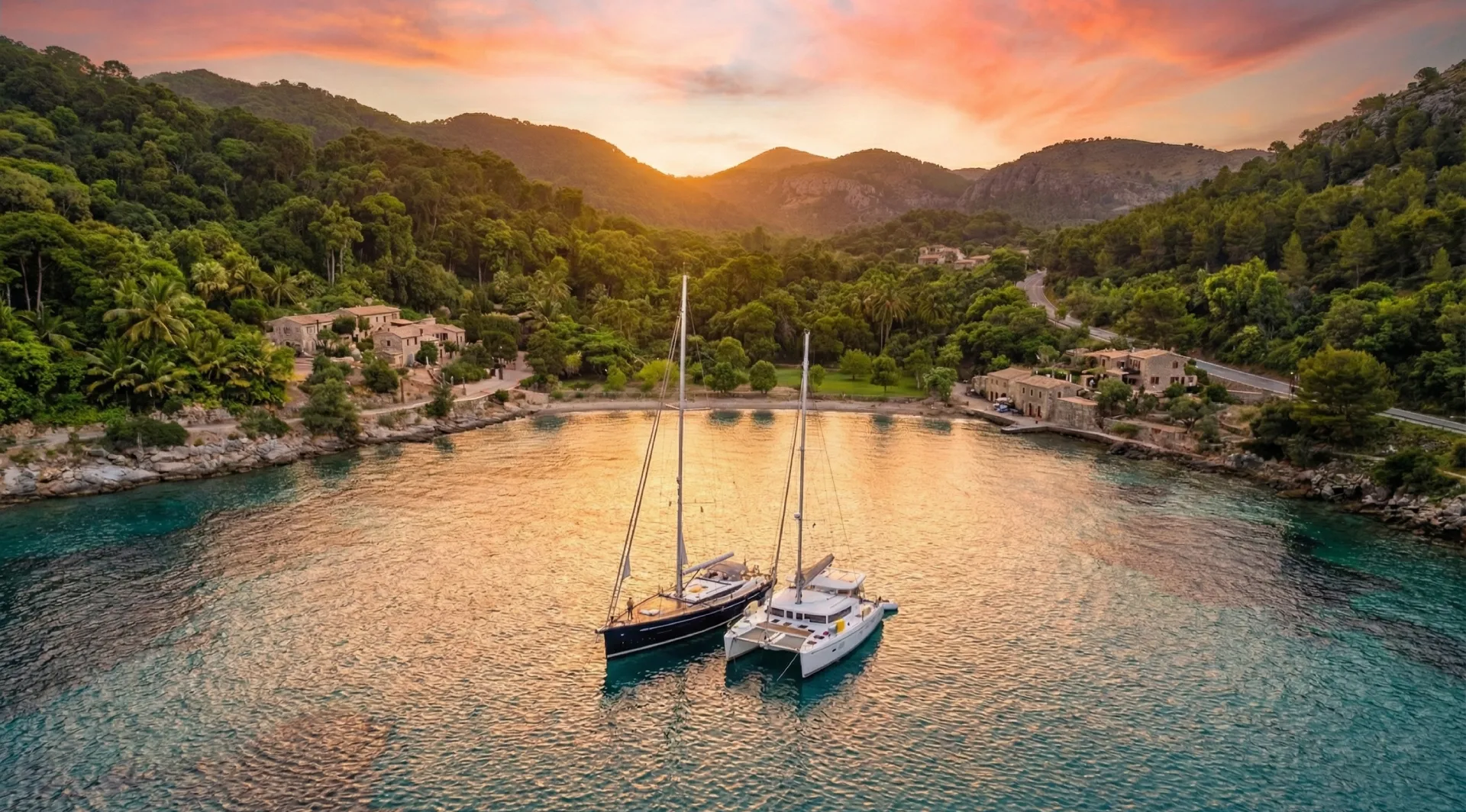
Sailing the Canary Islands: routes, winds, and practicalities for year-round passages
The Canary Islands offer serious sailors a rare combination: reliable trade winds, ocean-grade passages between dramatic volcanic islands, and modern harbours spaced at realistic day-sailing intervals. You can sail here any month of the year. In summer, brisk north-easterlies create fast reaches with local acceleration zones to test your sail trim. In winter, mild air and cool, lucid light deliver purposeful blue-water hops and a front-row seat to the Atlantic rally season.
This guide sets out where to go, when to go, and what to expect. It explains island microclimates, identifies wind bullets between the high islands, and highlights the harbours and anchorages that consistently work when swell rolls in. It also outlines charter options and the simple certification you need to skipper legally in Spain, so you can plan with confidence.
Quick links
- Why Sail in the Canary Islands?
- Canary Islands Sailing Itineraries
- When to Go
- Wind and Weather
- Anchorages and Marinas
- Chartering
- Licences and Formalities
- Getting There
- FAQs
- References
Why Sail in the Canary Islands?
The archipelago is purpose-built for sailors who like substance with their scenery. The islands sit in the belt of the North-East Trades, so you can plan confident passages rather than hoping for zephyrs. The high, mountainous profiles of Tenerife, La Palma and Gran Canaria carve wind into distinct bands, offering everything from sheltered lee coasts to exhilarating acceleration zones within the same day.
Spacing between islands is Goldilocks-perfect: 20-60 nautical miles. That is close enough for a rewarding day hop, yet far enough to feel like a proper passage. You will trim for real Atlantic wave patterns, work tides and current intelligently, and arrive to well-equipped marinas that understand voyaging yachts.
The landscape is astonishingly varied within a compact area. Lava fields and lunar ridges in Lanzarote give way to jade-green laurel forests in La Gomera and sheer cliffs at Los Gigantes. Clear water, abundant marine life (including pilot whales off south-west Tenerife), and dark-sky anchorages add texture to the logbook.
Practicalities are reassuringly straightforward. Year-round flight connections, competitively priced marinas, and Spanish hospitality make basing or chartering here easy. If you value predictable wind, ocean practice and modern shoreside support, this chain is hard to beat.
Canary Islands Sailing Itineraries
Below are two seven-day routes that capture the essence of the eastern and western island groups. Use them as a framework, shortening legs for a relaxed pace or extending with bonus hops when the forecast is settled. Always factor local acceleration zones and northerly swell into daily plans, and aim for daylight arrivals at unfamiliar ports.
Eastern Trades: Lanzarote, La Graciosa and Fuerteventura (7 days)
A 7-day route. Adjust legs to forecast, moorings and crew preferences.
Day 1 - Arrecife to Puerto Calero (12 NM)
A short shakedown along Lanzarote's lee coast. Leave Arrecife after provisioning and run south in flat water inside the island's wind shadow. Puerto Calero is well-run with all services and good dining. Arrive early to choose an alongside fuel stop before heading to your berth; evening katabatics can pulse off the slopes, so rig extra springs for a quiet night.
Day 2 - Puerto Calero to Marina Rubicón via Papagayo (16 NM)
A relaxed reach to the golden coves of Papagayo for lunch and a swim, then continue round to the excellent shelter of Marina Rubicón at Playa Blanca. In Papagayo, favour sand patches in 5-8 m and lay a generous scope - swell can wrap in from the north-west. Rubicón's approaches are straightforward; call ahead on VHF for a berth and expect cross-winds in the fairways on fresher afternoons.
Day 3 - Rubicón to La Graciosa (Playa Francesa/Caleta del Sebo) (26 NM)
Sail north in the lee of Lanzarote, rounding Punta Fariones. Watch for acceleration north of the island. Anchor at Playa Francesa in settled northerlies, or take a berth at Caleta del Sebo. If a long-period swell is running, round Fariones with a conservative sail plan and give overfalls a wide berth; at Playa Francesa, the holding is good sand in 4-7 m with clear water for easy set checks.
Day 4 - Explore the Chinijo Archipelago
Lay day for hiking volcanic cones, snorkelling clear water and, if conditions allow, a gentle explore to Playa La Cocina. Respect marine reserve rules and any anchoring permits in force. Ashore, the sandy lanes of Caleta del Sebo and the island's car-free calm make for a restorative pause between passages.
Day 5 - La Graciosa to Isla de Lobos/Corralejo (22 NM)
Reach across to Fuerteventura. In the strait, expect funnelling and short chop. Anchor at Isla de Lobos in settled weather or take a berth/fuel in Corralejo. The Lobos anchorage is best as a daytime stop with light N-NE winds and minimal swell; otherwise, Corralejo's breakwater provides security plus fuel and provisions before heading south.
Day 6 - Corralejo to Gran Tarajal (35 NM)
Sail south down Fuerteventura's east coast with consistent trades and low swell. Gran Tarajal offers good shelter, fuel and a relaxed town vibe. Keep a respectful offing where katabatic gusts spill from the barrancos, and expect a smooth, fast reach in the afternoon sea breeze.
Day 7 - Gran Tarajal to Arrecife (55 NM)
An earlier start for the open-water leg back to Lanzarote. Aim to arrive with daylight; expect acceleration off the northern tips in fresh trades. Track set from the Canary Current and any residual swell when laying your approach to Arrecife's fairway.
Western Passages: Tenerife, La Gomera and La Palma (7 days)
A 7-day route. Adjust legs to forecast, moorings and crew preferences.
Day 1 - Marina San Miguel to Los Gigantes (24 NM)
A coastal leg along Tenerife's south-west. You will find stronger trades past Montaña Roja easing in the lee near Los Gigantes' cliffs. Marina spaces are limited; book ahead. Keep a lookout for pilot whales off Costa Adeje, and anticipate some surge on the marina entrance when a north-west swell is running.
Day 2 - Los Gigantes to San Sebastián de La Gomera (25 NM)
A classic inter-island hop. Expect a marked acceleration as you clear Tenerife and again approaching La Gomera. San Sebastián marina is sheltered and friendly. Reef before the gap, keep sheets eased through the strongest band, and enjoy flatter water in the lee for an easy final approach.
Day 3 - La Gomera exploration
Lay day. Consider a short sail to Playa de Santiago for lunch, then return to the capital's marina. Inland hiking in Garajonay National Park is outstanding. Taxi tours from the marina give quick access to viewpoints if you prefer to keep the boat snug in San Sebastián.
Day 4 - San Sebastián to Santa Cruz de La Palma (50 NM)
A purposeful ocean leg. Set early to arrive with light. Trades tend to back and ease near La Palma's lee. Santa Cruz marina is well placed for town access. Plan a conservative sail plan for the mid-channel acceleration and verify swell height at Santa Cruz, which can reflect after big Atlantic systems.
Day 5 - La Palma west coast to Tazacorte (18 NM)
Short hop along towering cliffs to Tazacorte's modern marina, often sunnier and drier than the east. Good base for provisioning and a swim at the beach. The coastal scenery is spectacular; keep a healthy offing to avoid any local gusts pouring out of the barrancos.
Day 6 - Tazacorte to San Sebastián (50 NM)
Retrace to La Gomera. Monitor forecasted swell; acceleration near island corners can be significant. Enjoy a final evening ashore in the old town. If winds are fresh, consider bearing away initially to stay comfortable before hardening up for the approach.
Day 7 - San Sebastián to Marina San Miguel (25 NM)
Time your departure for daylight arrival. Expect strong breeze mid-channel easing in Tenerife's lee. Re-fuel and de-rig at San Miguel. Watch for local gusts off the slopes on final approach and allow for marina traffic around charter changeovers.
When to Go
Sailing is possible year-round. The choice is about style rather than feasibility.
- May to September: The North-East Trades are strongest and most reliable. Expect frequent Force 4-6, with 25-30-knot gusts in acceleration zones. Sea breezes reinforce the synoptic flow. Swell is generally moderate from the north-west but can be significant after North Atlantic lows.
- October to April: Milder winds, generally Force 3-5, with occasional Atlantic fronts bringing southerlies, rain and larger swell. The ARC rally makes Las Palmas busy from October-November; reserve berths early. Winter temperatures are comfortable (18-22 °C air, 18-20 °C sea), and daylight is shorter, so plan earlier arrivals.
Shoulder months (April-May, late September-October) are particularly pleasant for varied conditions and easier marina availability. If your crew prefers flatter seas and warmer swims, target late summer; for purposeful blue-water practice with quieter harbours, aim for late winter into spring.
Wind and Weather
The synoptic engine is the Azores High, driving persistent North-East Trade winds. This baseline flow is reshaped dramatically by the islands' height and spacing.
- Acceleration zones: Expect compressed wind between islands, notably Lanzarote-Fuerteventura, Tenerife-La Gomera, and Tenerife-Gran Canaria. In these corridors, true wind speed often jumps 5-15 knots above the general forecast, with steep chop. Reef early and maintain a conservative sail plan when approaching the gaps.
- Wind shadows and katabatics: The lee of the high islands (south and west coasts) can be markedly calmer, punctuated by local gusts and katabatic evening flows, especially off Tenerife and La Palma.
- Swell: A north-west Atlantic swell is common. Open anchorages facing the quadrant can be rolly even in light wind. Choose harbours or coves with headlands from the north and west when a swell train is running.
- Currents and tide: The Canary Current sets broadly south-west to south at 0.2-0.5 knots, locally more in channels. Tidal range is modest (roughly 1-2 metres), but streams can be enhanced around headlands and in narrows.
- Calima: Episodic dust-laden air from the Sahara brings reduced visibility, haze and warmer temperatures with an easterly wind component. It typically lasts 1-3 days; reduce exposure and monitor air quality.
Sea temperatures range from around 18-20 °C in winter to 22-24 °C in late summer. Squalls are uncommon but stronger gusts accompany cloud streets over warm water; keep an eye on the horizon, update from AEMET regularly, and default to reefing early before entering known acceleration lanes.

Anchorages and Marinas
Eastern Isles - Lanzarote, La Graciosa, Fuerteventura
- Marina Lanzarote (Arrecife): A modern, all-weather hub with deep water, full service, fuel, lift, and easy airport access. Good base for repairs and crew changes.
- Puerto Calero: Well-sheltered, friendly, with restaurants and quality technical support. Handy staging for Papagayo and La Graciosa.
- Marina Rubicón: Excellent shelter from trade winds, comprehensive facilities and a pleasant shore scene. The nearby Papagayo coves offer clear-water day anchorages in settled northerlies.
- La Graciosa (Playa Francesa/Caleta del Sebo): Playa Francesa is the go-to anchorage in light to moderate N-NE. Holding is generally good in sand; swell can wrap in after strong NW. Caleta del Sebo has limited berths; book via the port authority.
- Fuerteventura (Corralejo, Gran Tarajal, Morro Jable): Corralejo is practical for fuel and short stays, exposed to northerly swell. Gran Tarajal is a dependable, low-key marina; Morro Jable offers shelter at the southern tip with ferry movements to mind.
In the east, plan days around wind bends and shelter created by Lanzarote's spine. When northerly swell builds, prefer the south-coast marinas and use La Graciosa's anchorages only in settled periods. Facilities are excellent at Arrecife and Rubicón, while Caleta del Sebo rewards early bookings.
Central Isles - Tenerife, Gran Canaria
- Santa Cruz de Tenerife: A city marina with room, culture and excellent provisioning. Surge is minimal compared to smaller south-coast basins.
- Marina San Miguel / Puerto Colón: Convenient for south-coast cruising and the La Gomera hop. Space can be tight in high season; book in advance. Expect local gusts off the slopes.
- Los Gigantes: Spectacular setting with limited berths and occasional swell surge; accessible facilities nearby.
- Las Palmas (Muelle Deportivo): The Canaries' yachting crossroads. Full services, haul-out, riggers and ARC buzz. Reserve well ahead in Oct-Nov.
- South-west Gran Canaria (Pasito Blanco, Puerto de Mogán): Well-run and comparatively sheltered from NE trades with good restaurants and beaches.
The central pair are ideal for inter-island training runs. Use the big-city marinas for maintenance and provisioning, and treat Los Gigantes and Puerto Colón as weather-window stops where swell and space can dictate plans.
Western Isles - La Gomera, La Palma, El Hierro
- San Sebastián de La Gomera: Secure, welcoming and a perfect springboard for inter-island legs. Fuel and basics available.
- Playa de Santiago/Valle Gran Rey: Possible day stops in settled weather only; swell can make these uncomfortable or untenable. Confirm local rules before anchoring.
- Santa Cruz de La Palma: Modern marina by a charming old town. Mind swell reflections after big Atlantic systems.
- Tazacorte: Excellent shelter on La Palma's sunnier west side with beach access and shops.
- El Hierro (La Estaca): Remote, dramatic and exposed to weather windows; plan carefully for approaches and limited services.
The western isles feel wilder, with taller relief and sharper wind gradients. Anchorages are fewer and more weather-dependent, so lean on the dependable marinas of San Sebastián, Santa Cruz and Tazacorte, and pick day stops only when swell subsides.
General tips
- In any northerly swell, choose coves with protection from the north-west. Check for acceleration near headlands, lay reefs early, and keep a tide/current eye for set and drift in channels.
- Marina VHF is widely used; call ahead for berths and fuel. In busy weeks, early afternoon arrivals improve your chances of space.
Paperless check-in is common but keep ship's papers ready at the office. Many marinas accept online reservations; a quick call on approach still helps with berth allocation and fuelling slots.
Chartering
Bareboat, skippered and flotilla charters are all available, though fleets are more dispersed than in the Med. Monohulls from 34-50 ft dominate; there is a growing catamaran presence, particularly in Lanzarote and Tenerife. One-way passages are sometimes offered between eastern and western bases outside peak weeks.
Seasonality is inverted relative to the Med: winter is lively with ocean-minded crews and ARC transatlantic movements, while summer attracts performance-oriented sailors chasing strong trades. Lead times for marina reservations can be long in October-November (Las Palmas) and July-August (when local cruising peaks).
Plan for longer daily runs (20-50 NM) than typical coastal charters. Many operators set weather and daylight limits for inter-island legs. Expect a security deposit, mandatory damage waiver options, and equipment aimed at open-water comfort (sprayhoods, larger downwind sails on request). Fuel, water and provisioning are straightforward at the main marinas; smaller outer-island ports may have limited chandlery stock - bring specific spares.
Typical inventories include autopilot, plotter, bimini/sprayhood, tender with outboard and cockpit safety gear; ask for additional reefs, storm jib or a smaller headsail if your crew is new to trades sailing. Build in time for a thorough handover and rig check, and confirm the operator's policy on night entries and channel crossings before you cast off.
Licences and Formalities
- ICC (International Certificate of Competence) with Sail endorsement, or an RYA Day Skipper Practical (or higher) as an equivalent proof of competence.
- Short Range Certificate (SRC) for VHF operations is commonly required in addition to the skipper's licence.
Some companies request evidence of recent tidal/ocean passage experience, and may restrict night sailing or certain inter-island legs in fresh trade conditions. If your planned route includes longer offshore hops, an RYA Coastal Skipper/Yachtmaster Coastal is persuasive.
Formalities are straightforward. The Canaries are part of Spain (EU/Schengen). Arrivals from the EU require no customs/immigration formalities beyond normal ID. Non-EU arrivals should follow Spanish entry procedures and carry ship's papers, proof of insurance and crew list. Fly the Spanish courtesy flag. Marine protected areas (e.g., parts of the Chinijo Archipelago around La Graciosa and Isla de Lobos, and reserves near El Hierro/La Palma) may have anchoring or permit requirements - check current regulations before you go. Local harbourmasters will advise on any temporary restrictions due to swell or works.
Keep originals and digital copies of registration, insurance, radio licences and passports handy; many marinas will take details on arrival and appreciate advance notice during busy periods.
Getting There
There are plentiful direct flights from the UK and mainland Europe to the main islands: Gran Canaria (LPA), Tenerife South (TFS) and North (TFN), Lanzarote (ACE) and Fuerteventura (FUE). La Palma (SPC), La Gomera (GMZ) and El Hierro (VDE) are linked by inter-island flights via Tenerife or Gran Canaria.
Ferries connect the islands reliably. Fred. Olsen Express and Naviera Armas run fast services between Tenerife, Gran Canaria, La Gomera, La Palma, Lanzarote and Fuerteventura. There are also long-haul ferries from mainland Spain (Cádiz/Huelva) to the Canaries.
Common charter bases include Arrecife/Marina Lanzarote, Puerto Calero and Marina Rubicón (Lanzarote); Las Palmas, Pasito Blanco and Puerto de Mogán (Gran Canaria); Marina San Miguel, Puerto Colón and Santa Cruz (Tenerife); and San Sebastián (La Gomera). If connecting by ferry or domestic flight, allow buffer time for provisioning on arrival and confirm late check-ins with your base.
FAQs
Is the Canary Islands a suitable first blue-water charter destination?
Yes, if you are comfortable with 20-50 NM passages and handling fresh trades. The routes are straightforward and marinas are frequent, but wind acceleration between islands and Atlantic swell add complexity compared to sheltered Mediterranean cruising.
How strong do the winds get in the channels?
In typical trade conditions, expect a 5-15-knot increase over the area forecast, with gusts into the high 20s or low 30s. Reef early before entering the gap and ease sheets for comfort and control.
Can I anchor freely around La Graciosa and Isla de Lobos?
Anchoring is concentrated in designated spots such as Playa Francesa, and permits or notifications may be required in parts of the marine reserve. Regulations change - check with local authorities or your charter base before arrival.
What's the water temperature and do I need a wetsuit?
Sea temperatures run about 18-20°C in winter and 22-24°C in late summer. Many sailors use a shorty in winter or for longer snorkelling sessions; in summer, most are comfortable without.
Are there tidal hazards?
Tidal range is modest (roughly 1-2 metres), but expect enhanced streams near headlands and in inter-island channels, especially with strong trade winds. Factor a small south-setting Canary Current into passage plans.
Is whale and dolphin watching common?
Yes. The waters south-west of Tenerife and around La Gomera are renowned for resident pilot whales and frequent dolphin sightings. Keep a proper watch and follow local wildlife approach guidelines.
Do I need a fishing licence?
Recreational fishing from a yacht may require a regional licence, and restrictions apply within marine reserves. Check current rules with your base; spearfishing is tightly regulated or prohibited in many areas.
How busy are marinas during the ARC?
Las Palmas fills months in advance from October to late November due to the Atlantic Rally for Cruisers. If you plan to berth there, secure a reservation early or use alternative ports such as Pasito Blanco or Arrecife.
References
- https://www.cruiserswiki.org/wiki/Canary_Islands
- https://www.aemet.es/en/eltiempo/prediccion/maritima
- https://www.worldcruising.com/arc
- https://www.naviera-armas.com/en
- https://www.fredolsen.es/en
- https://marinalanzarote.com/
- https://www.puertocalero.com/
- https://www.marinarubicon.com/
- https://puertosdetenerife.org/en/port/santa-cruz-de-tenerife/
- https://www.marinasanmiguel.co.uk/
- https://www.lpaspuertocanarias.com/en/muelle-deportivo/
- https://www.pasito-blanco.com/
- https://www.puertoscanarios.es/puertos/san-sebastian-de-la-gomera/
- https://www.turismodecanarias.com/en/nature/marine-reserves-canary-islands/
Charter a Yacht
Compare crewed & bareboat charters, learn the best months to sail, and get a custom shortlist from 500+ providers.