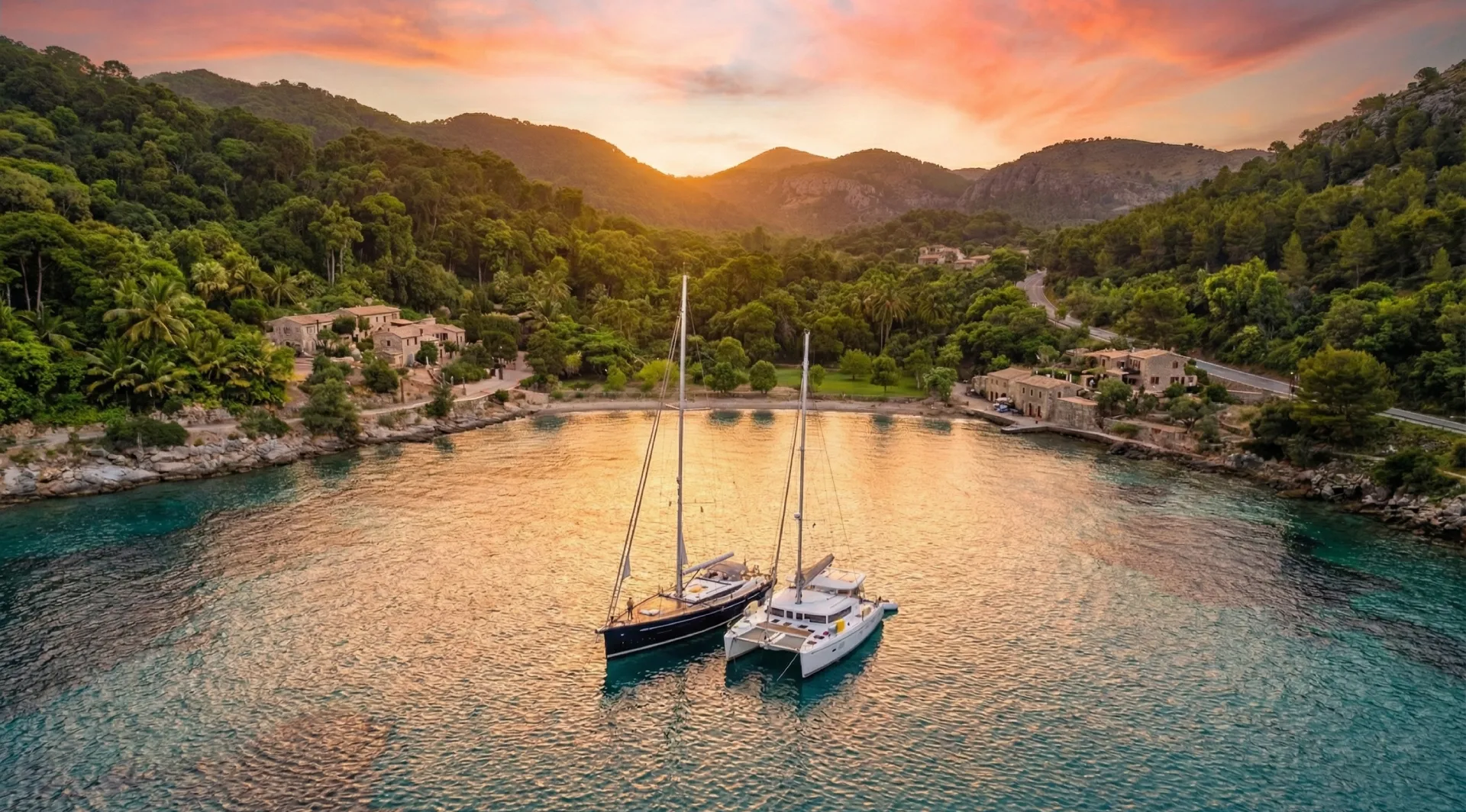
Sailing in Ibiza & Formentera (Western Balearics), Spain
Sailing in Ibiza & Formentera (Western Balearics), Spain: routes, conditions and practicalities
For boats, weekly rates and a shortlist, see our Ibiza yacht charter page.
Choosing a start harbour? See the Ibiza charter bases guide for Saturday logistics and which marina fits your week.
For boats, weekly rates and a shortlist, see our Yacht Charter Ibiza page.
Ibiza and Formentera offer short-hop, line-of-sight cruising through a mosaic of pine-backed calas, white-sand anchorages and well-appointed marinas. Conditions in season are typically governed by reliable sea breezes, with sheltered options on most coasts if you plan your day around wind direction and swell.
Navigation is straightforward yet rewarding: you will thread islets, respect protected Posidonia sea-grass, and time your passages through the Freus channel between the islands. Charter bases are concentrated at Ibiza Town, San Antonio, Santa Eulalia and La Savina, with extensive fleets and services. Whether you are building miles, exploring secluded coves, or mooring beside a walled old town for supper, this compact cruising ground fits a full week or an elegant long weekend.
Quick links
- Sailing in Ibiza & Formentera
- Why Sail in Ibiza & Formentera?
- Itineraries
- When to go
- Wind and weather
- Getting there
- Chartering
- Licences and formalities
- Anchorages and marinas
- FAQs
- References
Why Sail in Ibiza & Formentera (Western Balearics), Spain?
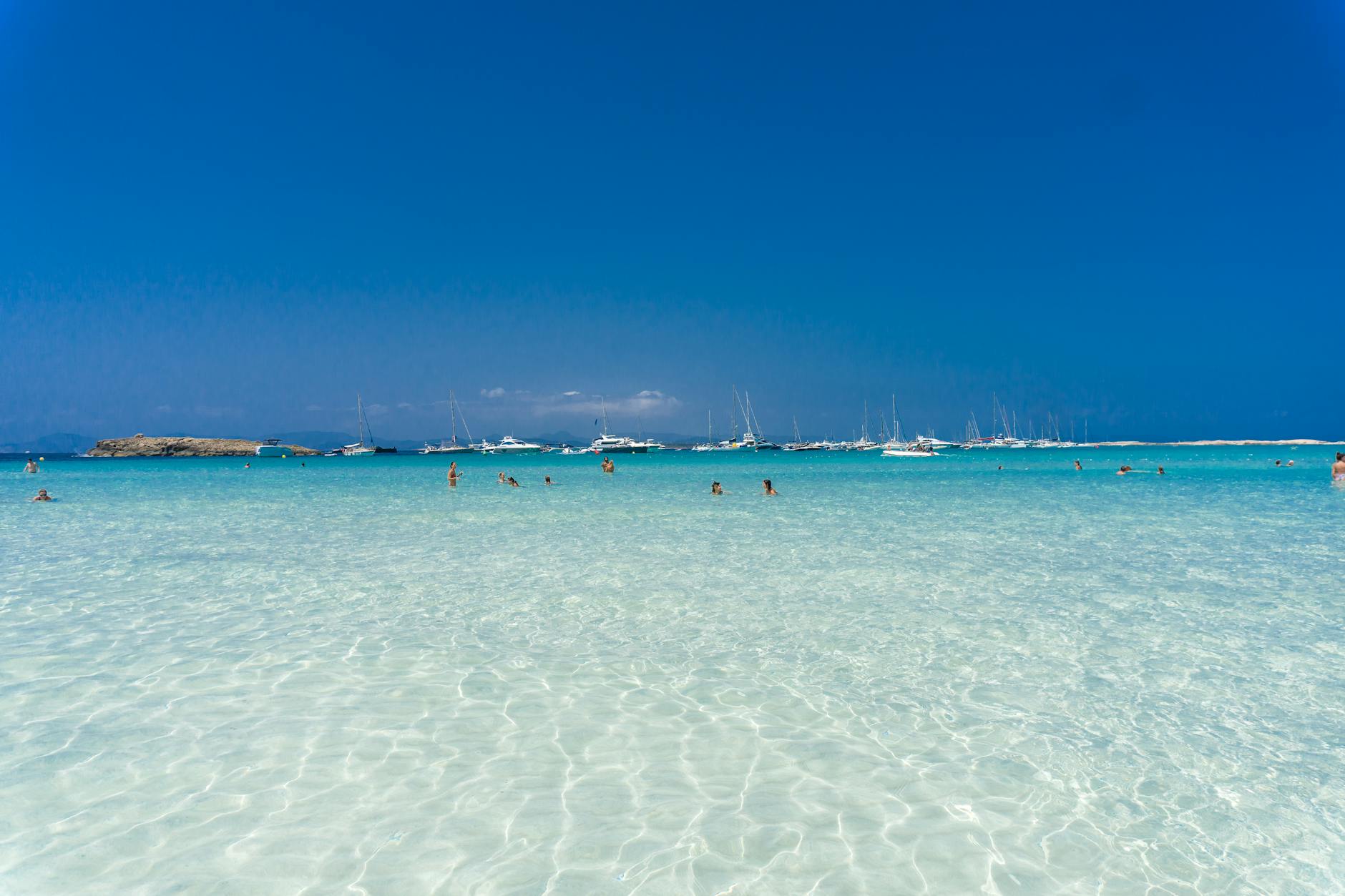
The Western Balearics distil the Mediterranean promise into manageable passages. Anchorage variety is the headline act: powder-sand and turquoise at Illetes and S'Espalmador; sculpted cliffs and sunset bowls on Ibiza's west coast; and rugged, fragrant coves to the north. Few regions let you shift ambience so completely in a single day's sail.
Predictable summer sea breezes add calm structure to your planning. Mornings are gentle, afternoons build to satisfying sailing without excessive sea state, and evenings settle for peaceful nights at anchor if you choose your exposure. Ferries and fast craft keep you alert but the marks are clear, the tides are negligible, and there is ample daylight to unhurriedly choose the right cala for the wind.
A further draw is the shore experience. Historic Eivissa (Ibiza Town) sits beneath a UNESCO-listed citadel; Santa Eulalia is civilised and family-friendly; San Antonio delivers sunsets and provisioning; and Formentera's La Savina gates a low-slung island of dune paths and glassy lagoons. Facilities are modern, yet the marine reserves and Posidonia protections sustain outstanding water clarity.
For skippers seeking a first Balearic charter, Ibiza-Formentera is forgiving without being dull. For repeat visitors, the micro-choices - where the swell wraps, which side of an islet tucks you out of the breeze, when to take a buoy - keep the seamanship interesting.
Itineraries
Below are two tried-and-tested itineraries that fit the prevailing summer patterns. Use them as a framework: adjust daily hops to match the forecast, your crew's energy, and mooring availability. Early arrivals at popular calas make for more relaxed afternoons.
7-day clockwise circuit: Ibiza and Formentera highlights
A full lap of Ibiza with a foray to Formentera. Start in Ibiza Town and ease up the east coast before rounding the rugged north. Reset in Sant Antoni de Portmany, then meander through the west-coast calas. Cross the Freus to Cala Saona, drift over the pale sands of Illetes and S'Espalmador, and finish via Cala Jondal for an unhurried return.
Day 1: Ibiza Town to Talamanca and Cala Llonga (6-10 NM)
Board at Ibiza Town (Marina Ibiza/Botafoch). Shake down in the broad bay of Talamanca, keeping clear of swim-zone buoys and fast ferries on approach. Make a short hop along the low east coast to Cala Llonga. You will find good sand patches with clear water and quick shelter if the sea breeze fills in; set well with adequate scope as depths shelve.
- Key stops: Ibiza Town (Marina Botafoch); Talamanca Bay; Cala Llonga.
Day 2: Cala Llonga to North Ibiza (Tagomago pass, Benirràs or Portinatx) (18-22 NM)
Skirt past Tagomago offshore - keep outside private island limits and watch for acceleration zones. Choose Cala Benirràs for dramatic cliffs and evening calm in light northerlies, or continue to Portinatx for a broad, convenient bowl in settled weather. Arrive early for best sand, and avoid Benirràs if a northerly swell is running.
- Key stops: Off Tagomago; Cala Benirràs; Portinatx.
Day 3: North to San Antonio via lunch stop (20-24 NM)
Pick a north-coast swim stop - Cala Xarraca is superb in calm conditions - then round the western headlands. Enter Sant Antoni de Portmany for fuel, water and a provisioning reset. The wide bay has ample room to anchor in sand with good holding; sunset from the bay is a signature Ibiza moment.
- Key stops: Cala Xarraca; Sant Antoni de Portmany (Marina/Club Náutico).
Day 4: West-coast calas to Cala d'Hort (10-15 NM)
A short-hop day among headline coves: Cala Bassa and Cala Comte deliver sand-over-turquoise and clear snorkelling. Continue to Cala d'Hort for commanding views of Es Vedrà. Mind swell wrap from the W-SW and position accordingly on either side of the bay; lines ashore are rarely needed but can help in busy spells.
- Key stops: Cala Bassa; Cala Comte (Conta); Cala d'Hort.
Day 5: Cross the Freus to Formentera - Cala Saona (10-14 NM)
Time your crossing of the Freus (Ibiza-Formentera channel) for good visibility and outside peak ferry movements. Expect a touch more breeze and chop mid-afternoon. Cala Saona offers reliable sand holding and sunset colours; avoid in fresh W-NW when set and wrap can build quickly.
- Key stops: Freus channel (Ibiza-Formentera); Cala Saona.
Day 6: Illetes and S'Espalmador; overnight La Savina or buoy field (6-10 NM)
Work north along Formentera's west shore to the famed sandbars of Illetes and S'Espalmador. Use moorings where provided and give Posidonia a wide berth. Overnight on a buoy if permitted and available, or head into La Savina for shore power, a stroll and an easy morning departure.
- Key stops: Platja de Ses Illetes anchorage; S'Espalmador anchorage; La Savina (Formentera Marina).
Day 7: Return to Ibiza Town via Cala Jondal (12-18 NM)
Re-cross the Freus with an early start before the breeze pipes up. Pause for a relaxed lunch in Cala Jondal or tucked into Porroig depending on breeze and swell, then shape a final leg into Ibiza Town for hand-back and a celebratory meal beneath the citadel.
- Key stops: Cala Jondal; Porroig; Ibiza Town (Marina Ibiza/Botafoch).
3-day long weekend: West Ibiza and Formentera taster
A compact circuit from Sant Antoni de Portmany. Enjoy an easy first evening among the west-coast calas, then a satisfying hop across the Freus for Formentera's headline anchorages. Return with a beam view of Es Vedrà and a final swim-and-lunch stop in Cala Jondal.
Day 1: San Antonio to Cala Comte/Bassa (6-10 NM)
Collect in Sant Antoni. Take a gentle reach to Cala Bassa or Cala Comte for swimming and a settled first night when easterlies prevail. Both offer striking colours, sandy bottoms and lively beach clubs; set your hook in pale sand away from swim buoys and trip boats.
- Key stops: Sant Antoni de Portmany; Cala Bassa; Cala Comte (Conta).
Day 2: To Formentera - Cala Saona or Illetes (14-18 NM)
Run down past Cap des Falcó and across the Freus. Choose Cala Saona for west-coast drama in settled westerlies, or Illetes for lagoon-like calm and crystalline water. Expect seasonal eco-moorings and Posidonia limits - have a buoy plan and arrive early.
- Key stops: Cap des Falcó (offing); Cala Saona; Platja de Ses Illetes anchorage.
Day 3: Return via Cala Jondal and Es Vedrà offing (18-22 NM)
Lift anchor early and shape a course that gives you a view of Es Vedrà off the beam for photos, then pause in Cala Jondal for lunch and a swim. An afternoon reach returns you comfortably to Sant Antoni in time for fuel and check-out.
- Key stops: Es Vedrà (offing); Cala Jondal; Sant Antoni de Portmany.
When to go
May to October is the practical season. June and September balance settled weather with lighter crowds and better berth availability. July-August deliver the warmest seas (22-26 °C) and the most reliable sea-breeze pattern, but also premium-season berth prices and busier anchorages - especially at Illetes, S'Espalmador, Cala Comte and Cala Bassa.
Spring (April-May) and late autumn (October) can be excellent for sailors seeking more wind and fewer people, though occasional lows bring rain and brisk westerlies. Winter sailing is possible but characterised by stronger systems, cooler water and reduced services, with some beach clubs and buoy fields removed. Public holidays and local festivals can tighten marina availability - book ahead if your dates coincide.
Wind and weather
Summer is dominated by a diurnal sea-breeze regime. Mornings are typically light and variable (3-8 kn), building by early afternoon to 10-18 kn. Direction varies with coastline: along Ibiza's south and west coasts expect S-SW to W sea breezes; on the east coast and Formentera's north they tend to veer SE-E. Nights often see a land breeze that smooths any residual chop.
Synoptic patterns to note: Levante (E-SE) episodes bring cloud, haze and a pronounced easterly swell that can make Ibiza's east-facing calas and Formentera's north-eastern anchorages rolly or untenable. Tramontana/Mistral (NW-N) surges are less frequent here than in Mallorca/Minorca, but when they reach Ibiza they accelerate across the north coast and send short steep seas into open bays like Portinatx and Benirràs. Westerly blows (W-SW) affect the west coast and Cala Saona most. The Freus can funnel the afternoon breeze 3-5 kn above the general forecast, adding a lively chop and making early crossings sensible.
Tides are negligible (generally 0.2-0.3 m), but local set in the Freus, gusts at headlands and wraparound swell can be material for comfort and holding. Visibility is usually excellent; reduce sail early if late-summer thunderstorms are forecast and avoid tight lee shores in squalls.
Getting there
Ibiza Airport (IBZ) lies 7 km from Ibiza Town and is well served from the UK and mainland Europe in season. Transfer times by road are typically 15-20 minutes to Ibiza Town marinas (Ibiza Magna, Marina Ibiza, Marina Botafoch); 25-30 minutes to Sant Antoni de Portmany; and 30-35 minutes to Santa Eulalia. Pre-arranged marina taxis and ride-hailing apps are widely available; traffic builds on peak Saturdays.
Formentera has no airport; arrivals connect via frequent ferries from Ibiza Town to La Savina (35-60 minutes). Ferries from mainland Spain run from Dénia, Valencia and Barcelona to Ibiza (some continue to Formentera). If joining a charter the same day, allow margin for summer traffic and ferry punctuality when selecting your check-in slot.
Chartering
Charter fleets operate from Ibiza Town (Marina Ibiza, Botafoch, Ibiza Magna), Sant Antoni de Portmany, Santa Eulalia and La Savina (Formentera). A wide choice of monohulls and catamarans is available for bareboat, skippered and crewed charters. High-season turnarounds are typically Saturday-Saturday; shoulder season often permits flexible starts and shorter breaks.
Booking tips: secure berths ahead for Ibiza Town and La Savina in July-August; budget for security deposits, end-cleaning and any outboard or toys; and plan a fuel-and-water top-up midweek to avoid weekend queues. In peak months, mix marina nights (every 2-3 days) with early-arrival anchoring to manage crowding and enjoy the calas after day-boats depart.
Licences and formalities
For bareboat sailing in Spain, skippers are generally expected to hold an ICC (International Certificate of Competence) with sail endorsement or an RYA Day Skipper Practical (or higher). A VHF/SRC radio operator's certificate is also expected. Some operators stipulate RYA Coastal Skipper or equivalent for larger yachts or catamarans; check boat-specific requirements in advance. Carry original certificates and photo ID for check-in.
Local rules to note: anchoring on Posidonia oceanica sea-grass is prohibited and enforced; fines are significant. Use sandy patches or designated eco-mooring buoys where provided and consult the Balearic Posidonia maps before dropping the hook. Discharge of black water is prohibited in ports, marinas and bathing areas - use holding tanks and pump-out where available. Keep clear of ferry lanes and buoyed channels in the Freus. Tagomago is private with restricted landing; Cala d'Hort/Es Vedrà is a marine reserve - adhere to fishing and anchoring rules. Tenders and toys must remain outside swim-zone buoys.
Anchorages and marinas
Ibiza Town and environs
The natural harbour of Eivissa is split between Marina Ibiza, Marina Botafoch and Ibiza Magna. Approaches are straightforward in settled weather; maintain a sharp lookout for frequent ferries, trip boats and harbour traffic. Talamanca Bay, just outside, offers convenient sand patches with lee in light westerlies and is a handy spot for first or last-night shakedowns.
East coast
Santa Eulalia is a well-run marina with full services and a family-friendly waterfront. Nearby calas - Cala Llonga and Cala Olivera - offer sand holding but are exposed to easterly swell; choose these in westerly regimes and avoid in Levante. Off the NE tip, Tagomago sits in a channel with wind acceleration; anchor only in settled weather and outside private/perimeter zones.
North coast
Scenically rugged with fewer all-weather refuges. Cala Benirràs gives good sand but can be rolly with any northerly component. Portinatx is spacious with varying depths and sand/rock - best in calm or light southerlies. Cala Xarraca is crystal-clear but small; arrive early and set carefully on sand, using a trip line if rocks fringe the patch.
West and southwest
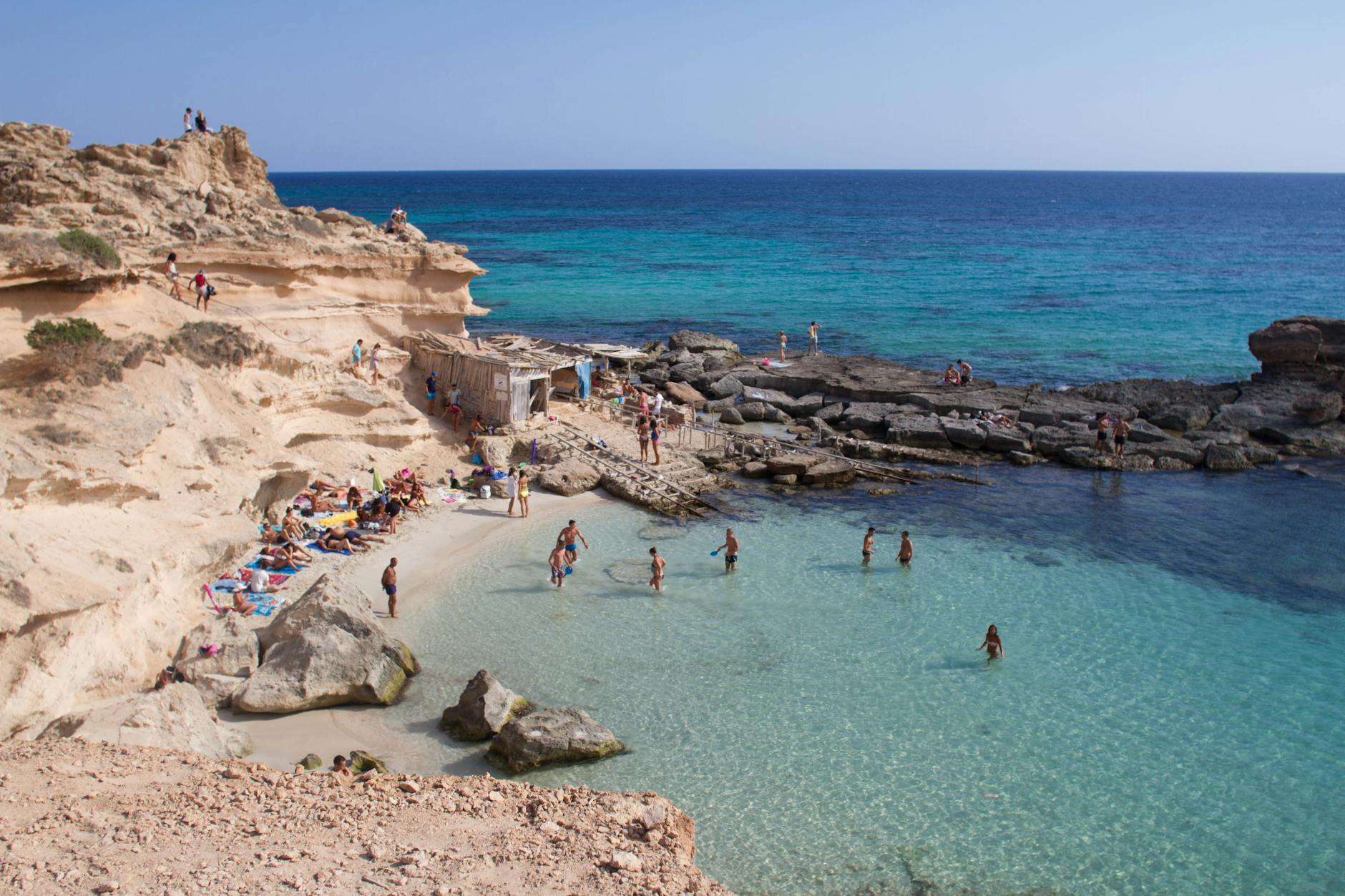
A chain of standout calas - Cala Salada, Cala Bassa, Cala Comte - offer sand over blue with summer crowding and occasional roll from W-SW swell. Cala d'Hort provides dramatic shelter in settled conditions; adjust your position for swell wrap. Further south, Porroig and Cala Jondal are reliable lunch and overnight options in E-SE sea breezes, with restaurants offering tender pick-ups in season.
Formentera
La Savina is the service hub with fuel, water and provisioning. Illetes and S'Espalmador deliver idyllic sandbanks and lagoon colours; expect seasonal eco-moorings and anchoring restrictions to protect Posidonia - book buoys where applicable and avoid dark sea-grass. Cala Saona has excellent sand holding and a sunset aspect but is open to the W-NW. The east/north-east (Es Caló, near La Mola) is tenable only in settled easterlies, with superb snorkelling over sand and rock.
General anchoring notes
Seek pale-sand patches and avoid dark Posidonia. In the Freus, respect buoyed fairways and fast ferry traffic. Depths in many calas shelve quickly - drop with adequate scope, back down to set firmly, and allow swinging room relative to boats on buoys. In busy spots, an early arrival and a swim while others jostle in mid-afternoon pays dividends.
FAQs
.faq-accordion details{border:1px #cccccc solid;border-radius:4px;margin:8px 0;}.faq-accordion summary{padding:10px 15px;cursor:pointer;display:flex;align-items:center;gap:8px;list-style:none;}.faq-accordion summary::-webkit-details-marker{display:none;}.faq-accordion summary::before{content:'▸';color:#12305c;font-weight:700;display:inline-block;transform:rotate(0deg);transition:transform .2s ease;}.faq-accordion details[open] summary::before{transform:rotate(90deg);}.faq-accordion p{padding:10px 15px;margin:0;}
When is the best time to find space at popular anchorages like Illetes or Cala Comte?
Arrive before late morning (ideally by 10:00) or after 17:30 as day-boats depart. In peak season, consider lunch stops rather than overnights at the most popular spots.
How strong can the wind get in the Ibiza-Formentera channel (the Freus)?
On typical summer days expect 3-5 knots more than the general forecast due to funneling, with short chop in the afternoon. Plan earlier crossings and keep clear of ferry tracks.
Can I anchor at S'Espalmador?
Anchoring is regulated seasonally to protect Posidonia, with eco-moorings installed in parts of the area. Use designated buoys when provided and avoid sea-grass. Check current restrictions before arrival.
What charts and guides are recommended?
Carry updated electronic charts (e.g., Navionics/C-Map) and an up-to-date pilot or harbour guide for the Balearics. Local Notices to Mariners and marina handouts complement onboard plotters.
Are night entries advisable?
Major harbours are well-lit, but calas often contain unlit rocks and fish-farm gear. First-time visitors should plan daylight arrivals to anchorages and use night hours for passages only when necessary.
Where can I refuel and take water?
Fuel docks are at Ibiza Town (multiple marinas), Sant Antoni, Santa Eulalia and La Savina. Expect queues on Fridays and Saturdays; mid-week and mid-morning are quieter.
Do I need a skipper's licence for a skippered charter?
If you hire a professional skipper, you as a guest do not need a licence. For bareboat, Spain expects an ICC or RYA Day Skipper (or higher) plus VHF/SRC.
Is there much tide or current?
Tidal range is only 0.2-0.3 m. Currents are generally weak except for local set and wind-driven flow in the Freus and around headlands during strong breezes.
References
- https://www.cruiserswiki.org/wiki/Ibiza
- https://www.cruiserswiki.org/wiki/Formentera
- https://sailscanner.ai/destinations/mediterranean/sailing-in-spain/sailing-in-the-balearic-islands/
- https://www.aemet.es/en/eltiempo/prediccion/maritima
- https://portsib.es/
- https://www.portsdebalears.com/en/puertos/ibiza
- https://www.saveposidoniaproject.org/en/
- https://www.caib.es/sites/posidonia/en/anchoring_on_posidonia/
- https://www.balearicislands.travel/ibiza/
- https://www.balearicislands.travel/formentera/
Charter a Yacht
Compare crewed & bareboat charters, learn the best months to sail, and get a custom shortlist from 500+ providers.