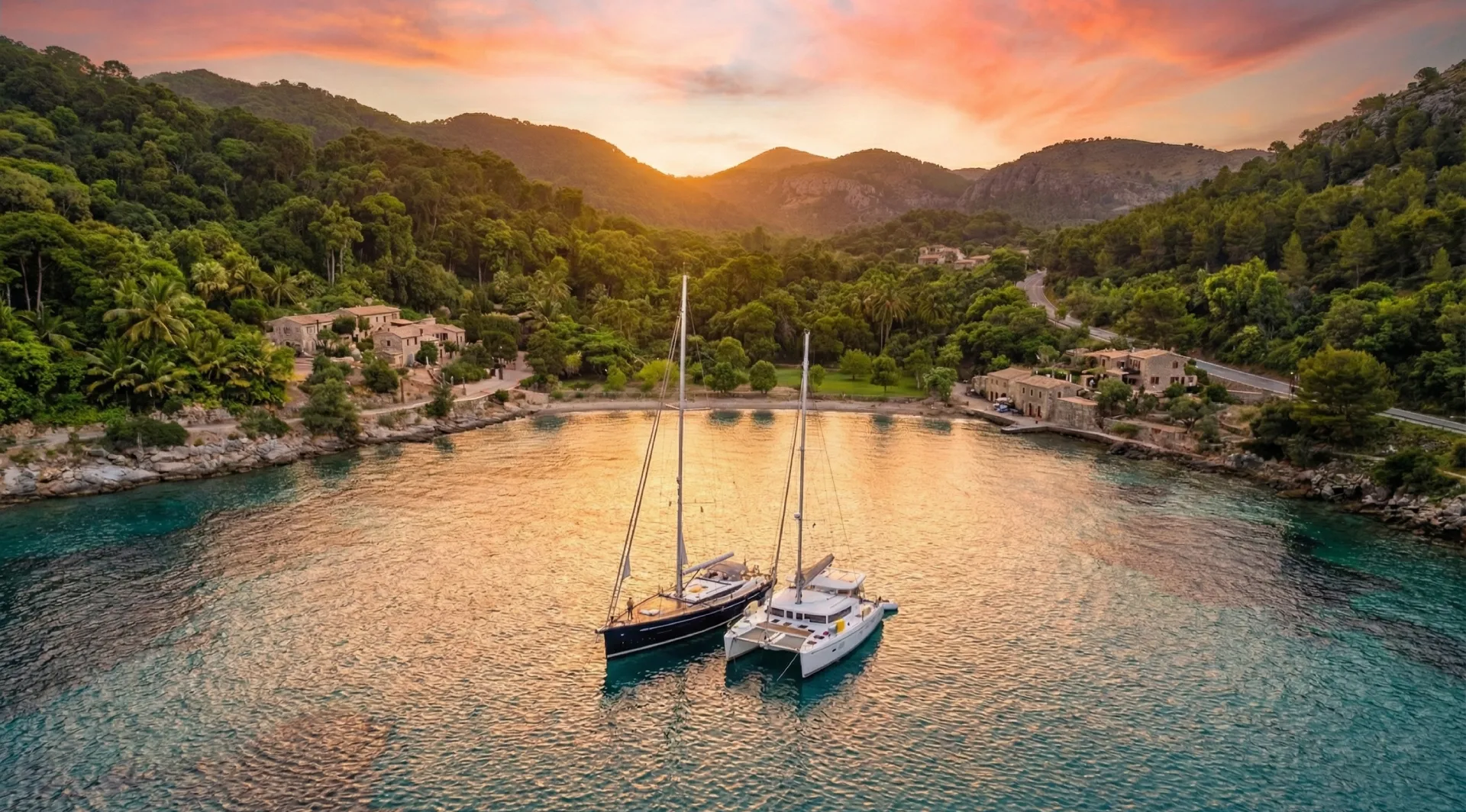
Sailing in the ABC Islands: Aruba, Bonaire & Curaçao
Sailing the ABC Islands: routes, conditions and practicalities
Sailors come to the ABC Islands for consistent trade winds, luminous water and a rare promise in the Caribbean: year-round cruising outside the hurricane belt. Aruba, Bonaire and Curaçao sit on the southern edge of the Caribbean Sea, offering dry, sunny weather, reliable easterlies and striking contrasts ashore - from Bonaire's protected reefs to Curaçao's colourful Willemstad and Aruba's long, white beaches.
The sailing is purposeful rather than placid: passages between islands are blue-water hops, the wind accelerates around headlands, and lee shores reward good pilotage. With sensible planning, you will enjoy big-sky reaching, high-visibility snorkelling stops and secure moorings or marinas at day's end. This guide outlines where to go, when to go, how the weather behaves, and what to expect at anchor and in harbour - so you can turn the trades to your advantage.
Quick links
- Why Sail in ABC Islands: Aruba, Bonaire & Curaçao?
- Itineraries
- When to go
- Wind and weather
- Getting there
- Chartering
- Licences and formalities
- Anchorages and marinas
- FAQs
- References
Why Sail in ABC Islands: Aruba, Bonaire & Curaçao?
The ABCs are reliably windy and reliably open. The easterly trades blow most days of the year, making for confident passage planning and fast, blue-water reaches between islands. Crucially, these islands sit outside the Atlantic hurricane belt, so even the high summer months remain viable for charter and cruising.
Each island has a distinct sailing character. Bonaire is a marine park with no anchoring along its west coast, but excellent, well-managed yacht moorings off Kralendijk and outrageously clear water over coral gardens. Curaçao offers protected anchoring inside Spanish Water, the spectacle of transiting Willemstad's channel beneath the Queen Emma Bridge, and an appealing mix of bays along the south and west coasts. Aruba is beach-fringed and lively, with good marina infrastructure near Oranjestad and straightforward air links from Europe and North America.
For skippers who enjoy planning, the ABCs reward seamanship: trades that freshen seasonally, acceleration zones near capes, and reefy lee shores that call for good light and careful approach. In return you get stable weather, short tidal ranges, practical harbours, and shore services that make maintenance and provisioning efficient between passages.
If you relish purposeful passages, clear-water snorkelling on day-use moorings, and the ease of secure berths at night, the ABCs deliver a satisfying blend of adventure and practicality for crews with a little blue-water experience.
ABC Islands Itineraries
Below are two well-paced sample routes that make the most of the trades and protected leeward coasts. Adjust departure times to preserve daylight arrivals, and always weigh decisions against the latest forecast and local notices to mariners.
7-day Curaçao and Bonaire loop (start/finish Curaçao)
A compact circuit that showcases Curaçao's easy logistics and Bonaire's marine-park clarity. Expect a reach to Klein Curaçao, a blue-water hop to Kralendijk for moorings and reef time, then a purposeful upwind return that rewards early starts and coastal tactics in Curaçao's lee.
Day 1 - Willemstad to Spanish Water (check-in and shakedown)
Arrive in Curaçao, complete clearance at Willemstad, and call Port Control on VHF 12 before transiting St Anna Bay. Motor through the channel and along the south coast to the protected lagoon of Spanish Water. Test systems with a short sail to Caracasbaai and settle back on a secure first-night hook or berth. Plan 5-8 nm under way and use the afternoon to rig reefing lines and stow for sea.
Day 2 - Spanish Water to Klein Curaçao
Depart early on a beam reach for Klein Curaçao (roughly 15-20 nm). Anchor in sand on the western lee in 4-8 m when settled; the wrap-around swell can build quickly in fresh trades. Swim, lunch aboard and walk to the lighthouse and wreck. Overnight only in benign conditions; otherwise shape a late-afternoon return to Curaçao's south coast.
Day 3 - Klein Curaçao to Kralendijk, Bonaire
Make a lively passage across clear water to Bonaire (about 25-30 nm). Pick up an authorised yacht mooring off Kralendijk - anchoring is prohibited within the Marine Park. Check in ashore, then enjoy a high-visibility snorkel on nearby reefs before a stroll along the waterfront for dinner.
Day 4 - Bonaire day moorings and reefs (return to Kralendijk)
Use daylight-only dive/snorkel moorings for short stops along Bonaire's west coast in calm weather - sites like Andrea I/II and Thousand Steps are close at hand. Return to your assigned overnight mooring off Kralendijk well before dusk. Ensure your Nature Tag and mooring fees are paid and displayed.
Day 5 - Kralendijk to Curaçao west coast (Santa Cruz)
Leave early for the upwind leg back to Curaçao (35-45 nm). After landfall, hug the south-west coastline to enjoy flatter water in the island's lee. Continue to Santa Cruz or Santa Marta for a scenic, fair-weather anchorage, keeping an eye on any mid-winter northerly swell.
Day 6 - West coast bays to Spanish Water
Day-sail down the leeward bays - Playa Santa Marta, Daaibooi and Caracasbaai make pleasant lunch and swim stops - before re-entering Spanish Water. Top up fuel or water if needed and enjoy dinner ashore at Jan Thiel or Caracasbaai.
Day 7 - Spanish Water to Willemstad (check-out and hand-back)
A short hop back to Willemstad for fuel and formalities. Time your arrival to pass the Handelskade in good light and call Port Control before entering St Anna Bay. Hand back and celebrate a tidy loop.
10-day Three-Island passage (Curaçao-Bonaire-Aruba-Curaçao)
A fuller circuit for crews keen on inter-island variety: Curaçao shake-down, Klein Curaçao's sand-and-turquoise, Bonaire's marine-park moorings, a downwind slide to Aruba for marina comfort and vibrant shoreside life, then a scenic Curaçao west-coast return. Expect two longer blue-water legs and plan all arrivals for daylight.
Day 1 - Willemstad and Spanish Water
Arrivals, provisioning and systems checks. Take a short shakedown sail to Caracasbaai and return to Spanish Water for a calm first night. Confirm port and park procedures for coming days.
Day 2 - Spanish Water to Klein Curaçao
Reach to Klein Curaçao for turquoise-water swimming and a beach walk to the lighthouse. Assess the forecast carefully before deciding to overnight; the anchorage is open to swell in fresh trades.
Day 3 - Klein Curaçao to Kralendijk, Bonaire
Cross to Bonaire and pick up a town mooring. Clear, deep water and easy shoreside access make this a relaxed stop - snorkel or dive just off the stern and explore Kralendijk's waterfront in the evening.
Day 4 - Bonaire reefs and Kralendijk
Explore selected day moorings along the protected west coast; return to your assigned overnight mooring before dusk. Respect the daylight-only rule for day sites and watch for dive boats.
Day 5 - Bonaire to Aruba (Oranjestad)
Set off on the longer downwind leg in the trades (60-70 nm). Time departure to guarantee a daylight landfall at Oranjestad. Berth at a marina with clearance on site and enjoy shoreside amenities.
Day 6 - Aruba day sail (Palm Beach sector)
Make a short coastal run in lee conditions between marked swim zones. Observe local restrictions near beaches and the airport approach - many areas are buoyed and patrolled. Return to the marina for the night.
Day 7 - Aruba to Curaçao west coast (Santa Cruz / Santa Marta)
Reach back towards Curaçao on a broad reach (45-55 nm). Choose a west-coast bay for a scenic night in settled weather, with care for any northerly swell that can creep into west-facing coves.
Day 8 - Curaçao west coast exploration
Enjoy swim and lunch stops among coves like Grote Knip and Daaibooi. Keep afternoon legs short to arrive at the next stop in good light, then start shaping south-east towards Spanish Water.
Day 9 - Spanish Water lay day
Return to Spanish Water for a relaxed lay day. Paddleboard in flat water, restock at nearby supermarkets and dine ashore at Caracasbaai or Jan Thiel.
Day 10 - Willemstad hand-back
Fuel, complete formalities and enjoy a final run past the Handelskade for photographs before hand-back. If transiting St Anna Bay, coordinate with Port Control and time the swing bridge opening.
Note: Distances are approximate and assume direct routes in settled conditions. Always consult current charts, port notices and marine-park rules before departure.
When to go
Sailing is viable year-round. The ABCs lie outside the hurricane belt, so July to October remains a practical season as long as you watch for squalls and occasional tropical disturbances. The driest months are January to September; the short wet season typically peaks October to December with brief, sometimes intense showers. Winds are strongest from December to July, easing in September and October. Sea temperatures stay at 26-29 °C through the year, and tidal range is small (generally under 0.5 m), giving long windows for reef-watching in good light.
- Best for fast reaches: December-July (expect fresher trades and acceleration zones).
- Best for gentler conditions: September-October (lighter, more variable winds).
- Best underwater visibility: typically late winter to late summer, with minimal runoff.
For most crews, shoulder periods at the start or end of the stronger-wind season strike a fine balance between lively sailing and relaxed anchorages. In all months, plan coastal approaches for midday when the sun is high and the reefs read clearly.
Wind and weather
Trade winds at a glance
The prevailing wind is the North-East to East trade, most often between 12 and 22 knots, with frequent days at 20-25 knots from January to July. The so-called Christmas winds (December to February) can blow in the mid-20s with higher gusts, accelerating around capes and between islands. September and October are lighter (8-15 knots) and more variable.
Sea state and swell
Swell and sea state vary by exposure. The windward (north and east) coasts are rough and generally unsuitable for casual anchoring. The south and west coasts are in the lee and offer flatter water with short wind waves. Long-period northerly swell in mid-winter can wrap into some west-facing bays; check local notices. A west-setting Caribbean Current of roughly 0.5-1 knot is usual offshore. Convection brings brief squalls in the rainy season; visibility otherwise is excellent. Night entries are discouraged except into well-lit harbours such as Willemstad and Oranjestad.
Navigation notes
Reef fringes are common; approach in good overhead light with a bow lookout. In Bonaire, anchoring is prohibited along the west coast within the Marine Park - use assigned yacht moorings or marinas. In Curaçao, Spanish Water offers extensive, protected holding but observe local anchoring zones and permit requirements. Aruba has swim buoys, cable areas and restricted zones near the airport - follow charts and local instructions.
Getting there
There are international airports on all three islands with frequent links. Curaçao International (Hato, CUR) handles long-haul from Europe via Amsterdam and regional connections. Aruba's Queen Beatrix International (AUA) has wide North American coverage and European links via Amsterdam. Bonaire International (Flamingo, BON) has direct flights from Amsterdam and regional feeders via Curaçao and Aruba. There is no routine inter-island ferry; travel between islands is by air or your own keel.
Marina bases are concentrated around Willemstad/Spanish Water in Curaçao and Oranjestad in Aruba, with full provisioning, fuel and engineering support. Bonaire's marinas and town moorings are central to Kralendijk, with supermarkets and dive shops close to dinghy docks. Taxis and hire cars are readily available on all three islands, making one-shop provisioning and crew changes straightforward.
Clearance offices generally keep business-hours schedules; overtime charges can apply outside office hours. Plan international arrivals to coincide with weekday opening where possible, and keep originals and copies of ship's papers and insurance to hand.
Chartering
The ABCs have a smaller charter footprint than the northern Caribbean, but yacht charter options exist. Curaçao is the most common start point, with a handful of bareboat monohulls and catamarans based around Spanish Water or Willemstad, plus crewed yachts. Bonaire and Aruba host day-charter fleets and a limited number of live-aboard options; for bareboat, expect to embark in Curaçao or arrange a repositioning.
Expect purposeful sailing between islands - 40 to 100 nautical miles. Catamarans are popular for the upwind leg back from Bonaire and for comfortable anchorages in Spanish Water. One-way charters across islands are sometimes possible but limited; round-trip itineraries are the norm.
Provisioning is straightforward: large supermarkets near Willemstad and Oranjestad offer good selection, and Kralendijk has excellent stores for top-ups. Shore services are strong for the region, including haul-out and repair in Curaçao and Aruba. Booking tips: secure dates early for high-wind months (January-July) and for the European summer, and share your recent logbook and skipper's résumé - operators here pay close attention to blue-water experience for inter-island passages.
Licences and formalities
Certifications to charter
Most operators accept the ICC (International Certificate for Operators of Pleasure Craft) or RYA Day Skipper Practical (or higher) for monohulls, with RYA Coastal Skipper preferred for longer passages. A Short Range Certificate (VHF) is commonly required. Catamarans over roughly 38-40 ft may require evidence of multihull experience. There is no separate government-issued local charter licence for skippers; acceptance is at the operator's discretion based on your résumé and qualifications.
Customs and immigration
Aruba, Curaçao and Bonaire (part of the Caribbean Netherlands) have separate clearance procedures. On arrival and before departure between the islands, you must clear in/out with Customs and Immigration at designated ports (e.g., Willemstad for Curaçao, Oranjestad/Barcadera for Aruba, Kralendijk for Bonaire). Carry ship's papers, crew passports, proof of insurance and, if applicable, a radio licence. Overtime charges can apply outside office hours.
Local regulations
Bonaire's Marine Park prohibits anchoring along the west coast; visiting yachts must use assigned moorings or marinas and pay applicable nature and mooring fees. Curaçao requires registration of your anchorage in Spanish Water and adherence to zoned areas; check current procedures with the Harbour Master or local police. Aruba has restrictions around swim zones, submarine cables and the airport approach - use only designated anchorages or marinas and follow port control instructions.
Anchorages and marinas
Aruba
- Oranjestad: Renaissance Marina and nearby facilities provide secure berths, fuel and clearance. Approach is straightforward in settled weather; observe traffic separation and port control. Anchorage options are limited and tightly regulated; many coastal areas are buoyed for swimmers or restricted near the airport.
- Palm Beach sector: Primarily day stops for local craft; visitors usually berth in Oranjestad marinas. Holding and space for visiting anchors are limited.
Aruba is best treated as a marina-first destination. The trade-off is excellent shoreside access, easy provisioning and swift airport transfers.
Bonaire
- Kralendijk Mooring Field: Robust, well-managed yacht moorings line the waterfront; book via the marina/harbour authority on arrival. No anchoring is permitted within the Marine Park. Dinghy docks and water taxi services make shore access simple. Harbour Village Marina offers alongside berths, water and fuel.
- Day moorings: Numerous white-topped moorings along the west coast and Klein Bonaire for snorkelling/diving; they are not for overnight use. A nature fee is payable to the park authority, and spear-fishing is prohibited.
Bonaire's system makes life easy once you have your assigned mooring. Plan your day hops around the clearly marked day buoys and return before dusk.
Curaçao
- Spanish Water: Large, protected lagoon with designated anchoring zones. Good holding in mud/sand, low swell, and easy dinghy access to restaurants and chandleries at Caracasbaai/Jan Thiel. Check in at Willemstad before settling here and comply with permit/registration rules.
- Willemstad: Marina berths and fuel are available near the Schottegat; the approach through St Anna Bay is well-marked and controlled by Port Authority. Outside Spanish Water, pleasant day and fair-weather anchorages dot the south and west coasts (e.g., Santa Cruz, Daaibooi, Santa Marta); avoid during strong northerly swell.
Curaçao offers the widest choice of sheltered berths and easy logistics. Treat west-coast bays as fair-weather gems and keep a weather eye on northerly swell events.
Practicalities across the ABCs are strong: water and fuel are widely available in Curaçao and Aruba and at marinas in Bonaire. Haul-out and engineering support are reliable at Curaçao Marine (Willemstad) and Varadero Aruba, with routine maintenance available at Bonaire's marinas. Reserve night entries for lit commercial ports and plan reef-fringed approaches in high sun.
FAQs
Are the ABC Islands in the hurricane belt?
No. Aruba, Bonaire and Curaçao sit south of the usual hurricane tracks. While strong tropical systems are rare, you should still monitor forecasts, especially in late summer and autumn when squalls and distant systems can influence wind and swell.
Can I anchor in Bonaire?
Anchoring is prohibited along Bonaire's west coast within the Marine Park. Visiting yachts must use assigned town moorings off Kralendijk or berth in a marina. Day moorings exist for snorkelling and diving but are not for overnight use.
Is night sailing advisable between the islands?
The inter-island legs are open-water passages. Most crews prefer daylight for departures and arrivals to ensure reef-safe approaches. If you sail at night, reserve arrival for a well-lit commercial port such as Willemstad or Oranjestad.
What wind strengths should I expect?
Trades typically blow 12-22 knots, with frequent 20-25-knot days from December to July. September-October is lighter at 8-15 knots. Expect gusts and acceleration around capes and between islands.
Do I need special permits?
You must clear in and out when moving between Aruba, Bonaire and Curaçao. Bonaire requires payment of marine park and mooring fees. Curaçao's Spanish Water anchorage has zoning and registration rules. Aruba enforces swim zones and restricted areas - follow port guidance.
How available are fuel, water and repairs?
Good. Curaçao and Aruba have multiple marinas with fuel docks and engineering support; Curaçao Marine and Varadero Aruba handle haul-outs. Bonaire provides fuel and water through marinas, with easy shoreside provisioning in Kralendijk.
Is fishing allowed?
Recreational fishing regulations vary. In Bonaire's Marine Park, strict protections apply and spear-fishing is prohibited. Check current local rules before trolling offshore and avoid protected zones.
What charts should I use?
Carry up-to-date official and commercial charts (paper and electronic) for detailed reef depiction. Local notices to mariners from port authorities are recommended for Spanish Water zoning and Willemstad port procedures.
References
Charter a Yacht
Compare crewed & bareboat charters, learn the best months to sail, and get a custom shortlist from 500+ providers.