Sailing the Philippines: Palawan & the Visayas - routes, conditions and practicalities
For boats, weekly rates and a shortlist, see our Philippines yacht charter page.
Choosing a start harbour? See the Philippines charter bases guide for Saturday logistics and which marina fits your week.
Palawan and the Visayas deliver the archetypal tropical cruising brief: warm trade winds, water as clear as glass, and archipelagos that break longer passages into easy day-sails. For skippers, the rewards are twofold. North Palawan strings together Coron's WWII wrecks, Linapacan's sand shelves and El Nido's karst lagoons. The Central and Western Visayas offer Cebu's practical base, Bohol's reef-fringed islets, Siquijor's low-key anchorages and the handsome granite bays of Romblon. Infrastructure is improving, yet the feel remains exploratory. With seasonal monsoons dictating which coasts lie in lee, planning is part of the pleasure - and the key to serene nights on the hook.
Expect straightforward legs punctuated by memorable stops: you'll often be anchoring off villages and marine sanctuaries rather than in manicured marinas. That lends a sense of discovery, but it also puts a premium on daylight pilotage, sandy holding, and a respectful approach to marine park rules. Time your passages for the tides in constricted channels, arrive with the sun high for eyeball navigation over coral, and you'll be rewarded with quiet bays, clear water and abundant sea life.
Quick links
- Why Sail in Philippines: Palawan & the Visayas?
- Itineraries
- When to go
- Wind and weather
- Getting there
- Chartering
- Licences and formalities
- Anchorages and marinas
- FAQs
- References
Why Sail in Philippines: Palawan & the Visayas?
This region rewards thoughtful seamanship. The northeast monsoon (Amihan) from November to April supplies reliable breezes, settled seas on many leeward coasts and excellent visibility for eyeball navigation over coral. Inter-island hops of 15-40 nautical miles are typical, so you can build itineraries that balance passage-making with unhurried snorkelling and shore time.
Geography does the rest. North Palawan's island chains form a natural stepping-stone from Coron to Bacuit Bay, with sandy anchorages and high-sided limestone walls that temper the wind. In the Visayas, channels between Cebu, Bohol, Siquijor and Negros funnel predictable sea breezes by day and quiet anchorages by night. Westwards, Panay, Boracay and the Romblon group combine craggy bays, traditional towns and clear, firm holding.
For many, the standout is how wild it can still feel. Outside a handful of towns and resort hubs, you're anchoring among outrigger fishing boats rather than marinas. That adds a sense of discovery - but also makes local knowledge, daylight pilotage and respect for marine parks essential. Plan conservatively around currents and squalls, carry cash for park fees, and you'll find the Philippines as rewarding as it is beautiful.
Itineraries
Below are three tried-and-tested routes that fit the prevailing winds and typical daily ranges. Adjust them for the season: in Amihan (NE trades), favour west- and north-facing lees; in Habagat (SW monsoon), flip to the east and leeward sides and keep passages short if squalls are about. Always arrive with good light to read the reef and favour sand patches or designated moorings.
7-day North Palawan: Coron to El Nido stepping-stones
A classic north-to-south island-hop linking Coron's historic bay to the karst towers of Bacuit. Expect glassy passes, sandy shelves and ranger-managed marine parks. Tidal gates in Linapacan reward early starts, and there's ample time to snorkel, hike and explore between short legs.
Day 1 - Coron Town to Culion
Provision in Coron Town, then make a short, scenic passage through Coron Bay to historic Culion. Anchor on sand with good holding and easy dinghy access to town for last-minute supplies and a stroll around the old fort and church.
Day 2 - Culion to Pass Island and Ditaytayan
Island-hop over clear sand shelves. Swim and snorkel on Pass Island's reefs, then tuck behind Ditaytayan's spits for a calm night in settled weather. Mind the shoal tongues and keep a bow watch as water clarity can make depths deceptive.
Day 3 - Ditaytayan to Black Island (Malajon) and Linapacan
Start early for Black Island's caves and beach, then cross into the Linapacan group. Watch for tidal set and coral heads on approach to San Miguel. Arrive with the sun high, and consider buoying the chain if anchoring near bommies.
Day 4 - Linapacan to Bacuit Bay, El Nido
Sail south through clear passes to Bacuit Bay. Anchor on sand off Cadlao or near Pangulasian in fair weather; avoid coral and observe no-anchoring zones. Afternoon thermals can freshen; re-check your swing and scope.
Day 5 - Bacuit Bay exploration
Make short moves within Bacuit Bay: lagoons at Miniloc, beaches at Pinagbuyutan and sundowners at Corong-Corong. Use daylight-only pilotage and pick up designated moorings where provided; rangers may collect fees.
Day 6 - South Bacuit or Lagen Bay lay day
Slow the pace with a relaxed day. Hike viewpoints, snorkel reef shelves and enjoy a settled final night at anchor in Lagen or a south Bacuit nook. It's a good moment to top up water by jerry can from town if needed.
Day 7 - El Nido town
Make the short hop to El Nido for disembarkation, fuel and onward transfers. Expect busy traffic from ferries and tour bancas - keep clear, monitor VHF and approach with care in crosswinds.
10-day Central Visayas loop from Cebu
A varied circuit from Cebu that samples marine sanctuaries, relaxed island towns and clear-water anchorages. The route uses predictable channel breezes by day and mixes provisioning stops with fair-weather bays. Watch acceleration zones between islands and time transits for favourable tide.
Day 1 - Cebu Yacht Club to Hilutangan Channel
Shake down from Mactan with a short reach to the Gilutongan Marine Sanctuary. Pick up a mooring if available and enjoy easy snorkelling. Currents are gentle but note passing traffic and keep clear of sanctuary swim zones.
Day 2 - Hilutangan to Panglao (Bohol)
Cross to Panglao, choosing Alona or the Danao side depending on wind and swell. Anchor on sand outside marked swim areas. Ashore, casual eateries and supplies are within dinghy range.
Day 3 - Panglao to Balicasag Island (day) then Siquijor
Snorkel Balicasag early before day boats arrive, then enjoy a beam reach to Siquijor. Choose Siquijor or Larena depending on lee and swell; both offer sand patches with decent protection in the trades.
Day 4 - Siquijor to Apo Island
A short but rewarding passage. Anchor in fair-weather sand patches on the leeward side; marine park rules apply and rangers will advise on moorings and fees. Surge can build with swell - stand by to relocate if needed.
Day 5 - Apo Island to Dumaguete (Negros)
Hop across the southern end of Tanon Strait. Dumaguete offers good provisioning, fuel and repairs, with generally reliable holding off the boulevard in settled conditions. Expect some ferry wash.
Day 6 - Dumaguete to Sumilon or Oslob area
Work north along the Negros/Cebu channel. Use tidal gates to your advantage. Whale shark interaction zones near Oslob are tightly controlled - observe local rules and mooring guidance.
Day 7 - Sumilon to Moalboal (west Cebu)
Round Cebu's southern tip for a scenic run up to Panagsama/Moalboal. Anchor on sand outside reefs and be ready for katabatic evening puffs off the hills. Shore dives and sardine runs are popular here.
Day 8 - Moalboal to Malapascua (optional stage via Mactan)
A longer leg up Cebu's coast. Break at Mactan if needed, then make the final push to Malapascua for a quieter anchorage and beach walks. Allow for acceleration zones off headlands.
Day 9 - Malapascua to Camotes
Reach across to the Camotes for low-key anchorages and easy shore walks. Streams can pipe up between islands - trim early and keep an eye on set and drift.
Day 10 - Camotes to Cebu Yacht Club
Return to Mactan with time to refuel, water up and hand back the boat. Confirm berth or fuel dock availability with the club on VHF ahead of arrival.
7-day Western Visayas and Romblon from Boracay
An elegant loop through granite-framed anchorages and characterful towns. Seasonal winds dictate which side of Boracay you use at the start and end; once clear, you'll find community moorings, well-sheltered bays and superb water clarity.
Day 1 - Boracay seasonal anchorage
In Amihan, use the west side (White Beach); in Habagat, shift to Bulabog on the east. Observe strict no-anchoring-on-coral rules and stay outside swim buoys. Expect strong local boating activity - arrive in daylight.
Day 2 - Boracay to Carabao Island
A short hop to the quieter coves of Hambil (Carabao). Anchor on clear sand with plenty of scope. Services ashore are limited, so plan water and provisions accordingly.
Day 3 - Carabao to Looc Bay (Tablas)
Enter the well-protected inner bay and pick up community moorings in season. It's an excellent all-round stop with calm water, friendly check-ins and easy dinghy access for fresh produce.
Day 4 - Looc to Romblon Town
A pretty run to Romblon's horseshoe harbour. Anchor in mud and sand with good holding. Ashore, explore the marble workshops and compact market; refuel by jerry can if needed.
Day 5 - Romblon to Sibuyan (San Fernando)
Cross Romblon Pass with attention to stream and wind-over-tide chop. Rugged scenery and clear water reward you on Sibuyan's south side. Anchor on sand and enjoy an unhurried evening.
Day 6 - Sibuyan to Cobrador (Nagoso) or back to Tablas
Cobrador offers turquoise sand shelves in settled weather - magnificent for swimming. If conditions freshen, stage back via Odiongan on Tablas for a more comfortable night.
Day 7 - Return to Boracay/Caticlan
Time your arrival for daylight pilotage through traffic off Caticlan. Keep well clear of ferries and kite areas. Complete check-out and transfers ashore.
When to go
Broadly, November to May is the prime window, aligned with the northeast monsoon (Amihan). Within that, January to April is the sweet spot for stable winds, lower rainfall and the clearest water. Sea temperatures hover between 27-30 °C year-round, and visibility for snorkelling and eyeball navigation is often excellent.
- November-December: Trades settle from the NE-E. Occasional frontal showers linger as visibility improves.
- January-April: Peak season. NE-E 10-20 knots most days, moderated in the lee of islands. Swell is minimal on leeward coasts.
- May: Lighter transition month; calms and sea breezes common. Good for gentle passages; watch for isolated thunderstorms.
- June-October: Southwest monsoon (Habagat) brings SW winds, higher humidity and more frequent squalls. West-facing coasts see swell; prefer east and leeward anchorages. Tropical cyclones are most likely July-October.
If your dates fall in the shoulder seasons, keep routes flexible and plan shorter hops with alternative anchorages noted in case of wind shifts or squalls.
Wind and weather
Two seasonal monsoons shape planning. Amihan (NE-E) dominates roughly November-April, providing reliable 10-20 knot breezes and drier conditions. Habagat (SW) sets in around June-October with 8-18 knots typical, humid air and episodic squalls and rain. Transitional months (May and October) can be light and variable with afternoon sea breezes that favour relaxed day-sailing.
Typhoons form mainly in the Philippine Sea and may affect the region - less frequently in Palawan than in Luzon, but not to be discounted, especially July-October. Maintain a conservative plan if systems are forecast and monitor official advisories daily.
Sea state is moderate in Amihan, with smooth water in the lee of Palawan's and Visayas' island chains. In Habagat, west-facing coasts (e.g., Palawan's outer west, Panay's west and Boracay's White Beach) can be exposed to swell - anchor instead on eastern and leeward sides. Tidal range is generally 0.6-2.0 metres. Expect strong tidal streams in constricted channels such as Linapacan and Calibangbangan Passes (North Palawan), Hilutangan Channel (Cebu-Mactan), Tanon Strait (Cebu-Negros), Romblon Pass and Balabac Strait. Local acceleration around headlands and evening katabatics from high islands are common - reef early and set a generous scope.
Getting there
International access is via Manila (MNL) and Cebu (CEB). For Palawan, fly into Puerto Princesa (PPS), El Nido (ENI - limited carriers) or Busuanga/Coron (USU). For Western Visayas, Caticlan/Boracay (MPH) and Iloilo (ILO) are convenient. Domestic flights are frequent and cost-effective, and luggage allowances typically accommodate soft kit and some sailing gear.
Charter bases and pick-up points are most common in Coron, El Nido and Cebu/Mactan, with some operators offering start/finish in Bohol or Boracay/Caticlan by arrangement. Ferries link major islands but are less useful for joining a charter mid-itinerary. Transfers from airports to marinas or anchorages are straightforward by van or banca arranged through operators - confirm rendezvous points and dinghy pick-up options in advance.
Connectivity is good around towns and many islands via local SIMs (Globe or Smart). Carry cash for fuel, water and park fees at out-island stops, where card facilities are rare.
Chartering
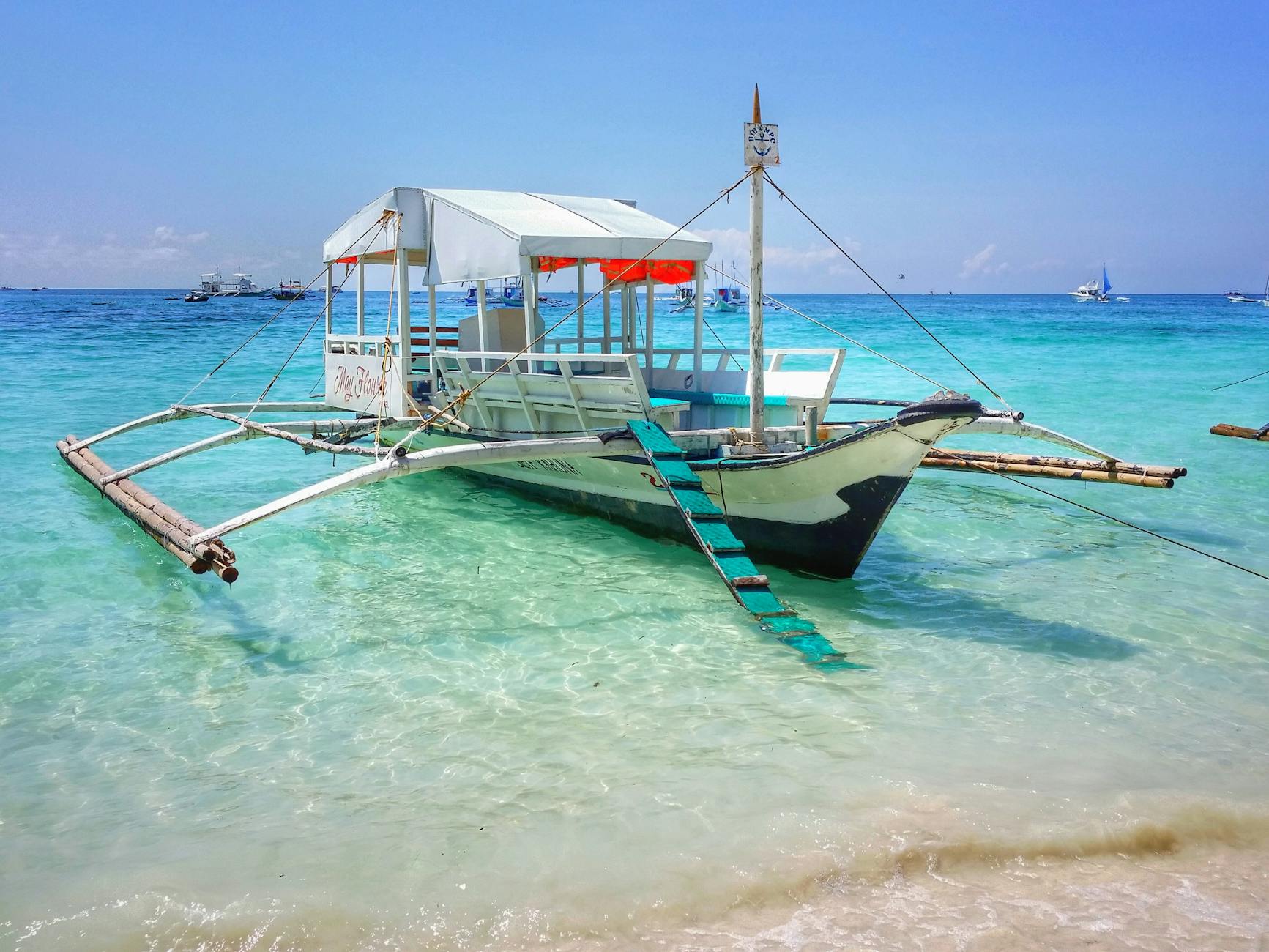
You will find a mix of bareboat, skippered and fully crewed options. Catamarans dominate for their shallow draught and space; monohulls are available with fewer bases. Most bareboat fleets cluster around Coron/El Nido and Cebu/Mactan, with seasonal boats repositioning to suit weather and demand. One-way routings (e.g., Coron to El Nido; Cebu to Bohol or Siquijor) are sometimes possible and reduce backtracking.
Provisioning is easiest at the start: Coron Town, El Nido, Puerto Princesa, Cebu and Dumaguete have supermarkets; out-islands offer markets with fresh produce and basics. Fuel is widely sold but may require jerry-can runs outside main ports. Water is available in towns; avoid drawing near river outlets after heavy rain and consider topping up via delivered water where offered.
Crewed and cabin charters suit those new to the area or travelling outside peak season, when a local skipper's knowledge of seasonal lees, unlit fish traps and municipal rules is invaluable. Book well ahead for January-April and for any trips overlapping public holidays. If bareboating, request a thorough local briefing on moorings, marine sanctuary boundaries and seasonal anchorages.
Licences and formalities
Bareboat operators commonly accept an RYA Day Skipper (or higher) or an ICC, plus evidence of recent skippering experience in tidal waters. ASA 104 or equivalent is also typically recognised. A VHF/Short Range Certificate is advisable. For skippered charters, no certification is needed for guests.
Bring passports for all aboard and the charter contract/boat papers. The operator normally handles local coastguard notifications and passenger manifests. Expect marine park fees and municipal environmental charges in many anchorages (e.g., Balicasag, Apo, parts of Bacuit Bay and Romblon). Anchoring inside lagoons or over coral is commonly prohibited; use sand patches or designated moorings when available.
Special areas: Tubbataha Reefs Natural Park is permit-only, moorings-only and generally restricted to licensed liveaboard dive vessels during the short season (approximately March-June). Private yachts require advance coordination with the Park Management Board; no casual anchoring is allowed. Always retain fee receipts and follow ranger guidance.
Anchorages and marinas
Palawan north (Coron-Linapacan-El Nido)
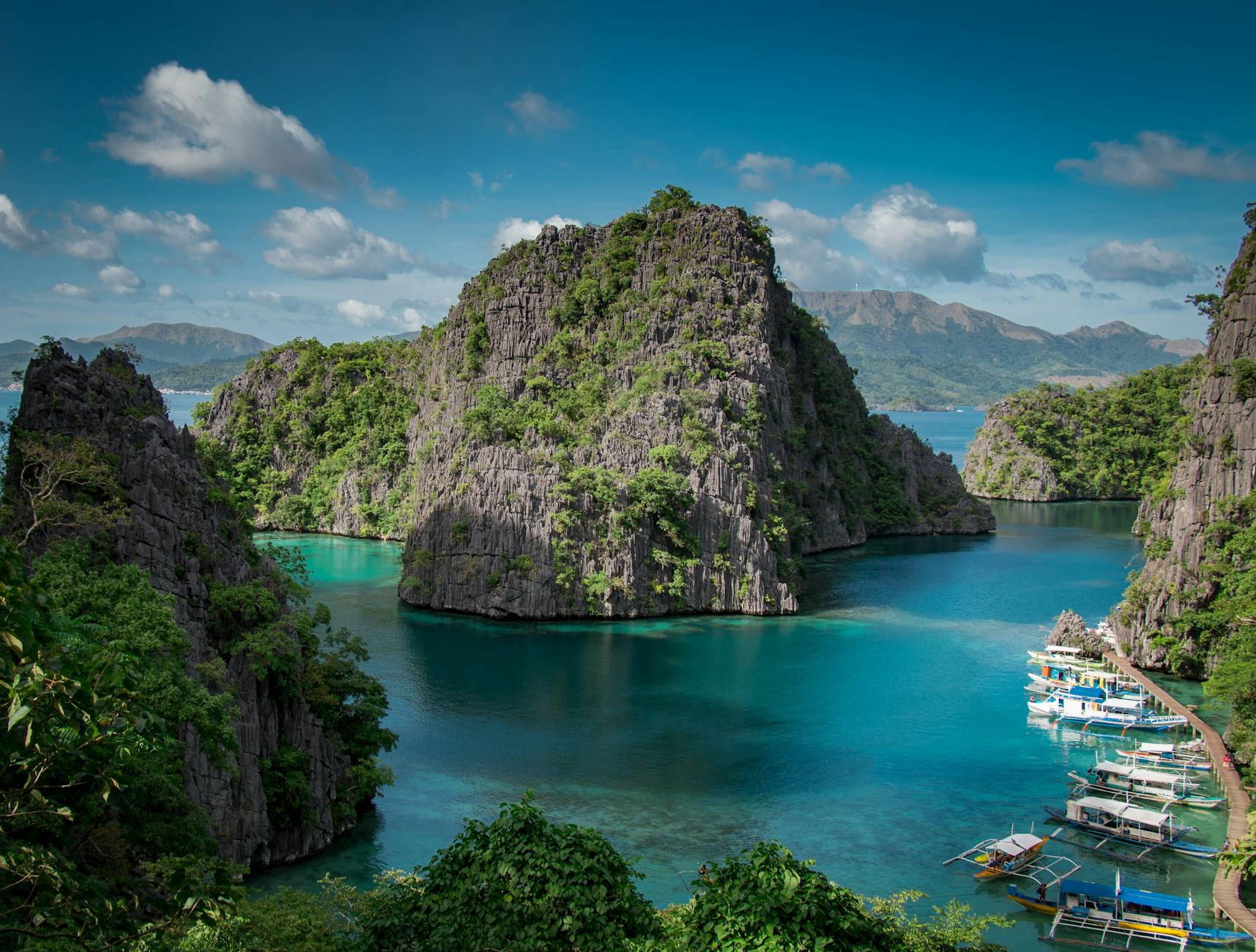
Coron Town offers a busy but serviceable roadstead with fuel, water and markets ashore. In Coron Bay, anchor only on sand clear of wreck sites and park zones. Culion, Pass Island and Ditaytayan provide fair-weather sand shelves. Black Island is a day stop in settled weather. Linapacan's passes are exquisitely clear but studded with coral heads - enter in high sun with a bow watch. Bacuit Bay has numerous sandy anchorages (e.g., off Cadlao, Pangulasian and Lagen), but lagoons and popular snorkel areas are often no-anchor with ranger oversight.
Central Palawan (Taytay-Puerto Princesa)
Taytay's large bay is protected but busy with pearl farms and fish pens; keep a sharp lookout and give farm perimeters a generous berth. Puerto Princesa provides a practical stop for fuel, water, repairs and onward logistics via PPS airport. Holding is generally good mud and sand off the city waterfront, with space to swing.
Southern Palawan (Balabac)
Wild and beautiful but an advanced-level pilotage area. Expect strong streams in Balabac Strait, limited services and many reefs and stakes. Attempt only in settled weather with ample daylight, and preload satellite imagery for clarity.
Central Visayas (Cebu-Bohol-Siquijor-Negros)
Cebu Yacht Club in Mactan is the area's main full-service marina with berths, fuel and yard services. Around Mactan/Hilutangan, pick up marine sanctuary moorings where provided. Panglao offers seasonal sand anchorages; avoid swim zones. Siquijor and Apo Island have fair-weather anchorages with marine park fees and ranger guidance. Dumaguete provides urban resupply and good holding off the boulevard in settled conditions.
Western Visayas and Romblon (Panay-Boracay-Tablas-Romblon-Sibuyan)
Boracay anchoring is strictly seasonal - west side in Amihan, east side in Habagat - under local environmental rules. Looc Bay (Tablas) is a notably secure all-round anchorage with community moorings. Romblon Town is a favourite for its protected horseshoe bay and shore facilities. Crossings to Sibuyan require attention to Romblon Pass streams. Cobrador and nearby islets offer beautiful sand shelves in calm conditions.
General notes
Expect fish traps, unlit buoys, pearl farms and bamboo stakes, especially near villages and in Taytay Bay. Many hazards are unlit - plan transits in daylight. Holding is usually good in sand; set thoroughly and buoy your chain in coral areas. Respect marine parks; rangers may visit to collect fees and advise on permitted areas. Good manners go a long way - slow near fishing bancas, minimise wake and avoid anchoring over seagrass beds.
FAQs
.faq-accordion details{border:1px #cccccc solid;border-radius:4px;margin:8px 0;}.faq-accordion summary{padding:10px 15px;cursor:pointer;display:flex;align-items:center;gap:8px;list-style:none;}.faq-accordion summary::-webkit-details-marker{display:none;}.faq-accordion summary::before{content:'▸';color:#12305c;font-weight:700;display:inline-block;transform:rotate(0deg);transition:transform .2s ease;}.faq-accordion details[open] summary::before{transform:rotate(90deg);}.faq-accordion p{padding:10px 15px;margin:0;}
When is the best time to sail Palawan and the Visayas?
November to May, with January to April offering the most reliable NE-E trade winds, low rainfall and clear water. June to October is the southwest monsoon: sail the leeward/east sides of islands, expect squalls and plan conservatively around any cyclone forecasts.
What certifications do I need to charter here?
For bareboat, most operators accept RYA Day Skipper or ICC (or ASA 104) plus recent skippering experience; a VHF SRC is recommended. Skippered and crewed charters require no certificates for guests.
Are there marinas?
Marinas are limited. Cebu Yacht Club (Mactan) is the principal full-service option in the region. Elsewhere you will mostly anchor off towns or in bays and go ashore by dinghy for fuel, water and provisions.
Is it safe to anchor at night?
Yes, with prudent selection. Choose sand or mud with lee from the prevailing monsoon, set well, and avoid coral and exposed west coasts during Habagat. Many hazards are unlit; arrive and depart in daylight where possible.
Can I visit Tubbataha on a yacht?
Access is tightly controlled. The park operates a short season (around March-June) on fixed moorings for permitted liveaboard dive vessels. Private yachts must arrange permits well in advance; casual visits and anchoring are not allowed.
How strong are currents?
Currents are benign in open water but can be strong in passes such as Linapacan, Hilutangan, Tanon Strait, Romblon Pass and Balabac Strait. Plan with tide tables and aim for slack or favourable streams.
References
- https://www.cruiserswiki.org/wiki/Philippines
- https://www.cruiserswiki.org/wiki/Palawan
- https://www.cruiserswiki.org/wiki/Visayas
- https://bagong.pagasa.dost.gov.ph/information/climate-philippines
- https://www.tubbatahareefs.org/plan-your-visit/
- https://www.cebuyachtclub.org/
- https://www.noonsite.com/country/philippines/
- https://sailscanner.ai/destinations/mediterranean/sailing-in-spain/sailing-in-the-balearic-islands/

Charter a Yacht
Compare crewed & bareboat charters, learn the best months to sail, and get a custom shortlist from 500+ providers.