Sailing the French Riviera (Côte d'Azur): routes, winds, anchorages and charter essentials
For boats, weekly rates and a shortlist, see our French Riviera yacht charter page.
Choosing a start harbour? See the French Riviera charter bases guide for Saturday logistics and which marina fits your week.
For boats, weekly rates and a shortlist, see our Yacht Charter French Riviera page.
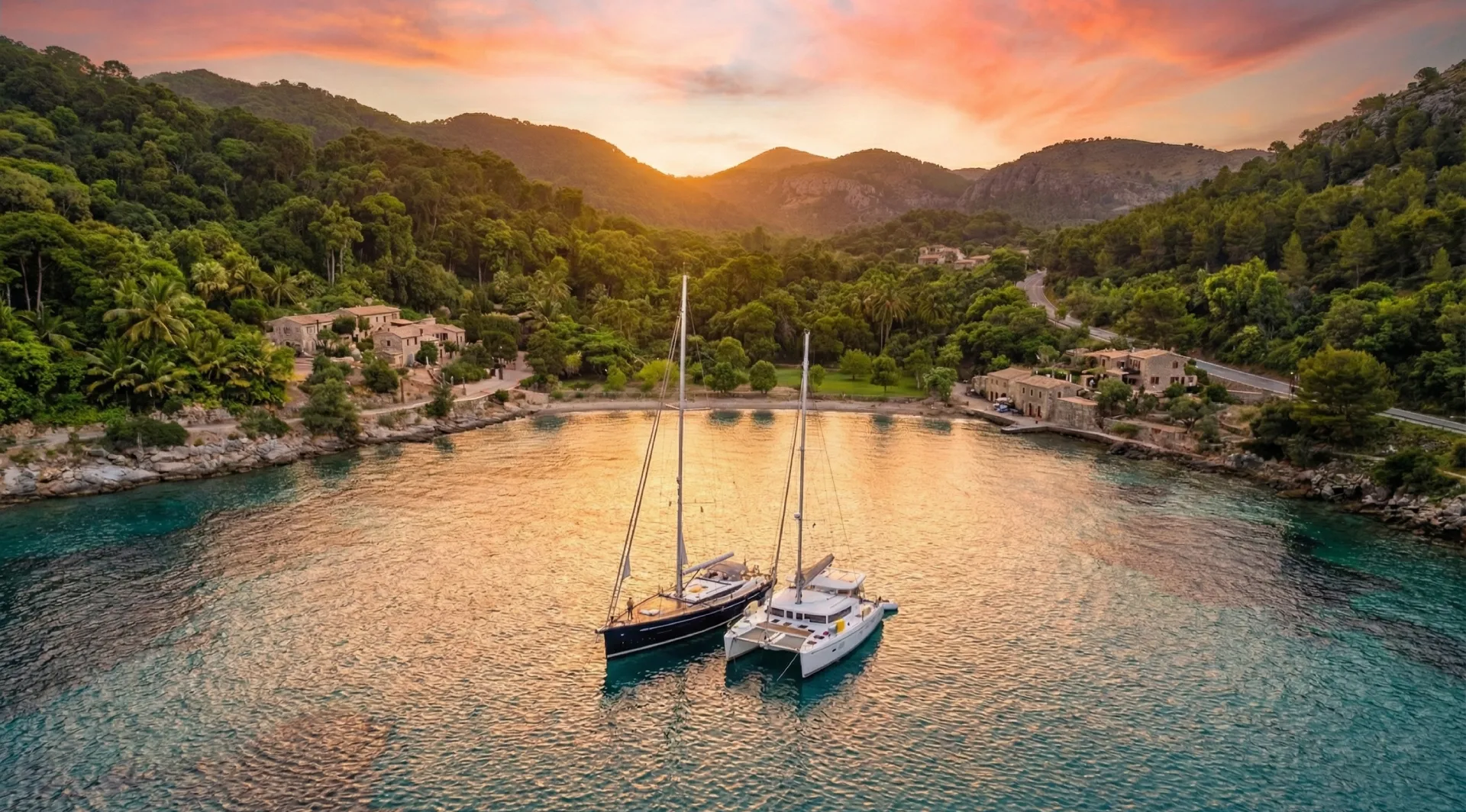
Sailing the Côte d'Azur combines sheltered island anchorages, glamorous harbour towns and predictable summer breezes into a compact, confidence-building cruising ground. Sailors can day-hop from the Îles d'Hyères to Saint-Tropez, thread between the Îles de Lérins off Cannes, and settle into deep, dramatic bays like Villefranche-sur-Mer. This guide to sailing the French Riviera distils the coastline into practical sailing areas, explains the winds you will meet, and highlights marinas and protected anchorages that work in real weather.
If you are chartering, we outline the bases, typical boat options and the certificates most operators ask for so you can book with assurance. You will also find sample itineraries with realistic legs, where to go in a blow, and tips for booking busy summer berths without the stress.
Quick links
- Sailing the French Riviera (Côte d'Azur): routes, winds, anchorages and charter essentials
- Why Sail in French Riviera (Côte d'Azur)?
- Itineraries
- When To Go
- Wind and Weather
- Getting There
- Chartering
- Licences and Formalities
- Anchorages and Marinas
- FAQs
- References
Why Sail French Riviera (Côte d'Azur)?
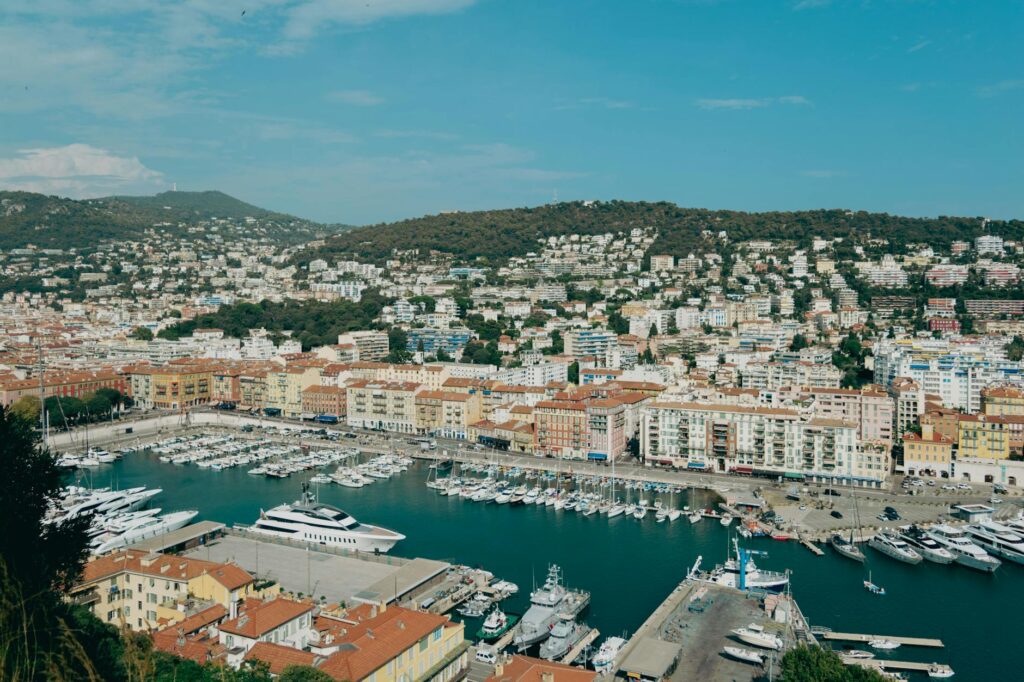
Few coasts marry convenience and theatre quite like sailing the French Riviera. Within 80 nautical miles you move from pine-scented national park anchorages at Porquerolles and Port-Cros to the superyacht stage sets of Saint-Tropez, Cannes and Monaco. Depths, marks and facilities are reassuring; passages are short; provisioning is effortless; and there is almost always a lee to be found behind a headland or island.
Summer brings a reliable rhythm: calm mornings, a building sea breeze through the afternoon, and golden evenings in well-managed harbours. When the weather flexes - a punchy Mistral from the west or an easterly swell rolling into open bays - the Riviera still offers workable bolt-holes, from the all-round shelter of Villefranche to marina networks that welcome transients.
Culture is never far from the cockpit. You can swim in gin-clear water over Posidonia meadows at Cap Taillat at lunchtime and be tied up under the citadel in Saint-Tropez by dusk. Historic islands, vineyard walks, monastery bells on the Îles de Lérins and late-season regattas create a sense of occasion without demanding long offshore slogs.
French Riviera (Côte d'Azur) Sailing Itineraries
Below are three tried-and-tested routes suited to week-long and long-weekend charters sailing the French Riviera. Legs are deliberately modest, allowing for swims, shore time and flexible bolt-holes if the wind turns. Adjust daily plans to forecast and crew tempo.
Hyères to Antibes: Islands, Capes and Classic Harbours (7 days, one-way)
A west-to-east progression that stitches together the national park islands with headline Riviera names. Expect varied scenery, excellent provisioning and a satisfying sense of passage as capes and bays unfurl. Typical daily runs are 6-30 NM with many optional swim stops in settled weather.
Day 1 - Hyères to Porquerolles (Plage Notre-Dame)
Collect your boat at Port Saint-Pierre, Hyères. A short shake-down across the Rade d'Hyères brings you into the marine park waters of Porquerolles. Anchor on sand off Plage Notre-Dame for a first swim, then move to the village anchorage or marina if you prefer shore facilities. It is an easy 5-8 NM introduction with clear marks and generous depths.
Day 2 - Porquerolles to Port-Cros (National Park moorings)
Slip across to Port-Cros, a jewel of the national park. Pick up a park mooring in settled weather and snorkel over pristine Posidonia. Ashore, waymarked trails lead to forts and viewpoints. Night on a mooring or in the tiny harbour if space permits; arrive early as berths are few and first-come.
Day 3 - Port-Cros to Cavalaire-sur-Mer (via Cap Lardier)
A relaxed coastal run east past Cap Lardier delivers sandy anchorages with good day-time shelter in a sea breeze. Berth in Cavalaire for fuel, water and a protected night with restaurants on the quay. Expect around 18-22 NM; keep an eye out for pot markers near headlands.
Day 4 - Cavalaire to Saint-Tropez (via Cap Taillat and Pampelonne)
Stop for lunch under Cap Taillat in turquoise water, then push on to anchor off Pampelonne Beach in settled weather or book a berth in Saint-Tropez's Vieux Port. Expect theatre-style docking and a lively evening. If an easterly swell builds, consider Marines de Cogolin or Port Grimaud for quieter shelter.
Day 5 - Saint-Tropez to Îles de Lérins (Cannes)
A classic passage along the Esterel red cliffs brings you to the channel between Sainte-Marguerite and Saint-Honorat. Anchor on sand; visit the Cistercian monastery and enjoy clear-water swimming. This is the longest leg (c. 25-30 NM) but straightforward in settled conditions.
Day 6 - Îles de Lérins to Antibes (Port Vauban)
Short hop to Antibes. Port Vauban is vast and well-run, with the old town and markets a short stroll. Top up water, rubbish and provisions; explore Vauban's ramparts for sunset views.
Day 7 - Cap d'Antibes day sail and hand-back
Circle Cap d'Antibes for a final swim in Baie de la Garoupe, keeping clear of swim zones and Posidonia protection areas. Return to Port Vauban for check-out and refuelling. Allow time for the fuel dock during weekend rush.
Sailing notes: In summer, mornings are ideal for transits; plan swims and anchorages for the breezier afternoons. Have plan B marinas earmarked during events or if the breeze exceeds comfort levels.
Eastern Riviera Loop from Antibes to Monaco (7 days, return)
A gentle there-and-back that favours short legs, deep natural harbours and city-front marinas. Perfect for newer crews and mixed interests, with easy options to shorten or lengthen days.
Day 1 - Antibes to Îles de Lérins
Gentle start to the sheltered sands between Saint-Honorat and Sainte-Marguerite. Good holding in sand; watch for ferries and swim zones. The 6-10 NM hop lets everyone settle in.
Day 2 - Îles de Lérins to Théoule-sur-Mer / Baie d'Agay
Trace the Esterel to a string of sandy coves. Anchor by day in settled weather at Agay; take a berth at Théoule for a quiet night if a swell sets in. Red rock backdrops make for superb photos at golden hour.
Day 3 - Agay to Cannes (old town evening)
Return towards Cannes for galleries, markets and a well-protected berth in either the Vieux Port or Port Pierre Canto. Book ahead in peak season and observe speed limits on approach - traffic can be dense.
Day 4 - Cannes to Villefranche-sur-Mer
A rewarding coastal passage to one of the coast's best natural harbours. Deep water lies close in; anchor on sand patches with long scope. Superb all-round shelter from the Mistral and most easterlies. Leave room for ferries turning inside the bay.
Day 5 - Villefranche to Monaco (Port Hercule) or Menton
Short hop east via Cap-Ferrat to the rock of Monaco. Book a berth in Port Hercule or continue to Menton Garavan for a quieter, cost-effective marina near the Italian border. Monaco's fuel and services are top notch but prices reflect the postcode.
Day 6 - Monaco to Nice (Port Lympia) via Beaulieu
Pause in Beaulieu for lunch or provisioning, then into Nice's amphitheatre-style Port Lympia. Expect traffic and strict speed control inside the harbour; arrivals are well marshalled on VHF 9.
Day 7 - Nice to Antibes via Cap d'Antibes
A final reach back round Cap d'Antibes. In settled weather stop for a swim in Baie de la Garoupe before returning to Port Vauban for hand-back. Allow a time buffer for refuelling and end-cleaning formalities.
Sailing notes: The eastern sector is deep with limited casual anchorages outside set bays. Plan lunches under Cap-Ferrat or within Beaulieu, and use marinas for assured overnights during easterly swells.
Long Weekend: Antibes - Îles de Lérins - Villefranche loop (3 days)
A compact circuit that distils the best of the eastern Riviera: sandy island anchorages, a dramatic natural harbour and easy hops that leave time for swims and shore dinners.
Day 1 - Antibes to Îles de Lérins
An easy first leg to anchor between the islands on sand. Visit the monastery on Saint-Honorat and the old fort on Sainte-Marguerite. Arrive early to secure a spot clear of swim lanes and ferry tracks.
Day 2 - Îles de Lérins to Villefranche-sur-Mer
Coastal hop past Nice to anchor in Villefranche's deep, protective bay. Go ashore for supper in the old town. Lay generous scope in 10-20 m and check forecast for any southerly swell.
Day 3 - Villefranche to Antibes via Cap-Ferrat
Morning swim in a Cap-Ferrat cove, then return to Antibes. Refuel and hand-back. With time in hand, stroll the Provençal market for a relaxed finale.
Sailing notes: This loop suits beginners and families. Every leg has a straightforward marina back-up if the wind pipes up or an easterly swell develops.
French Riviera: When To Go Sailing
May to October is the practical window. Shoulder months (May-June and September-early October) offer the best balance of warm water, reliable afternoon sea breezes (8-15 knots), clearer anchorages and easier marina berthing. July and August are hot (air 28-33 °C, sea 23-26 °C), very busy and expensive; you must pre-book berths and arrive early to popular anchorages.
Winter and early spring can be beautiful and quiet, with crisp visibility and plenty of marina availability, but weather systems are more active. Strong Mistral episodes spill from the Gulf of Lion a few times each month and easterly lows can push swell into open bays. Many seasonal services on the islands reduce hours or close outside peak months.
For the smoothest experience, aim for early June or mid-September: the sea is swimmable, prices ease, and you will still enjoy long daylight hours. Calendar highlights such as Cannes Film Festival and Monaco Grand Prix add buzz but also pressure on berths; plan alternatives or shift dates if you prefer calmer marinas.
Wind and Weather
Summer brings a familiar pattern: calm or light gradient winds in the morning, building sea breezes from late morning through the afternoon, typically west to southwest in the western section (Îles d'Hyères to Saint-Tropez) and south to southeast in the east (Cannes to Menton). Expect 8-15 knots most days, with occasional 15-20-knot afternoons that fade after sunset.
The Mistral (NW-W) can reach the Riviera after blowing out of the Gulf of Lion. It arrives dry and gusty, funnelling strongest around capes. Shelter on the eastern sides of headlands and in deep bays like Villefranche; avoid open south-facing anchorages. Conversely, easterlies and the Levante bring cloud and swell from the Ligurian Sea, making Îles de Lérins and Pampelonne rolly; prefer western coves under Cap Lardier, Cavalaire's marina or the Hyères islands' lee shores. Late-summer thunderstorms can flare after hot days; keep an eye on forecasts and the sky.
Forecasts are excellent and widely disseminated. Use Météo-France coastal bulletins and inshore GRIBs. VHF channel 79/80 broadcasts local weather in French; coastal marinas commonly monitor VHF 9. Expect gust acceleration around the Esterel cliffs and capes, and katabatic night breezes in clear conditions. Seas are typically 0.5-1.0 m in the afternoon sea breeze, rising quickly in a Mistral or prolonged easterly. Visibility is generally good, but traffic density is high around Cannes, Antibes, Nice and Monaco; maintain a sharp watch for ferries and fast tenders.
Mooring fees in France
Short answer: fees vary by region, season and facility (full-service marinas cost most; town quays and managed mooring fields are cheaper). In July-August, demand peaks - arrive early or pre-book where possible.
French Riviera (Marseille → Nice/Monaco)
- Pricing: rises as you head east; prestige ports (e.g., Saint-Tropez, Antibes, Monaco area) command the highest tariffs.
- Berths: marinas book out quickly in summer; town quays are limited and time-capped.
- Anchoring: plentiful options (e.g., around the Îles d'Hyères, Îles de Lérins, Cap Taillat, Villefranche) to keep costs down, but bays fill early. Respect Posidonia seagrass no-anchor zones and local restrictions.
Corsica
- Pricing: seasonal; expect peak-season pressure in hotspots like Porto-Vecchio and Bonifacio - advance reservations strongly advised.
- Anchoring: abundant and scenic along the west coast (Calvi → Propriano), but popular in peak months and exposed in certain wind directions.
Practical tips to manage costs
- Book smart: use marina websites/berth-booking apps or call VHF; have LOA/beam/draught and ETA ready.
- Time your arrival: aim before early afternoon for the best chance of a walk-in berth.
- Mix it up: alternate anchoring/mooring fields with occasional marina nights for water, waste and shore power.
- Shoulder seasons: May-June and September are quieter and cheaper than high summer.
- On the day: expect length-based tariffs, plus line-handling, electricity/water and tourist-tax extras in some ports.
Getting There
The Riviera is exceptionally connected. Nice Côte d'Azur Airport (NCE) is the primary hub for Antibes, Cannes, Nice, Monaco and Menton (15-45 minutes by road). Toulon-Hyères (TLN) and Marseille Provence (MRS) serve the western sector (Hyères, Bormes, Saint-Tropez, Saint-Raphaël). Cannes-Mandelieu handles private flights.
High-speed TGV services run to Nice, Cannes, Antibes and Toulon from Paris and Marseille, with local TER trains linking most coastal towns - useful for one-way charters or crew changes. The A8 motorway shadows the coast, and ride-hailing and taxis are readily available around major marinas. Provisioning is straightforward: large supermarkets sit within a short taxi ride of most bases, and markets in Antibes, Cannes and Saint-Tropez are excellent for fresh produce.
For smoother turnarounds, pre-order groceries for timed delivery, confirm marina gate and pontoon access with your base, and factor in weekend traffic on the A8. Many bases offer private transfers; share flight details in advance to align check-in windows and luggage drop-offs.
Chartering in the French Riviera
The Côte d’Azur fleets sit on our yacht charter in France page, with bases from Hyères to Nice.
Main charter bases cluster at Hyères/Port Saint-Pierre, Bormes-les-Mimosas, Saint-Raphaël, Golfe-Juan, Antibes (Port Vauban), Cannes, and Nice. Fleets include recent monohulls (30-50 ft) and an extensive choice of catamarans (38-50 ft); skippered and crewed options are common, and powerboats and day-charter RIBs are widely available. One-way itineraries between Hyères and Antibes/Nice are frequently offered outside the absolute peak weeks.
Pricing varies by size and season. As a guide, a modern 40-ft monohull might range from €2,500 - €4,000/week in shoulder season to €5,000 - €7,500+ in July-August. A 40-45 ft catamaran typically commands €5,000 - €9,000/week off-peak and €9,000 - €15,000+ in peak. Skippers are usually €200 - €300/day plus meals; security deposits and end-cleaning are standard. Book marinas ahead during July-August and during major regattas (Régates Royales Cannes; Les Voiles de Saint-Tropez). Apps and marina portals increasingly support advance reservations; otherwise call ahead on VHF 9 or by phone.
Expect a detailed check-in covering safety gear, engine, sails and electronics; allow time to photograph topsides for deposit purposes. Optional extras include outboards, water-toys, linens, early check-in, and damage-waiver insurance. Most bases provide a starter pack of consumables; fuel is paid on return. For low-stress cruising, a skippered charter is an excellent way to learn local anchorages and Posidonia rules while everyone focuses on holiday mode.
French Riviera: Licences and Formalities
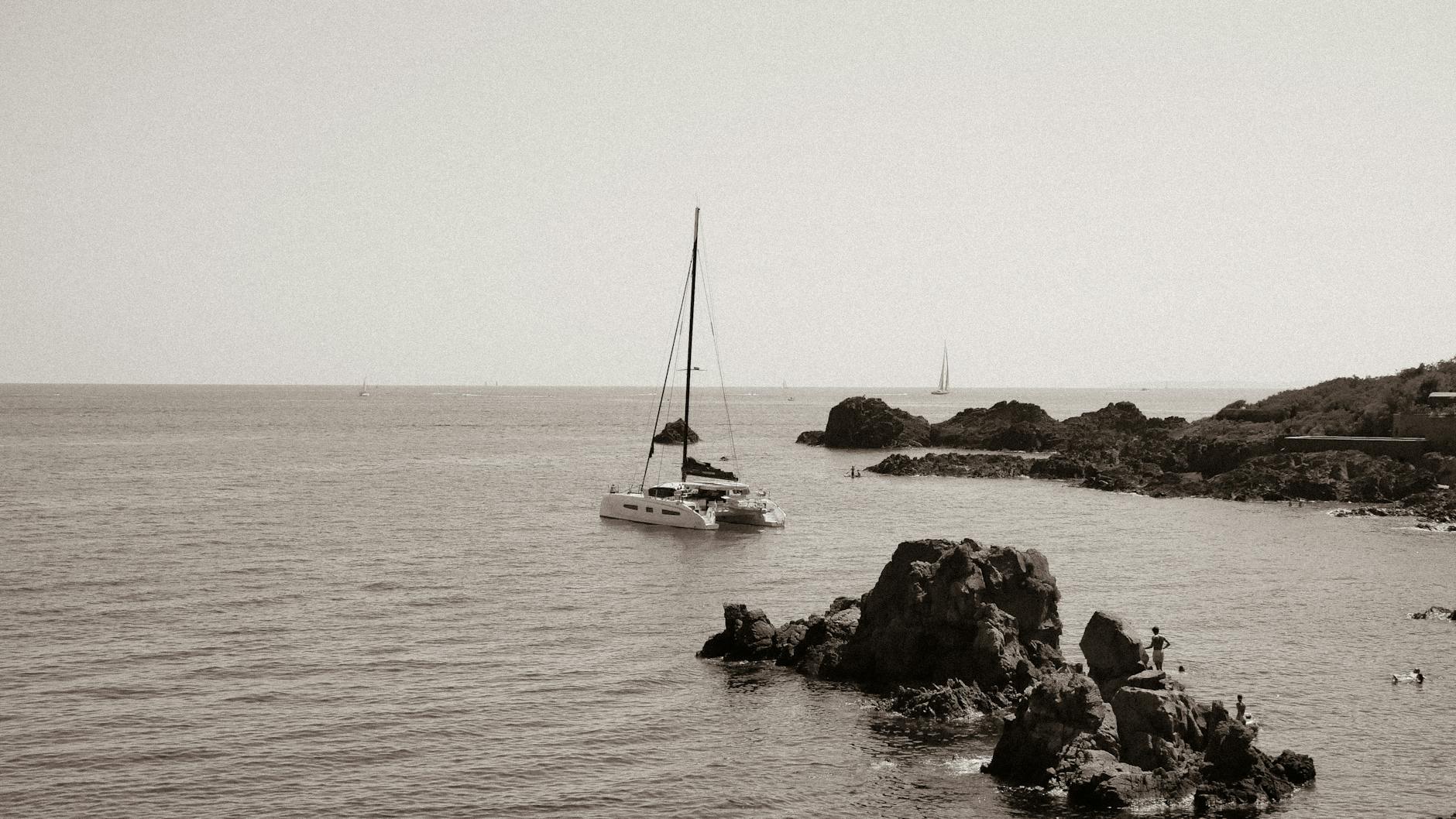
For bareboat sailing, charter companies in France typically require proof of competence such as the ICC (International Certificate of Competence) with a coastal/sail endorsement, or an equivalent national qualification (e.g. RYA Day Skipper Practical). A VHF Short Range Certificate (SRC) is commonly requested. Skippered charters remove the need for your own certificates. Carry passports/ID for all crew and proof of insurance where relevant.
France is in Schengen; routine formalities are minimal for EU movements. Safety equipment carriage rules follow French regulations - your charter operator will equip the vessel appropriately. Speed is limited to 5 knots within 300 m of the shore and in harbours; keep clear of marked swim zones. Anchoring on protected Posidonia seagrass is restricted along much of the Riviera: use designated mooring buoys (notably in Port-Cros/Porquerolles) or anchor only on sand patches, observing local prefectural notices. Waste discharges are prohibited in marine parks; use pump-out where available.
Navigation follows IALA Region A (red to port, green to starboard when entering). Expect Med-mooring with lazy lines in most marinas; rig stern lines and fenders at quarter height in advance. Many ports require a crew list and ID at check-in; shore-power adapters are typically 16 A/32 A - check your lead.
Anchorages and Marinas
The western sector (Îles d'Hyères to Saint-Tropez) is the French Riviera's playground for anchoring. Porquerolles offers multiple sandy bays - Notre-Dame, Plage d'Argent and Alycastre - with clear water and good holding in settled conditions. Port-Cros is a national park with managed mooring fields and strict no-anchoring zones to protect seagrass. Eastwards, Cap Lardier, Cap Taillat and Pampelonne provide postcard-perfect day anchorages; they are exposed in easterly swell and during Mistral surges. Cavalaire and Le Lavandou give reliable marina shelter and services.
From Saint-Raphaël to Antibes, the Esterel coast has scenic but more open coves; Baie d'Agay is popular in calm weather. The Îles de Lérins are the star attraction off Cannes: anchoring is on sand between Saint-Honorat and Sainte-Marguerite with swimming-only zones well marked. Holding is generally good but the area becomes rolly in prolonged easterlies. Cannes, Golfe-Juan and Juan-les-Pins provide marina alternatives.
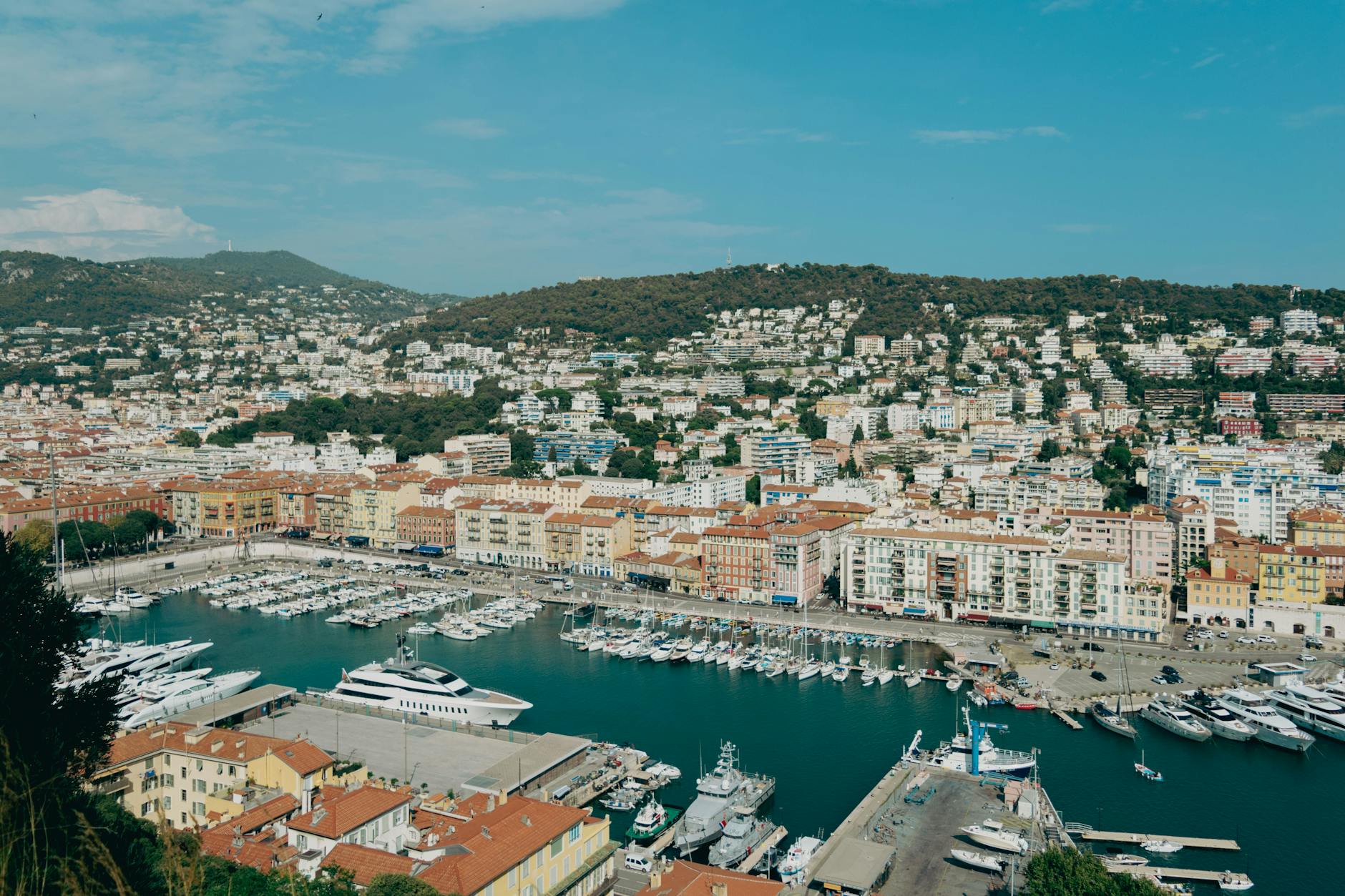
Between Antibes and Italy, deep water approaches the shore quickly, limiting casual anchoring. The notable exception is Villefranche-sur-Mer, a magnificent, sheltered roadstead with sand patches in 10-20 m; lay ample scope and keep clear of moorings and ferries. Beaulieu-sur-Mer and Saint-Jean-Cap-Ferrat offer snug coves by day, while Nice (Port Lympia), Monaco (Port Hercule/Fontvieille) and Menton Garavan provide full-service marinas. In high season and during events, reserve early and plan arrivals by mid-afternoon.
Practical notes: many French marinas monitor VHF 9 for arrivals; call ahead for berth allocation. Expect lazy-line stern-to mooring, occasional cross-winds on entry, and wash from passing craft near resort towns - rig fenders well. Use mooring buoys where provided in protected areas and consult local charts/apps to avoid Posidonia meadows before dropping the hook.
FAQs
.faq-accordion details{border:1px #cccccc solid;border-radius:4px;margin:8px 0;}.faq-accordion summary{padding:10px 15px;cursor:pointer;display:flex;align-items:center;gap:8px;list-style:none;}.faq-accordion summary::-webkit-details-marker{display:none;}.faq-accordion summary::before{content:'▸';color:#12305c;font-weight:700;display:inline-block;transform:rotate(0deg);transition:transform .2s ease;}.faq-accordion details[open] summary::before{transform:rotate(90deg);}.faq-accordion p{padding:10px 15px;margin:0;}
What is the best month to sail the French Riviera?
June and September offer warm water, dependable sea breezes, lighter crowds and easier marina bookings. July-August are hottest and busiest; May and early October are excellent shoulder options.
Is Villefranche-sur-Mer a good all-weather anchorage?
It is one of the most sheltered natural anchorages on the coast, well protected from the Mistral and many easterly scenarios. It can be rolly in strong SE swells and is deep, so choose sand patches and use generous scope.
Can I anchor off Saint-Tropez?
Yes, in settled weather you can anchor off Pampelonne or outside the Vieux Port limits, taking care to avoid swim zones and Posidonia. If conditions change, nearby marinas include Saint-Tropez, Marines de Cogolin and Port Grimaud.
Do I need an ICC or RYA Day Skipper to charter here?
Most operators ask for an ICC (sail/coastal) or an equivalent like RYA Day Skipper Practical, plus a VHF SRC. Skippered charters are available if you prefer not to be responsible as captain.
How far apart are typical hops?
Passages are deliberately short: 5-15 NM between many anchorages and marinas, with the longer legs (e.g. Saint-Tropez to Îles de Lérins) around 20-30 NM.
Are jellyfish a problem?
Pelagia (mauve stingers) can appear in warm, calm periods, especially after onshore winds. A mask helps you check before swimming; many beaches display daily notices.
How do I book marinas in peak season?
Reserve as early as possible via marina portals or by email/phone, and call on VHF 9 on approach. Arrive by mid-afternoon; during major regattas, consider alternative ports or anchorages.
Where can I refuel and take on water?
Most major ports (Hyères, Cavalaire, Saint-Tropez, Cannes, Golfe-Juan, Antibes, Nice, Monaco, Menton) have fuel docks. Water is available on visitor berths; confirm hours outside peak months.
References
- https://www.cruiserswiki.org/wiki/Sailing_the_French_Riviera_(Cote_d%27Azur)
- https://meteofrance.com/previsions-meteo-marine
- https://www.portcros-parcnational.fr/
- https://www.premar-mediterranee.gouv.fr/actualites/les-herbiers-de-posidonie-et-la-reglementation-du-mouillage
- https://www.aeroportsdeparis.fr/en/airports/nice-cote-dazur
- https://www.sncf.com/en/passengers
- https://www.rya.org.uk/training/certificates/icc
- https://www.rya.org.uk/training/courses/src
- https://sailscanner.ai/destinations/mediterranean/sailing-in-spain/sailing-in-the-balearic-islands/
Charter a Yacht
Compare crewed & bareboat charters, learn the best months to sail, and get a custom shortlist from 500+ providers.