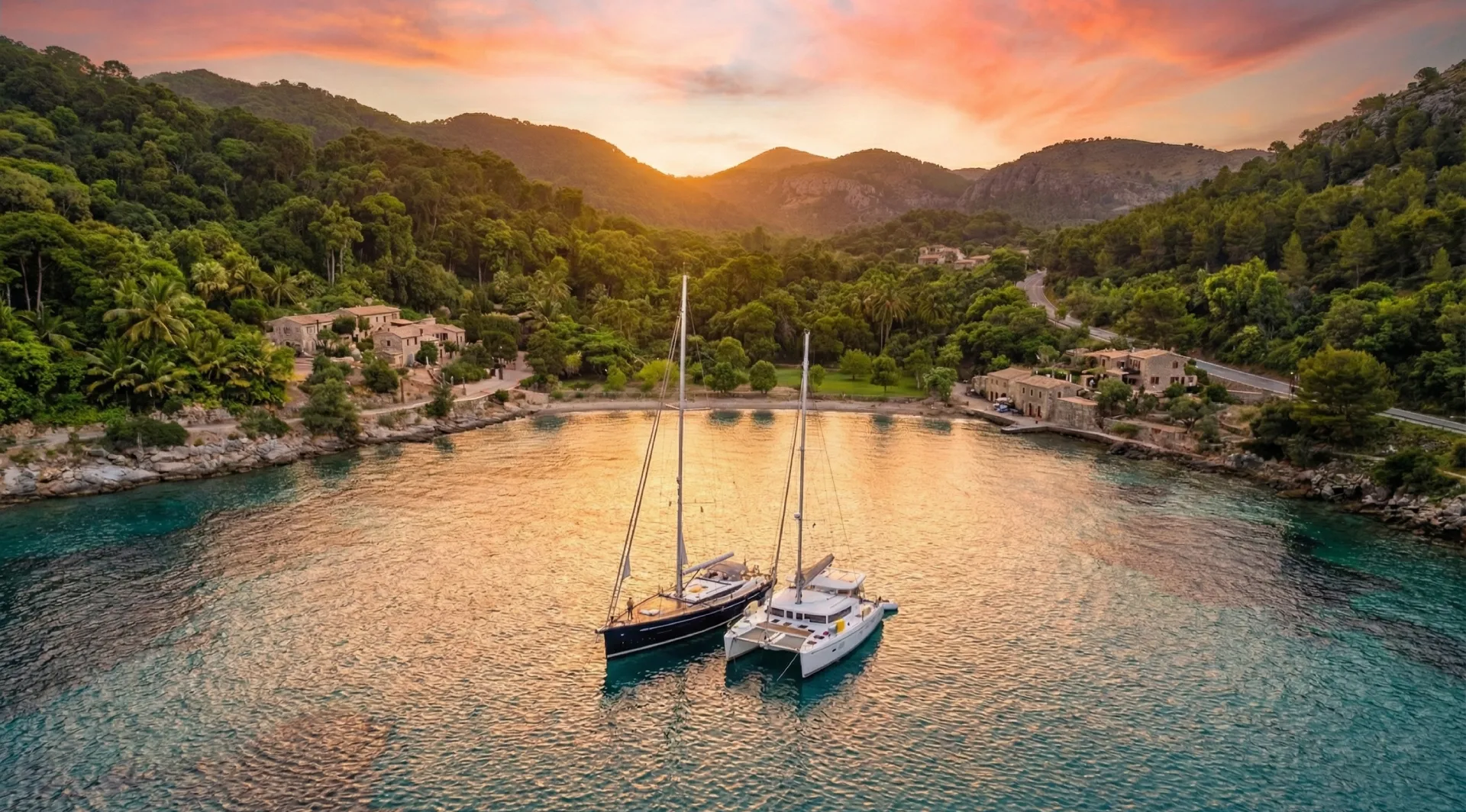
For boats, weekly rates and a shortlist, see our Sardinia yacht charter page.
Choosing a start harbour? See the Sardinia charter bases guide for Saturday logistics and which marina fits your week.
Sailing in Sardinia - Your Complete Guide
Sardinia pairs granite-fringed coves with deep, reliable anchorages and a wind pattern that rewards good seamanship. From the jade shallows of La Maddalena to the wild capes of the west and the sun-soaked south, this is a large, varied island where each coast feels like a different cruising ground.
Expect world-class swimming in transparent water, short-to-medium legs between well-marked harbours, and a choice of park-managed moorings in sensitive areas. The island's scale means you can choose conditions to suit your crew: the relatively sheltered north-east, the adventurous north-west, or easy day-hops along the south.
Itineraries
Below are three tried-and-tested, one-week routes that balance sailing time with time ashore. Adjust for weather, permits and crew preferences. Always check local Marine Protected Area (MPA) rules and secure permits in advance for La Maddalena, Asinara and Tavolara.
NE Sardinia and La Maddalena (7 days, moderate)
A classic circuit from Portisco through the Costa Smeralda, La Maddalena National Park and the Tavolara MPA. Expect immaculate anchorages, katabatic evening gusts and busy mooring fields in peak weeks.
Day 1 - Portisco to Cala di Volpe/Porto Rotondo
Ease into the week with an 8-12 NM shakedown in the sheltered Gulf of Cugnana. Practise mooring and anchor drills in clear water with plentiful space. Cala di Volpe offers sand patches among Posidonia for lunch and a swim; overnight in Porto Rotondo if you prefer shore power and a stroll.
- Stops: Marina di Portisco; Cala di Volpe (anchorage); Porto Rotondo (marina).
Day 2 - Costa Smeralda to Caprera
Hop north via Porto Cervo for a lunch stop and provisions if needed. In the afternoon, slip into Caprera's sculpted granite coves such as Cala Garibaldi. Rig extra scope and expect katabatic gusts after sunset; holding is good where you find clean sand.
- Stops: Porto Cervo (optional); Cala Garibaldi, Caprera (anchorage).
Day 3 - La Maddalena National Park circuit
Purchase or validate your park permit early. Rotate through emerald pools like Cala Corsara (Spargi) and Porto Madonna (Budelli), using buoys where provided. Arrive before late morning to beat the crowds, and maintain low speeds with a bow watch for isolated rocks in crystalline water.
- Stops: La Maddalena town (provisions); Cala Corsara, Spargi; Porto Madonna, Budelli (mooring field).
Day 4 - Santa Teresa Gallura
Skirt the edges of the Bonifacio Strait, planning around Maestrale bursts that accelerate between Sardinia and Corsica. Expect short, steep seas in strong north-westerlies. A secure berth and lively old town await in Santa Teresa Gallura.
- Stop: Santa Teresa Gallura (marina).
Day 5 - Tavolara Marine Protected Area
Reach south-east to the dramatic limestone slab of Tavolara. Observe MPA zoning: use designated anchoring zones and moorings, keeping clear of Posidonia meadows. In settled weather, Spalmatore di Terra is spectacular; Porto Taverna offers a broad sandy bay nearby.
- Stops: Spalmatore di Terra, Tavolara; Porto Taverna (anchorage).
Day 6 - Molara and Golfo Aranci
Snorkel Molara's shallow turquoise pools from seasonal mooring buoys, then continue to Golfo Aranci for an easy overnight with services and good dining. Observe buoyed swimming areas close to beaches and proceed at minimum wake.
- Stops: Molara (south moorings); Golfo Aranci (town quay/marina); Cala Moresca (day anchorage).
Day 7 - Return via Cala dei Sardi
A relaxed sail back into the Gulf of Cugnana. Pause on a mooring at Cala dei Sardi for lunch, then return to base for fuel, water and hand-back procedures. Allow time for diver checks in high season.
- Stops: Cala dei Sardi (moorings); Marina di Portisco (base).
Southern Sardinia: Cagliari, Teulada and San Pietro (7 days, easy-moderate)
Gentle day-sailing between wide sandy bays, small towns and protected capes. This route shines outside peak weeks, with warm seas, clear water and ample marina availability.
Day 1 - Cagliari to Nora (Pula)
Depart Marina di Cagliari and coast-hop west 12-18 NM to the broad bay beneath the Roman ruins at Nora. Anchor in sand with good holding. Avoid if strong westerlies are forecast, when swell can wrap in.
- Stops: Marina di Cagliari (base); Nora/Pula (anchorage).
Day 2 - Nora to Tuerredda/Porto Teulada
Work along a coastline of pale sandbars and turquoise water. If the Maestrale fills in, continue to the excellent shelter of Porto Teulada's harbour. In light airs, Tuerredda Bay is postcard-perfect for a swim and lunch stop.
- Stops: Tuerredda Bay (anchorage); Porto Teulada (harbour/marina).
Day 3 - Around Capo Teulada to Carloforte
Round Sardinia's south-western corner early for calmer seas and fewer gusts, then set course for Carloforte on San Pietro. The town blends Ligurian heritage with island charm; marinas are well organised and welcoming.
- Stops: Capo Teulada (headland); Carloforte (marina).
Day 4 - San Pietro and Sant'Antioco day
Enjoy short inter-island legs. Choose Calasetta on Sant'Antioco for a change of scene, or return to Carloforte depending on wind and space. Expect excellent seafood and relaxed evening passeggiata.
- Stops: Calasetta (marina); Carloforte (old town).
Day 5 - Carloforte to Porto Pino dunes
Anchor off the vast, pale dunes of Porto Pino in settled weather. Keep clear of any charted restricted military zones and observe local notices. Sandbars shift - enter in good light and follow buoyage if laid.
- Stop: Porto Pino (anchorage).
Day 6 - Long reach to Villasimius
A rewarding reach across the Golfo di Cagliari to the Capo Carbonara MPA. The marina offers full facilities, lovely beaches and trails. In MPA waters, use approved sand patches and moorings where available.
- Stops: Villasimius (marina); Campulongu Bay (anchorage).
Day 7 - Villasimius to Cagliari via Poetto
Stop for a swim off Poetto's long beach, then return to Cagliari for refuelling and handover. Celebrate with dinner in the Castello district overlooking the city.
- Stops: Poetto (anchorage); Marina di Cagliari (base).
NW Sardinia: Alghero, Stintino and Asinara (7 days, moderate)
For crews seeking a touch more adventure, the north-west delivers soaring cliffs, Atlantic-style seas after fronts and the wild beauty of Asinara National Park. Choose windows carefully in Maestrale.
Day 1 - Alghero to Porto Conte
A short hop under Capo Caccia's cliffs into the deep natural harbour of Porto Conte. Excellent shelter in Mistral and options to anchor or take a berth. Ideal for a first-night systems check and relaxed dinner.
- Stops: Alghero (marina); Porto Conte (marina/anchorage).
Day 2 - Capo Caccia to Stintino
Round the headlands with an eye on acceleration zones. Stintino's marina provides solid shelter and access to La Pelosa's famous shallows. Observe local restrictions and bathing zones; day anchor only where permitted.
- Stops: Capo Caccia (headland); Stintino (marina); La Pelosa (day anchorage; restrictions).
Day 3 - Asinara south moorings
Enter via Fornelli in good light and fair weather; currents can be significant. Inside the park, use only designated moorings with a valid permit. Wildlife, clear water and quiet evenings make this a highlight.
- Stops: Fornelli (mooring field); Cala Reale (moorings).
Day 4 - Asinara north to Castelsardo
Enjoy a morning hike from Cala d'Oliva before a reaching leg back to the mainland. Castelsardo's compact harbour nestles beneath its medieval castle; arrive early for choice berths in season.
- Stops: Cala d'Oliva (moorings); Castelsardo (marina).
Day 5 - Castelsardo to Isola Rossa
A short coastal leg framed by red granite headlands. Shelter is good from westerlies; anchor in sand in settled weather or take a berth if swell persists after a front.
- Stop: Isola Rossa (marina/anchorage).
Day 6 - Return to Porto Conte
Make a longer return passage with an early start to take advantage of morning lulls. In calm conditions, explore Neptune's marine caves by tender near Capo Caccia - always with lifejackets and a careful eye on swell.
- Stop: Porto Conte (marina/anchorage).
Day 7 - Porto Conte to Alghero
A short final leg for fuel and hand-back. Wander Alghero's Catalan-flavoured old town for a celebratory meal and gelato.
- Stop: Alghero (marina).
When to go
Quick overview
- Peak season: July-August for warm seas and buzzing towns; expect crowding and premium marina rates, especially on the Costa Smeralda.
- Best balance: Late May-June and September-early October, when the Maestrale is active but settled spells are common, sea temperatures are swimmable, and berths are available.
Climate snapshot
- Air temperatures: Typically 22-28°C in June/September; 26-32°C on the coast in July-August, hotter inland.
- Sea temperatures: Around 20-22°C in June, peaking at 24-26°C in August; 21-23°C in September.
- Rain: Generally low in summer; brief afternoon thunder squalls are possible, especially near high ground.
Planning cues by month
- April-May: Fresh NW-W winds are common, cooler evenings and quieter anchorages; some services keep reduced hours.
- June: Stable and warm with reliable sea breezes; La Maddalena buoys and permits fully in place.
- July-August: Hot, lighter gradient winds by day with strong thermal cycles; anchorages fill early and prices peak.
- September-October: Warm water and more frequent Maestrale outbreaks; forecasts change faster - plan conservative routing.
Winds & climate
Prevailing winds
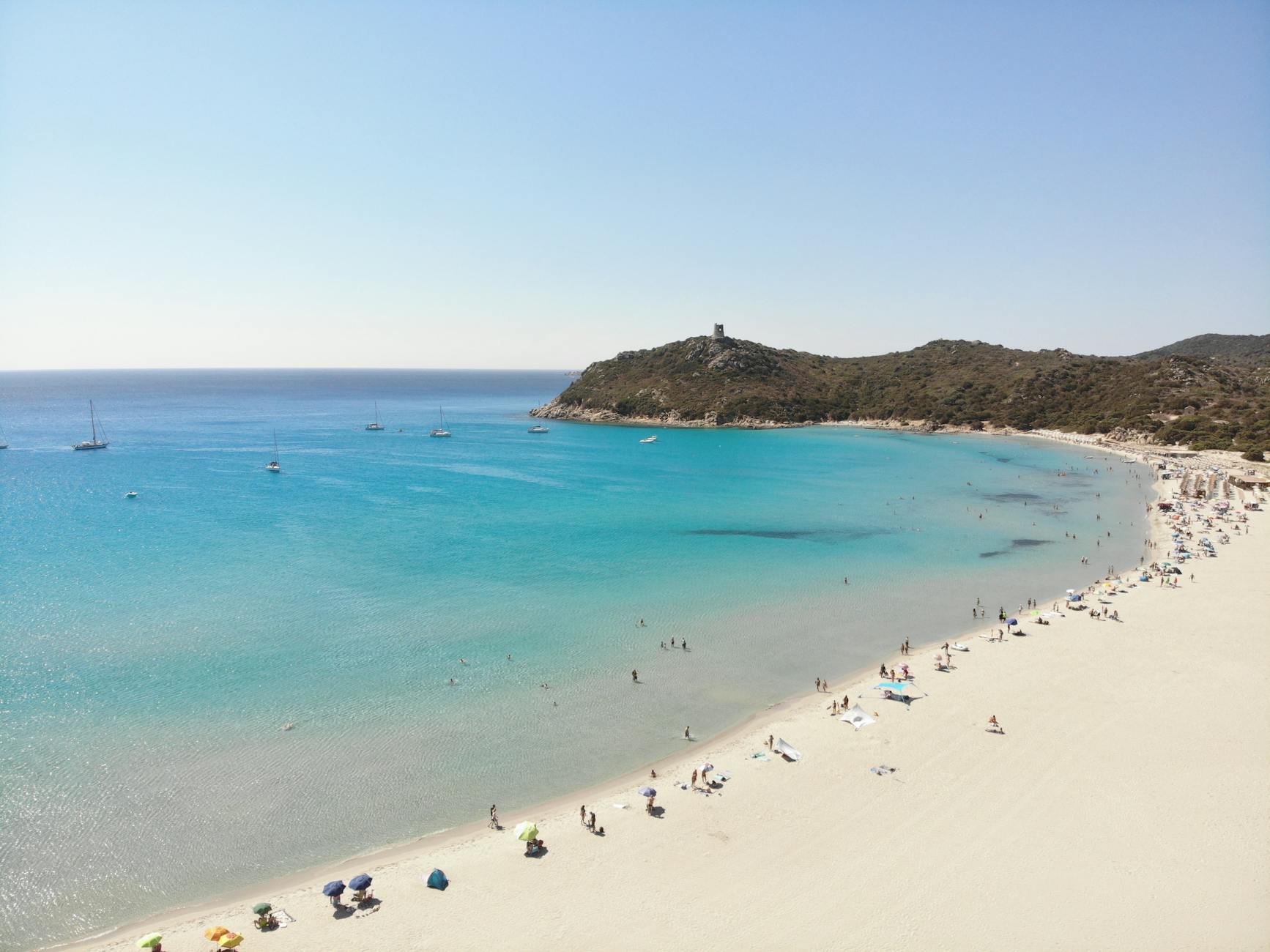
- Maestrale (NW): Sardinia's defining wind, often accelerated by the Gulf of Lion. Spring and autumn bursts can reach F7-F8, producing short, steep seas, especially in the Strait of Bonifacio and off west-coast capes.
- Scirocco (SE): Warm, humid and hazy; can build awkward swell along the north-east and east coasts.
- Ponente (W) and Libeccio (SW): Common with frontal passages, kicking up surf and surge on the west and south-west.
- Levante/Grecale (E-NE): Occasional; push swell onto the east coast and funnel through gaps with surprising force.
Daily patterns
In summer, expect sea breezes of 10-18 knots building from late morning, strongest mid-afternoon and fading near dusk. These overlay or oppose the gradient wind, creating local quirks - reef to the breeze, not the forecast.
Regional quirks
- Strait of Bonifacio: Strong acceleration and violent gusts in Maestrale; plan transits in settled windows and reef early.
- NE (Costa Smeralda/La Maddalena): Katabatic evening gusts roll off granite hills; anchor with extra scope and good swing room.
- East coast (Gulf of Orosei): Long lee in NW winds but open to E-SE. Few all-weather harbours between Olbia/Golfo Aranci and Arbatax.
- West/NW (Alghero-Stintino): Exposed to Atlantic-like fetch. After a front, seas remain up despite easing winds.
- South (Teulada-Villasimius): Better shelter options, but Capo Teulada and Capo Carbonara act as acceleration zones.
Sea state, tides and currents
- Tides: Microtidal (c. 0.2-0.3 m). Berthing is largely wind- and surge-dependent rather than tidal.
- Currents: Generally wind-driven. Local streams in the Bonifacio Strait can exceed 2-3 knots in strong Maestrale.
Visibility and hazards
Scirocco can bring haze and dust that reduce visibility. Keep clear of Posidonia meadows and isolated rock pinnacles that rise abruptly - use excellent light, a bow watch and slow speed in tight approaches.
Getting there
Airports
- Olbia (OLB): Best for the north-east, Costa Smeralda and La Maddalena bases (Portisco, Cannigione, Olbia, Golfo Aranci).
- Alghero (AHO): For north-west and west-coast starts (Alghero, Stintino).
- Cagliari (CAG): For southern itineraries (Cagliari, Villasimius, Carloforte).
Ferries
- Mainland Italy: Regular services from Genoa, Livorno and Civitavecchia to Olbia, Golfo Aranci and Porto Torres; from Civitavecchia to Cagliari.
- Corsica link: Bonifacio to Santa Teresa Gallura - useful for crew changes (not for yachts under way).
Transfers and provisioning
Marina shuttles and taxis are ubiquitous around charter bases. Large supermarkets cluster around Olbia, Cagliari and Alghero; consider a first-night berth near the base for stress-free shopping, technical checks and briefings.
Chartering
Where charters are based
- North-east coast: Marina di Portisco, Olbia, Cannigione, Cala dei Sardi and Porto Rotondo host the largest fleets (ideal for La Maddalena/Tavolara).
- South: Cagliari and Villasimius for Capo Carbonara and the south-west islands.
- North-west/west: Alghero and, seasonally, Stintino for Asinara and Costa Paradiso.
Fleet and formats
- Monohulls (34-50 ft) dominate; catamarans are popular in July-August and book early.
- Skippered and bareboat available; one-ways (e.g., Portisco-Cagliari) are occasional and carry premiums.
Booking rhythm and costs
- High-season berths on the Costa Smeralda can be among the Mediterranean's most expensive. Budget for anchoring and buoy fields to reduce costs.
- Reserve La Maddalena and Asinara permits/buoys in advance during peak weeks.
Handovers and support
- Saturday turnarounds are standard. Arrive Friday to shop, complete paperwork and safety briefings.
- Technical support and chandlery networks are strongest in the north-east.
Credentials at a glance
Most operators in Italy ask for an ICC (sail, coastal) or equivalent skipper certificate plus a VHF/SRC. RYA Day Skipper (Practical) or ASA 104 with an International Proficiency Certificate are commonly accepted. Always confirm with your chosen company and carry photo ID for skipper and crew.
Licences & formalities
Skipper qualifications and radio
- Generally accepted: ICC (sail, coastal) or RYA Day Skipper Practical with SRC (VHF) for typical charter yachts. ASA 104 accompanied by an IPC is often accepted for non-European skippers.
- Italy requires a licence when operating beyond 6 NM offshore or with higher-powered engines; charter firms align to this with ICC/RYA/ASA equivalents.
Vessel papers you'll be asked for
- Charter contract, certificate of registry, insurance, crew list and radio licence (provided by the operator). Keep passports/IDs onboard.
Marine Protected Areas and permits
- La Maddalena National Park: Navigation/anchoring permits required; buoy fields in season with zoned access and Posidonia protection.
- Asinara National Park: Moorings only in designated areas; advance online permits recommended.
- Tavolara-Punta Coda Cavallo and Capo Carbonara MPAs: Zoning affects speed, anchoring and fishing; use marked buoys and approved sand patches.
Environmental rules to respect
- Posidonia: Anchoring on seagrass is restricted and fined in many areas - choose sand and use park buoys where provided.
- Waste: Pump-out facilities are limited; retain black water in harbours and MPAs. Separate rubbish ashore.
Cross-border note
If you plan to visit Corsica (France), carry passports. Within Schengen there are usually no formalities for short tourist visits, but ensure your charter agreement permits leaving Italian waters.
Safety and local notices
Monitor Italian Coast Guard (Guardia Costiera) notices and VHF Ch 16/68/72. Use a reliable weather app and consult local bulletins before committing to exposed legs.
Anchorages & marinas
Orientation by coast
- North-east (Costa Smeralda & La Maddalena): Densest network of marinas, mooring fields and all-weather coves. Summer crowding and strict MPA rules.
- East (Olbia-Arbatax): Long stretches with limited harbours; excellent day anchorages in settled weather, exposed to E-SE.
- North-west/west (Alghero-Stintino-Castelsardo): Big Atlantic-style seas in westerlies; choose deep natural harbours such as Porto Conte.
- South/south-west (Cagliari-Teulada-Carloforte-Villasimius): Good mix of marinas and sandy bays; watch acceleration zones around capes.
Selected harbours and anchorages (quick reference)
| Area | Stop | Type | Shelter | Notes |
|---|---|---|---|---|
| NE | Marina di Portisco | Marina | Excellent except strong easterlies | Major charter base, fuel, workshops. |
| NE | Cala di Volpe | Anchorage | N-W | Sand patches among Posidonia; busy July-Aug. |
| NE | Porto Cervo | Marina | Good all-round | Premium rates; surge in strong easterlies. |
| La Maddalena | Cala Corsara (Spargi) | Anchorage | S-E | Park permit; emerald shallows; avoid overnight in swell. |
| La Maddalena | Porto Madonna (Budelli) | Mooring field | Variable | Buoys only in zones; no landing on Pink Beach. |
| Tavolara MPA | Spalmatore di Terra | Anchorage | W-N | Zoning/permits; sand with patches of weed. |
| East | Arbatax | Harbour/marina | All-round | Good bolt-hole mid-east coast. |
| NW | Porto Conte | Marina/anchorage | NW-SW | Excellent Mistral refuge near Alghero. |
| NW | Stintino | Marina | W-S | Access to La Pelosa; traffic in peak season. |
| NW | Asinara (Cala Reale) | Mooring field | Good | Permits; no anchoring. |
| West | Bosa | Marina/river | Good | Charming town 2 NM upriver; bar entrance watch swell. |
| South | Porto Teulada | Harbour | All-round | Military zones nearby; check notices. |
| SW | Carloforte | Marina | All-round | Characterful; book early in August. |
| South | Villasimius (Capo Carbonara) | Marina | All-round | In MPA; great beaches and hiking. |
| South | Nora/Pula | Anchorage | N-E | Open to W-S; ruins ashore. |
Practical anchoring tips
- Identify sand before dropping; a tripping line helps in rocky pockets.
- Expect powerful gusts after sunset in granite-lined bays - rig adequate scope and snubbers.
- In buoy fields, approach slowly, rig bow lines in advance, and confirm maximum vessel length and depth with the operator.
FAQs
What is the best month to sail in Sardinia?
June and September offer the best mix of warm water, steady winds, lighter crowds and more available berths. July-August are hottest and busiest; May and October can be windier with changeable spells.
How strong is the Mistral around Sardinia?
Strong Maestrale bursts in spring and autumn can reach gale force, especially in the Strait of Bonifacio and off the west coast. Reef early, plan conservative legs, and use deep natural harbours like Porto Conte when it pipes up.
Do I need a licence to charter a sailboat in Sardinia?
Yes. Most companies require an ICC (sail, coastal) or RYA Day Skipper Practical plus a VHF/SRC. ASA 104 with an IPC is commonly accepted for non-European skippers. Carry photo ID for all crew.
Can I anchor anywhere in La Maddalena National Park?
No. Navigation and anchoring are zoned and regulated. You'll need a permit, and in many popular coves you must use park moorings. Anchoring on Posidonia is prohibited.
Are there tides to worry about?
Sardinia is microtidal, with about 0.2-0.3 m range. Berthing and anchoring are more affected by wind and swell than tide.
Is the east coast suitable for beginners?
Day-sailing in settled weather is delightful, but there are few all-weather harbours between Olbia and Arbatax. Plan conservative legs and avoid exposed anchorages in E-SE winds.
Where are the cheapest berths?
Away from the Costa Smeralda and peak weeks you'll find better value. Consider Carloforte, Porto Teulada, Bosa and Cagliari. Anchoring or using park moorings reduces costs.
Are jellyfish common?
They appear episodically, particularly after onshore winds and warm spells. A short relocation or waiting for a wind shift often clears bays.
Can I sail to Corsica from Sardinia on a charter?
Often yes, but you must obtain written permission from your charter company and carry passports. Check insurance and weather carefully - the Bonifacio Strait can be severe.
References
- https://www.cruiserswiki.org/wiki/Sardinia
- https://www.cruiserswiki.org/wiki/Italy
- https://www.parks.it/parco.nazionale.arcip.maddalena/Eindex.php
- https://www.parcoasinara.org/
- https://www.amptavolara.it/
- https://www.ampcapocarbonara.it/
- https://www.rya.org.uk/knowledge/abroad/icc
- https://asa.com/international-proficiency-certificate-ipc/
- https://www.porto-conte.it/en
- https://www.sardegnaturismo.it/en
- https://sailscanner.ai/destinations/mediterranean/sailing-in-spain/sailing-in-the-balearic-islands/
Charter a Yacht
Compare crewed & bareboat charters, learn the best months to sail, and get a custom shortlist from 500+ providers.