
Sailing in Vestfold & Telemark
Sailing in Vestfold & Telemark: routes, conditions and practicalities
Vestfold & Telemark, on the south-east cost of Norway, offer sheltered archipelagos, well-marked coastal fairways and a sequence of welcoming guest harbours from Horten and Tønsberg to Langesund, Kragerø and the Jomfruland skerries. Summer brings long daylight hours, reliable marina infrastructure and varied passages that can be tailored to the weather—pinballing between granite skerries one day and stretching your legs offshore the next. Navigation is precise rather than difficult: rocks are charted and ranges are clear, but pilotage rewards careful eye-balling and a conservative approach in poor visibility.
For visiting crews, the attraction is breadth. You can sample Færder National Park, step ashore in painters’ towns like Åsgårdstrand and Stavern, and loop into the island mazes of the Grenland and Kragerø coasts. Tides are modest, yet local winds and narrows can generate currents and short seas that keep things engaging. Charter options exist in the Oslofjord and along the Vestfold coast, and formalities are straightforward with the usual European sailing qualifications.
Quick Links
- Sailing in Vestfold & Telemark: routes, conditions and practicalities
- Quick links
- Why Sail in Vestfold & Telemark?
- Itineraries
- When to go
- Wind and weather
- Getting there
- Chartering
- Licences and formalities
- Anchorages and marinas
- FAQs
- References
Why Sail in Vestfold & Telemark?
This coastline is purpose-built for coastal cruising. The skerries create a necklace of bolt-holes—natural coves, islet stern-to rings and guest harbours that let you keep moving even when the Skagerrak is lively. In fair weather you can pop outside the islands for clean wind and an ocean feel; when fronts rumble through, you tuck back into the inner leads with minimal sea state.
The character changes as you go. Vestfold’s broad Oslofjord shore is dotted with culture-rich stops like Tønsberg and Åsgårdstrand, while the outer edge—Færder and the Bolæerne islands—brings low granite, seabirds and classic Norwegian rock moorings. Telemark’s Grenland and Kragerø archipelagos are more intricate again, with wooded isles, traditional boat traffic and guest piers that hum in July yet feel wild at the edges.
Practicalities favour visiting skippers. Hydrographic data are excellent, signage is exemplary, and marinas provide shore power, showers and pump-out as standard. With modest tidal ranges, long summer days, and weather windows that move quickly, it is a region where good planning is rewarded with flexible, confidence-building cruising.
Vestfold & Telemark Itineraries
Two sample routes to match a full week or a long weekend. Both blend inner-lead pilotage with the option of short outside legs when conditions are settled. Daily distances are designed for unhurried cruising; shorten or extend legs to suit the forecast and crew energy.
7-day circuit: Tønsberg to Kragerø and back via the skerries
A 7-day route. Adjust legs to forecast, moorings and crew preferences.
A classic loop taking in Færder National Park, Stavern and Larvik, the nature island of Jomfruland, lively Kragerø and protected Langesund. Expect a satisfying mix of short scenic transits inside the rocks and one or two longer reaches outside when visibility and wind allow. Total mileage typically sits between 120 and 180 nm depending on your exact choices.
Day 1 — Tønsberg to Vestre Bolæren (12–16 nm)
Provision in Tønsberg then slip down the channel on the bridge opening if required. A short hop takes you into Færder National Park. Pick up a guest berth at Vestre Bolæren and explore coastal trails.
Arrive early in peak weeks to secure a space on the pontoons. Depths are good but watch for shoal patches close to the rocks; approach at modest speed and post a bow lookout in bright light.
Day 2 — Explore Færder: outer skerries to Verdens Ende (10–18 nm)
Thread the marked inner leads or nip outside if conditions are settled. Pause at the ranges off Færder before curving into Verdens Ende for museum exhibits and a sunset walk.
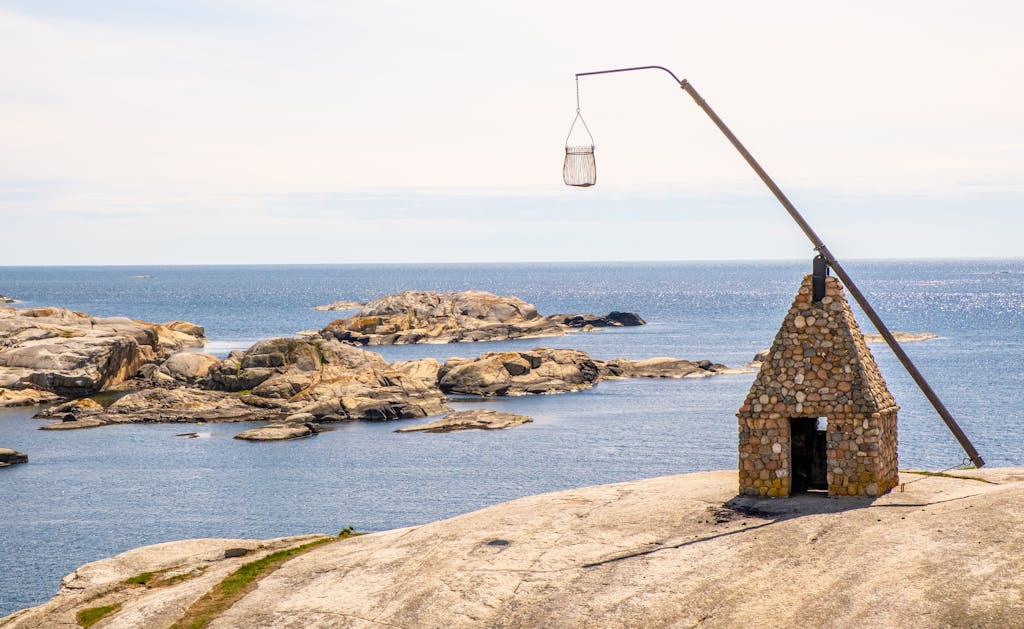
The Vippefyr at Verdens Ende is a photogenic landmark. The harbour is exposed in fresh southerlies; choose the quietest corner or return into the inner fairway if the swell builds.
Day 3 — Verdens Ende to Stavern/Larvik (20–25 nm)
A classic run along the skerries. In south-westerlies, the inner fairway is comfortable and scenic. Choose the lively guest harbour at Stavern or the larger facilities in Larvik.
Stavern’s summer atmosphere is hard to beat, while Larvik offers reliable fuel, supermarkets and easy berthing in any weather. Keep a wide berth on ferry tracks and give way early.
Day 4 — Stavern to Jomfruland (25–30 nm)
With a settled forecast, head outside Nevlunghavn and along the coast to Jomfruland. In fresher conditions, slip inside via Langesundsfjorden then back out to the island for a night at the guest pier.
Jomfruland’s nature trails and lighthouse are highlights. The guest pier can surge in onshore winds; in those cases anchor in fair weather on the lee side with good scope.
Day 5 — Jomfruland to Kragerø (10–14 nm)
Short, intricate pilotage through the Kragerø archipelago. Anchor among the islets in settled weather or enjoy the cafés and supplies at Kragerø’s central guest harbour.
Expect local traffic and ferries; keep to the marked channels and watch for pot markers. Kragerø’s historic wooden houses make a rewarding evening stroll.
Day 6 — Kragerø to Langesund (22–28 nm)
Weave north through the Grenland islands, perhaps pausing near Stråholmen in calm conditions, then continue to Langesund’s protected guest harbour.
Langesund is compact and sheltered with good services. If time allows, consider a side trip to Brevik or Stathelle for a quiet, inland-feel overnight.
Day 7 — Langesund to Tønsberg via a Veierland lunch stop (45–55 nm)
An early start and a favourable breeze make this longer return leg satisfying. If timing allows, pause off Veierland before the final reach into Tønsberg.
Book ahead for the Tønsberg bridge opening on approach if you need to reach inner berths. Arriving before late afternoon improves your chances of a convenient berth.
3-day weekend: Sandefjord, Bolæerne and Åsgårdstrand
A 3-day route. Adjust legs to forecast, moorings and crew preferences.
A relaxed long-weekend within the Oslofjord’s lee that pairs island hopping with charming towns. Expect gentle legs, plentiful services and sheltered sailing—ideal for mixed-experience crews or those easing into local pilotage. Total distance is typically 55–75 nm.
Day 1 — Sandefjord to Tønsberg via Veierland (18–22 nm)
A gentle first day within the Oslofjord’s lee. Lunch on a buoy off Veierland, then continue to Tønsberg for plentiful dining and services.
Sandefjord’s guest harbour is spacious; fuel and supermarkets are nearby. Veierland offers pleasant swimming in settled weather—mind local speed limits and swimmers near the beaches.
Day 2 — Tønsberg to Bolæerne and Verdens Ende (16–22 nm)
Hop out to the Bolæerne islands for a swim and shore walk, then continue to Verdens Ende for the night and sunset at the iconic Vippefyr light.
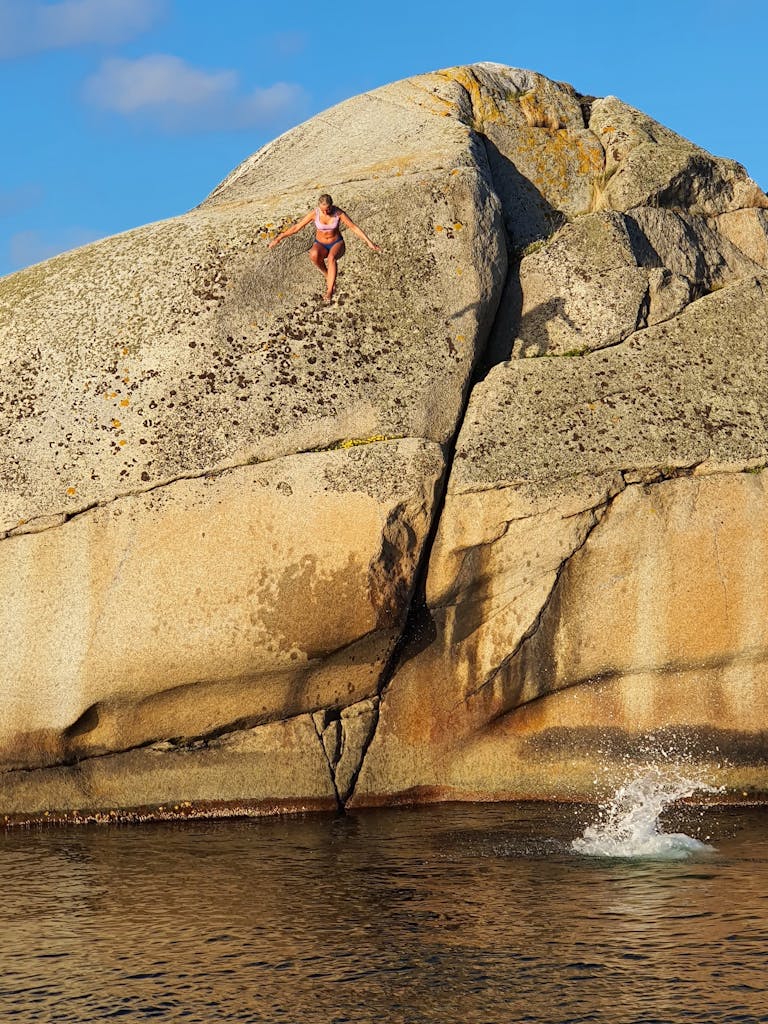
The Bolæerne provide classic rock moorings and rings—rig long shorelines to protect vegetation. If a swell rolls into Verdens Ende, return a mile or two into the inner leads for a quieter berth.
Day 3 — Verdens Ende to Sandefjord via Åsgårdstrand (22–28 nm)
Sail the inner fairway to Åsgårdstrand for a coffee stop by Munch’s former haunt, then a pleasant reach back into Sandefjord.
Åsgårdstrand’s small harbour fills quickly in July; time your stop to late morning for easier alongside space. The final leg into Sandefjord crosses ferry approaches—monitor AIS and keep clear.
When to Go
The core season runs from late May to early September. June and July deliver long daylight and the most reliable marina services; August often brings warmer water and slightly quieter guest harbours after the school holidays. Spring and autumn can be rewarding but more changeable, with sharper frontal passages and cooler nights.
Sea temperatures typically reach 16–20°C in sheltered coves by late summer. Tidal ranges are small, but gusty sea breezes, localised currents in narrows, and sudden showers are common. Plan conservative hops early in the trip, then extend your range as you calibrate local patterns.
Expect up to 18 hours of usable light at midsummer, which offers generous windows to dodge showers or time bridge openings. Public holiday weeks and school breaks concentrate demand—arrive earlier in the afternoon for the best guest berths, particularly in July.
Wind and Weather
Prevailing winds are south-westerly, moderated by regular sea breezes on warm days. Expect morning calms, building F3–4 onshore breezes by afternoon along open stretches like the approaches to Færder and Jomfruland, and gentler winds inside the skerries. Easterly or northerly patterns bring clearer air but can drive a steeper, shorter sea in the Skagerrak.
Tides are modest—often 0.2–0.4 m—but set-up and wind can create 0.5–2 knots of current in narrows and bridge channels. The Oslofjord can become choppy when wind opposes the general set. Fog can form when warm air moves over cold water, particularly in early summer and after calm, clear nights. Thunderstorms occur on hot, unstable days and pass quickly.
Use MET Norway’s coastal forecasts and inshore sea warnings, and match your route to the day: inside leads in fresh south-westerlies; outside legs when gradients drop and visibility is good. A simple routine—early starts, keeping an eye on sea breeze onset, and planning a snug plan B—keeps passages comfortable.
Getting there
The most convenient gateway is Sandefjord Torp Airport (TRF), with seasonal European links. Oslo Gardermoen (OSL) offers wider connections and an efficient rail link to Vestfold towns. By road, the E18 runs along the coast, placing Tønsberg, Sandefjord, Larvik and the Grenland towns within two hours of Oslo.
Ferry connections include Sandefjord–Strömstad (Sweden) and Larvik–Hirtshals (Denmark). The Horten–Moss ferry connects the west and east sides of the Oslofjord. Charter bases and guest harbours commonly arrange transfers; parking is straightforward outside peak weeks.
From OSL, trains to Tønsberg and Sandefjord are frequent; allow around 1.5–2 hours. If joining a yacht in Langesund or Kragerø, consider a rental car for flexible provisioning stops en route.
Chartering in Vestfold & Telemark
Charter fleets along the Oslofjord and Vestfold coast are smaller than in the Mediterranean but well-kept. Expect modern monohulls in the 30–45 ft range and a handful of performance cruisers and multihulls. Typical bases include Tønsberg, Sandefjord and, for one-way options, Oslo or the Grenland area (Langesund/Brevik). Skippered charters are readily arranged if you prefer to focus on pilotage without bridge timings and range lights.
Pricing reflects the short northern season. Peak July weeks command the highest rates; better value is found in June and late August. Most operators include bedding, gas and a basic cruising inventory; outboard engines, early check-in and linens may be extra. Marinas charge transparent guest fees, usually including shore power and showers.
Routes can be flexed to the forecast: a settled week allows outside legs past Færder and Jomfruland; a breezier pattern still yields full itineraries within the inner leads from Horten to Kragerø. Book early for school holiday weeks and ask bases about bridge opening times if your start/finish is in Tønsberg.
Norway Licences and Formalities
For bareboat charters, companies typically accept an International Certificate of Competence (ICC) or national equivalent such as RYA Day Skipper (practical). At least one crew member should hold a Short Range Certificate (SRC) to operate VHF if fitted, which is standard on charter yachts. There is no separate local cruising permit for Norway.
Norwegian law requires operators of leisure craft over 8 m LOA or with engines above 25 hp to hold a licence if born on/after 1 January 1980 (the Båtførerprøven). Visiting skippers generally satisfy this requirement with an ICC or recognised national certificate. Carry originals plus passports and proof of insurance; reflective vests and safety gear are customary checks.
Environmental rules are strict. Holding tanks are mandatory in practice, with pump-out facilities common. National park islets and bird reserves have seasonal landing or anchoring restrictions—observe signage in Færder and Jomfruland National Parks. Speed limits apply in harbours and narrow fairways, typically 5 knots. Keep lifejackets to hand for all crew and display a radar reflector when transiting fog-prone areas.
Anchorages and Marinas in Vestfold & Telemark
The region mixes well-serviced guest harbours with classic Norwegian rock moorings. Depths shoal quickly near skerries; approach at slow speed in good light, keep a sharp bow watch, and trust large-scale official charts. Many popular islets have iron rings or bolts for stern lines; use long shorelines to protect vegetation.
Vestfold highlights include Tønsberg’s central guest harbour (full-service, bridge opening schedules to consider), the Bolæerne islands (guest pontoons and stern-to rings in settled conditions), Verdens Ende (exposed in southerlies but atmospheric), Sandefjord (large, sheltered and well-supplied) and Stavern (lively summer vibe). Larvik offers all-weather berths and easy provisioning.
Telemark’s Grenland and Kragerø archipelagos provide variety: Langesund’s harbour is protected with nearby provisions; Jomfruland offers guest piers and anchoring in fair weather, with nature trails and lighthouse visits; Kragerø town is central and popular—arrive early in July. Further inside, Brevik and Stathelle provide calm berths, fuel and access to the industrial fjords.
Services are consistent: shore power (usually 16A), fresh water, showers and Wi‑Fi; fuel docks at key towns (e.g., Tønsberg, Sandefjord, Larvik, Stavern, Langesund, Kragerø, Brevik). Expect guest fees in the 250–500 NOK range in peak season. Watch for pot markers—particularly in shoulder seasons—and give wide berth to ferries on set routes, notably into Sandefjord, Larvik and Kragerø. Bridge clearances vary; check the latest data for the Tønsberg area and Grenland bridges before committing.
Many harbours accept card or app-based payment at the berth. In peak weeks, some marinas allow limited advance reservations; otherwise, aim to arrive by mid-afternoon for the best choice of space.
FAQs
How difficult is navigation along the Vestfold & Telemark coast?
It is precise rather than hard. Rocks and skerries are well charted, ranges and leading lines are clear, and buoyage is excellent. The key is conservative speeds in pilotage waters, good light for eyeball navigation, and a plan B inside the skerries when the Skagerrak becomes lumpy.
What distances should I plan for a typical week?
Most crews are comfortable with 15–30 nm days, mixing short intraday hops between islands. One longer leg (40–55 nm) may be added if you want to link Grenland back to the central Oslofjord in a single day with an early start.
Are there strong tides?
Tidal ranges are small, usually 0.2–0.4 m. However, wind setup and narrows can create noticeable currents and short, steep seas—particularly when wind opposes the general set in the Oslofjord or through bridge channels.
Can I anchor freely?
Yes, Norway’s right to roam allows anchoring provided you respect distances from houses and avoid marked reserves. In national parks such as Færder and Jomfruland, observe seasonal restrictions and use provided mooring rings where available.
What about weather reliability in summer?
Expect changeable but manageable patterns: many fair days with sea breezes, interspersed with fast-moving fronts. Long daylight allows flexible departure windows. Fog can occur after calm nights and during warm-on-cold advection.
Is swimming practical?
Yes, particularly in July and August when sheltered coves can reach 16–20°C. Open-coast water is cooler. Many guest harbours have ladders and designated swimming areas.
Do I need a VHF certificate?
If the yacht has fixed VHF (most do), at least one person on board should hold a Short Range Certificate (SRC). Charter companies normally require it alongside your helm qualification.
Where can I find accurate weather and chart information?
Use MET Norway (yr.no) for coastal forecasts and inshore sea warnings, and official Norwegian Hydrographic Service charts and sailing directions. Local harbour master pages provide bridge timings, fees and practical notices.
References
- https://www.cruiserswiki.org/wiki/Vestfold_og_Telemark
- https://www.met.no/en
- https://www.yr.no/en
- https://kartverket.no/en/sea/nautical-charts-and-publications
- https://www.kystverket.no/en/
- https://ferdernasjonalpark.no/
- https://www.jomfrulandnasjonalpark.no/
- https://www.visitvestfoldtelemark.com/
- https://www.colorline.com/
- https://www.toll.no/en/boating/sailing-and-boating-in-norway/
Charter a Yacht
Compare crewed & bareboat charters, learn the best months to sail, and get a custom shortlist from 500+ providers.