
Sailing in Norway: routes, winds and fjord-side practicalities
Norway is a sailor’s playground of skerries, deep fjords and high-latitude light. From the sheltered channels of the Oslofjord to the granite-studded south coast, and from the weather-tossed Vestland to the luminous islands of Helgeland and Lofoten, the coast offers variety, security and drama in equal measure. The seamanship required is real yet rewarding: you will work with tides in narrows, rig stern-lines to smooth rock, and thread precisely-marked leads under snow-streaked peaks.
This guide sets out the distinct sailing areas, seasonal weather patterns and practical harbour know‑how, so you can choose an itinerary that matches your experience. It also covers charter options and the certifications most operators expect. The tone is deliberately clear and structured: by the end, you will understand when to go, how the wind behaves, where to overnight, and how to prepare safely for Norway’s unique conditions.
Quick links
- Why Sail in Norway?
- Itineraries
- When to go
- Wind and weather
- Getting there
- Chartering
- Licences and formalities
- Anchorages and marinas
- FAQs
- References
Why Sail in Norway?
An unmatched coastal highway
Norway’s “skjærgård” (skerry coast) provides a near-continuous inner fairway from the Swedish border to the fjordlands of the west. You can sail day after day in flat water, stepping outside for a taste of swell when you wish. Navigation is a joy: sector lights, lead marks and superb charting make precision possible even in complex waters.
Big landscapes, human-scale stops
Round a headland to a tiny island ringed with polished granite, or follow a fjord to a village quay beneath waterfalls and orchards. Guest harbours are plentiful, well run and increasingly bookable via apps, yet you are rarely far from a quiet anchorage with iron rings set into rock for shorelines.
High-latitude light and seasons
Above the Arctic Circle, summer brings long twilights and, for several weeks, the midnight sun. Further south, golden evenings and cool, clear mornings are the norm. In shoulder seasons the crowds thin and the atmosphere sharpens; in winter, seasoned crews find world-class aurora sailing with strong weather awareness.
Seamanship that stays with you
Norway asks for tidy planning rather than bravado. You will learn to read gaps and gusts, judge tidal gates in narrows, and choose between the inside route and the ocean side. These are skills that transfer directly to ambitious cruising elsewhere.
Put simply, Norway lets you dial up or down the exposure each day. Inside routes keep seas flat for comfortable passages, while short hops outside serve up ocean vistas and rolling swell—a perfect classroom for growing confident coastal sailors.
Norway Sailing Itineraries
Below are suggested Norway sailing itineraries for different regions and experience levels. Each route balances rewarding day-sails with reliable overnight options, and can be shortened or extended to suit weather and crew. Treat them as frameworks: adjust legs to match forecasts, daylight and your team’s pace.
Oslofjord and the South Coast (7 days, one‑way to Kristiansand)
A classic week that begins in the sheltered Oslofjord and tracks the polished skerries of Sørlandet to Kristiansand. Expect clear marks, short legs and abundant guest harbours, with optional forays outside for a taste of open water. Ideal for first‑timers and families who want manageable distances and plenty of shoreside stops.
Day 1 — Oslo to Oscarsborg/Drøbak
Ease into the week with a short shakedown in protected water. The narrows at Drøbaksundet are well marked but busy; keep a lookout for ferries and commercial traffic. Step ashore to explore Oscarsborg Fortress and overnight at Drøbak’s lively guest harbour, which offers restaurants and easy provisioning.
Stops: Oslo, Aker Brygge Marina; Oscarsborg Fortress; Drøbak Guest Harbour
Day 2 — Drøbak to Son and Hankø
Follow the inside leads south with frequent sector lights guiding the twists and turns. Pause for lunch at Son’s welcoming visitor pontoons, then continue to Hankø’s regatta‑centred marina. In settled weather, nearby coves provide excellent stern‑line practice to smooth rock.
Stops: Son Guest Harbour; Hankø Marina
Day 3 — Hankø to Tønsberg via the Bolærne islands
Hop across the outer Oslofjord, checking shipping lanes, and weave among the Bolærne skerries. Former military islands now host neat moorings and walking paths. Enter historic Tønsberg for museums, full services and well‑stocked supermarkets.
Stops: Bolærne Islands Moorings; Tønsberg Guest Harbour
Day 4 — Tønsberg to Kragerø/Jomfruland
Run the skerries towards the south coast proper, staying precisely in the marked leads where rocks sit close to track. Choose Kragerø’s colourful waterfront for bustle, or anchor under pines off Jomfruland’s long shingle shore for quiet and birdlife.
Stops: Kragerø Guest Harbour; Jomfruland Anchorage
Day 5 — Kragerø to Arendal and Merdø
A short coastal leg delivers you to Arendal’s sheltered Pollen basin—observe no‑wake rules here. After a relaxed afternoon ashore, hop to the sandy coves around Merdø for a peaceful night and textbook stern‑lines to rings in the rock.
Stops: Arendal, Pollen Guest Harbour; Merdø Anchorage
Day 6 — Arendal to Lillesand via the Blindleia
A highlight of Sørlandet: the narrow, sheltered Blindleia inside passage. Expect sector lights, summer houses and intricate pilotage. Keep a close eye on charted turns and mind bridge clearances on this route. Lillesand offers welcoming guest pontoons and good eateries.
Stops: Brekkestø, Blindleia; Lillesand Guest Harbour
Day 7 — Lillesand to Kristiansand
Finish with a final skerries sail, perhaps detouring through the scenic Ny‑Hellesund archipelago. Kristiansand’s central guest harbour has fuel, onward ferries and convenient flights—perfect for a smooth one‑way handover.
Stops: Ny‑Hellesund Archipelago; Kristiansand Guest Harbour
Weather turns are easy to manage on this route thanks to plentiful all‑weather harbours. If a front arrives, shorten a leg and enjoy time ashore; there is little need to push distances in this well‑served cruising ground.
Helgeland Archipelago (7 days, circular from Brønnøysund)
A 7-day route. Adjust legs to forecast, moorings and crew preferences.
Low, luminous islands, big horizons and immaculate pilotage make Helgeland unforgettable. This circular week mixes sheltered sounds with short, rewarding open legs to ocean outposts. In high summer you’ll have long evenings and, at latitudes here, near‑midnight light.
Day 1 — Brønnøysund to Torghatten
Cast off into classic Helgeland scenery for a short hop to Torghatten’s famous hole‑through‑the‑mountain. Anchor in settled weather or pick up local moorings, then take the path to the rock arch for sunset views across skerries and sea.
Stops: Brønnøysund Guest Harbour; Torghatten Anchorage
Day 2 — Torghatten to Vega (UNESCO)
Slide across to Vega’s low, bird‑rich islands and visit the eiderdown heritage site. Visitor berths are quiet, with wide horizons and gentle evening breezes. Keep a watch for charted shallows and give bird sanctuaries respectful space.
Stops: Vega, Nes Harbour
Day 3 — Vega to Husvær and Sandnessjøen
Island‑hop through Herøy’s maze of skerries. Husvær makes a good lunch layover before a relaxed run to Sandnessjøen for fuel, groceries and laundry. Expect to meet aquaculture traffic—pass fish farms well clear as marked on charts.
Stops: Husvær Moorings; Sandnessjøen Guest Harbour
Day 4 — Sandnessjøen to Dønna and Lovund
Follow precise leads through Dønna’s sheltered sounds, then make an afternoon crossing to puffin‑famous Lovund. Tidal lines here can be playful; trimming early pays off. Visitor berths are limited in peak weeks—arrive in good time.
Stops: Dønna (Bjørn) Anchorage; Lovund Harbour
Day 5 — Lovund to Træna
A satisfying open‑water leg to Træna’s ocean outposts. Husøya provides guest berths and stair‑stepped walks with immense views. If swell is up, choose the most sheltered approach and avoid lee shores.
Stops: Træna, Husøya Harbour
Day 6 — Træna to Onøya (Lurøy)
Reach back into calmer water for Onøya’s pools and skerries. This is classic stern‑line country with iron rings in the rock; take time to set the hook carefully if kelp is thick.
Stops: Onøya Harbour
Day 7 — Onøya to Brønnøysund (via Sleneset, weather‑permitting)
Return among low islets on the inside route. Keep a sharp lookout for markers and aquaculture moorings, and enjoy an easy final glide back to Brønnøysund for celebratory seafood on the quay.
Stops: Sleneset; Brønnøysund Guest Harbour
This loop rewards patient pilotage and rewards it with solitude. Use the long daylight to unhurriedly read sectors and leads, and build in time for shore hikes—the scenery is as good from ridgelines as from the cockpit.
Lofoten and Raftsundet (10 days, circular from Svolvær)
A 10-day route. Adjust legs to forecast, moorings and crew preferences.
A headline cruise that blends storybook fishing villages on Lofoten’s south side with the drama of Raftsundet and the famed Trollfjord. Short legs, tight basins and occasional swell windows make this a brilliant step‑up itinerary for competent crews with tidy boat handling.
Day 1 — Svolvær to Skrova
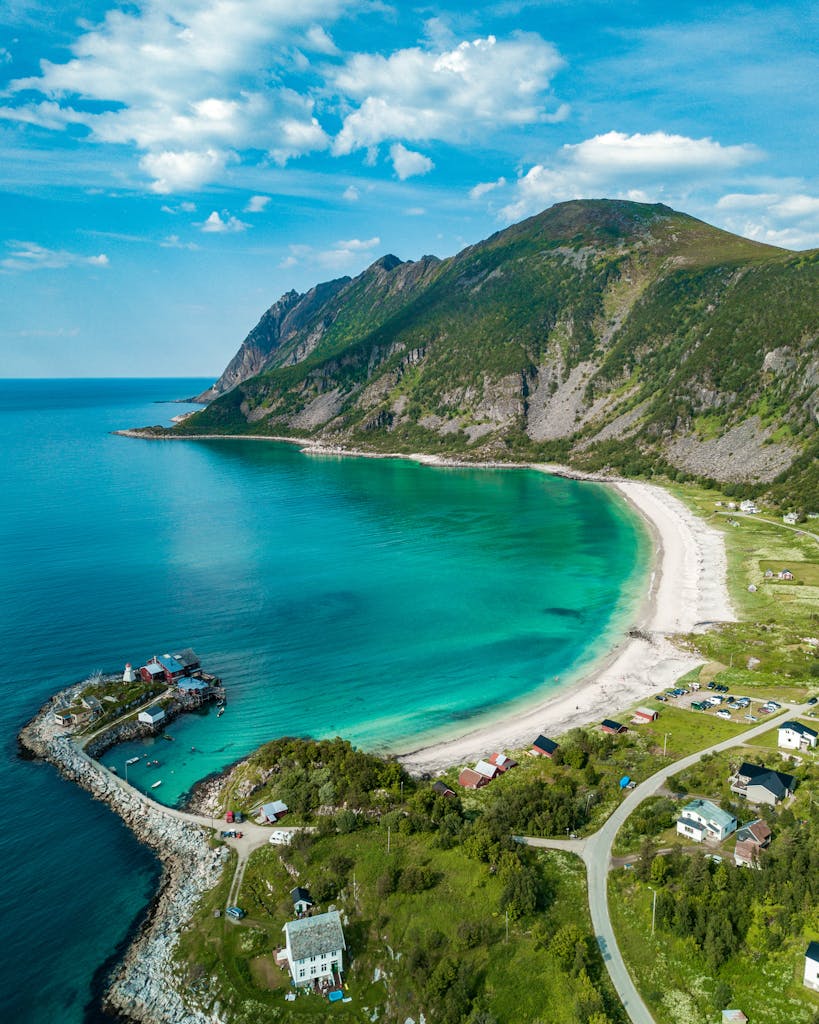
Shakedown across the sound to Skrova’s white beaches and turquoise shallows. It’s a perfect sunset spot with views back to the Lofoten wall, and a friendly first‑night harbour with simple services.
Stops: Svolvær Guest Harbour; Skrova Harbour
Day 2 — Skrova to Henningsvær
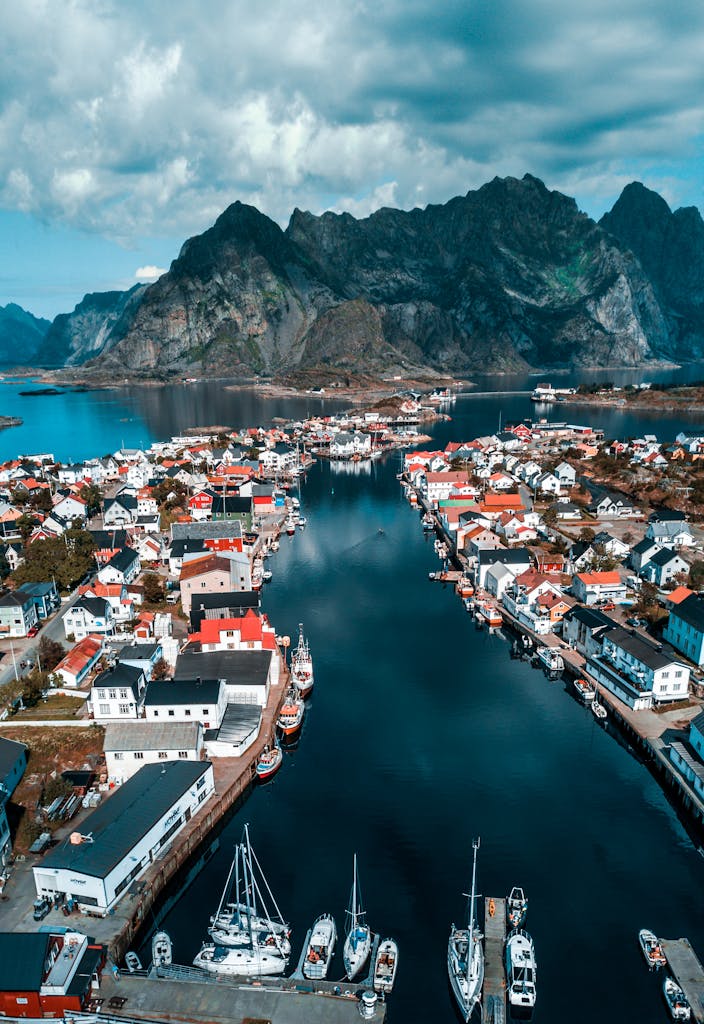
A short, scenic sail between islets. Henningsvær is arty and atmospheric; visitor berths are central but can be busy in mid‑summer, so arrive early and have a plan B in nearby coves.
Stops: Henningsvær Guest Harbour
Day 3 — Henningsvær to Nusfjord
Thread the outer skerries if weather allows, or take the inside route for comfort. Nusfjord’s historic rorbuer (fishermen’s huts) ring a tiny basin; manoeuvring is tight, but the setting is unforgettable.
Stops: Nusfjord Harbour
Day 4 — Nusfjord to Reine/Sakrisøy
One of Norway’s most photogenic anchorages. Space is limited and swell can wrap in; aim for an early arrival to secure visitor pontoons at Reine or Sakrisøy.
Stops: Reine Guest Harbour; Sakrisøy Pier
Day 5 — Reine to Sørvågen and Å (weather window)
A very short hop gives you time to explore the end‑of‑the‑road village of Å. If swell or wind is up, keep inside and walk ashore instead. Fishing traffic is frequent—keep speed down in close quarters.
Stops: Sørvågen Harbour; Å i Lofoten
Day 6 — Sørvågen to Ballstad
Retrace inside leads to Ballstad for good services, fuel and excellent hikes. Mind nets and pot markers, and expect working vessels at all hours.
Stops: Ballstad Harbour
Day 7 — Ballstad to Stamsund
A short repositioning day leaves time for shoreside museums or a late sail in the endless evening light. Stamsund is a practical stop with reliable shelter.
Stops: Stamsund Harbour
Day 8 — Stamsund to Trollfjord (via Raftsundet)
Start early to experience Raftsundet’s steep walls and the narrow, dramatic Trollfjord in settled weather. Treat Trollfjord as a day visit only; the basin is small and conditions can change quickly.
Stops: Raftsundet; Trollfjord
Day 9 — Trollfjord to Laukvik (Austvågøya NW)
Exit Raftsundet and round to Laukvik for big‑sky views of the open Norwegian Sea. Ocean swell can wrap in here; pick an alongside berth with good fendering and check lines for chafe.
Stops: Laukvik Harbour
Day 10 — Laukvik to Svolvær
Often a relaxed downwind return in typical summer northerlies or a morning sea breeze. Refuel, replenish water and celebrate in Svolvær’s harbourfront restaurants.
Stops: Svolvær Guest Harbour
Lofoten rewards conservative planning: keep legs short, arrive early at tight harbours, and hold a weather day if a front approaches. The scenery is world‑class even from the dock.
When to Sail in Norway
Peak season: June to August
The reliable window for most crews. Daytime temperatures commonly 15–22 °C in the south and 10–18 °C in the north, with long daylight and frequent sea‑breezes. The inner leads and fjords are busy but rarely crowded compared with Mediterranean standards.
Shoulder seasons: May to mid‑June, and September
Quieter harbours, cooler nights and crisper visibility. Winds are more changeable and frontal passages quicker. South coast spring blooms are lovely; the north sees vibrant autumn colours and, by late September, the first chances of aurora on dark nights.
High latitudes and daylight
North of the Arctic Circle, expect midnight sun roughly late May to mid‑July, and very short nights either side. Plan for sleep management and consider eye masks. Conversely, winter brings limited daylight; only experienced, well‑equipped teams should sail beyond day‑sailing then.
Svalbard note
Expedition‑only for most visitors. Sea ice, wildlife protection rules and severe weather compress the safe season to roughly June–August, and most cruises are skippered.
Booking marinas ahead is increasingly possible in popular hubs, but not essential if you arrive mid‑afternoon. In peak weeks, plan shorter days and aim to secure berths before dinner time.
Wind and Weather in Norway
The synoptic picture
Norway sits beneath the North Atlantic storm track. In summer, weaker lows still transit the Norwegian Sea while high pressure sometimes settles over Scandinavia. Expect variability: two‑ to three‑day patterns of fronts, showery troughs and quieter ridges. Winter brings frequent gales and significant swell on open coasts.
Regional patterns
- South & Oslofjord/Skagerrak: Summer brings moderate breezes (8–16 knots) with afternoon sea‑breeze components, often from S–SW but swinging with local heating and topography. The inside routes stay flat in all but strongest winds.
- West Coast fjords (Rogaland to Sogn og Fjordane): Prevailing SW winds meet high terrain. Gaps and fjord axes can accelerate flow; katabatic night breezes descend off glaciers. Expect sharp gust lines near headlands and funnelling in sounds.
- Trøndelag & Helgeland: Mixed patterns. In settled highs, light N–NE winds and land/sea breezes dominate; during frontal passages, brisk S–SW winds bring fast‑moving showers and squalls.
- Lofoten, Vesterålen & Troms: Summer often alternates between gentle northerlies under high pressure and brisk S–SW ahead of fronts. Channels such as Raftsundet can amplify gusts. Ocean swell wraps into outer anchorages.
- Finnmark & Barents Sea: More exposure, cooler air and longer fetch. Plan conservatively and use all‑weather harbours between hops.
Local effects are pronounced around gaps and fjord mouths. Expect gusts on the dark water near headlands, and acceleration zones where valleys open to sea. Reef early, especially when sailing towards narrows or bridges where options to bear away are limited.
Tides and streams
Tidal range is modest in the south (typically 0.3–0.6 m in the Oslofjord), increasing west and north (1–2 m common; up to ~2–3 m in parts of Troms). Most coastal passages see weak streams, but narrows can be fierce and must be timed. Saltstraumen near Bodø can exceed 15 knots; Moskenesstraumen off Lofoten is also notorious. Use official tide tables and time slack carefully.
Currents, swell and visibility
A persistent Norwegian Coastal Current sets generally NE along the coast and can add or subtract a knot. Open stretches on the North Sea and Norwegian Sea see long‑period swell after Atlantic lows. Sea fog and advection mist are possible in late spring/early summer, especially after warm days over cool water; sound and radar practice are valuable.
Sea temperature
Expect 12–18 °C in the south at midsummer, 8–12 °C in the north, and near‑freezing in Svalbard. Dress for cold‑water immersion risk year‑round.
Forecasting and practical tools
Use high‑resolution coastal forecasts and localised wind/precipitation maps to plan each leg, and refresh your view twice daily during changeable spells. Many guest harbours display updated forecasts and provide reliable Wi‑Fi, making it easy to adjust routes around fronts and fog.
Getting there
By air
International gateways include Oslo (OSL), Bergen (BGO), Stavanger (SVG) and Trondheim (TRD). For northern itineraries, Bodø (BOO), Evenes/Harstad–Narvik (EVE), Svolvær (SVJ), Leknes (LKN) and Tromsø (TOS) place you close to charter bases. Domestic flights are frequent and reliable, particularly in summer.
By sea, rail and road
Car ferries connect Denmark and Germany to southern Norway (for example Hirtshals–Kristiansand/Larvik and Kiel–Oslo). The Bergen Line and Dovre Line are scenic railway options into the fjordlands and Trondheim. The coastal express calls at many west and northern ports, simplifying one‑way join‑ups for crew.
Base logistics and provisioning
Most guest harbours are central to towns with supermarkets, chandleries and laundry. Fuel docks (“Diesel”/“Bensin”) are widespread but close early outside high season. Many marinas use apps for payment and berthing information; keep a Visa/Mastercard and, if you have it, the local Vipps app for on‑the‑spot payments. Plan main provisioning on arrival day—Sunday trading can be limited outside major cities.
Chartering in Norway
Where fleets are based
Charter availability is strongest around the Oslofjord and along the west and north: Oslo/Sandvika, Stavanger and the Ryfylke islands, Bergen with access to Hardanger‑ and Sognefjord, Helgeland from Brønnøysund, and high‑latitude bases at Bodø, Svolvær and Tromsø. In the far north, skippered expeditions are common, with limited bareboat fleets.
Boat types and suitability
Modern cruising monohulls between 34–45 feet dominate, with a smaller selection of performance cruisers, motor yachts and a few multihulls. Drafts of 1.8–2.2 m suit most harbours; inside routes and fjords often offer ample depth but require precise pilotage.
Matching route to experience
- First‑timers: Oslofjord and the south coast skerries (May–September) offer sheltered waters, short legs and abundant harbours.
- Intermediate crews: Bergen–Ryfylke–Hardanger, or Helgeland’s inner fairways, mix inside routes with optional open legs.
- Advanced: Lofoten/Vesterålen and Troms reward confident tide and weather planning; Svalbard is expedition‑grade.
Pick an area that lets you shorten or lengthen legs as weather dictates. In peak weeks, consider booking one or two “treat” harbours ahead and keep the rest flexible. North of the Arctic Circle, operators may request a more detailed passage plan before handover.
Handover, one‑ways and extras
Turnarounds are typically Friday–Sunday. One‑way options appear in high season, especially north of the Arctic Circle. Expect to be asked for passage plans in the north, along with evidence of cold‑water gear. Extras often include bedding, outboard, and cockpit enclosures; ask for a stern‑line reel and consider a diesel heater if shoulder‑season sailing.
Insurance, deposits and running costs
Security deposits are standard and can be reduced with a damage‑waiver fee. Check what’s covered (grounding, rig, tender) and confirm excesses. Budget for fuel (heaters can increase consumption), mooring fees in popular towns, and occasional paid showers and laundry in guest harbours.
Licences and formalities
Skipper certifications typically requested
Most Norwegian operators accept an ICC (International Certificate of Competence) or RYA Day Skipper (Sail) as the minimum for bareboat, together with the Short Range Certificate (VHF). They will also ask for a sailing CV evidencing recent tidal/coastal experience; for Lofoten/Troms, expect higher scrutiny and sometimes two experienced adults aboard. Norwegian nationals commonly hold the Båtførerprøven; foreign guests are not expected to obtain it if they present an equivalent credential.
Entry, customs and Schengen
Norway is in Schengen but outside the EU Customs Union. Arrivals from Schengen can proceed directly to harbours; arrivals from non‑Schengen should use designated ports of entry and follow customs guidance. Alcohol and fishing export limits are enforced. Carry vessel papers, insurance, and crew passports.
Environmental and safety rules
- Anchoring and access follow Norway’s right‑to‑roam principles with sensible distance from houses and respect for marked nature reserves and bird sanctuaries (some have seasonal restrictions).
- Fish farms are common; give wide berth and avoid crossing cage lines or mooring spreads.
- Cold‑water safety is paramount. Carry proper lifesaving equipment, service your heating, and use thermal layers even in summer.
Environmental etiquette is simple: keep noise low, avoid damaging vegetation when running shorelines, and use pump‑out facilities where provided. Weather can change quickly—build conservative margins into every plan.
Svalbard specifics
Independent cruising requires advance notification to the Governor, robust SAR insurance, polar bear safety planning and strict environmental compliance. Most visitors therefore join skippered expeditions.
Norway Anchorages and Marinas
The Norwegian way of mooring
Natural harbours abound. Depths often plunge close to shore; the classic technique is to anchor off and take one or two stern lines to iron rings set into rock, or to trees/boulders where permitted. Many islets have public mooring rings installed. Kelp can be thick—set and check your anchor carefully.
Guest harbours (Gjestehavn)
Almost every town maintains guest berths with water, electricity and showers. Fees are commonly paid via machines or widely used apps; QR codes are prevalent. Pump‑out stations are well distributed in populated areas. Expect 16–32 A shore power and good Wi‑Fi in larger towns.
Notable stops by region
- Oslofjord & South Coast: Aker Brygge (Oslo), Drøbak, Son, Tønsberg, Kragerø, Arendal (Pollen), Lillesand/Brekkestø, Kristiansand, and the lovely uthavner of Ny‑Hellesund and Jomfruland.
- West & Fjords: Stavanger (Vågen), Skudeneshavn, Kvitsøy, Haugesund, Bergen (central guest harbour and quieter Hjellestad), Rosendal (Hardangerfjord), Balestrand and Aurland (Sognefjord), Espevær and Bekkjarvik in the islands.
- Trøndelag & Helgeland: Rørvik, Hitra/Frøya marinas, Brønnøysund, Sandnessjøen, Dønna, Lovund, Træna and Støtt.
- Lofoten & Troms: Svolvær, Henningsvær, Ballstad, Reine/Sakrisøy (limited space), Nusfjord (tight), Sommarøy and Hamn i Senja; Tromsø has full‑service marinas.
Harbour etiquette is relaxed but orderly: rig fenders both sides, keep lines tidy, and be ready to raft if asked by the harbourmaster. Many towns post live berth availability in apps—checking en route saves time.
Practical cautions
Follow IALA Region A marks and Norway’s sector lights precisely; many approaches rely on coloured sectors. Check bridge clearances on inside routes. Watch for underwater cables, marked leading lines, and aquaculture facilities shown on official charts. In narrows, wait for slack if uncertain, and avoid meeting large coastal traffic in constricted sounds.
Sailing in Norway FAQs
Is Norway suitable for a first bareboat charter?
Yes—particularly the Oslofjord and south coast between May and September. You will find sheltered, well‑marked inside routes and frequent guest harbours. Choose conservative daily distances and practise stern‑line techniques.
When is the best time for Lofoten and the far north?
June to August give the most settled weather and long daylight. Earlier and later can be beautiful but breezier and colder, with fewer services open. Plan short legs and have strong cold‑weather gear.
Will I see the Northern Lights in summer?
No. You need dark nights, which return from late August/September to April. Summer offers the midnight sun instead.
Do I need a drysuit to sail in Norway?
Not routinely, but high‑quality foul‑weather gear, insulating layers, hats and gloves are sensible year‑round. For high‑latitude passages or winter sailing, expedition‑grade clothing is advisable.
How strong are the tides?
The range is modest in the south and increases northward. Most of the coast has gentle streams, but a few narrows—such as Saltstraumen and Moskenesstraumen—are extremely strong and should only be transited at slack in suitable conditions.
Can I anchor anywhere?
Anchoring is widely tolerated under the right‑to‑roam ethos, but keep a respectful distance from houses, avoid marked nature reserves during sensitive seasons, and stay clear of aquaculture sites and underwater cables.
Do I need a fishing licence?
Sea fishing for visitors is generally licence‑free, but there are species and area restrictions, and export limits apply. Licences are required for salmon, sea trout and char in rivers and some fjord zones. Check current local regulations.
How do I pay in marinas?
Most guest harbours accept card payments at kiosks or via apps. Many also use QR codes and provide codes for facilities after payment. Carry a bank card and a phone with roaming data.
References
- https://www.cruiserswiki.org/wiki/Norway
- https://www.yr.no/
- https://www.kartverket.no/en/sea/sehavniva
- https://www.kystverket.no/en/
- https://www.rya.org.uk/knowledge/abroad/icc
- https://www.toll.no/en/recreational-boats/
- https://www.hurtigruten.com/coastal-norway/ports/
- https://www.havneguide.no/
- https://www.sdir.no/en/recreational-boating/
- https://www.sysselmesteren.no/en/
Charter a Yacht
Compare crewed & bareboat charters, learn the best months to sail, and get a custom shortlist from 500+ providers.