
Sailing in Florida
Sailing in Florida: routes, winds, harbours and practicalities
Florida offers an unusually varied cruising ground in one state: sugar-white Panhandle sands, Gulf Coast barrier islands, the coral-fringed Keys and the Atlantic ICW from Fernandina to Miami. Warm water, mostly moderate winds and abundant marinas make it approachable, while reef passes, shifting inlets, summer squalls and the Gulf Stream ensure it remains engaging for experienced crews. You can choose protected line-of-sight day hops in Pine Island Sound or Biscayne Bay, push offshore along Hawk Channel or the Atlantic shelf, or stage a bluewater hop to the Bahamas.
Plan around seasons. Winter brings lively ‘northers’ after cold fronts, tempered by excellent visibility and low rain. Summer is hot, often light to moderate by day with dependable sea breezes but punctuated by powerful afternoon thunderstorms. The official hurricane season runs June to November, with peak activity August to October. With sensible timing and conservative pilotage through inlets and the Keys’ reef tract, Florida rewards with easy logistics, rich wildlife and a harbour every few miles.
Quick links
- Why Sail in Florida?
- Itineraries
- When to go
- Wind and weather
- Getting there
- Chartering
- Licences and formalities
- Anchorages and marinas
- FAQs
- References
Why Sail in Florida?
A single coastline seldom delivers so much contrast. In a week you might ghost through manatee zones on the ICW at sunrise, broad reach inside the Keys’ reef in aquamarine water by lunch and watch the sun set behind Gulf barrier islands. Florida’s mosaic of semi-sheltered waters allows beginners to build miles in safety, while the open Atlantic, the Gulf Stream and the long, shallow Gulf fetch keep advanced skippers intellectually honest.
The infrastructure is reassuring. Well-marked channels, frequent marinas, municipal moorings and helpful bridge tenders support itineraries that remain flexible when the weather shifts. Provisioning is straightforward in almost every port, and there are anchorages within dinghy distance of good food throughout the Keys, Tampa Bay and the northeast coast.
Wildlife and water clarity add a layer of magic. Turtle grass flats and coral heads demand accurate pilotage but repay it with turtles, rays and reef fish beneath the keel. Dolphins are a near-daily companion; manatee zones remind you to slow down and look. When conditions align, Florida also becomes a springboard for a short bluewater passage to the Bahamas, with customs processes and services geared to that migration.
Culturally, the state is a study in contrasts: Spanish forts in St Augustine, Cuban coffee in Key West, working waterfronts in the Panhandle and polished resort marinas in Palm Beach and Miami. Whatever your sailing aims—mile-building, family-friendly island-hopping, or reef-and-wreck snorkelling—Florida has a corner that fits.
Itineraries
Below are three tried-and-tested Florida sailing itineraries spanning the Keys, the sheltered waters of Pine Island Sound and Charlotte Harbor, and the emerald Panhandle. Use them as a framework and flex your hops to match the season, the forecast and your crew.
Florida Keys: Biscayne Bay to Key West (7 days, line-of-sight inside the reef)
A 7-day route. Adjust legs to forecast, moorings and crew preferences.
This classic south-westerly run keeps you mostly inside the reef in Hawk Channel for clear water, frequent day-stop reefs and reliable anchorages. Expect crab-pot fields, narrow passes and sparkling snorkelling when the wind eases.
Day 1 — Miami to Key Biscayne and Biscayne National Park
Shake down in protected water. Slip from Coconut Grove or Miami Beach and settle at No Name Harbor, with an optional hop to Boca Chita’s picturesque harbour. Expect easy motoring in channels and light sea-breeze reaches; holding is good with simple dinghy access to trails and swimming.
Day 2 — Key Biscayne to Key Largo (Rodriguez Key)
Enter Hawk Channel and track the reef line southwest. Keep to the marks through the shallows and give fringing shoals a healthy berth. Anchor off Rodriguez Key in sand patches that show clearly in settled light—excellent for a first Keys snorkel.
Day 3 — Key Largo to Islamorada
Short reaches between reef lights make for relaxed sailing. Time a midday stop at Alligator Reef for snorkelling when the sun is high, then edge inside to Islamorada or Plantation Key. Trap floats are common—post a bow lookout and avoid night arrivals.
Day 4 — Islamorada to Marathon (Boot Key Harbor)
A staple Keys leg with services at the finish. Pick up a mooring in Boot Key Harbor if available for secure shelter, chandleries and easy reprovisioning. In a northerly, the basin is snug and social; hail on VHF for assignments.
Day 5 — Marathon to Bahia Honda/Newfound Harbor
Make a short hop to Bahia Honda State Park for beaches and walking trails, or choose roomy Newfound Harbor if you prefer more swinging room. After winter fronts, northeasterlies can kick up a steep chop in Hawk Channel—reef early for comfort.
Day 6 — To Key West via the reef
Follow the reef southwest with optional snorkel stops such as Western Sambos in settled conditions. Time your arrival for marina check-in at Key West Bight or a city mooring in Garrison Bight and enjoy sunset at Mallory Square.
Day 7 — Key West lay day or out to the Marquesas (advanced)
Stay ashore to explore Old Town or, in truly fair weather, make a there-and-back day run to the remote Marquesas for sand, swimming and solitude. Top up fuel and water, check forecasts and currents carefully before any offshore foray.
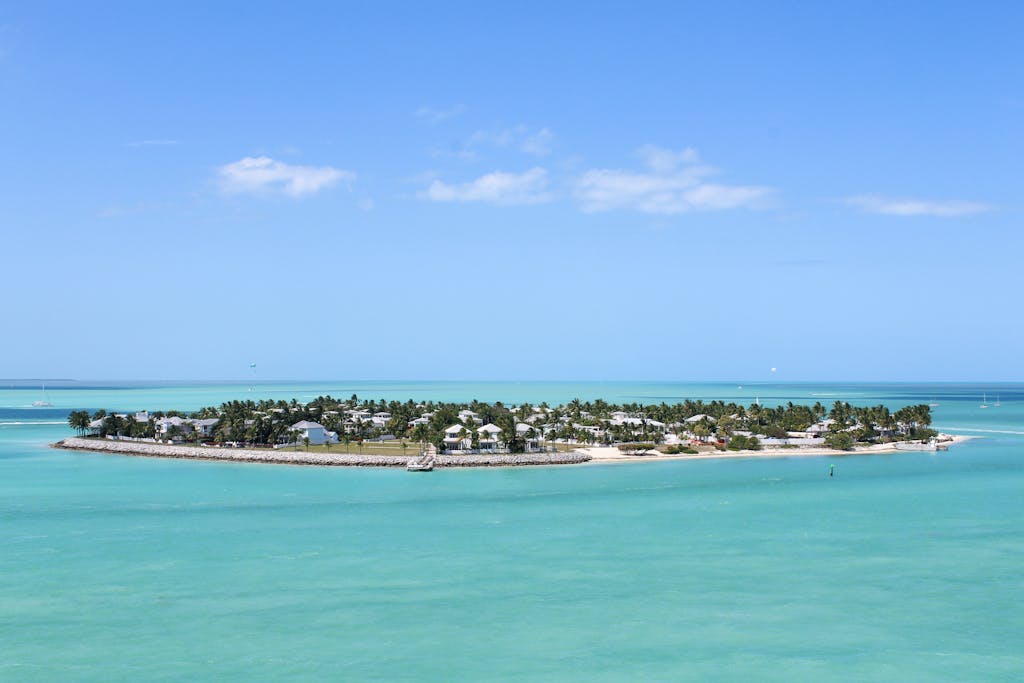
Southwest Florida: Charlotte Harbor and Pine Island Sound (7 days, protected island-hopping)
A 7-day route. Adjust legs to forecast, moorings and crew preferences.
A gentle, line-of-sight circuit threaded through well-marked channels and mangrove keys. Ideal for newer skippers, this route delivers beaches, shelling and wildlife with minimal exposure to ocean swell.
Day 1 — Punta Gorda to Pelican Bay (Cayo Costa)
Depart Fishermen’s Village or Laishley Park and shape a course down Charlotte Harbor. Pelican Bay offers excellent protection, clear sand and dinghy access to Cayo Costa State Park—arrive early for the best spots near the park channel.
Day 2 — Pelican Bay to Cabbage Key/Useppa
Meander south through Pine Island Sound’s marks, favouring the channel centres in the shallower cuts. Set the hook near Cabbage Key for an easy hop ashore and laid-back sunset views across the flats.
Day 3 — To Captiva (Tween Waters area)
Work south along the inside route towards Captiva. Narrow fairways and cross-currents reward patience—post a depth-watcher on the bow. In settled weather, enjoy long beach walks and renowned shelling.
Day 4 — Picnic Island and St James City
Make a short sail to Picnic Island for a lunchtime swim, then continue to St James City for a quiet night and waterside dining. Crab pot buoys are abundant—keep speed down and a sharp lookout.
Day 5 — Back to Pelican Bay via Buck Key
Weave north with an optional kayak through Buck Key’s mangrove trail when winds are light. Return to the reliable shelter and sandy holding of Pelican Bay for an easy evening.
Day 6 — Boca Grande/Whidden’s Bay
Hop to Boca Grande for a change of scene. Expect noticeable tidal set near the passes; plan arrivals for slack where possible. Ashore, a charming historic village awaits within walking distance.
Day 7 — Return to Punta Gorda
Fetch back up Charlotte Harbor with a rewarding close or beam reach depending on the breeze. Post-front north or north-easterlies can be punchy—reef early and enjoy a steady final run up the river.
Panhandle sampler: Pensacola, Santa Rosa Sound and Destin (7 days, bays and passes)
A 7-day route. Adjust legs to forecast, moorings and crew preferences.
This emerald-coast circuit alternates between broad bays and narrow sounds behind protective barrier islands. It suits relaxed summer sailing and shoulder-season adventures when winter ‘northers’ ease.
Day 1 — Pensacola to Fort McRee/Big Lagoon
Shake down across Pensacola Bay and settle behind the dunes at Fort McRee. The anchorage is well sheltered with easy beach landings and fine sunset light over the Gulf islands.
Day 2 — To Destin (Crab Island) via East Pass
Leave early and target a fair-weather window; East Pass can turn lumpy with onshore wind against an ebb. Anchor north of the bridge at Crab Island in clear water and strong tidal flow—rig a stern anchor if needed.
Day 3 — Explore Choctawhatchee Bay
Enjoy light-air day sails, swimming and paddleboarding in the bay. Shoals and shifting bars demand conservative routes and a close eye on the sounder along the ICW cut.
Day 4 — Santa Rosa Sound to Navarre
Run westward in protected water behind the barrier islands. Anchor near Navarre Beach in settled weather, dinghy ashore and walk the dunes for broad Gulf views.
Day 5 — Pensacola Beach (Little Sabine Bay)
A short hop brings excellent shelter in Little Sabine Bay. Ashore you will find plentiful amenities; observe no‑wake zones and keep clear of buzzing personal watercraft.
Day 6 — Perdido Key and Johnson Beach
Anchor off Johnson Beach in fine weather for a last swim in the emerald water. Expect afternoon sea breezes in summer and livelier post-front winds in winter—reef accordingly.
Day 7 — Return to Pensacola
Time your return for a fair tide through channels and under bridges. Re‑provision easily downtown and celebrate with fresh seafood on the waterfront.
When to go
Broad patterns
- Best overall: November to April in South Florida and the Keys for lower rain, clearer water and regular trade-wind easterlies. Expect brisk ‘northers’ after cold fronts, especially December to February.
- Shoulder seasons: March to May and October to early December offer warm water with fewer squalls and lighter crowds.
- Summer: May to September is hot and humid. Reliable afternoon sea breezes (often 8–15 knots) are countered by powerful late-day thunderstorms and occasional overnight squall lines.
- Hurricane season: 1 June to 30 November, with peak activity August to October. Build robust go/no-go thresholds and flexible plans.
For most visiting crews, winter and spring deliver the best mix of visibility, temperature and wind. Summer remains very workable with early starts, short hops and conservative thunderstorm strategies.
Regional nuances
- Florida Keys and South Florida: Prime months November–May. Summer brings calmer mornings, seabreeze afternoons and vivid but fast-moving storms.
- Atlantic Northeast (St Augustine to Fernandina): Autumn is lovely; winter fronts can make inlets rough. Spring brings settled spells with cool mornings.
- Gulf Coast and Charlotte Harbor: October–May is excellent. Summer is viable with short hops and early starts, but afternoon convection is routine.
- Panhandle: Spring and autumn are most settled. Winter can be cold with punchy northers; summer offers clear water and beach weather with midday heat.
If your plans hinge on reef snorkelling and clear water, favour the Keys in winter and spring. For easy, family-friendly cruising, Charlotte Harbor and Pine Island Sound are forgiving nearly year‑round.
Water and air temperatures
- Keys/South Florida sea 22–29°C (72–84°F) through the year; Panhandle 15–30°C (59–86°F) with coolest in January–February. Air ranges from 15–32°C (59–90°F).
Pack for sun and spray whatever the season: long-sleeve UV layers, wide‑brim hats and light rain shells keep everyone comfortable between swims.
Wind and weather
Synoptic drivers
Florida’s weather pivots between winter cold fronts and summer sea-breeze regimes. Frontal passages rotate winds from SW to NW–N, then veer NE–E over 24–72 hours, often 15–25 knots with higher gusts. In summer, mornings are light, building to S–SE sea breezes by early afternoon at 8–15 knots before evening calms. Thunderstorms are common from late May to September, with strong, gusty outflows and frequent lightning.
Regional wind regimes
- Keys and South Florida: Winter features E–SE trades at 12–18 knots punctuated by 24–48 hours of NW–N at 20–30 knots after a front, which can heap short, steep seas in Hawk Channel and the Straits. Summer brings E–SE 8–15 knots, with squalls; night land breezes may ease the return leg.
- Atlantic coast (Miami to Fernandina): Sea breezes S–SE 10–15 knots dominate summer; winter sees alternating north-easters and easterlies. The Gulf Stream flows N at 2–4 knots close offshore south of Palm Beach; wind‑against‑stream conditions produce steep, dangerous seas—pick your window carefully.
- Gulf Coast (Naples to Tampa Bay): Summer W–SW sea breezes 8–15 knots with frequent afternoon storms; winter ‘northers’ at 15–25 knots bring clear, cool air and a short, steep chop over the shallow shelf.
- Panhandle: Strongest winds in winter with frequent post-front N–NE 20+ knots. Spring and autumn give mixed but moderate flows. Summer favours light S–SE sea breezes with isolated squalls.
Near-coastal routes often allow you to pick a comfortable point of sail by tucking inside barrier islands or the Keys’ reef. Offshore legs demand closer attention to gradient winds and sea state.
Tides, currents and visibility
- Tidal range: Atlantic NE Florida 1–2 m (3–6 ft) decreasing southward; Keys and Gulf coasts 0.3–1.0 m (1–3 ft). Inlets can run hard; avoid wind‑against‑tide entries.
- Currents: The Gulf Stream hugs the Atlantic coast south of about Lake Worth; ICW currents are modest but can be sharp near inlets and bridges. Tidal set is noticeable in Pine Island Sound passes and Tampa Bay.
- Visibility: Winter fronts bring crystal air; summer haze and sea spray reduce contrast. Fog can affect the Panhandle and Big Bend in late winter/early spring.
Build decisions around state not just wind: a modest breeze over adverse current at an inlet or over the Stream can create treacherous, standing waves.
Thunderstorms and severe weather
Afternoon convection is a defining summer risk. Expect rapid build-ups, gust fronts 30–50 knots, intense rain, lightning and occasional waterspouts. Reef early, reduce sail well ahead of any gust front and avoid open inlets during outflow events. Track the tropical outlook daily during hurricane season and maintain conservative diversion plans.
Getting there
Gateways
- By air: Miami (MIA), Fort Lauderdale (FLL), Key West (EYW), Tampa (TPA), Orlando (MCO), Jacksonville (JAX) and Pensacola (PNS) offer excellent access to major charter bases and marinas.
- By road: Interstates I‑95 (Atlantic) and I‑75 (Gulf) parallel the coasts with abundant marina clusters near exits.
Most bases are within an hour of a major airport, and rideshare services make transfers straightforward even for late arrivals.
Where to start
- Atlantic/Keys: Miami–Fort Lauderdale for Biscayne Bay, Hawk Channel and Bahamas staging; Key West and Marathon for central/southern Keys.
- Gulf: St Petersburg/Tampa Bay for urban sailing and barrier islands; Punta Gorda/Charlotte Harbor for protected island-hopping; Pensacola for emerald-water Panhandle cruising.
Choose a start point that matches your crew’s appetite: urban amenities and big-fleet support in Miami and St Pete, or quiet sand and mangroves in Charlotte Harbor and the Panhandle.
Provisioning and spares
Big-box groceries and chandleries are near most marinas. Marinas in Marathon, Key West, St Petersburg, Fort Lauderdale and St Augustine have on-site or nearby riggers and mechanics. Order specialist parts ahead of time during peak season.
For efficiency, pre‑order bulky water, beverages and ice for dockside delivery on turnaround day. Many marinas can recommend trusted local services.
Charts and comms
NOAA raster/vector charts are widely available on plotters and apps. The ICW uses standard US Aids to Navigation; the Atlantic ICW fixed bridges are typically 65 ft, but note the Julia Tuttle Causeway in Miami at about 56 ft. Mobile reception is strong nearshore; VHF Ch. 16 and local working channels are monitored by the Coast Guard and bridges.
Carry a backup navigation app and paper overview charts for context. On the Atlantic, a dedicated Gulf Stream layer is invaluable for planning.
Chartering
Where to charter and what to expect
Florida’s main bareboat centres are Miami, Key Largo, Marathon and Key West in the south; St Petersburg/Tampa Bay and Punta Gorda on the Gulf; and Pensacola in the Panhandle. Fleets range from modern 34–50 ft monohulls to 38–50 ft catamarans, with crewed options common around Miami and the Keys.
Expect thorough local briefings on inlets, bridges and reef etiquette. Many operators offer optional skippers for the first day to smooth checkouts and local pilotage.
Seasons and pricing
Peak demand aligns with winter (December–April) and school holidays. Shoulder months offer gentler rates, while hurricane season can be significantly discounted—balanced by stricter weather watch and insurance conditions. Many operators permit one‑ways within the Keys (e.g., Key West ↔ Marathon) when schedules allow.
Book early for winter school breaks and spring. If sailing in peak season, secure marina space or moorings ahead of time in Marathon and Key West.
Suggested experience level
- Biscayne Bay and Charlotte Harbor: Suitable for newer skippers comfortable with channels and tides.
- Keys/Hawk Channel and Atlantic hops: Intermediate; reef pilotage, crab pot fields and squall management required.
- Bahamas crossings: Advanced; Gulf Stream strategy, night entries discouraged.
Matching boat and area to your experience is the simplest route to a relaxing week: cats shine in the shallow inside routes, while deeper monohulls are at home along Hawk Channel and offshore.
What certification is needed?
The US has no national skipper licence. In practice, Florida charter firms accept a strong sailing CV and often ask for ASA 104 Bareboat Cruising or RYA Day Skipper/ICC as evidence. A practical checkout or hired skipper for the first day is common. If you will operate a vessel with an engine and you were born on or after 1 January 1988, Florida requires a Boating Safety Education ID or a temporary certificate—charter companies can guide you.
Licences and formalities
Operating and safety
- Boater education: Operators born on or after 1 January 1988 must carry a Florida Boating Safety Education ID or a Florida temporary certificate when operating a powered vessel (most charter sailboats qualify due to auxiliary engines).
- VHF and equipment: No personal VHF licence is required for domestic use on US waters. US‑flagged recreational vessels staying domestically typically do not need an FCC ship station licence. Carry appropriate PFDs, sound signals and night lights; an EPIRB/PLB and AIS are strongly recommended for offshore legs.
- Alcohol and speed zones: Strict enforcement of BUI laws; numerous manatee protection and no‑wake zones, especially on the ICW.
Skippers are responsible for ensuring safety kit is serviceable and accessible. Brief the crew on overboard recovery and thunderstorm procedures before leaving the dock.
Environmental rules
- Florida Keys National Marine Sanctuary prohibits anchoring on coral; use reef mooring buoys where provided. Avoid scarring seagrass—look for sand patches and use a trip line in dense grass.
- Local anchoring limits exist in some municipalities and designated “anchoring limitation areas”; respect posted rules and use mooring fields where provided (e.g., St Augustine, Marathon, Key West).
Leave no trace: manage rubbish, avoid grey-water discharge near reefs and use pump‑out facilities where available.
Foreign-flagged yachts and Bahamas hops
- Arrival: Report immediately to US Customs and Border Protection (CBP). Vessels ≥30 ft require a user fee (DTOPS) decal. Qualifying foreign yachts may obtain a US Cruising Licence to ease interstate movements.
- Departures/returns: When visiting the Bahamas, clear Bahamian customs on arrival and use CBP ROAM to report back into the US. Check insurance limits for named-storm clauses.
Paperwork is streamlined if prepared in advance. Keep copies of passports, vessel documents and permits in both digital and hard copy.
Bridges and depths
- ICW bridge clearances are generally 65 ft, with notable exceptions (e.g., Julia Tuttle Causeway ~56 ft). Opening bridges have schedules; hail bridge tenders early on VHF.
- Depths vary widely. Florida Bay and parts of Pine Island Sound are shallow; Hawk Channel and offshore routes are deeper but exposed. Inlets can be hazardous with onshore winds against ebb, and some (e.g., St Augustine, Ponce, Jupiter, Boynton) shoal and change frequently—seek local notices.
Plan mast clearance and under‑keel margins conservatively. If in doubt at an inlet, wait for settled seas and fair tide or choose a deeper, more reliable pass.
Anchorages and marinas
Atlantic coast (Fernandina to Miami)
- Fernandina Beach: Moorings and marina near historic downtown; strong tidal flow. Good jump-off for Cumberland Island (north of the state line).
- St Augustine: Municipal marina and mooring fields with strong current; inlet is dynamic—enter with settled seas and current behind you.
- Cape Canaveral/Port Canaveral: Deep inlet, reliable all-weather access and full-service marinas. Easy launch pad for the Space Coast.
- Fort Pierce and Vero Beach: Secure municipal moorings (Vero) and well-served marinas. Convenient ICW stopovers with good provisioning.
- Lake Worth (Palm Beach): Expansive anchorage near Peanut Island with ocean access; mind strong tidal set and holding variations.
- Fort Lauderdale to Miami: Dense marina network, boatyards and bridges. No Name Harbor on Key Biscayne is a prized staging anchorage for the Keys or Bahamas.
Expect pronounced currents near inlets and bridges. Book marinas ahead in peak season and maintain a tidy deck for frequent bridge transits.
Florida Keys
- Hawk Channel: A largely protected inside route with frequent reef mooring buoys outside for day stops. Expect trap floats and narrow passes.
- Key Largo to Islamorada: Anchorages off Rodriguez and Tavernier Keys; marinas scattered along the inside route.
- Marathon: Boot Key Harbor’s large mooring field and services make it the Keys’ cruiser hub.
- Key West: Slips in Key West Bight and Stock Island; city moorings in Garrison Bight. Dry Tortugas (Garden Key) offers a scenic but exposed anchorage with no services—self-sufficiency required.
Water clarity rewards daylight entries. Use reef mooring buoys for snorkelling and avoid anchoring on coral or dense grass.
Gulf Coast (Naples to Tampa Bay)
- Marco Island and Naples: Well-marked but shallow approaches; Marco’s Factory Bay and Smokehouse Bay are popular. Naples City Dock offers access to town.
- Fort Myers/Charlotte Harbor: Extensive protected waters with anchorages at Cayo Costa (Pelican Bay), Useppa/Cabbage Key and Captiva. Numerous marinas at Punta Gorda and Cape Coral.
- Sarasota and Tampa Bay: Marina Jack in Sarasota; St Petersburg Municipal Marina and many deep-water options across Tampa Bay. Egmont Key has fair-weather holding and dramatic scenery near the bay entrance.
Across the shallow Gulf shelf, short, steep chop builds quickly in ‘northers’. Choose inside routes when the gradient breeze freshens.
Panhandle (Pensacola to Apalachicola)
- Pensacola: Full-service marinas and easy access to well-sheltered anchorages (Fort McRee, Little Sabine Bay). Clear water and sugar-sand beaches.
- Destin/Choctawhatchee Bay: Beautiful but shallow in places; East Pass can be treacherous with onshore wind against ebb. Anchor at Crab Island in settled weather.
- Panama City and St Joseph Bay: Deep, clear bays with ample room to sail and anchor; services within reach.
Bar passes shift—seek recent local knowledge before committing, and always avoid wind‑against‑ebb at the inlets.
Practical anchoring notes
- Bottoms: Predominantly sand and mud with excellent holding; coral and grass require precision. Carry a scoop-style primary and a secondary well-suited to grass.
- Hazards: Crab/lobster pots are ubiquitous on the Keys’ and Gulf routes; keep a sharp lookout, especially at dawn/dusk. Mind swift tidal streams in inlets and around bridge abutments.
Set and back down firmly, then snorkel to inspect in clear water where feasible. A trip line is helpful in grass, and a kellet or snubber will quiet the rode in chop.
FAQs
When is the best time to sail in Florida?
For the Keys and South Florida, November to April balances good visibility, manageable winds and lower rainfall. Autumn and spring are ideal on the Panhandle and Gulf Coast. Summer is workable with early starts and short hops, but thunderstorms are frequent.
Is Florida suitable for beginner bareboat skippers?
Yes—choose protected areas like Biscayne Bay, Charlotte Harbor or Santa Rosa Sound, avoid exposed inlets in onshore winds, and keep day hops short. Intermediate skills are advisable for Hawk Channel, reef pilotage and any Gulf Stream passages.
How risky is the Gulf Stream?
Handled with respect, it is manageable. The current runs north at 2–4 knots close to the Atlantic coast. Avoid wind-against-stream conditions, choose fair-weather windows and plan set and drift carefully—especially for Bahamas crossings.
Do I need a licence to charter?
There is no national skipper licence requirement. Most Florida operators accept a solid sailing CV and often ASA 104 or RYA Day Skipper/ICC as evidence. If you were born on or after 1 January 1988, you will need a Florida Boating Safety Education ID or temporary certificate to operate a powered vessel.
Can I anchor anywhere in the Keys?
No. Anchoring on coral is prohibited and damaging seagrass is illegal. Use sand patches, observe local anchoring restrictions and take advantage of mooring buoys on the reef and municipal mooring fields in places like Marathon and Key West.
What draft is practical for the Keys and Florida Bay?
Drafts up to about 1.8 m (6 ft) are common on the Hawk Channel side with prudent pilotage. Florida Bay is much shallower; many routes favour shoal-draft monohulls or catamarans. Always consult up-to-date local guidance before taking the inside routes.
How do summer thunderstorms affect sailing plans?
Expect a daily risk from late May to September. Leave early, aim to be anchored by mid‑afternoon, reef conservatively and track radar. Gust fronts can exceed 30–50 knots with lightning and torrential rain.
Are there bridge restrictions on the ICW?
Most fixed bridges provide 65 ft clearance, but there are lower exceptions. The Julia Tuttle Causeway in Miami is around 56 ft and limits taller masts. Many bridges are openings with published schedules—call ahead on VHF.
References
- https://www.cruiserswiki.org/wiki/Florida
- https://marine.weather.gov/MapClick.php?map.x=228&map.y=149&zmx=5&zmy=5&map=marine
- https://www.nhc.noaa.gov/
- https://floridakeys.noaa.gov/mbuoy/welcome.html
- https://myfwc.com/boating/regulations/
- https://www.dhs.gov/cbp/roam
- https://dtops.cbp.dhs.gov/
- https://www.navcen.uscg.gov/local-notices-to-mariners
- https://www.noaa.gov/stories/understanding-sea-breeze
- https://www.weather.gov/safety/thunderstorm
Charter a Yacht
Compare crewed & bareboat charters, learn the best months to sail, and get a custom shortlist from 500+ providers.