
Sailing the Maldives: routes, monsoon winds and practicalities
The Maldives is a chain of low-lying coral atolls strung across the equator, offering luminous lagoons, reef-fringed anchorages and day-sailing between sandbanks. For the cruising sailor, this is a destination of contrasts: serene passages inside atoll lagoons and boisterous ocean swells in the channels; simple village jetties and high-end resort moorings. Understanding the monsoons, the reef passes and the formalities is key. Get those right and you will unlock a unique cruising ground of clear-water anchorages, reliable trade winds in season and world-class snorkelling with manta rays and whale sharks.
Expect short, line-of-sight hops within the lagoons, with longer, open-water crossings between atolls. Navigation is largely visual—time your approaches for overhead sun, post a bow watch and favour sand patches for anchoring. With Malé and Gan acting as well-served gateways, and a dependable seasonal rhythm of winds and currents, the Maldives suits both first-time crewed charters and experienced skippers seeking tropical passages with rewarding marine life.
Quick links
- Sailing the Maldives: routes, monsoon winds and practicalities
- Quick links
- Why Sail in Maldives?
- Itineraries
- When to go
- Wind and weather
- Getting there
- Chartering
- Licences and formalities
- Anchorages and marinas
- FAQs
- References
Why Sail in Maldives?
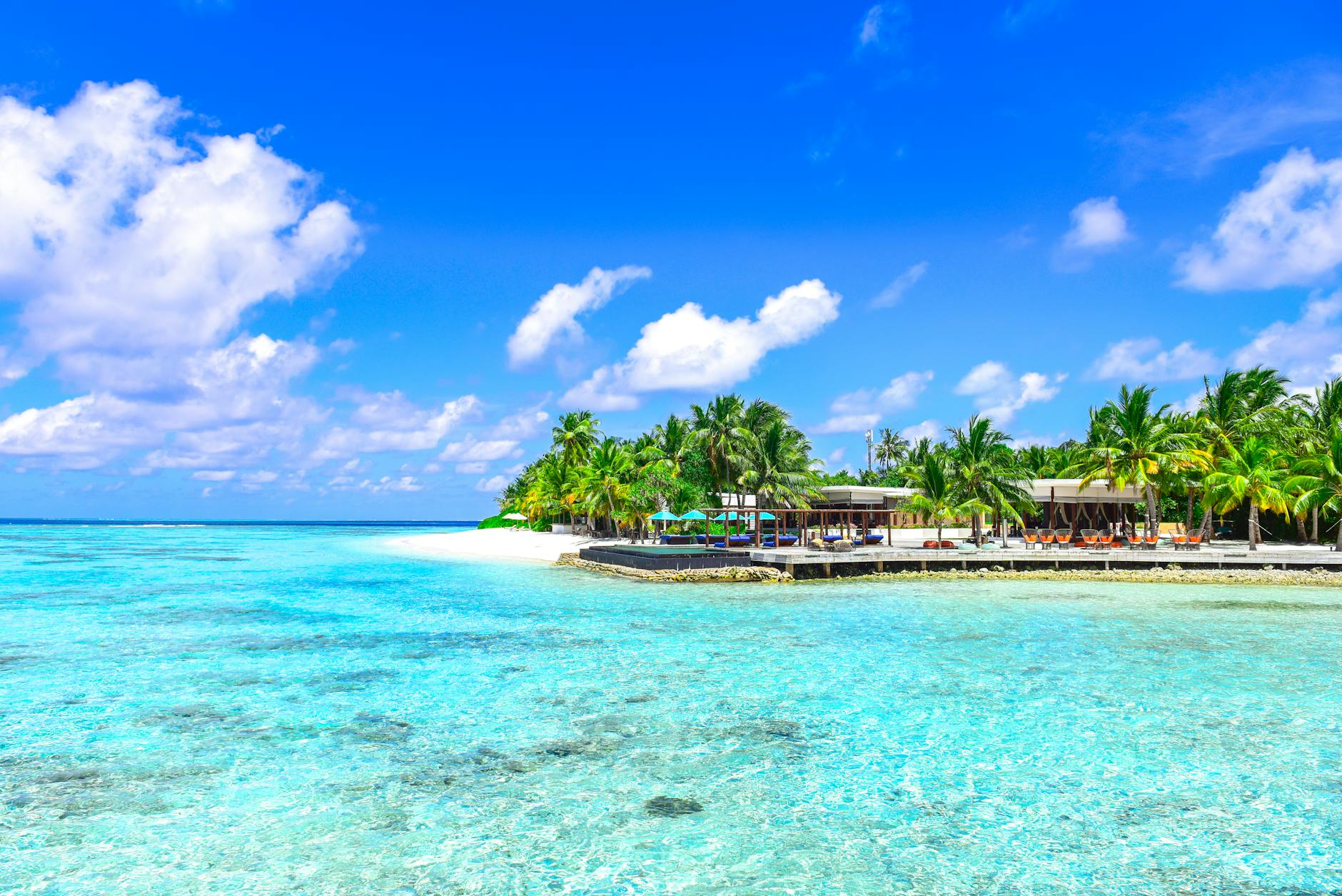
Sailing in the Maldives rewards those who plan with precision. The atolls form vast natural breakwaters, creating mile-wide lagoons of flat water for relaxed day sails. Coral reefs add complexity but also character; time your entries with the sun high and you are treated to turquoise anchorages over white sand that feel tailor-made for shallow‑draft cats and careful monohulls.
Marine life is the constant backdrop. North-east monsoon months deliver exceptional visibility for snorkelling and diving, while the south-west brings richer plankton and manta congregations at sites such as Hanifaru Bay (permit dependent). Many anchorages sit within a short tender ride of reef passes where currents sweep in life; plan your tides and you can drift-dive with sharks in the morning and anchor in glassy lagoons by afternoon.
Logistics are favourable. Velana International Airport sits beside the principal yachting anchorage at Hulhumalé, with fuel, water and provisions a short hop away. In the far south, Gan provides a quieter gateway with a protected lagoon and straightforward services. Whether you prefer a crewed catamaran exploring central atolls or an independent cruise that stitches together entry ports in the north and south, the Maldives offers manageable distances, predictable seasonal patterns and unforgettable horizons.
Itineraries
Below are two seven-day Maldives sailing itineraries to suit different tastes and seasons. The central atolls loop combines classic snorkel and dive sites with easy logistics from Malé, while Addu’s sheltered lagoon offers calm-water sailing in the far south. Always adjust plans to the monsoon, time pass transits for slack water, and aim to enter reef areas in full sun.
Central Atolls Highlights (7 days, Malé return)
A compact circuit through North Malé, Rasdhoo and Ari atolls, this route delivers a blend of mellow lagoon sailing and marquee underwater sites. With short daily passages and abundant sand patches for anchoring, it’s ideal for a first Maldives cruise or a relaxed, resort-adjacent holiday with ample time in the water.
Day 1 – Hulhumalé to Thulusdhoo (North Malé Atoll)
Join the yacht at Hulhumalé anchorage. Make a short shakedown sail north inside the atoll to Thulusdhoo. Anchor on sand in settled conditions and take a tender to the reef for a first snorkel. In the evening, enjoy calm lagoon conditions and an easy night.
Day 2 – Thulusdhoo to Rasdhoo Atoll
Make an early start to cross the channel to Rasdhoo. Enter the atoll in good light and keep a bow watch for bommies; anchor in the lee of Rasdhoo and, if conditions permit, snorkel or dive Madivaru Corner on a slack tide. Expect brisker winds and some swell in the channel compared with the lagoons.
Day 3 – Rasdhoo to Ukulhas (North Ari)
Enjoy a relaxed hop into North Ari Atoll. Anchor off Ukulhas on sand patches with room to swing. Take a shore visit for supplies and a stroll, then a late‑afternoon swim on the house reef when the sun highlights the coral heads.
Day 4 – Ukulhas to Maaya Thila and Fesdu Lagoon
Sail within the lagoon to classic North Ari sites. Time Maaya Thila for slack water to maximise visibility and minimise current, then finish in Fesdu’s calm lagoon for an easy night and star-gazing in flat water.
Day 5 – Fesdu to Dhigurah/Maamigili (South Ari)
Head south through Ari’s lagoon. Anchor off Dhigurah for beach time, or position near Maamigili for access to services. Arrange a licensed guide if seeking whale sharks along the South Ari Marine Protected Area and follow local interaction guidelines.
Day 6 – Maamigili to Guraidhoo (South Malé Atoll)
Use a weather window for the channel crossing back to Kaafu. Enter via a marked kandu in full sun, then continue to Guraidhoo’s lagoon. Advanced divers may plan Kandooma Thila on slack; otherwise, enjoy sheltered swimming inside the atoll.
Day 7 – Guraidhoo to Hulhumalé via Emboodhoo Lagoon
Make a leisurely return up the atoll with a lunch stop at Emboodhoo Lagoon before clearing back to Hulhumalé. Top up fuel and water if required and prepare for disembarkation.
Addu Atoll Easy Loop (7 days, Gan return)
Addu (Seenu) offers sheltered, almost landlocked lagoon sailing with short hops between villages and sandbanks. It’s a great choice for families or those prioritising flat-water comfort, heritage sites from the RAF era, and relaxed snorkelling over high-adrenaline pass dives.
Day 1 – Arrive Gan (Seenu/Addu)
Join in Gan’s protected lagoon. Complete any local paperwork and take a shakedown sail towards Feydhoo/Maradhoo. The wide lagoon offers forgiving depths and straightforward anchoring on sand.
Day 2 – Maradhoo and the British Loyalty Wreck
Make a short lagoon passage. Snorkel or dive the British Loyalty, a WWII-era wreck in the atoll, noting slack water timings and any local guidance. Overnight in flat water with excellent shelter.
Day 3 – West Addu: Hithadhoo and Koattey
Drift along the western side to Hithadhoo. Explore mangroves and birdlife at the Koattey Protected Area and enjoy gentle sailing in the lee of the islands.
Day 4 – Eastbound to Hulhudhoo/Meedhoo
Cross the lagoon in settled conditions. Anchor off Hulhudhoo or Meedhoo and visit the village (modest dress ashore). Pick up fresh provisions and meet friendly locals.
Day 5 – Southern Rim and Sandbanks
Day-sail along the southern rim. Swim on sandbanks and watch for turtles on the reef edge. Return to a secure anchorage before dusk, mindful of isolated coral heads.
Day 6 – Leisure Day and Local Culture
Make a short hop to a favourite lagoon. Arrange a local guide for heritage sites from the former RAF base era, or focus on snorkelling and beach time. The lagoon’s protection makes for easy nights at anchor.
Day 7 – Return to Gan
Return to Gan for fuel, water and final swims before disembarking or preparing for an onward passage. Coordinate departures with domestic or international flights from GAN.
When to go
The Maldives is reliably warm year‑round, with air temperatures of about 27–32 °C and sea temperatures of 27–30 °C. Seasonality is driven by the monsoons rather than temperature. The most settled sailing conditions usually run from January to April, during the north‑east monsoon, bringing drier weather, lighter to moderate winds and excellent underwater visibility.
May to October is the south‑west monsoon: windier, more humid, with squalls and rougher ocean channels but productive for manta and whale shark encounters in certain areas. Transitional months (late April/May and late October/November) are variable and can bring thunderstorms and calms. For easy lagoon sailing and frequent daylight reef entries, late December through April offers the widest windows. Surfers may prefer the south‑west monsoon for swell, but yachts should be prepared for gusts and reduced visibility in rain.
Wind and weather
Two seasonal regimes dominate. The north‑east monsoon (Iruvai) typically establishes from December/January to April, giving NE–E winds of roughly 8–15 knots across the central atolls, often lighter in the lagoons. Skies are predominantly fair, rainfall is low, and underwater visibility is at its best. The south‑west monsoon (Hulhangu) arrives around May and runs to October, with prevailing SW–W winds 12–25 knots, gusty squalls and higher humidity; ocean swell wraps into atoll channels and some windward anchorages. Transitional periods can flip direction within hours and deliver thunderstorms.
Currents are a critical consideration. Tidal range is modest (about 0.5–1.0 m), yet streams in the passes (kandu) can exceed 3–4 knots as oceanic flow exchanges with the lagoons; plan pass transits and dives around slack water. Ocean swell is lowest in the NE monsoon and highest in the SW monsoon. Tropical cyclones are uncommon but not impossible, with slightly higher risk in the far north during inter‑monsoon months; the southern atolls are rarely affected. Expect strong sun year‑round; good light at the masthead and a bow watch are essential for reading coral heads on approach. In the SW monsoon, keep an eye on squall lines and avoid wind‑against‑current in passes, which can create steep, confused seas.
Getting there
Most charter trips and crew changes route through Velana International Airport (Malé, MLE), adjacent to the main yachting anchorage at Hulhumalé/Hulhulé. Domestic flights and ferries connect Malé to other atolls. In the far south, Gan International (Seenu/Addu, GAN) handles regional flights and is a convenient gateway for southern itineraries.
For private yachts, recognised ports of entry include Uligan (Uligamu) in the far north, Malé/Hulhumalé in the central atolls and Gan (Addu) in the south. An appointed local agent is normally required ahead of arrival to organise clearances and cruising permits; they will advise the most suitable entry port for your route and season. Approaches between atolls involve open‑ocean channels—plan inter‑atoll passages for daylight arrivals, ideally with the sun high. Within atolls, routes are typically line‑of‑sight day sails with abundant visual navigation; charted depths and reef edges can be incomplete, so supplement with recent satellite imagery and local knowledge where possible.
Chartering
The Maldivian charter scene is built around crewed vessels—catamarans and traditional liveaboard ‘safari boats’—that deliver comfortable cabin charters and fully‑provisioned private trips. Most start and finish near Malé for access and service support; a smaller number operate from Gan for southern circuits. Expect shallow‑draft cats to anchor on sand patches inside lagoons, with daily snorkel and dive stops at passes and thilas (pinnacles). Going ashore on resort islands may attract a fee; inhabited islands are welcoming but conservative—modest dress is expected away from resort beaches.
Bareboat options are limited and subject to change. Where offered, operators typically restrict cruising to defined areas and require skippers with suitable qualifications and recent multihull experience. Many visitors opt for skippered charters to simplify local navigation, dive logistics and permits. Provisioning and fuel are strongest around Malé/Hulhumalé. Fresh produce is available on larger inhabited islands; resort supply boats can be a useful backup at a premium. Fuel and water are commonly delivered by barge at Malé and available in Gan; elsewhere facilities are sparse. Diving is excellent, but check whether your charter includes a dive guide and compressor or partners with local dive centres. A customary gratuity for crew is appreciated on crewed charters—confirm norms with your operator.
Skipper qualifications (brief): If a rare bareboat is approved, expect to show an ICC or RYA Day Skipper (or higher) plus VHF/short‑range certificate and a concise log of recent, relevant experience. Crewed and skippered charters do not require guest certifications.
Licences and formalities
Entry and cruising rules evolve, so engage a local agent before departure. In practice, private yachts are expected to appoint an agent to coordinate clearance, cruising permits and inter‑atoll travel authorisations. Standard check‑in is at Uligan, Malé/Hulhumalé or Gan. Visas on arrival are available for many nationalities (duration varies); passports should have adequate validity. Your agent will advise current fees, documentation and permitted cruising areas.
Customs are strict. Importing alcohol for personal use is prohibited; ship’s stores may be sealed on arrival and unsealed on departure. Pork products, spear guns and certain drones are restricted or banned. Fishing is tightly regulated—no spear‑fishing, no taking of turtles or coral, and respect marine protected areas (e.g., Hanifaru Bay requires permits and seasonal rules). Waste management is sensitive on low‑lying islands; avoid discharging near reefs and use reception facilities where provided. Friday is a public holiday and some offices close for prayers; plan clearances accordingly. Modest dress is expected on inhabited islands outside designated bikini beaches, and photography of government or military sites is restricted. Night entries to unfamiliar passes are strongly discouraged.
For bareboat charters (where permitted), operators will set minimum skipper qualifications and experience and may confine routes to specified atolls. Keep copies of ship’s papers, insurance, crew list and passports readily available for inspections, and ensure your AIS and navigation lights are in good order.
Anchorages and marinas
There is no conventional marina network. Hulhumalé provides the main yachting anchorage and services for Malé, with fuel and water deliveries, chandleries and shore access via the public jetty. Gan (Addu) offers a large, protected lagoon with straightforward anchoring and basic facilities. Uligan in the far north is the preferred first stop for arrivals from India/Sri Lanka, with a welcoming anchorage and efficient clearance via local agents.
Elsewhere, anchoring is almost always on sand patches inside atoll lagoons. Avoid coral at all times. Use a bow watch, polarised glasses and overhead sun (late morning to mid‑afternoon) for entry. Many passes (kandu) are unlit and can run 2–4 knots, with standing waves in the SW monsoon—time your transits for slack water and daylight. Resort islands occasionally maintain moorings for guests; fees and prior permission are the norm. Services outside Malé and Gan are limited; plan fuel, water and provisioning accordingly.
- Favour sand patches and use ample scope; consider a trip line if bommies are nearby.
- Avoid anchoring on coral or seagrass; reposition if the anchor drags onto reef.
- In tighter lagoons, a stern line to a sandbank can reduce swing and protect coral heads.
Popular central options include Rasdhoo’s lagoon in settled weather, sand patches off Ukulhas and Mathiveri in North Ari, Fesdu and Maaya Thila areas in North Ari, Dhigurah/Maamigili on the South Ari edge, and Guraidhoo/Emboodhoo inside South Malé. In the north, Kelaa and Dhidhdhoo provide shelter; in the south, Addu’s lagoon anchorages near Feydhoo, Maradhoo and Hithadhoo are reliably calm.
FAQs
When is the best time to sail in the Maldives?
January to April offers the most settled weather and clearest water under the north‑east monsoon. May to October is windier with more squalls under the south‑west monsoon but can be superb for manta and whale shark encounters. Transitional months are variable.
Can I bareboat charter in the Maldives?
Bareboat options are limited and subject to change. Most visitors book crewed or skippered charters. If bareboat is available, expect to show ICC or RYA Day Skipper (or higher), VHF certification and recent experience, and to accept area restrictions.
Are there marinas in the Maldives?
There are no conventional leisure marinas. Hulhumalé offers the main service anchorage near Malé; Gan in Addu provides a spacious, protected lagoon. Otherwise you will anchor on sand patches inside lagoons and rely on local fuel/water deliveries.
Is night sailing advisable between atolls?
Not for first‑timers. Enter passes and anchorages only in daylight with the sun high to read coral. Ocean channels can be transited by night in settled conditions, but plan to arrive at the next pass in good light and at or near slack water.
What are the rules on alcohol and dress?
Importing alcohol is prohibited and ship’s stocks may be sealed. Alcohol is served in licensed resorts and on licensed liveaboards. On inhabited islands, dress modestly away from designated bikini beaches.
How strong are currents in reef passes?
Despite a small tidal range, exchange flows can exceed 3–4 knots, especially in the SW monsoon or during spring tides. Plan pass transits and dives around slack water and be conservative with wind‑against‑current scenarios.
Is provisioning straightforward?
Around Malé/Hulhumalé, yes—there are supermarkets, markets and fuel/water services. Elsewhere, selection is limited to local stores and markets on larger islands. Stock up before heading to remote atolls.
Do I need a local agent for my own yacht?
In practice, yes. Agents arrange clearance, cruising permits and inter‑atoll travel authorisations and will brief you on current restrictions, fees and permitted areas.
References
Charter a Yacht
Compare crewed & bareboat charters, learn the best months to sail, and get a custom shortlist from 500+ providers.