
Sailing in Anguilla
Sailing in Anguilla & Prickly Pear Cays: routes, conditions and practicalities
Anguilla and the nearby Prickly Pear Cays deliver text‑book tradewind sailing set against pale‑blue shallows and white‑sand crescents. The distances are short, the navigation is largely line‑of‑sight, and the rewards are immediate: marine‑park moorings over coral gardens, calm anchorages in settled weather, and easy access from St Martin/Sint Maarten. This guide outlines where to go, when to go, and what to expect from winds, sea state, formalities and chartering — so you can plan with confidence and make the most of a compact yet compelling cruising ground.
Quick links
- Sailing in Anguilla
- Why Sail in Anguilla & Prickly Pear Cays?
- Itineraries
- When to Go
- Wind and Weather
- Getting There
- Chartering
- Licences and Formalities
- Anchorages and Marinas
- FAQs
- References
Why Sail in Anguilla & Prickly Pear Cays?
Why Anguilla stands out
Anguilla is a low‑lying limestone island ringed with beaches and clear, shallow water. For sailors, that means brilliant visibility over sand and reef, straightforward pilotage in daylight, and sheltered pockets that sparkle in the trades. The character is more low‑key than some neighbours, yet the anchorages — from Road Bay to Crocus Bay — feel refreshingly unhurried.
Navigation is reassuringly simple in good light: you will read water colour for depth, eyeball coral patches and pick sand for your hook. Ashore, Sandy Ground offers a friendly strip of bars and supplies without fuss, while the rest of the coastline keeps a relaxed, uncrowded feel even in peak season.
The Prickly Pear draw
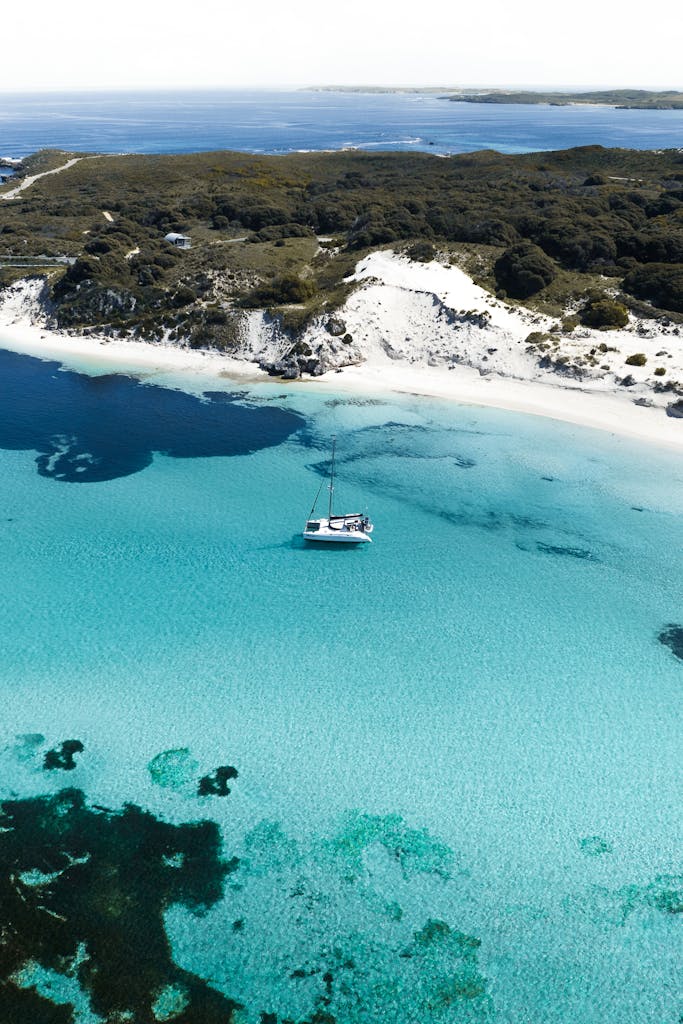
Six nautical miles northwest of Road Bay, the Prickly Pear Cays sit inside a protected marine park with visitor moorings. On a settled day, a reach out and a reach back delivers snorkelling with good coral, turtles and schooling reef fish. When winter swells are running, the same reef line reminds you you’re on the Atlantic edge — a timely nudge to choose windows well.
Plan to arrive mid‑morning for the best light on the reef, pick up a mooring and spend unhurried hours in the water. In any northerly pulse, reassess early and be ready to return to Road Bay; the protection there makes for a far more comfortable night.
Short hops, big variety
Within a day’s sail you can move from lively beach bars at Sandy Ground to dramatic cliffs at Little Bay, from the postcard sand‑spit of Sandy Island to the wild, open feel of Dog Island. It’s an ideal arena for a first Caribbean charter, a gentle shakedown from St Martin, or a restorative pause on a longer passage between the Virgins and the Leewards.
Distances rarely exceed 10–12 nautical miles between highlights, giving you time to enjoy swims, snorkels and long lunches. Reaches and broad reaches predominate, and with careful swell watching you can stitch together a rewarding circuit that suits mixed‑ability crews and families.
Itineraries
Below are two suggested itineraries that showcase Anguilla’s easy day‑sailing and the marine‑park moorings at Prickly Pear. Adjust daily hops to suit the forecast, particularly with regard to any north‑swell events.
Anguilla Explorer: 5 days including Prickly Pear and Dog Island (weather‑permitting)
A 5-day route. Adjust legs to forecast, moorings and crew preferences.
Day 1 — Road Bay arrival and clearance
Enter Road Bay (Sandy Ground) in daylight for easy visual pilotage and sand holding. Clear customs/immigration ashore, then settle the hook and take a short afternoon hop to Crocus Bay for a swim in calm conditions, or remain off Sandy Ground for an easy first night.
Day 2 — Reach to Prickly Pear Cays
A beam‑reach carries you 6–7 NM to the Prickly Pear marine‑park moorings. Snorkel the reef in settled weather and watch for north‑swell sets at the passes. If there’s any wrap or a pulse of groundswell, return to Road Bay for the night.
Day 3 — Dog Island or Sandy Island
With fair weather and modest seas, extend 7–8 NM west to Dog Island for a wild, open‑ocean feel and excellent snorkelling; otherwise opt for the easier hop to Sandy Island’s moorings for lunch and a beach‑bar vibe. Return to Road Bay if any swell builds.
Day 4 — Cliffs and coves
Work along the north‑west coast: short hops to Little Bay (moorings) and Crocus Bay under the cliffs. In a settled spell you can lunch off Meads Bay or Rendezvous Bay on the south coast before returning to Road Bay for a quiet night.
Day 5 — Easy morning, clear out
Take a final swim and breakfast at anchor, top up on fuel/water if needed, and complete outward clearance at Road Bay before making for St Martin or your next Leewards waypoint.
Prickly Pear Taster: 3 relaxed days
A 3-day route. Adjust legs to forecast, moorings and crew preferences.
Day 1 — Settle in at Road Bay
Arrive, anchor on sand with good holding, and enjoy Sandy Ground’s shore side. Check the marine forecast and watch for north‑swell windows for tomorrow.
Day 2 — Prickly Pear out‑and‑back
Sail to Prickly Pear Cays, pick up a mooring and snorkel the reef. If swell is up, substitute with Sandy Island and Little Bay for protected snorkelling and return to Road Bay for the night.
Day 3 — Morning swim and depart
Enjoy a leisurely swim at Crocus Bay or a coffee on deck at anchor, then prepare to depart or cross to St Martin on the afternoon breeze.
When to Go
Season at a glance
- December to April: Peak season with reliable easterly trades (12–20 knots). Occasional North Atlantic groundswells (“northers”) can affect north‑facing anchorages and the Prickly Pear reef line.
- May to June: Often the best blend of settled trades, fewer north swells, and quieter anchorages.
- July to October: Hurricane season. Expect lighter, more variable winds punctuated by squalls. Tropical systems require close monitoring and a flexible plan.
Holiday weeks (Christmas, New Year and Easter) are busier and pricier; book permits and moorings early and plan conservative day lengths. Outside peak weeks you will find ample space at Road Bay and a calmer pace ashore.
Temperatures and water
Air temperatures sit around 24–31 °C year‑round. Sea temperatures hover at 26–29 °C, making in‑water time pleasant in all months.
Sun exposure is strong even on overcast days. Rash vests, reef‑safe sunscreen and plenty of shade on deck will keep the crew comfortable on longer snorkel days.
Practical timing tips
Aim your Prickly Pear and Dog Island visits for settled days with minimal northerly swell. Use shoulder months (late April–June, November) for calmer seas while retaining consistent breeze.
Arrival and departure days benefit from daylight approaches. Plan to be anchored before 16:00 when possible, leaving a margin to relocate if swell builds.
Wind and Weather
Trade winds
The easterly trades dominate. Expect E–NE in winter, veering E–SE into summer. Typical strengths are 12–20 knots, with stronger pulses during frontal activity to the north or when the pressure gradient tightens.
Swell and sea state
North Atlantic groundswells are the single most important local modifier. From roughly December to March, periodic north or north‑west swell can make north‑coast anchorages roll and renders Prickly Pear and Sandy Island exposed. In contrast, the south coast and Road Bay can remain workable when chosen with care.
Local effects
- Acceleration and chop in the Anguilla Channel between St Martin and Anguilla, particularly in fresh trades.
- Gusts and minor shifts near the cliffs of Crocus and Little Bay.
- Night‑time katabatics are modest; holding is generally sand with good bite at Road Bay.
Combine a general wind forecast with a dedicated swell model to judge comfort at exposed cays. A small northerly component can turn a pleasant mooring into a rolly one within hours; build in alternatives and check conditions early.
Tropical systems
From July to October, tropical waves and the occasional cyclone pass through the Leewards. Monitor forecasts closely, build in contingency days, and favour conservative passages during this period.
Getting There
By air
- Fly direct to St Martin/Sint Maarten: Princess Juliana International (SXM) is the primary gateway with frequent long‑haul and regional connections.
- Connect to Anguilla (AXA): Clayton J. Lloyd International Airport has regional services from San Juan and nearby islands. Many sailors transfer via SXM and ferry to Blowing Point before joining a yacht.
If your charter begins in St Martin, time arrivals to coincide with base briefings and bridge openings. If embarking in Anguilla, factor in ferry schedules and transfer time from Blowing Point to Sandy Ground.
By sea
- From St Martin/Sint Maarten: It’s an 11–15 NM crossing from Marigot/Simpson Bay to Road Bay with straightforward, daylight pilotage.
- Ports of entry: Road Bay (Sandy Ground) is Anguilla’s main clearance point for yachts. Approach is easy in settled conditions with sand holding in 3–8 m.
Cross the Anguilla Channel in settled morning conditions for flatter seas. Keep a practical reefing plan; the breeze can be a notch stronger mid‑channel.
Provisions and services
- Sandy Ground/Lower Valley have groceries, ice and dining. Specialist chandleries are limited on Anguilla; source parts and major services in St Martin/Sint Maarten and arrive well‑prepared.
Provision staples before leaving St Martin if possible. On Anguilla, you’ll find fresh produce, bakery items and fuel/water, but niche spares and advanced repairs are best handled across the channel.
Chartering
Where to charter from
While Anguilla has limited on‑island fleets, nearby St Martin/Sint Maarten hosts extensive bareboat and crewed options. Many charters plan Anguilla as a highlight within a Leewards itinerary, clearing in at Road Bay.
Boat choice
Catamarans are popular thanks to shallow draught and generous deck space for mooring‑field life. Monohulls are equally suitable; just plan conservatively around swell windows for exposed cays.
Experience level
Anguilla is well‑suited to competent day‑skippers comfortable with mooring pick‑ups and reading reef colours. The sailing is largely line‑of‑sight, but groundswells and the open‑ocean feel beyond Prickly Pear reward prudent decision‑making.
What you’ll need to show
Charter companies typically accept RYA Day Skipper (or higher) or an ICC, or ASA 104 Bareboat Cruising, often alongside a sailing CV and VHF operator competence. Expect a local cruising/park permit for Anguilla waters, arranged either by your base or on arrival at Road Bay.
Confirm inclusions such as dinghy, outboard, snorkel gear and park‑mooring fees in advance. Build your plan around daylight movements and leave room to adapt if swell constrains the offshore cays.
Licences and Formalities
Entry and clearance
- First call at Road Bay (Sandy Ground) to complete inward clearance with Customs and Immigration before cruising beyond the anchorage.
- Outward clearance is required when departing Anguilla for a foreign port (e.g., St Martin).
Arrive with documents organised and the whole crew available to present if requested. Office hours can vary on holidays; time your arrival to avoid delays.
Cruising permits and marine parks
- A cruising permit is required to visit bays beyond Road Bay and the offshore cays. Marine‑park areas (e.g., Prickly Pear, Sandy Island, Little Bay, Dog Island) are mooring‑only; anchoring on coral is prohibited.
- Visitor moorings are first‑come, first‑served. In swell, they can become untenable; have an alternate plan (often returning to Road Bay).
Carry cash or card for park fees and keep your receipt handy; rangers may check permits afloat at popular sites.
Environmental expectations
- Use holding tanks and avoid discharge in anchorages. Do not take or damage coral, shells or conch; recreational fishing and spearfishing are regulated — check current rules before attempting either.
Choose reef‑safe sunscreen, stow rubbish securely and leave cays as you found them. Mooring use protects coral and keeps anchor chains off fragile habitat.
Documents and payments
- Carry passports, ship’s papers, crew list, insurance and proof of radio licence. Fees for cruising and marine parks are payable during clearance or via the marine parks authority as directed locally.
Some charges are per‑person and per‑day. Clarify what your charter base has pre‑arranged to avoid duplication.
Anchorages and Marinas
Ports and facilities
- Road Bay (Sandy Ground): Principal anchorage and clearance point. Sand holding, 3–8 m, good space. Dinghy dock and shore‑side services. Fuel, water and basics available; arrange major repairs in St Martin/Sint Maarten.
Road Bay is the dependable bolt‑hole when swell affects exposed cays. You’ll find convivial beach spots ashore and straightforward access for taxis and provisioning.
Notable stops
- Prickly Pear Cays: Marine‑park moorings on the lee side in settled weather; exposed to any northerly swell.
- Sandy Island: Small sand cay with moorings; perfect in calm spells, rolly in swell.
- Little Bay and Crocus Bay: Scenic, cliff‑backed coves; moorings/day stops. Good snorkelling on calm days.
- Dog Island: Remote and open. Best in very settled conditions; no services, leave no trace.
- Rendezvous Bay: Long south‑coast beach; a pleasant fair‑weather lunch stop with care for shoals and any wrap.
Approach all day‑stops in high sun for the best read of bommies and sand. In marine‑park areas, pick up an available mooring promptly and rig a snubber to soften motion.
Depths and holding
Expect clear water over sand with patch reef. Approach in good light, keep a bow watch, and use the charts to identify reef shelves. In marine parks, pick up a mooring; elsewhere, anchor on sand clear of coral.
Scope of 4:1 to 5:1 is usually sufficient in settled conditions on sand. Check set with a gentle astern build‑up and verify swing room relative to reef edges.
Hazards and cautions
Groundswells are the key risk for exposed cays and north‑facing bays. Give reef edges a wide berth, especially near the Prickly Pear passes. Winter “northers” can arrive with little local wind change; check swell forecasts daily.
Beware lobster pots and local fishing gear when departing or returning in low light. Maintain a vigilant lookout and keep speed modest near mooring fields.
FAQs
Is Prickly Pear suitable for an overnight stay?
Yes, in settled conditions with minimal north swell. Use the marine‑park moorings and keep a close eye on forecast swell. If there’s any wrap or a rising pulse, return to Road Bay before dusk.
Where do I clear in and out of Anguilla?
Road Bay (Sandy Ground) is the main port of entry for yachts. Complete inward clearance on arrival and outward clearance before sailing on to another country.
Are there marinas in Anguilla?
No conventional yacht marinas. You will anchor (primarily at Road Bay) or use visitor moorings in marine parks. Fuel, water and provisions are available ashore at Sandy Ground.
Can I anchor at Prickly Pear or Sandy Island?
These are marine‑park areas. Use the designated moorings and avoid anchoring to protect coral. In strong swell, consider alternative plans ashore or at Road Bay.
What qualifications do I need to charter here?
Most companies accept RYA Day Skipper or ICC, or ASA 104, plus a VHF operator competence and a sailing CV. Experience handling moorings and reading reef water is expected.
When is the best time to visit?
Late April to June and November often combine steady trades with fewer north swells. Peak season runs December to April; hurricane season is July to October and requires extra caution.
How long is the sail from St Martin to Anguilla?
From Marigot or Simpson Bay it’s typically 11–15 NM to Road Bay, around 2–3 hours depending on wind and sea state.
Where are the best snorkel spots?
Prickly Pear reef, Sandy Island and Little Bay offer excellent snorkelling in calm conditions with clear water and healthy coral.
References
- https://www.cruiserswiki.org/wiki/Anguilla
- https://www.noonsite.com/place/anguilla/
- https://www.nhc.noaa.gov/
- https://www.metoffice.gov.uk/weather/warnings-and-advice/seasonal-advice/hurricanes-typhoons-and-cyclones
- https://www.anguilla.com/
- https://windy.com/
- https://webapp.navionics.com/
- https://axanationaltrust.com/

Charter a Yacht
Compare crewed & bareboat charters, learn the best months to sail, and get a custom shortlist from 500+ providers.