
Sailing in Turks & Caicos Islands: routes, winds, anchorages and charter tips
The Turks & Caicos Islands deliver a striking blend of ocean passages and shallow-bank cruising. Crystal-clear water overlays white sand and scattered coral heads, rewarding those who favour visual piloting and careful passage planning. On the Caicos Bank you will find long legs in protected, shallow water; across the Columbus (Turks Island) Passage lie the low-lying Turks Islands, sprinkled with dive sites, whale encounters in season, and colonial harbours.
This is a destination for sailors who enjoy seamanship. Trade winds are dependable, navigational marks are sparse, and many cuts demand arrival in good light. The payoff is generous: empty anchorages, excellent holding in sand, world-class snorkelling and diving, and a cruising ground that still feels refreshingly uncrowded compared with the better-known island chains.
Whether you plan a circuit of the Caicos Bank from Providenciales or a longer itinerary to Grand Turk and Salt Cay, you will find reliable trades, manageable distances, and just enough infrastructure to make life straightforward without diluting the sense of exploration.
Quick links
- Why Sail in Turks & Caicos Islands?
- Itineraries
- When to Go
- Wind and Weather
- Getting There
- Chartering
- Licences and Formalities
- Anchorages and Marinas
- FAQs
- References
Why Sail in Turks & Caicos Islands?
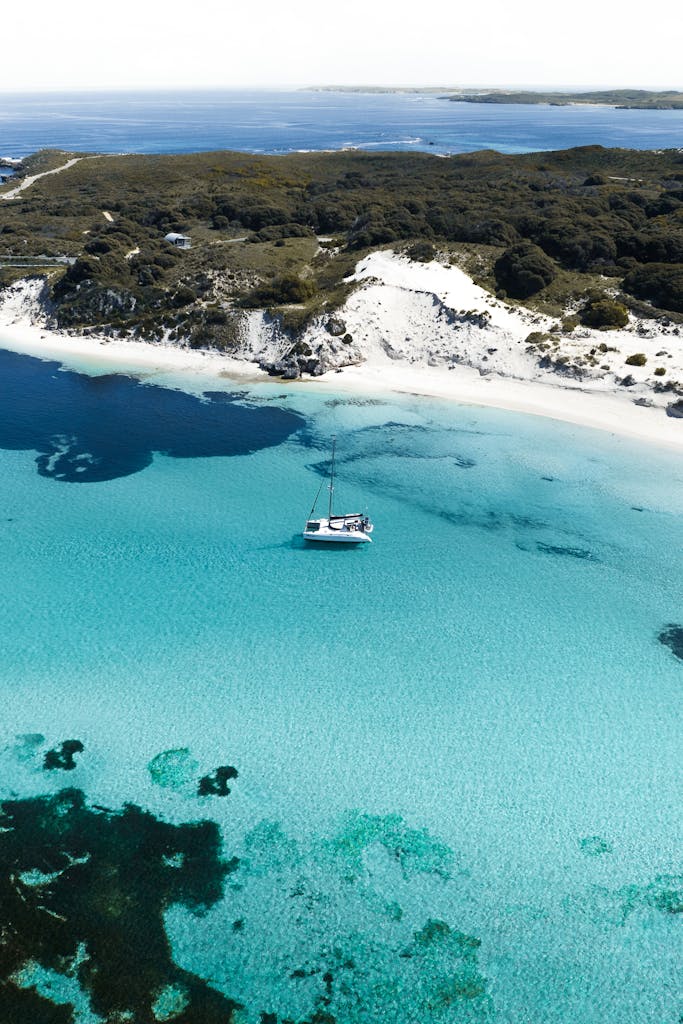
The geography offers two distinct but complementary arenas. To the west and south, the Caicos Bank is a vast, shallow lagoon fringed by reefs and cays. Here, a shallow-draft yacht can thread sand-bottom anchorages in shelter from ocean swell, sailing in luminous water that makes eyeball navigation a pleasure. To the east, the deep Turks Island Passage separates Caicos from the Turks Islands. Crossing it in settled weather unlocks Grand Turk’s historic roadstead and Salt Cay’s time-capsule charm.
Clarity of water is a highlight. Reading the bottom is not simply enjoyable; it is a practical aid to safe pilotage over the bank. The same visibility elevates snorkelling and diving, from West Caicos walls to French Cay and innumerable mooringed dive sites. During January to April, humpback whales transit the passage, adding a seasonal spectacle to offshore legs between banks.
Despite its proximity to major air hubs, Turks & Caicos remains comparatively quiet afloat. You will share anchorages with only a handful of yachts outside holiday peaks. Facilities on Providenciales are well organised, yet beyond Provo the feel is resolutely low-key, with friendly communities, simple provisioning, and space to anchor without fuss.
For skippers who value self-reliance—tidal awareness, light-angle entry to reef cuts, and conservative weather calls—the sailing is deeply rewarding. It blends the independence of the Bahamas with the easier logistics of a small, English-speaking territory.
Itineraries
Two classic styles define cruising here. A week lets you loop the Caicos Bank from Providenciales, mixing sand-bottom anchorages with day stops at West Caicos and French Cay. With 10 days and a settled forecast, add an offshore return across the Turks Island Passage to visit Grand Turk and Salt Cay’s historic roadsteads. Always time reef entrances for good light and avoid exposed north-coast roadsteads in swell.
7-day Caicos Bank circuit from Providenciales
A sheltered-loop introduction to Turks & Caicos. Highlights include snorkelling on West Caicos’ wall, the bird sanctuary at French Cay (no landings), and easy, sand-bottom anchorages on Provo’s south shore. Distances are modest, but allow time for eyeball navigation across the bank.
Day 1 – Providenciales (Leeward/Blue Haven) to West Caicos
Complete checks and a short shakedown before routing west along Provo’s north shore if conditions allow, or exit via Leeward Going Through and round to the south. Anchor off West Caicos in settled trades for late-afternoon snorkelling on the wall. Expect 18–30 nm depending on route; pick a sand patch well away from reef.
Day 2 – West Caicos to French Cay (day stop) to Sapodilla/Taylor Bay
Reach south across clear water to French Cay. It is a protected bird sanctuary with superb snorkelling; do not land. In mid-afternoon, fetch back to the south coast of Provo and anchor in Sapodilla or Taylor Bay for excellent sand holding. Time the return for sun overhead to spot scattered coral heads.
Day 3 – Sapodilla Bay to South Caicos (Cockburn Harbour)
Cross the Caicos Bank in good light, maintaining a bow lookout for isolated coral heads. Arrive at Cockburn Harbour mid-afternoon to a clear-water anchorage and a friendly welcome. Ashore you’ll find low-key eateries and a working-island feel; fuel may be available by jerry can—ask locally.
Day 4 – Explore Long Cay and Admiral Cockburn Land & Sea Park
Make a short hop to the park area for swimming and beach time. Choose your anchorage for wind angle; sand patches abound but maintain distance from coral. In settled weather you can remain at anchor; otherwise return to Cockburn Harbour for a quieter night.
Day 5 – South Caicos to Pine Cay/Parrot Cay via the bank
A longer leg north-west across the bank aims for the cays east of Provo. Enter through Leeward Going Through in midday sun to minimise glare. Day-anchor off Pine Cay for a swim, then choose a calm-weather overnight spot within the cays, observing private resort restrictions around Parrot Cay.
Day 6 – Little Water Cay and Grace Bay (day stops), return to Leeward
Spend the day meandering the clear shallows. Visit Little Water Cay (Iguana Island) by designated boardwalks and avoid anchoring on coral. Grace Bay is a fair-weather, daytime stop; return to the shelter of Leeward for the night.
Day 7 – Short sail and return to base
Enjoy a final sail on the north shore or a relaxed morning in Leeward before refuelling and handover. If transiting between banks, time a fair tide and good light through the cut.
10-day Turks & Caicos highlights with Grand Turk and Salt Cay
This extended route adds an offshore return across the Turks Island Passage to the historic roadsteads of Grand Turk and Salt Cay. Choose a settled E–SE trade-wind window with minimal northerly swell, and be prepared to adjust for comfort if roadsteads become rolly.
Day 1 – Providenciales to West Caicos
Shakedown to West Caicos. Choose a sand patch with space from reef; superb afternoon snorkelling. This easy leg lets crew acclimatise and checks systems before the longer hops ahead.
Day 2 – West Caicos to French Cay (day) then South Caicos
Use the day breeze to enjoy French Cay, then a late-afternoon fetch to Cockburn Harbour for a calm night. Arrive early enough to anchor in sand with room to swing and enjoy sunset ashore.
Day 3 – Weather window assessment and prep for offshore hop
Top up fuel and water where possible, confirm forecast for the Turks Island Passage, and stow for sea. Avoid strong northerly swell; aim for settled E–SE trades and moderate seas. Identify bail-out options and set alarms for a daylight arrival.
Day 4 – South Caicos to Grand Turk (Cockburn Town roadstead)
A bluewater leg across the deep passage. Make an early start for a mid to late-afternoon arrival and anchor off Cockburn Town in sand. Ashore, stroll historic streets lined with low, whitewashed buildings and learn about the islands’ salt heritage.
Day 5 – Grand Turk exploration and diving
Lay day for diving the spectacular wall or visiting the lighthouse and museum. Reassess swell periodically; these open roadsteads are uncomfortable in any westerly component. Use day-use dive moorings only while actively on board.
Day 6 – Grand Turk to Salt Cay (Balfour Town)
A short hop south in the lee of the trades. Anchor off Balfour Town in sand and step back in time ashore. Expect a tranquil evening and excellent snorkelling close by.
Day 7 – Whale season option or reef snorkelling
Between January and April, watch for humpbacks traversing the passage. Outside the season, explore the reefs and quiet beaches, keeping clear of turtle grass and coral when anchoring.
Day 8 – Return hop to South Caicos
Pick a gentle day for the return across the passage. Re-anchor at Cockburn Harbour or in the lee of Long Cay if conditions are settled. A post-passage swim on the bank is a welcome reward.
Day 9 – Bank sail to the cays off Provo
Reach back over the Caicos Bank, entering Leeward Going Through in bright overhead light. Day stop at Pine Cay or Dellis Cay and enjoy paddle-boarding in gin-clear shallows.
Day 10 – Little Water Cay and return to base
A final, relaxed day around the marine park before fuel, water and return to base at Leeward. Plan arrivals to avoid glare and allow time for a tidy handover.
When to Go
The core season runs from December to May. During winter and early spring, the easterly trades are steady and the air is less humid, with daytime temperatures around 26–28°C and cool, comfortable nights. December to February can see the so-called Christmas Winds, when the trades stiffen to 20–25 knots for days at a time. These spells deliver fast reaches on the bank but make north-facing anchorages and reef entrances more demanding.
June to November is hotter, typically 29–31°C, with lighter winds and a higher chance of squalls. This period coincides with the Atlantic hurricane season, peaking from August to October. If sailing then, keep passages short, use multiple forecast sources, and ensure plans are flexible. Humpback whale migration enriches passages across the Turks Island Passage between January and April, a compelling reason to visit late winter.
Outside of swell events, the Caicos Bank remains free of ocean swell and therefore offers dependable comfort under anchor. The north coasts of Provo and the Turks are exposed; winter cold fronts and rare westerlies can make their roadsteads untenable for short periods. Booking outside holiday peaks also means quieter anchorages and easier marina availability.
Wind and Weather
Prevailing winds are trade winds from NE–E in winter veering to E–SE in late spring and summer. Typical speeds are 12–18 knots, with 18–22 knots common in December to February. Lighter 8–14-knot days occur more often in late summer. Passing winter fronts sometimes rotate winds N–NW briefly and push swell onto exposed coasts. Summer brings the risk of tropical waves and the occasional cyclone; keep a weather eye and allow for conservative stopovers.
Sea State and Visibility
Sea state is bifurcated by geography. Outside the reef you meet true Atlantic conditions. Inside the Caicos Bank, ocean swell is filtered out and you encounter only wind-driven chop. This makes the bank both attractive and deceptively simple; coral heads and patch reefs require vigilant visual pilotage. Enter reef cuts and unmarked channels only in good light with the sun high and ideally ahead or abeam. Avoid low sun, glare, and overcast when transiting the bank.
Tides and Currents
Tidal range is modest—typically 0.5–1.0 m—but matters in shallow cuts such as Leeward Going Through and in certain bank channels where a fair tide helps. Currents in the Turks Island Passage can set strongly during wind-against-current conditions and near reef cuts. Use tide tables and local advice from marinas to time entrances and exits.
Forecasting and Practical Sources
Combine multiple forecast perspectives: synoptic charts, GRIB-based models and local marina briefings. Check marine forecasts daily during winter fronts and throughout hurricane season. For offshore hops, set decision points and be prepared to delay a day for comfort and safety.
Getting There
Providenciales (PLS) is the primary air gateway, with frequent international flights from North America and regional services from surrounding islands. Grand Turk (GDT) and South Caicos (XSC) have domestic connections, useful for crew changes on longer itineraries. Most visiting yachts join and depart at Providenciales due to its marinas, provisioning, and technical services.
Approaches are straightforward if handled on daylight and fair-weather terms. On the north side, Turtle Cove’s entrance is a narrow, buoyed cut through the reef that is best attempted in settled conditions and good visibility. The Leeward Going Through is the main pass between the ocean and the cays; time your transit for mid to high water and a helpful sun angle. On the south side, the Caicos Bank allows direct approaches to South Side Marina, South Dock and Sapodilla Bay, but maintain a bow lookout for isolated coral.
Ports of entry include Providenciales (South Dock and selected marinas), Cockburn Harbour (South Caicos), and Cockburn Town (Grand Turk). Arrive flying the Q flag and proceed to clear in before going ashore elsewhere. Depths, aids and procedures evolve; always confirm current instructions with your chosen marina before arrival.
| Port of Entry | Location | Facilities | Notes |
|---|---|---|---|
| South Dock | Providenciales | Customs/immigration, commercial wharf | Main clearance facility; call ahead for hours and docking instructions. |
| Blue Haven Marina | Leeward, Providenciales | Berths, fuel, water, provisioning | Can often facilitate clearance by arrangement; easy access to Leeward Going Through. |
| Turtle Cove Marina | North coast, Providenciales | Berths, fuel | Reef pass entrance; enter only in settled conditions and good light. |
| Cockburn Harbour | South Caicos | Anchorage, basic services | Port of entry; expect jerry-can fuel and limited provisioning. |
| Cockburn Town | Grand Turk | Anchorage off town | Port of entry; open roadstead—avoid in westerly swell. |
Chartering
Charter options are more limited than in larger Caribbean hubs, but that is part of the appeal. Providenciales is the practical base for bareboat and skippered charters, with modern marinas, fuel, water and provisioning. Fleets are predominantly catamarans to take advantage of shallow drafts on the bank. Monohulls cruise here too, but draft constraints and coral heads demand extra care.
Bareboat availability can be seasonal and scarce. Many visitors opt for a skippered or crewed catamaran for a week on the Caicos Bank, or commission a delivery to include the Turks Islands if time and weather align. Provisioning is best done on Provo, where large supermarkets, chandleries and LPG refills are accessible by taxi from marinas. Fuel is available at Blue Haven, South Side and Turtle Cove; pump-out services are limited, so plan holding-tank management accordingly.
Recommended experience includes recent command on a similar-sized yacht, comfort with anchoring in 3–6 m of water over sand, and confidence with visual pilotage. Skippers unfamiliar with reef entrances should consider a local pilot for the first transit or choose a skippered option. Diving is excellent throughout; dive moorings are day-use only and not intended for overnight stays.
Certifications commonly requested for bareboat include proof of competence equivalent to RYA Day Skipper (practical, ideally tidal) or the ICC, plus the VHF/SRC operator’s licence. A strong sailing CV with relevant recent experience is often decisive. Individual operators set their own standards; verify paperwork at the time of booking.
Licences and Formalities
On arrival, hoist the Q flag and proceed directly to a port of entry. The skipper should present vessel registration, passports valid for at least six months, a crew and passenger list, and evidence of insurance. Immigration typically grants stays up to 90 days for many nationalities; visas may be required depending on citizenship. Customs will issue a cruising permit; fees vary by vessel size and length of stay, and overtime charges can apply outside office hours. Keep copies of all receipts on board.
On departure to another country, outward clearance is required. Do not move between islands before clearing in, and always obtain permission before changing the declared port if requested by officials. Firearms must be declared and secured; spearfishing with scuba is prohibited and many forms of spearfishing are tightly regulated. Drones and pets are subject to permit rules—arrange in advance.
Large areas fall within national parks and nature reserves. Anchoring, fishing, collecting and landing restrictions apply, notably around French Cay and within the Princess Alexandra Marine Park near Grace Bay and the cays east of Provo. Dive-site moorings are for day use, not overnight. Fishing requires a licence and there are strict no-take zones; check the latest guidance from the Department of Environment and Coastal Resources.
Health, biosecurity and environmental practices are taken seriously. Dispose of waste responsibly; pump-out is limited and holding tanks should be used. Refill water at approved facilities and avoid discharging in marine parks. Regulations and fees are periodically updated—confirm the current position with customs, immigration, your marina and the environment department before arrival.
Anchorages and Marinas
Providenciales is the hub for berthing and logistics. Blue Haven Marina in Leeward offers deepwater berths, full-service facilities and straightforward access to the cays and the bank via Leeward Going Through. Turtle Cove Marina sits on the north coast and is reached through a narrow reef pass; enter only in good light and without surge. South Side Marina, on the south coast, is well regarded for practical assistance with clearance, fuel and repairs, and provides a convenient jumping-off point for the Caicos Bank. South Dock nearby is the main commercial clearance facility.
On the hook, Sapodilla and Taylor Bays (south Provo) provide reliable sand holding in settled trades, with good protection from the prevailing easterlies. Grace Bay is generally a fair-weather, daytime stop because of exposure to swell. West Caicos and French Cay reward day visits for snorkelling and diving; both are exposed and should be used only in calm conditions, with no landfall at French Cay due to bird sanctuary status.
South Caicos (Cockburn Harbour) offers a well-used anchorage in sand with limited surge in strong easterlies; basic provisioning, fuel in cans and friendly shore support are usually available. Long Cay to the south and the nearby national park offer attractive day anchorages with careful coral avoidance. East and Middle Caicos are largely inaccessible from seaward due to reef and lack of passes; do not attempt without local knowledge.
Grand Turk’s Cockburn Town roadstead is a classic open anchorage in settled easterlies with clear sand patches, but becomes uncomfortable in any westerly component or swell. Salt Cay’s Balfour Town anchorage is similar in character and best treated as a fair-weather stop. Throughout the territory, you will find day-use dive moorings at popular reefs; they are not designed for overnighting. When anchoring, keep clear of coral and turtle grass and favour sand to preserve the environment and your ground tackle.
As a rule of thumb, aim for 3–6 m over sand with plenty of scope and a bridle in fresh trades. The water’s clarity makes it easy to verify your set; swim the anchor when practical and re-lay if near coral.
FAQs
Is Turks & Caicos suitable for first-time bareboat skippers?
It is better suited to skippers with some experience of reef navigation and unmarked channels. The sailing itself is straightforward in settled trades, but many entrances require good light and careful pilotage. Skippered or crewed charters are a good alternative for less experienced crews.
What charts and navigation tools should I carry?
Carry up-to-date electronic and paper charts and supplement them with large-scale cruising guides. Visual pilotage is essential over the bank—use polarised sunglasses, a bow lookout, and time arrivals for overhead sun. Local marina briefings are invaluable.
Are there mooring fields for overnight stays?
Dedicated overnight mooring fields are limited. Most moorings you will encounter are day-use dive buoys. Plan to anchor in sand in recognised bays and fair-weather roadsteads.
Which boat type works best here?
Shallow-draft catamarans are ideal for exploring the Caicos Bank and slipping into sand-bottom anchorages. Monohulls can cruise successfully with prudent route selection and tidal awareness.
Can I fish while cruising?
Yes, with the correct fishing licence and outside no-take zones. Many marine parks prohibit fishing entirely. Observe size and species restrictions and check the latest rules with the environment department before you go.
When is whale season?
Humpback whales migrate through the Turks Island Passage from roughly January to April. Sightings are most common on passages between South Caicos, Grand Turk and Salt Cay during calm conditions.
How reliable are fuel and water supplies?
Providenciales has the best availability at Blue Haven, South Side and Turtle Cove. Beyond Provo, supplies are limited and sometimes by jerry can. Plan conservative reserves and top up whenever convenient.
Do I need specific licences to charter?
Operators typically require proof of competence at the level of RYA Day Skipper or ICC, plus a VHF/SRC certificate. A solid sailing CV and recent experience on a similar yacht are expected.
References
- https://www.cruiserswiki.org/wiki/Turks_%26_Caicos_Islands
- https://www.noonsite.com/place/turks-and-caicos-islands/
- https://www.bluehavenmarina.com/
- https://www.turtlecovemarina.com/
- https://southsidemarina.com/
- https://www.gov.tc/immigration/
- https://www.gov.tc/environment/department-of-environment-coastal-resources
- https://www.nhc.noaa.gov/climo/
- https://www.intercaribbean.com/
Charter a Yacht
Compare crewed & bareboat charters, learn the best months to sail, and get a custom shortlist from 500+ providers.