
Sailing in St Lucia: routes, winds and practicalities
Sailing in St Lucia rewards confident cruisers with a blend of brisk trade-wind passages, calm leeward anchorages and immaculate marine parks beneath the Pitons. The island’s west coast is perfectly staged for short day hops between marinas, bays and mooring fields, while the channels north to Martinique and south to St Vincent provide classic bluewater legs with lively acceleration zones. Charter infrastructure is concentrated around Rodney Bay, making logistics straightforward whether you’re bareboating, taking a skipper or planning a one‑way voyage into the Grenadines.
From lively marina life to rainforest-backed coves, expect variety in short order. The west coast’s protective lee keeps sea state modest, yet a few miles offshore you’ll find true trade-wind sailing. Maintenance support, provisioning and customs facilities are all on the doorstep in Rodney Bay, so you can step aboard, brief thoroughly and be under way the same day.
Quick links
- Sailing in St Lucia: routes, winds and practicalities
- Why Sail in St Lucia?
- Itineraries
- When to Go
- Wind and Weather
- Getting There
- Chartering
- Licences and Formalities
- Anchorages and Marinas
- FAQs
- References
Why Sail in St Lucia?
St Lucia sits at the heart of the Windwards, offering a rare balance: reliable easterly trades for satisfying sails, yet numerous lee-side bolt‑holes that stay welcoming even when the “Christmas winds” pipe up. You can leave a well‑serviced marina after breakfast and be on a park mooring under rainforest‑clad peaks by lunch.
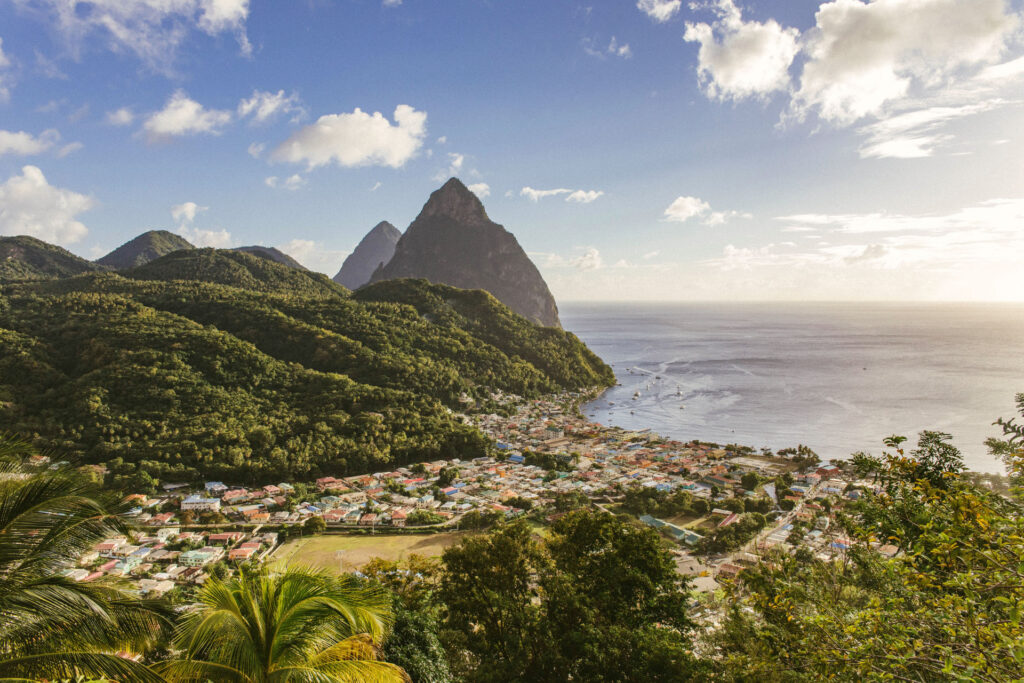
Geography does the heavy lifting. The mountainous spine throws a protective wind shadow over the west coast, softening seas and creating short, manageable hops between characterful bays. The Soufrière Marine Management Area safeguards reefs from Anse Cochon to the Pitons, so snorkelling, diving and turtle encounters are on your doorstep without long detours.
For those with itchy feet, St Lucia is also a springboard. To the north, Martinique’s St Anne and Le Marin lie across a fast, fun channel. To the south, St Vincent and the Grenadines beckon with Bequia, Mayreau and the Tobago Cays. This dual personality—gentle island cruising and rewarding inter‑island sprints—makes St Lucia an exceptional base for both first‑time Caribbean crews and seasoned passagemakers.
Itineraries
Below are two tried‑and‑tested St Lucia sailing itineraries. The seven‑day west coast loop is ideal for experiencing the island’s best moorings and marine parks with minimal miles. The ten‑day option stretches south into the Grenadines for classic trade‑wind passages, vibrant island life and world‑class snorkelling—perfect if your crew is keen on bluewater legs and inter‑island formalities.
7-day St Lucia West Coast Explorer
A 7-day route. Adjust legs to forecast, moorings and crew preferences.
A relaxed circuit of St Lucia’s west coast, balancing marina comfort with national‑park moorings. Expect short hops, gentle seas in the lee and plentiful swim stops, with the Pitons as a dramatic centrepiece.
Day 1 – Rodney Bay
Arrive, provision and brief at Rodney Bay Marina. Test systems with a short shakedown inside Rodney Bay or anchor off Pigeon Island for a first swim. Evening ashore for last‑minute shopping and dinner on the boardwalk. If timing allows, top up fuel and water so you can leave early and unhurried tomorrow.
Day 2 – Rodney Bay to Marigot Bay (~10 NM)
Slide down the lee of the island past Castries, watching for gusts off the headlands. Enter postcard‑perfect Marigot Bay; take a marina berth or a mooring in the inner lagoon. Mangroves give excellent shelter in most conditions. Arrive by mid‑afternoon for best choice of spots and enjoy easy dinghy access to beaches and restaurants.
Day 3 – Marigot Bay to Anse Cochon/Anse La Raye (~6–8 NM)
A gentle reach to snorkel‑friendly coves. Pick up a park mooring at Anse Cochon for clear water and reef life, or visit Anse La Raye for a low‑key village feel. Expect katabatic gusts funneling in late afternoon. Rangers will collect fees; bring cash and avoid anchoring on coral by using the marked moorings.
Day 4 – Anse Cochon to Soufrière/Pitons (~12 NM)
Short scenic hop to the Soufrière Marine Management Area. Moor under the Pitons at Sugar Beach (Jalousie) or take a town mooring in Soufrière for market access. Secure stern lines where requested to limit swing over coral. Arrive early for limited park moorings and arrange a water taxi if you plan to go ashore frequently.
Day 5 – Pitons lay day
Snorkel the marine reserve, dive the drop‑offs, or hike to viewpoints with a local guide. Afternoon breezes can be gusty off the slopes; check mooring lines and keep dinghies well secured. Consider a visit to Soufrière’s botanical gardens or nearby hot springs for a gentle leg stretch.
Day 6 – Soufrière to Canaries or Anse La Raye (~10–12 NM)
A relaxed coastal leg with stops for swimming at Anse Chastanet. Choose Canaries for a quiet overnight or time arrival at Anse La Raye for the Friday fish fry. Keep an eye out for fishing pots nearshore and plan arrivals in good light for easy mooring pick‑ups.
Day 7 – Return to Rodney Bay (~15–20 NM)
Sail past Castries and Pigeon Island, mindful of fishing pots nearshore. Refuel and water in the marina, then debrief and handback. Fuel dock hours can be busy on turn‑around days—build in buffer time to avoid rushing your check‑out.
10-day St Lucia to the Grenadines
A 10-day route. Adjust legs to forecast, moorings and crew preferences.
A rewarding loop that adds two bluewater channels and the postcard cays of the southern Windwards. You’ll clear out of St Lucia, cruise St Vincent and the Grenadines, then re‑enter St Lucia—so plan daylight approaches and allow time at customs on both legs.
Day 1 – Rodney Bay arrival
Check in and provision. Brief on inter‑island formalities and channel conditions. Confirm fuel, water, dinghy security and a reefing plan for the passages ahead; pre‑order fresh produce if arriving late.
Day 2 – Rodney Bay to Marigot Bay (~10 NM)
Shake down and settle the boat. Consider an evening mooring inside the lagoon for absolute calm. Use the short hop to rehearse MOB procedures and reefing drills so the crew is slick before the channel south.
Day 3 – Marigot Bay to Pitons/Soufrière (~12 NM)
Move to the SMMA to stage for the channel south. Complete St Lucia outward clearance if planning to depart early tomorrow. Check the forecast and set expectations for acceleration zones and sea state on the open leg.
Day 4 – Pitons to St Vincent (Cumberland or Wallilabou) (~35 NM)
Early start for the St Vincent Channel. Expect acceleration and a short, steep sea. Clear into SVG at Cumberland/Wallilabou or continue to Blue Lagoon. In Cumberland and Wallilabou, expect to take a stern line to shore with local boat‑boy assistance—agree a fee in advance and verify holding.
Day 5 – St Vincent to Bequia (Admiralty Bay) (~15 NM)
Beam reach to Bequia. Anchor or take a mooring off Port Elizabeth for easy customs and provisioning. Ashore you’ll find fuel, water by water‑boat, bakeries and chandlers—an ideal reset before the cays.
Day 6 – Bequia to Tobago Cays via Mayreau (~25 NM)
Hop via Salt Whistle Bay for a lunch stop, then push on to the Tobago Cays. Pick up a park mooring or anchor in sand with ample scope. Space in Salt Whistle is limited and often rolly—treat it as a day stop in busy periods.
Day 7 – Tobago Cays lay day
Swim with turtles, drift‑snorkel on Horseshoe Reef and enjoy a beach BBQ if offered by licensed vendors. Observe park rules: no anchoring on coral, respect turtle‑grass zones and secure dinghies to designated lines.
Day 8 – Tobago Cays to Bequia or Canouan (~25–30 NM)
Begin the return with a close reach. Choose Bequia for variety ashore or Canouan for a shorter hop tomorrow. Expect lively puffs between islands; keep reefs in until you’re back in the lee.
Day 9 – SVG to Soufrière, St Lucia (~35–45 NM)
Clear out of SVG and cross the channel north. Re‑enter St Lucia at Soufrière or Rodney Bay if time allows; moor in the SMMA for a calm night. Check clearance office hours to avoid overtime fees, and plan arrivals in daylight.
Day 10 – Soufrière to Rodney Bay (~20 NM) and handback
Coast hop north, refuel and water at Rodney Bay. De‑rig, debrief and hand over. Allow contingency for weather delays in the channel—return windows can close quickly in a strong surge.
When to Go
Peak season runs December to May when the northeast trades are settled, humidity is lower and rainfall eases. Expect daytime highs of 27–30 °C and sea temperatures of 26–28 °C. In December and January, the so‑called “Christmas winds” can lift gradient breezes to 20–30 knots, yet the west coast remains manageable on moorings and in marinas.
The wet season spans June to November, with warmer, more humid air, occasional squalls and tropical waves. Hurricane risk concentrates August to October, and most operators impose stricter booking and insurance conditions then. Shoulder months (November, late May/June) can be attractive: fewer crowds, good winds and lower prices, but keep an eye on forecasts for passing systems.
North swells in mid‑winter can affect open roadsteads exposed to the northwest. The Atlantic (east) coast is more consistently swell‑affected year‑round and is best attempted with settled weather and local knowledge.
Wind and Weather
Prevailing winds are the northeast to east trades. Through winter and spring, expect 15–20 knots most days, rising during surges and in the open channels. In summer, winds ease to 10–15 knots and veer slightly east‑southeast. Squalls bring brief gusts and rain; visibility and sea state improve rapidly afterwards.
Topography matters. The mountainous ridge casts a wide lee on the west coast, flattening seas between Rodney Bay and the Pitons. Closer to headlands, you’ll encounter gusts and directional shifts as winds spill over the hills. Under the Pitons, late‑day katabatic gusts are common—check lines and fenders.
Channel crossings are livelier. Between St Lucia and Martinique or St Vincent, expect acceleration to 20–25 knots and a short, steep chop, especially when current opposes wind. A west‑setting current of roughly 0.5–1.5 knots is typical. Tidal ranges are small (c. 0.2–0.6 m) and rarely the primary planning constraint, but they can subtly affect anchoring depth and dinghy access to docks.
On the east (Atlantic) side, reefs and persistent swell create breakers and confused seas near gaps. Only attempt with settled forecasts and daylight.
Getting There
International arrivals land at Hewanorra International (UVF) in Vieux Fort; transfers to Rodney Bay typically take 75–90 minutes by road. Regional Caribbean flights use George F. L. Charles Airport (SLU) near Castries, which is convenient for the west coast marinas.
Rodney Bay Marina is the principal yachting hub with customs and immigration on site. Additional ports of entry include Castries and Soufrière; Vieux Fort serves yachts less frequently. If you intend to head straight to Martinique or St Vincent, plan clearance timing carefully to avoid overtime fees outside office hours.
Spares and provisioning are straightforward in the north. Supermarkets, chandleries and technicians cluster around Rodney Bay. Fuel and water are available at Rodney Bay and Marigot Bay; limited services exist in Soufrière. Book taxis or marina transfers in advance during peak season and major regattas.
Chartering
Rodney Bay is the island’s charter hub, with major fleets offering monohulls and catamarans for bareboat, skippered and crewed charters. Typical weeks focus on St Lucia’s west coast or combine a northbound hop to Martinique or a southbound one‑way into the Grenadines. Catamarans are popular for space and stability, but a well‑reefed 36–45 ft monohull is equally suited to the trades.
Base life is efficient: expect thorough briefings on park moorings, stern‑line etiquette under the Pitons, and channel tactics. Most operators allow night sailing only by prior agreement; channels and new harbours are best approached in daylight. Provisioning can be pre‑ordered, and many bases offer early check‑in for mid‑afternoon departures.
One‑way charters into St Vincent and the Grenadines are common; factor time for outward and inward clearance on both legs, and keep a weather eye on the return channel window if you’re due back in St Lucia. Skippers new to the area often appreciate a first‑day checkout sail or local skipper for channel legs. Dinghy security is taken seriously; lock outboards and use well‑lit docks.
Licences and Formalities
Charter qualifications: Operators typically accept an RYA Day Skipper (Practical) or ICC with relevant experience, or ASA 104 Bareboat (with 103). A VHF/Short Range Certificate is normally required for the person in charge of communications. Many companies will accept a strong sailing CV in lieu of formal certificates, but expect a skipper assessment if experience is borderline.
Customs and immigration: St Lucia is a separate nation within the Windwards. Yachts must clear in at a designated port of entry (Rodney Bay, Castries, Soufrière or Vieux Fort) before sailing elsewhere, and clear out before departing for another country. Electronic pre‑arrival via SailClear is supported and speeds the paperwork; present passports, crew list, registration and departure details on arrival. Overtime fees may apply outside office hours and on public holidays.
Local regulations: In the Soufrière Marine Management Area, use only authorised moorings, observe no‑anchoring zones, and comply with ranger instructions. Holding tanks are required; discharge is prohibited in bays and marine parks. Fishing is restricted within reserves. Drone use and spear‑fishing are regulated—seek current guidance before use.
Insurance and seasonality: During hurricane season (June–November), confirm your charter contract’s named‑storm clauses, relocation plans and excesses. Some insurers stipulate stricter minimum qualifications or experience for inter‑island passages.
Anchorages and Marinas
West coast anchorages are the mainstay. Depths drop quickly, so many prime spots use park or private moorings rather than traditional anchoring.
Rodney Bay: Large, well‑protected bay with anchoring in sand off Reduit Beach and Pigeon Island. IGY Rodney Bay Marina offers full‑service berths, fuel, water, repairs and on‑site clearance. Watch for occasional swell wrap in strong northerlies and for numerous fishing pots nearshore.
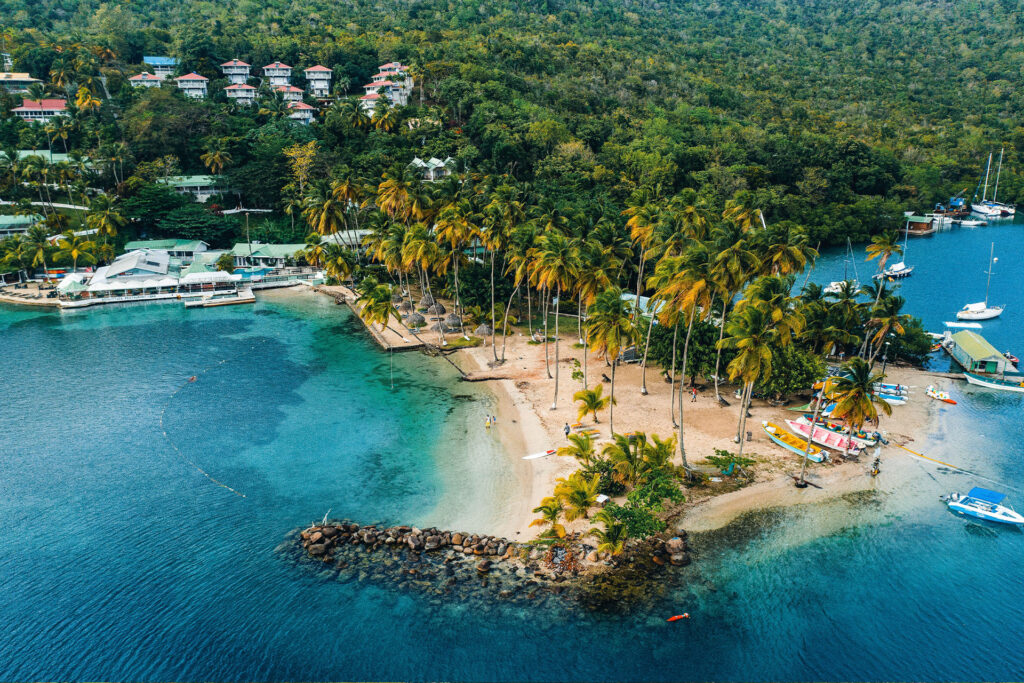
Marigot Bay: A hurricane‑hole style inlet with marina berths and organised moorings. The inner lagoon is exceptionally calm and well managed. Entry is straightforward by day; give way to traffic exiting the narrow mouth.
Castries/La Toc: Castries is a commercial port with cruise traffic; it’s not a routine yacht anchorage. La Toc nearby offers limited options in settled weather but is exposed to swell—most cruisers prefer Marigot or Rodney Bay.
Soufrière and the Pitons: The Soufrière Marine Management Area runs moorings at Anse Chastanet, Anse Cochon, the town front and between the Pitons (Sugar Beach/Jalousie). Anchoring on coral is prohibited. Rangers collect modest fees and may request a stern line to shore in the Pitons field to reduce swinging. Expect gusts off the slopes and excellent snorkelling.
Southern bays: Laborie is a quiet stop in settled conditions. Vieux Fort is close to the airport but open to Atlantic swell and trades; use caution and choose fair weather.
East coast: Scenic but exposed. Dennery and Praslin have limited shelter and reefs at the entrances; only attempt with settled forecasts, good light and local knowledge.
Services: Fuel and water at Rodney Bay and Marigot; limited water/dock access in Soufrière. Garbage disposal and recycling are managed in marinas; keep waste aboard when using park moorings. Night approaches are discouraged for unfamiliar bays.
FAQs
Do I need a licence to charter in St Lucia?
Expect to show RYA Day Skipper/ICC or ASA 104, plus a VHF certificate. A strong sailing CV may be accepted; operators can require a checkout or skipper.
What are the typical winds?
Trades blow NE–E at 15–20 knots December–May, easing to 10–15 knots in summer. Channels can accelerate to 20–25 knots with a short chop.
When is hurricane season?
June to November, with peak risk from August to October. Many bases maintain operations but have stricter policies and require flexible routing.
Are there many marinas?
Rodney Bay is the principal full‑service marina. Marigot Bay has a high‑quality marina and mooring field. Elsewhere, you’ll mostly use managed moorings.
Can I anchor under the Pitons?
Anchoring on coral is prohibited. Use the SMMA moorings and follow ranger instructions—stern lines to shore are often requested to limit swing.
Is the east coast suitable for cruising?
Generally no for visiting crews—it’s exposed with reefs and swell. Attempt only in settled weather, by day, and ideally with local knowledge.
Where do I clear in and out?
Rodney Bay, Castries, Soufrière and Vieux Fort are ports of entry. Electronic pre‑arrival via SailClear can speed the process.
References
- https://www.cruiserswiki.org/wiki/St._Lucia
- https://www.noonsite.com/place/saint-lucia/
- https://stluciaigymarina.com/
- https://www.marigotbayresort.com/marina
- https://www.slumarines.com/portfolio/soufriere-marine-management-association-smma/
- https://stlucia.org/
- https://sailclear.com/
- https://www.nhc.noaa.gov/climo/
- https://msi.nga.mil/Publications/SDPub/1801181299685
- https://www.metoffice.gov.uk/weather/travel-and-events/holiday-weather/north-america/st-lucia
Charter a Yacht
Compare crewed & bareboat charters, learn the best months to sail, and get a custom shortlist from 500+ providers.