
Sailing in Bermuda: routes, winds, reefs and safe harbours
Bermuda rewards careful skippers with some of the clearest water, most sheltered sounds and most exacting pilotage in the Atlantic. Encircled by coral reef and laced with narrow channels, it is a Caribbean destination where preparation and precision pay off. Within the reef you will find glassy anchorages and lively harbours; outside, the ocean is bluewater proper, shaped by the Bermuda–Azores High, Gulf Stream eddies and the occasional tropical system.
This guide signposts the principal sailing areas, prevailing winds and seasons, and the practicalities of entering, clearing and cruising. It also sets realistic expectations around chartering – Bermuda has superb day and crewed options, but bareboats are limited – and outlines the certification commonly requested. If you like your navigation visual, your holding good and your rewards immediate, the Great Sound, St George’s and the West End will suit you well.
Quick links
Jump to key sections of this Bermuda sailing guide:
- Why Sail in Bermuda?
- Itineraries
- When to Go
- Wind and Weather
- Getting There
- Chartering
- Licences and Formalities
- Anchorages and Marinas
- FAQs
Why Sail in Bermuda?
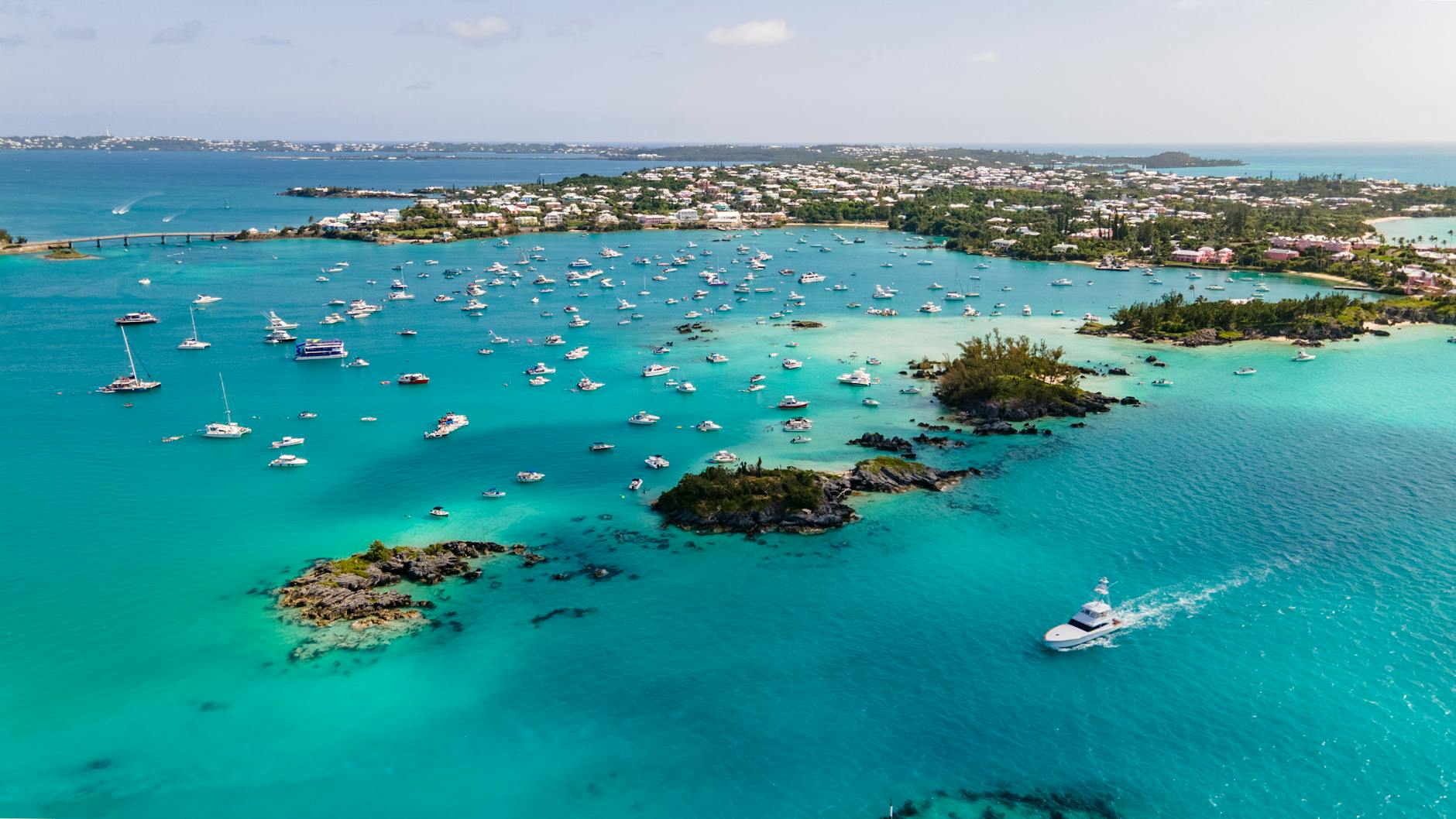
Bermuda is a compact archipelago with a big-sailing feel. Within a day you can clear in at St George’s, run the Narrows alongside wave-washed reefs, and open out into the amphitheatre of the Great Sound, home to the America’s Cup in 2017. The contrasts are compelling: pink sand beaches a short tender ride from Hamilton’s marinas; mangrove-edged creeks a reach away from open-ocean horizons.
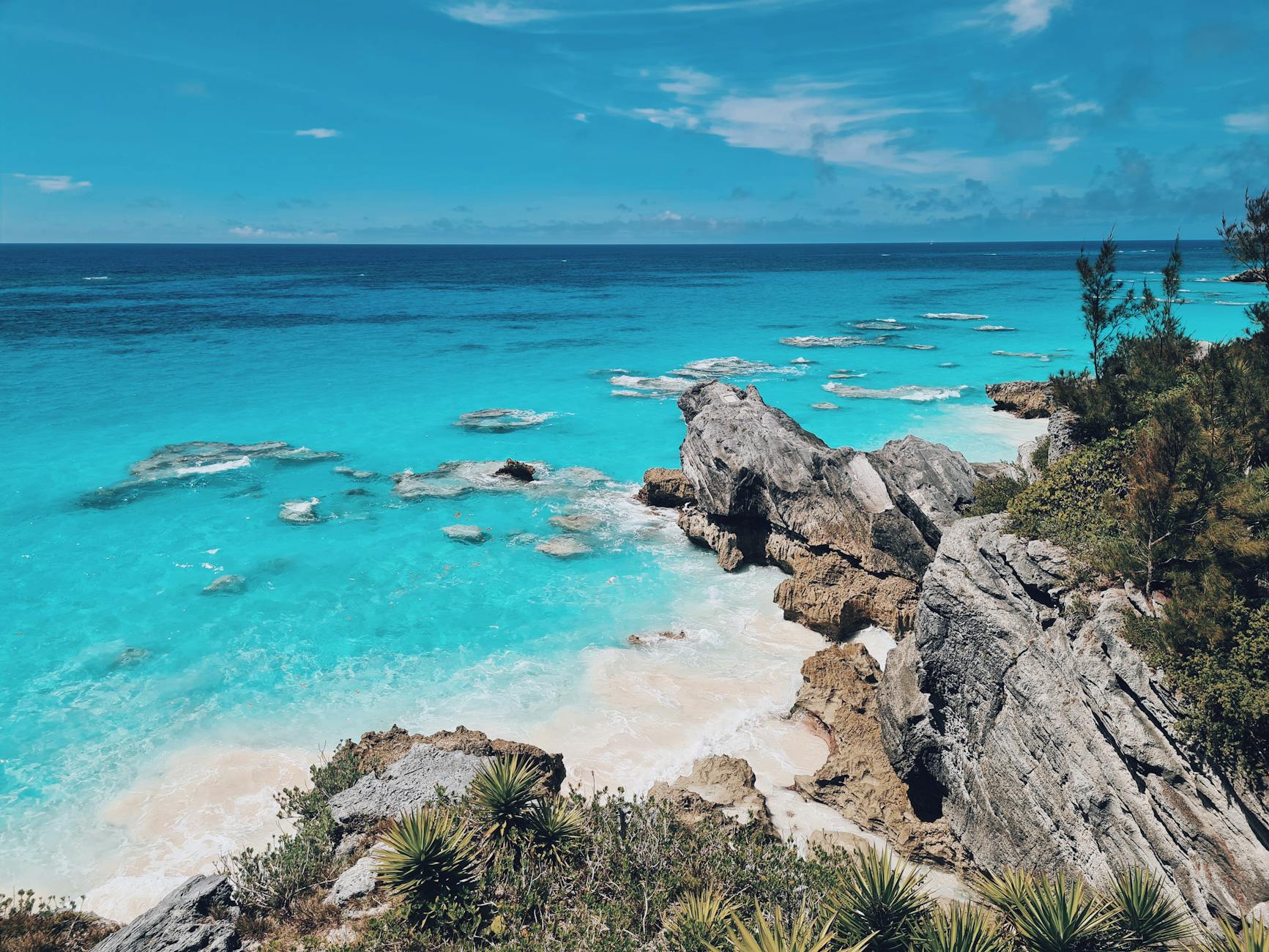
The water is astonishingly clear thanks to the surrounding coral platform. Inside the reef the seas are typically flat, which makes for restful nights and easy swimming in anchorages like Paradise Lakes, Hinson’s Bay and Mangrove Bay. Outside, the island sits in the path of classic North Atlantic weather, so keen passagemakers can dovetail a coastal cruise with a bluewater leg from the US East Coast or the Azores.
British heritage runs through the harbours: efficient radio services, clear buoyage and a strong safety culture. That framework matters in a place where you thread shallow cuts and follow leading marks through living reef. The payoff is special – proper pilotage by day, cosmopolitan evenings in Hamilton, and sunrise departures framed by forts and sea arches.
Bermuda Sailing Itineraries
Below are suggested itineraries designed to keep you comfortably within the reef in settled conditions, while giving a taste of Bermuda’s historic harbours, sheltered sounds and clear-water anchorages. Adjust daily hops to suit weather, visibility and crew energy levels, and always plan transits of the Narrows by day in good light.
3-day Great Sound Taster
This compact circuit is ideal for first-time visitors or ocean-arrival crews looking to decompress while sampling the highlights. It focuses on straightforward, well-buoyed routes: clearance at St George’s, a daylight run along the Narrows, time at anchor in the Great Sound and a stop at the West End before staging for departure.
Day 1 – St George’s Harbour and clearance
Make landfall via Town Cut and clear at Ordnance Island. Time your approach for good visibility and seek guidance from Bermuda Radio as required. Settle to anchor in St George’s Harbour and explore the historic town and nearby forts. In settled weather, consider a late-afternoon move to Murray’s Anchorage to stage for the run west; avoid if there is any northerly swell running.
Day 2 – The Narrows to the Great Sound
Transit the Narrows Channel westbound in daylight with the sun high for best contrast on the reef. Maintain a conservative speed, keep to the leading marks and post a bow lookout. Enter the Great Sound and anchor for lunch at Paradise Lakes before taking a berth in Hamilton via Two Rock Passage, or anchor in Hinson’s Bay for the night with excellent shelter in prevailing southerlies.
Day 3 – West End and Somerset, then stage east
Cruise to the Royal Naval Dockyard for history, services and a stretch ashore. Continue to Mangrove Bay for swimming and provisions, noting modest depths and limited swing room. In the afternoon, return east inside via the Great Sound and Narrows in good light, or pause at Castle Harbour if conditions allow, ready for departure and outward clearance formalities.
7-day Within-the-Reef Circuit
A relaxed week exploring protected waters without venturing outside the reef. Short legs and multiple safe bolt-holes make this plan suitable for families and mixed-experience crews. Plan your Narrows transits for clear daylight and allow time to enjoy Hamilton’s amenities midweek before looping to the West End and back east.
Day 1 – Arrival and settle, St George’s
Enter via Town Cut, clear on Ordnance Island and anchor in St George’s Harbour. Take a short dinghy run to Tobacco Bay or Achilles Bay for a swim, then enjoy sunset from the quay. Use the first evening to review local notices and confirm the next day’s visibility for any channel transits.
Day 2 – Castle Harbour and the East End
In settled weather, explore Castle Harbour’s turquoise shallows. Pilotage is intricate; anchor in sand with care and avoid seagrass. If any haze or swell develops, retrace to St George’s or stage at Murray’s Anchorage for a clean start to the Narrows the following morning.
Day 3 – North Shore transit to the Great Sound
Run the Narrows west in settled daylight with a bow lookout and paper and electronic charts in agreement. Enter the Great Sound and choose an overnight at Hinson’s Bay or Granaway Deep, both well-placed for Hamilton and well sheltered in typical spring and summer patterns.
Day 4 – Hamilton Harbour lay day
Take a marina berth at the Royal Bermuda Yacht Club or Hamilton Princess. Reprovision ashore, enjoy Hamilton’s restaurants and take care of pump-out and water. This is also a good day for maintenance checks and a wander along Front Street.
Day 5 – Paradise Lakes and Great Sound
Make a short hop to Paradise Lakes for a swim and paddleboarding in glassy water. Spend the afternoon sailing past Hawkins and Hinson’s Islands. Overnight at anchor with excellent protection in prevailing southerlies; set generous scope if squalls are in the forecast.
Day 6 – West End, Dockyard and Mangrove Bay
Reach over to the Royal Naval Dockyard for history and services, or a museum visit ashore. Continue to Mangrove Bay or Ely’s Harbour for a quiet night. Ely’s offers tucked-away basins for shallow to moderate drafts with careful entry and makes a useful bolt-hole in summer squalls.
Day 7 – Return east via the Great Sound and Narrows
Retrace to St George’s in settled daylight, or stage at Ferry Reach if departing next morning. Confirm your outbound clearance and weather with Bermuda Radio, and time your Town Cut exit for good light and minimal crosswind set.
When to Go
Best overall: April to June. Spring brings reliable easterlies to southerlies around the Bermuda–Azores High, comfortable temperatures and fewer squalls than midsummer. Visibility is good for pilotage, and the ocean outside the reef is comparatively kind.
Summer (July to early September) is warm and humid with lighter gradient winds. Expect local sea breezes, periods of calm, occasional Saharan dust haze and fast-building squalls or thunderstorms. It is also hurricane season (June to November) with peak activity August–October. Plans should be flexible and insurance checked.
Autumn (late September to November) can be glorious between fronts, with sparkling post-frontal northerlies and clear air. The risk of tropical systems persists into October; frontal passages start to reassert from the west.
Winter (December to March) is for confident crews. Frequent cold fronts bring fresh to strong westerlies and northerlies with gusty squalls, wind shifts and a short, steep chop outside the reef. Inside, the sounds remain sailable on many days. Air 17–20°C, sea 19–21°C.
For first-time visitors focused on within-the-reef cruising and visual pilotage, late spring to early summer often strikes the best balance of clear water, manageable winds and reliable visibility. Regardless of season, build slack into the plan for squall days and avoid committing to narrow channels in poor light.
Wind and Weather
Pattern: Bermuda sits under the western flank of the Bermuda–Azores High for much of the year. In spring and early summer, expect moderate easterlies through southerlies at 10–18 knots, with settled seas inside the reef and a low swell outside. In midsummer, gradient winds slacken; sea-breeze regimes set up with light airs mornings, 8–15 knots afternoons and the chance of evening squalls. Autumn transitions to more changeable patterns. In winter, cold fronts pass every few days, clocking winds rapidly from SW to NW and back as the next high builds; 15–25 knots is common with higher gusts in showers.
Hurricanes and squalls: The official Atlantic hurricane season runs 1 June to 30 November. Bermuda’s infrastructure and forecasting are excellent, but visiting yachts should monitor advisories, have bolt-holes pre-identified and avoid reef passages in any reduced visibility or swell. Summer squalls can arrive quickly with 30–40 knot gusts; good ground tackle and scope are essential.
Sea state and visibility: Inside the encircling reef, waters are typically flat with local wind chop. Outside, expect ocean swell modulated by Gulf Stream eddies. Haze is common in summer; prioritise reef transit in clear, high sun. Night navigation through the reef is not recommended for first-time visitors.
Temperatures: Air ranges from 17–20°C in winter to 27–30°C in summer. Sea temperatures run ~20°C in winter to 27–28°C in late summer.
Forecasting and services: The Bermuda Weather Service issues marine forecasts, tropical updates and radar. Bermuda Radio maintains a continuous watch on VHF 16 (working 27) and provides approach guidance and local notices to mariners.
Tides and currents: Tidal range is modest but can still produce noticeable cross-sets in narrow channels and across harbour entrances. Expect slightly stronger flows in constricted cuts and plan turns and approaches with this in mind. As ever, keep a generous margin from reef edges when manoeuvring.
Getting There
By air: LF Wade International Airport (BDA) on St David’s Island has regular services from North America and the UK. The airport lies close to St George’s Harbour, making crew changeovers and light provisioning straightforward.
By sea: Bermuda is a classic bluewater waypoint roughly 635–720 nautical miles from US East Coast ports (e.g., Newport, Hampton, Charleston). Approaches are clean in deep water until the reef edge; arrivals are customarily made by day. On first arrival all yachts must proceed to St George’s via Town Cut for clearance.
Radio and approach: Call Bermuda Radio on VHF 16 as you come within 30–40 nautical miles. You will be shifted to a working channel (typically 27) and given instructions. Proceed through Town Cut only in good visibility with the sun high if possible; follow leading marks precisely and maintain a sharp lookout.
Provisions, fuel and spares: Best availability is in Hamilton and the West End (Dockyard), with supermarkets, chandlers and fuel docks. St George’s has fuel, water, a modest chandlery presence and repair contacts. Advance ordering is sensible for specialist items.
Arrival tips: If you reach St George’s out of hours, anchor clear of the channel, fly the Q flag and complete formalities as soon as customs opens. Top up water and fuel before heading west, and confirm opening times for bridges, fuel docks and marina check-ins during shoulder seasons.
Chartering
Bermuda’s charter scene favours crewed yachts and day boats. You will find high-quality skippered sailing cats, motor yachts and smaller self-drive powerboats designed for exploring the Great Sound and nearshore creeks. Bareboat sailing charters are limited and seasonal; many visitors opt for a skipper for the first day to gain confidence with channels and local practices.
Pickup points are usually Hamilton, St George’s or the Royal Naval Dockyard. Within the reef the sailing is relaxed and scenic; outside the reef, conditions are bluewater and should be approached with care. Expect modern safety gear aboard, comprehensive briefings and clear operating areas defined by the charter company.
What to budget for: Prices vary by size and season; shoulder months (Apr–Jun, late Sep–Oct) often combine the best weather with good availability. Factor in fuel, marina fees in Hamilton or Dockyard, national park mooring charges where applicable, and a security deposit. Gratuities for crewed charters typically run 10–15% depending on service.
Skippered vs bareboat: If you can secure a bareboat, operators typically ask for evidence of tidal pilotage competence and recent experience in similar-sized yachts in confined waters. Many visitors with strong offshore credentials still choose a skipper initially to learn the local routes, tide gates and no‑go areas. For comfort aboard in summer, favour shade, good ventilation and a reliable generator or solar for quiet nights at anchor.
Licences and Formalities
Arrival and clearance: Fly the Q flag and call Bermuda Radio on VHF 16 on approach. All yachts must clear at Ordnance Island, St George’s. Skipper and crew present passports and vessel papers; health and biosecurity questions are standard. A cruising permit is mandatory and fees are payable on arrival (rates change; check current tariffs before departure). Outward clearance is required on departure.
Cruising area rules: The archipelago is encircled by coral; navigation inside the reef is by buoyed channels and leading marks. Reefs and seagrass are protected. Anchor only in sand where permitted; many moorings are private and must not be used without permission. Some bays have speed limits and no‑wake zones. Do not attempt reef passages at night unless locally experienced and suitably equipped.
Environmental and fishing: Discharging sewage in harbours and enclosed waters is prohibited; use holding tanks and pump-out facilities. Spearfishing is heavily regulated; certain gears and species are prohibited to visitors. Check the Department of Environment and Natural Resources guidance before fishing or diving.
Visas and stays: Immigration rules depend on nationality; most yacht crews are granted a limited stay on arrival, extendable on application. Pets, drones and firearms require prior permissions. For up-to-date forms, many skippers now file pre-arrival details via SailClear or the government’s online portals.
Certifications to charter: For bareboat sailing, operators commonly accept RYA Day Skipper (or higher) with practical experience, or an ICC/ASA 104 equivalent, plus a VHF/SRC certificate for radio use. Crewed charters generally do not require formal certificates for guests. Be aware of any local restricted areas (e.g., near the airport and certain government facilities) and comply with published marine notices.
Anchorages and Marinas
East End – St George’s and Castle Harbour: St George’s Harbour provides the mandatory clearance dock at Ordnance Island and ample anchoring room in settled conditions with good sand holding. Convict Bay and Powder Hole offer additional room. Murray’s Anchorage, just outside to the north, is a traditional staging anchorage in settled weather, protected by outer reef but open to northerly swell. Castle Harbour is stunning but shallow and intricate; only attempt in good light with large-scale charts, and avoid seagrass beds.
North Shore – The Narrows: The Narrows Channel runs west from St George’s along the North Shore. It is well buoyed but tight, with crosswinds and occasional current. There are few legitimate places to stop along this stretch; continue to the Great Sound before anchoring.
Great Sound and Hamilton: The Great Sound is Bermuda’s cruising heart. Paradise Lakes is a favourite day-stop with sandy patches and flat water. Hinson’s Bay and Granaway Deep offer night anchoring in settled weather. Hamilton Harbour has excellent marina facilities at the Royal Bermuda Yacht Club and the Hamilton Princess, alongside limited anchoring space subject to local regulations and traffic. Expect firm holding in sand and mud; give good scope in squally spells.
West End – Dockyard, Somerset and Ely’s: The Royal Naval Dockyard area combines deepwater access with services, fuel and repairs. Mangrove Bay at Somerset Village is picturesque and popular; depths are modest and swing room limited. Ely’s Harbour is a well‑sheltered creek for shallow to moderate drafts with careful entry.
South Shore: Exposed to ocean and lined with reef. There are no practical anchorages for visiting yachts on this coast; treat it as a fair‑weather sightseeing run outside the reef only if conditions are benign.
Facilities and services: Fuel and water are available at St George’s, Hamilton and the Dockyard. Pump-out facilities are concentrated around Hamilton/Dockyard. Chandlers, sail lofts and mechanics are easiest to arrange via marinas or local yacht services in Hamilton and St George’s. Monitor VHF for commercial traffic in harbour approaches, observe posted speed limits and rig chafe protection if a squally pattern is forecast.
FAQs
Is Bermuda suitable for novice skippers?
Inside the reef, the water is flat and distances are short, but pilotage is exacting. First-time visitors without strong pilotage experience should consider a skipper for at least a day to learn the channels and local practices.
When is hurricane season in Bermuda?
Officially 1 June to 30 November, peaking August to October. You should monitor forecasts from the Bermuda Weather Service and plan conservative routes and bolt‑holes.
Can I bareboat charter a sailing yacht in Bermuda?
Bareboats exist but are limited and seasonal. Most visitors choose crewed yachts or day charters. If you do bareboat, operators typically require RYA Day Skipper/ICC or ASA 104 with recent experience and a VHF/SRC certificate.
Do I have to clear in at St George’s?
Yes. All arriving yachts must proceed to Ordnance Island, St George’s, for customs and immigration clearance before cruising elsewhere.
What are the prevailing winds?
Spring to early summer brings mainly E–S winds 10–18 knots around the Bermuda–Azores High. Summer sees lighter sea-breeze patterns and squalls. Winter fronts bring fresh W–N winds and rapid shifts.
Are there public moorings I can use?
Most moorings are private. Some designated day-use buoys exist for dive/snorkel sites, but you should check local notices. Anchor only in sand and avoid seagrass.
Can I navigate the reef passages at night?
It is strongly discouraged for first-time visitors. Plan to use Town Cut and the buoys by day, in good visibility and with the sun high if possible.
What charts should I carry?
Carry official British Admiralty charts for Bermuda alongside detailed electronic charts. Large‑scale plans for Town Cut, the Narrows, Great Sound and Hamilton Harbour are particularly useful.
Where are the main marinas?
Hamilton Harbour (Royal Bermuda Yacht Club and Hamilton Princess) and the Royal Naval Dockyard host the principal marina facilities. St George’s provides customs berths, fuel and limited short‑stay berths via local services.
Is fishing allowed for visiting yachts?
Recreational hook‑and‑line fishing is common, but spearfishing and taking certain species are restricted or prohibited. Check the Department of Environment and Natural Resources before you fish.
References
- https://www.cruiserswiki.org/wiki/Bermuda
- https://weather.bm/
- https://www.gov.bm/bermuda-radio
- https://www.gov.bm/department/marine-and-ports-services
- https://www.sailclear.com/
- https://www.nhc.noaa.gov/
- https://www.rbyc.bm/
- https://www.thehamiltonprincess.com/marina/
- https://www.gotobermuda.com/plan/boating-and-sailing
- https://www.gov.bm/department/environment-and-natural-resources
Charter a Yacht
Compare crewed & bareboat charters, learn the best months to sail, and get a custom shortlist from 500+ providers.