
Sailing in Antigua: routes, conditions and practicalities
Antigua rewards skippers with a compact, coral-fringed playground that blends blue-water passages with genuinely sheltered bays. You can thread palm-backed anchorages on the west coast one day, then feel the full breath of the trades across Antigua’s windward reefs the next. Harbours such as English and Falmouth offer world-class facilities and a lively regatta scene, while Green Island and Nonsuch Bay deliver that South Pacific feeling without the long haul. For crews who like a clear plan, dependable easterly trades, short hops, and plenty of shore support, Antigua is both forgiving and deeply satisfying. If you want to test your mettle, step out to Barbuda’s surf‑washed beaches – a blue‑water mile or two, yet still within a week’s holiday.
Quick links
- Why sail in Antigua?
- Itineraries
- When to go
- Wind and weather
- Getting there
- Chartering
- Licences and formalities
- Anchorages and marinas
- FAQs
- References
Why Sail in Antigua?
Antigua sits squarely in the path of the northeast trades, which is exactly why sailors have been coming here for centuries. Predictable wind, minimal tides, and clear water make passage planning logical and low stress. You can stage exhilarating reaches on the windward side, then tuck into glassy anchorages on the leeward coast in time for a swim at sundown.
The sailing infrastructure is unusually strong for an island of this size. English and Falmouth harbours provide deep‑water access, sheltered berths, full‑service yards, and sail‑world energy in season. Move a few miles and you are in quiet bays with turtle grass, sand, and coral gardens. Provisioning is straightforward, chandleries are well stocked, and shore dining runs from fish shacks to fine dining with a regatta backdrop.
Geography adds texture. The west coast is Antigua’s calm veranda, dotted with sandy coves and easy holding. The east and south‑east are sculpted by reefs and small islands, creating luminous lagoons around Green Island and within Nonsuch Bay – spectacular, yet demanding respect and daylight pilotage. For those with an extra day and a settled forecast, Barbuda lies a satisfying reach away, delivering long beaches, teal shallows and nights under more stars than streetlights.
Itineraries
These suggested routes blend easy leeward‑coast hops with reef‑edged hideaways and, weather permitting, a rewarding blue‑water reach to Barbuda. Always adapt day lengths to your crew and the forecast, and time reef‑fringed entrances for good light.
7 days: Antigua classic loop
A 7-day route. Adjust legs to forecast, moorings and crew preferences.
A well‑balanced clockwise circuit that showcases Antigua’s contrasts: historic harbours, the luminous pools of Green Island, resort‑sheltered bays, and the palm‑lined west coast. Expect mostly short passages with plenty of time to swim, snorkel and explore ashore.
Day 1 – English Harbour arrival and shakedown
Arrive and clear in at English Harbour. Settle the crew, check systems, and take a gentle late‑afternoon sail around Freeman’s Bay. Explore Nelson’s Dockyard ashore in the evening.
- Stops: English Harbour (Nelson’s Dockyard), Freeman’s Bay anchorage
Day 2 – English Harbour to Green Island / Nonsuch
A rewarding half‑day sail east and north‑east around Cape Shirley, then into the reef‑protected waters of Green Island and Nonsuch Bay. Enter in good light with a bow lookout to read the colours and avoid coral heads.
- Stops: Cape Shirley, Green Island (Rickett Harbour), Nonsuch Bay
Day 3 – Explore Green Island and Mamora Bay
Snorkel the eastern reefs in the morning. Short hop south‑west to Mamora Bay for resort‑style shelter, or continue into Indian Creek for a mangrove‑lined hideaway (mind the bar and enter in settled conditions). Both offer excellent protection to catch your breath mid‑week.
- Stops: Mamora Bay (St James’s Club), Indian Creek
Day 4 – Mamora/Indian Creek to Carlisle Bay via the south coast
Round Antigua’s south coast, often a lively reach in the trades. Anchor in Carlisle Bay for clear water and dramatic hills; it can be rolly in northerly swells, so tuck further in if space allows.
- Stops: Old Road Bluff, Carlisle Bay
Day 5 – Carlisle Bay to Jolly Harbour with a Cades Reef stop
Dip out to Cades Reef for snorkelling in settled weather, then continue to Jolly Harbour for full‑service marina facilities and easy provisioning. A shoreside dinner and sundowners on the boardwalk round off the day.
- Stops: Cades Reef, Jolly Harbour
Day 6 – Jolly Harbour to Deep Bay and Five Islands
A gentle leeward‑coast meander. Pause at Hermitage Bay or continue to Deep Bay. Watch the wreck of the Andes near the centre of Deep Bay, and choose your spot for sand holding and a quiet night.
- Stops: Hermitage Bay, Deep Bay
Day 7 – Deep Bay to Falmouth/English Harbour
Complete the loop via Antigua’s north‑west and south‑west corners. Return in time for a final dinner on the Dockyard quays or a celebratory walk up to Shirley Heights for sunset views.
- Stops: Falmouth Harbour, English Harbour
7 days: Antigua & a taste of Barbuda (weather‑dependent)
A 7-day route. Adjust legs to forecast, moorings and crew preferences.
For crews keen on a blue‑water leg, this itinerary adds Barbuda’s vast beaches and gin‑clear shallows. Choose a settled forecast, allow margin for swell at the anchorages, and keep Antigua Plan B options ready if conditions turn.
Day 1 – Jolly Harbour shakedown to Deep Bay
Provision at Jolly Harbour, then make a short, easy hop to Deep Bay for a first swim and a calm night in settled conditions. It’s a relaxed start that lets the crew and systems settle.
- Stops: Jolly Harbour, Deep Bay
Day 2 – Deep Bay to Barbuda (Low Bay)
An early start for the reach to Barbuda. Low Bay offers spectacular beach anchoring; stand well off in swell and set plenty of scope in sand. Expect glorious remoteness and night skies free of light pollution.
- Stops: Low Bay (Barbuda)
Day 3 – Shift to Cocoa Point or Spanish Point
Slide down Barbuda’s west coast to Cocoa Point or round to Spanish Point for clear‑water snorkelling. These anchorages require settled weather and good light; move if swell builds.
- Stops: Cocoa Point (Barbuda), Spanish Point (Barbuda)
Day 4 – Barbuda to Green Island, Antigua
Reach back to Antigua and enter the Green Island/Nonsuch area in mid‑afternoon light. Reward the crew with a night in Rickett Harbour’s turquoise pool and a relaxed cockpit dinner.
- Stops: Green Island (Rickett Harbour)
Day 5 – Green Island to Falmouth Harbour
Short sail round the corner to Falmouth Harbour for berths, fuel, water and shoreside bustle. Explore the marina quarter, rigging shops and bakeries, and take on fresh produce.
- Stops: Falmouth Harbour
Day 6 – Falmouth to Carlisle Bay or Hermitage Bay via Cades Reef
Pick a leeward anchorage to taste: Carlisle Bay for drama and dining, Hermitage Bay for sunset calm. Consider a lunch stop at Cades Reef if conditions allow, then settle for a final quiet night.
- Stops: Cades Reef, Carlisle Bay, Hermitage Bay
Day 7 – Return to Jolly Harbour
Refuel, pump‑out and hand back the yacht. End with a final swim off the marina beach or a short walk to the viewpoint above the entrance to savour one last panorama.
- Stops: Jolly Harbour
When to go
Antigua’s seasonality is driven by the reliability of the trades, water temperatures and the North Atlantic’s swell patterns. The island is genuinely sailable year‑round, but conditions and crowd levels vary.
December to April (peak season)
Air temperatures sit around 26–29 °C by day, humidity is comfortable, and the northeast trades are at their most reliable. Sea temperatures are typically 26–27 °C. This is also regatta season; marinas and popular anchorages book out weeks ahead, and the atmosphere ashore is electric.
May to July (shoulder season)
Expect slightly lighter winds (often 10–18 knots), warmer seas, and fewer crowds. It’s an excellent time for relaxed coastal cruising and for exploring the reef‑studded east side in settled conditions with long daylight hours.
August to November (hurricane season)
Most days are still breezy and bright, but tropical waves and cyclones are possible. Insurance restrictions may apply; if you sail then, monitor forecasts closely, identify bolt‑holes in advance, and be ready to adjust plans at short notice.
Events calendar
Signature regattas include the RORC Caribbean 600 (February), Antigua Classic Yacht Regatta (April) and Antigua Sailing Week (late April/early May). These bring superb spectacle and busy marinas; book berths and dining well ahead.
Wind and weather
Overview of the trades
Antigua enjoys the dependable northeast–easterly trades that define classic Caribbean sailing. Through winter and spring the gradient wind is robust and predictable; in summer it softens and can veer a touch to the ESE.
- Direction: Predominantly NE–E, occasionally ESE in summer.
- Strength: Commonly 15–20 knots December–June. Expect pulsing 20–30‑knot “Christmas winds” in late December–January for a few days at a time. Summer trades ease towards 10–15 knots.
Sea state and swell
Exposed windward shores feel Atlantic energy, while the leeward coast is usually flat and forgiving. Plan your day around sea state and the angle of swell into your chosen anchorage.
- Windward (east) side: Atlantic swell can push 1.5–3 m in strong trades; time reef‑fringed entries (e.g., Green Island, Nonsuch) for good light with the sun high.
- Leeward (west) coast: Generally flat water with a long, low swell. Winter north swells can wrap into open bays (e.g., Deep Bay, Dickenson, Carlisle), making them rolly.
Visibility, tides and currents
Navigation is largely by eye along the reefs and lagoons, supported by chartplotter and satellite imagery. Tidal ranges are small, but allow for set and drift near headlands and in passes.
- Visibility: Typically excellent; showers can briefly reduce contrast on reefs.
- Tides: Micro‑tidal, usually 0.3–0.5 m range. Streams are weak but can be locally influenced around headlands and reef passes.
Weather patterns to watch
Most days follow a simple trade‑wind rhythm, but short‑lived systems can bring gusts and rain. Reef early and sail the forecast you have, not the one you want.
- Squalls: Fast‑moving showers bring short, sharp gusts. Reef early and ease sheets as they pass.
- Gust acceleration: Expect katabatic bullets in bays backed by hills (south coast) and near squalls.
- Tropical systems: From June to November monitor official advisories. Marinas and mangrove creeks offer relative shelter but are not cyclone‑proof.
Practical tips
- Make windward passages earlier in the day when convection is lower.
- Attempt reef and lagoon entrances only in settled weather, with a bow lookout and sun high and behind you.
- Avoid night entries to reef‑lined anchorages; plan to be anchored well before dusk.
With a flexible plan and a watchful eye for squalls, Antigua rewards you with fast, confidence‑building sailing and reliably comfortable nights at anchor.
Getting there
Flying in
V. C. Bird International Airport (ANU) receives direct services from the UK, North America and regional hubs. Transfer times are approximately 35–45 minutes by taxi to English/Falmouth and 30–35 minutes to Jolly Harbour. Pre‑book larger taxis for crew with bulky luggage, and confirm marina access arrangements if arriving late.
Ports of entry
Yacht clearance is straightforward at English Harbour (Nelson’s Dockyard) and Jolly Harbour, with St John’s (Deep Water Harbour) as a commercial alternative. Arrive with crew lists prepared and key vessel documents to speed the process.
Provisioning and spares
Large supermarkets (notably Epicurean) are in Jolly Harbour and St John’s, with bakeries, produce stalls and smaller stores around English/Falmouth. Chandlers, rigging lofts and repair facilities cluster in Falmouth/English and Jolly Harbour, with haul‑out at Jolly Harbour Boatyard, North Sound Marina (Crabbs) and yards in Falmouth. Fuel and water are available at major marinas; call ahead in peak weeks.
Local transport
Taxis are plentiful and can be arranged through marinas. Car hire is useful for inland exploration; driving is on the left. In season, marina launches and water taxis help shuttle crews and gear. Allow extra time around major events when roads and docks are busier.
Chartering
Where to base yourself
Most charters embark from Jolly Harbour or the English/Falmouth harbour complex. Both offer deep‑water access, quick provisioning and easy shakedown sails with multiple anchorages close by.
Types of charter
- Bareboat: Monohulls and catamarans from 34–52 ft suit Antigua’s mix of coastal hops and reef exploration.
- Skippered and crewed: Ideal for regatta weeks or crews seeking local pilotage expertise, especially around the windward reefs.
- Race charter: Available during the RORC Caribbean 600, Classics and Sailing Week, ranging from modern performance yachts to classic schooners.
Catamarans are popular for their space and shoal draft when exploring the east‑side lagoons, while performance monohulls shine on the longer windward reaches.
Best timing and booking
High season (December–April) sells out early, especially during events. May–June often offers softer pricing and settled weather. Consider a one‑way charter if planning a Barbuda add‑on and your operator supports it, and always reconfirm hurricane‑season terms if booking August–November.
Operating style on the water
Antigua has very few public moorings; expect to anchor in sand in most bays. Reef‑fringed anchorages require daylight entry and an alert bow lookout. Marinas in English/Falmouth and Jolly provide fuel, water, power and adaptors. Bring adequate ground tackle for trade‑wind conditions and a reliable snubber or bridle.
Skipper qualifications
For bareboat charters, companies typically ask for evidence of competence rather than a government‑issued licence. An RYA Day Skipper Practical with an ICC (or ASA 104, plus ASA 114 for catamarans) is widely accepted, alongside a VHF/SRC operator certificate. A strong, recent sailing CV in similar conditions can be accepted at the operator’s discretion.
Licences and formalities
Arrival and clearance
On arrival, fly the Q flag and proceed directly to a port of entry: English Harbour (Nelson’s Dockyard), Jolly Harbour, or St John’s (Deep Water Harbour). The skipper should attend customs and immigration with ship’s papers, crew list, passports and proof of insurance; outbound clearance from your last port may be requested. Expect modest clearance fees and a cruising permit; overtime charges can apply outside office hours and on public holidays.
Cruising within Antigua & Barbuda
Once cleared, you may cruise Antigua and Barbuda without re‑clearing between the two islands. Report any change of crew as required by the authorities. National park fees apply within Nelson’s Dockyard National Park (including parts of English and Falmouth Harbours); check current rates before anchoring or taking a mooring.
Environmental and local rules
Use holding tanks in harbours and marinas, and never discharge within swimming areas or lagoons. Many bays have turtle grass; anchor in sand where possible and avoid damaging coral heads. Keep a sharp lookout for fish‑pot buoys when nearshore and adjust course early to avoid entanglement.
Departure
Clear out at a port of entry before departing Antigua & Barbuda and keep stamped documents aboard until your next country. If weather delays your departure, advise authorities and update your planned exit as needed.
Anchorages and marinas
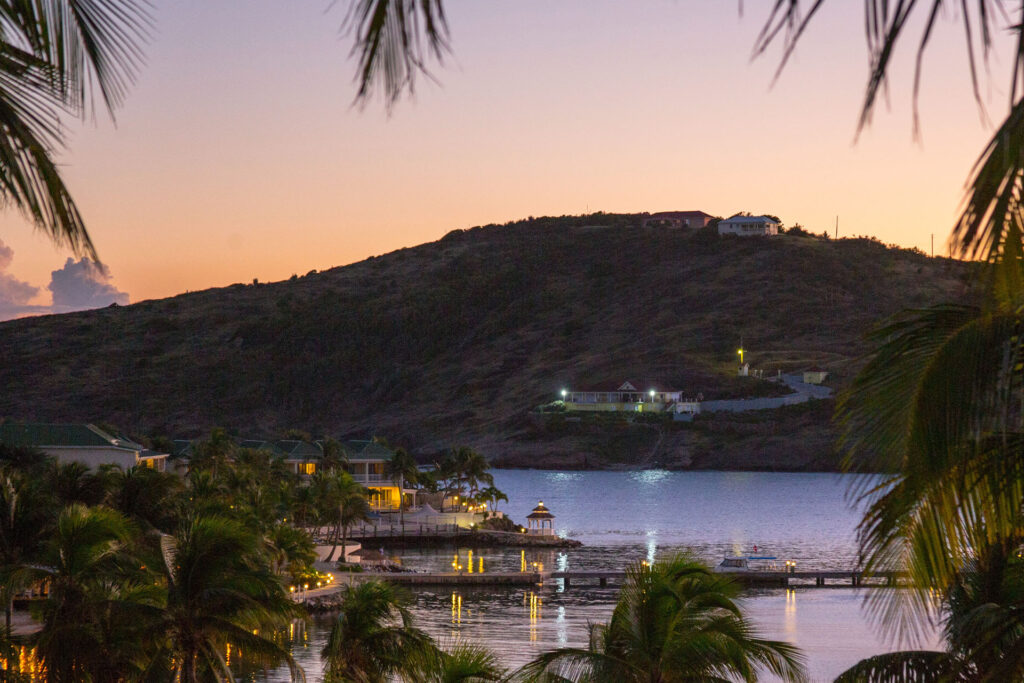
Leeward (west) coast – easy shelter and sand
The west coast is Antigua’s calm side, offering forgiving approaches, sandy bottoms and excellent swimming. It’s ideal for first‑time visitors and for relaxed days between windward adventures.
- Jolly Harbour: Full‑service marina and boatyard with a large, well‑sheltered anchorage in sand. Fuel, water, provisioning and chandleries on site.
- Hermitage Bay / Five Islands Harbour: Pretty coves with sand patches. Best in settled weather; can be exposed to northerly swell.
- Deep Bay: Sand bottom and good protection from the easterly trades. Avoid the wreck of the Andes near the centre; open to north swells.
- Dickenson Bay: Expansive roadstead and lively beach scene but can be rolly. Limited protection in northerly swell.
Plan your nights with swell direction in mind; a modest north‑west pulse can turn open bays rolly even when the trades are light.
South and south‑west – dramatic backdrops
Here the hills crowd the shoreline, creating striking scenery and occasional gust acceleration. Anchorages are generally straightforward, with sand holding and clear water.
- Carlisle Bay: Clear water, sand holding and a dramatic amphitheatre of hills. Swell can wrap in winter.
- Cades Bay and Cades Reef: Good snorkelling in settled conditions. Anchor with care behind the reef; avoid if swell is up.
On lively trade‑wind days, reef early for the south‑coast leg and enjoy a spirited but controlled reach.
South‑east and east – reef‑fringed and luminous
This is Antigua’s lagoon country: luminous pools behind protecting reefs. The rewards are high, but so are the demands for daylight pilotage and good visibility.
- English Harbour (Freeman’s Bay): Sheltered, historic, and well organised. Excellent holding in sand; National Park fees apply. Moorings and stern‑to options within Nelson’s Dockyard.
- Falmouth Harbour: Large, deep and all‑weather with multiple marinas (Falmouth Harbour Marina, Antigua Yacht Club Marina, Catamaran Marina). Ample anchoring room in mud/sand.
- Mamora Bay: Resort marina with strong shelter and limited anchoring space. Surge possible at the entrance in swell.
- Indian Creek: Mangrove‑lined hurricane hole with a shallow, bar‑controlled entrance. Daylight and settled weather only.
- Green Island / Nonsuch Bay: Multiple pools with sand patches and reef protection. Superb in trade‑wind calms; strict daylight pilotage with a bow lookout.
Enter reef‑edged anchorages with the sun high and behind you, a bow lookout posted, and speed down to displacement to read the water comfortably.
North and commercial harbours
The north side is functional rather than scenic, with services for haul‑out and storm preparation in the protected North Sound.
- St John’s: Main commercial port; short stays for clearance are possible but it’s not ideal for overnighting.
- Parham / Crabbs (North Sound): Shoal approaches and industrial surroundings. North Sound Marina offers haul‑out and cyclone preparation; not a cruising destination in itself.
If you plan off‑season storage or heavy maintenance, North Sound’s facilities are invaluable; otherwise, focus your nights on the west, south and east coasts.
General anchoring notes
- Bottoms are predominantly sand and sand‑over‑coral with excellent holding if you avoid grass and heads.
- Few public moorings exist; carry adequate ground tackle for 5:1–7:1 scope in trade‑wind bays.
- Night entries to reef‑fringed anchorages (notably Green Island/Nonsuch) are strongly discouraged.
A good anchor light, snubber or bridle, and careful scope management will keep nights quiet even when the trades freshen after dark.
FAQs
Is Antigua suitable for first‑time bareboat skippers?
Yes, provided you keep to the leeward coast and choose settled conditions. The west and south‑west offer short, forgiving hops with sand holding. The reef‑lined east side demands more experience and daylight pilotage.
Can I rely on mooring buoys around Antigua?
No. Public moorings are limited. Plan to anchor in sand in most bays or book marinas in English/Falmouth or Jolly Harbour.
How strong are the winds in peak season?
Expect 15–20 knots most days with occasional 20–30‑knot pulses during the “Christmas winds”. Reef early and enjoy fast, controlled reaches.
Is night sailing or night entry advisable?
Open‑water night passages are feasible for experienced crews, but avoid night entries into reef‑fringed anchorages such as Green Island/Nonsuch. Approach those in good light with a bow lookout.
Can I include Barbuda in a one‑week itinerary?
Yes in settled weather. It’s a rewarding 25–35 nm reach each way. Anchorages are exposed in swell, so have a Plan B back on Antigua if conditions deteriorate.
What currency and cards are accepted?
The Eastern Caribbean Dollar (XCD) is local, but US dollars are widely accepted. Cards are taken in marinas, larger restaurants and supermarkets.
Is provisioning straightforward?
Very. Jolly Harbour and St John’s have large supermarkets, and there are smaller stores and bakeries around English/Falmouth. Fresh produce markets run in St John’s.
Do I need a specific licence to charter?
Antigua does not mandate a national licence for visiting skippers, but charter companies typically require proof of competence such as RYA Day Skipper with ICC or ASA 104 (plus ASA 114 for cats), or a solid sailing CV.
Are there any special environmental considerations?
Anchor in sand to protect turtle grass and coral, use holding tanks in harbours, and be vigilant for fish‑pot buoys nearshore. National Park fees apply in English/Falmouth.
References
- https://www.cruiserswiki.org/wiki/Antigua
- https://visitantiguabarbuda.com/what-to-do/sailing/
- https://nationalparksantigua.com/
- https://www.jollyharbourmarina.com/
- https://www.fhmantigua.com/
- https://www.aycmarina.com/
- https://www.northsoundmarina.com/
- https://www.sailingweek.com/
- https://abairport.ag/
- https://www.noonsite.com/place/antigua-and-barbuda/antigua/
- https://www.rya.org.uk/knowledge/safety/icc
Charter a Yacht
Compare crewed & bareboat charters, learn the best months to sail, and get a custom shortlist from 500+ providers.