
Sailing in Ko Samui: routes, winds, seasons and safe anchorages
Ko Samui sits in the relatively protected Gulf of Thailand, offering short-hop passages between jungle-clad islands, clear-water anchorages and a forgiving sea state for most of the year. With Ang Thong National Marine Park to the west, Koh Phangan to the north and Koh Tao a little further beyond, you can shape a Thailand sailing itinerary that mixes scenic sailing with superb snorkelling and quiet nights on the hook.
Conditions are approachable for crews stepping up to their first tropical cruise, yet engaging enough for experienced skippers. Steady monsoon patterns, modest tides and plentiful day-sailing distances reduce complexity, while coral-fringed bays, simple shore access and reliable provisioning make logistics straightforward. Whether you opt for a crewed catamaran or a modest bareboat, Ko Samui rewards good passage planning with relaxed, memorable miles.
Quick links
Jump to the section you need:
- Why Sail in Ko Samui?
- Itineraries
- When to go
- Wind and weather
- Getting there
- Chartering
- Licences and formalities
- Anchorages and marinas
- FAQs
- References
Why Sail in Ko Samui?
Ko Samui’s appeal is practical as well as picturesque. The Gulf is less exposed than Thailand’s Andaman coast, so seas are typically shorter and more manageable. Distances between anchorages are short, allowing you to sail unhurriedly, drop the hook for a swim, and still reach a protected bay before dusk. This is an ideal training ground for skippers building confidence in tropical navigation.
The routing options are varied. To the west, Ang Thong’s 40-plus islands form a compact cruising ground of limestone pinnacles, white-sand coves and coral gardens. To the north, Koh Phangan offers arcs of powder sand with excellent holding in settled conditions, while Koh Tao’s mooring fields put world-class snorkelling straight off the transom. Each area feels distinct, yet they link neatly into one- and two-week loops.
Onshore services are dependable. Samui’s international airport, modern supermarkets, and busy ferry piers make crew changes and provisioning simple. Repairs and spares are not as comprehensive as Phuket, but you will find competent divers, fuel by jerrycan and helpful local agents. With thoughtful seasonal anchorage choice, the region delivers a calm, seaside pace without sacrificing comfort or safety.
Itineraries
Two tried-and-tested routes make the most of Samui’s sheltered waters and nearby islands. Use these as a framework, adjusting legs to suit the monsoon, crew energy and snorkelling ambitions. Typical hops range from 8–30 nautical miles, so it is straightforward to depart after breakfast and arrive in good light.
7-day Samui–Ang Thong–Phangan loop
A 7-day route. Adjust legs to forecast, moorings and crew preferences.
This relaxed circuit links Samui’s easy east-coast bays with the dramatic limestone scenery of Ang Thong before curving north to Koh Phangan’s sandy anchorages. Expect gentle morning breezes building to a modest afternoon sea breeze, with plenty of opportunities to swim, kayak and go ashore.
Day 1: Check-in at Bophut/Bangrak and short shake-down
Arrive, brief, provision and take a short sail to a nearby, easy anchorage such as Bangrak (Big Buddha), Fisherman’s Village (Bophut) or Choeng Mon. Use the afternoon for a systems check, a swim and to set the onboard routine for the week. Dinner ashore is convenient at Bophut’s waterfront.
Day 2: Samui to Ang Thong National Marine Park
Leave early for a broad reach of roughly 20–25 NM to Ko Wua Talap (park HQ). Pick up a mooring if available and allow time to hike the viewpoint in the afternoon for sweeping karst panoramas. Ko Mae Ko’s Emerald Lake is a rewarding dinghy trip in settled weather.
Day 3: Explore Ang Thong’s inner islands
Make short hops between islands for kayaking and snorkelling at Ko Samsao and the caves of Ko Tai Plao. Plan movements near slack tide and keep an eye out for gusts funneling through the passes. The park’s water clarity rewards an early start before day-trip boats arrive.
Day 4: Ang Thong to Koh Phangan (Thong Nai Pan)
Reach north-east 20–30 NM to Phangan’s twin bays, Thong Nai Pan Noi and Yai. Anchor in sand with good holding and enjoy calm, clear water in lighter conditions; if an onshore swell develops, shift to a more protected nook before nightfall.
Day 5: Down the east or south of Phangan
Hop to a contrasting bay. In settled weather, Haad Rin’s Sunrise Beach offers bright water and a long swim; give the shoreline respectful distance and avoid full-moon party nights. If there is any push onshore, Ban Tai can be a more comfortable day stop.
Day 6: Return to Samui’s east coast
Slide back to Samui in time for a final swim stop. Choose Lamai or Chaweng depending on wind direction and swell. Enter over sand tongues with good overhead light and keep a bow watch for coral fingers on the reef shelf.
Day 7: Short sail to base and hand-back
Work up the north shore via Mae Nam or back to Bophut for check-out. Arrange fuel by jerrycan if required, rinse the decks and disembark unrushed. Many crews celebrate with a last beachside dinner in Fisherman’s Village.
10-day Samui–Ang Thong–Koh Tao explorer
A 10-day route. Adjust legs to forecast, moorings and crew preferences.
This extended loop adds Koh Tao’s renowned mooring fields and reefs. It includes one longer open-water leg and several short repositioning sails, with ample time for snorkelling and shore walks. As ever, depart early, arrive in good light and favour moorings over coral where provided.
Day 1: Samui west coast shake-down
Coast along to Nathon or Lipa Noi for an easy first night and the option of last-minute supplies. The west coast is functional rather than fancy, but it offers good lee in the Northeast monsoon and straightforward holding in sand.
Day 2: West to Ang Thong HQ
Start early for Ko Wua Talap while seas are settled. Pick up a park mooring and stretch your legs on the viewpoint trail or the beach caves. Gusts can flare with passing showers; a bridle and extra scope keep the boat quiet.
Day 3: Ang Thong to Koh Tao (Mae Haad)
Make the longer hop of around 35–45 NM to Koh Tao. Aim to arrive with plenty of light to select a mooring off Mae Haad. Anchoring is restricted over coral, so have lines and a boat hook ready on approach.
Day 4: Koh Tao west coast
Reposition north to Sairee’s moorings for easy beach access and excellent snorkelling close inshore. With the dinghy, explore the coastline and time swims for slack water.
Day 5: Koh Tao south bays
Head to Chalok Baan Kao or Shark Bay for a sheltered morning. Use laid moorings where available and approach slowly in clear overhead light to avoid coral heads. The southern bays are superb for an unhurried lunch stop and paddleboards.
Day 6: Cross to Koh Phangan north (Chaloklum)
Enjoy a beam reach to Chaloklum’s deep horseshoe bay. Set in sand patches and anticipate occasional katabatic gusts overnight. The village offers simple eateries and a relaxed pace.
Day 7: Slide to Thong Nai Pan
A short scenic leg around the headland delivers you to Thong Nai Pan’s twin sandy bays with clear water and easy swimming. Arrive before midday to pick your spot and enjoy the afternoon ashore.
Day 8: South to Haad Rin or alternative lee
Choose Haad Rin in calm weather for a postcard anchorage and a long beach walk. If the breeze builds onshore, tuck into an alternative lee such as Haad Yao on the west coast, which often stays comfortable when the east rolls.
Day 9: Return to Samui (Choeng Mon/Chaweng)
Close-reach back to Samui’s north-east for a final-night swim at Choeng Mon or Chaweng. Both offer sand patches among coral; settle in before the afternoon sea breeze freshens.
Day 10: Back to base via Bophut
Make the short hop to your hand-back anchorage at Bophut or Bangrak. Refuel by arrangement, complete paperwork and disembark with time to spare for airport transfers.
When to go
Ko Samui’s sailing year is shaped by the Northeast monsoon (roughly November–January), the transitional late-dry months (February–April), and the Southwest monsoon (May–September), followed by a wet interlude in October–November. The driest, most settled months are February through August, with March–May bringing light winds and hot, glassy seas at times. Rain peaks in November–December on the Gulf side, and strong NE winds can make the north and east coasts exposed then.
Plan itineraries to use the lee of the island chain. In NE monsoon, favour Samui’s west and south (Lipa Noi, Taling Ngam, Thong Krut) and the western coves of Ang Thong. In SW monsoon, the east and north of Samui (Chaweng, Lamai, Bophut, Choeng Mon) and many Koh Phangan bays are more comfortable. Shoulder months often offer the best compromise of breeze, visibility and sea state. Regardless of season, the region rewards an “early off the hook, early to anchor” rhythm.
Wind and weather
Wind
The Northeast monsoon delivers NE–E winds typically 12–20 knots, with occasional stronger pulses and squalls in November–December. The Southwest monsoon brings SW–S winds of 10–15 knots. During April–May, sea-breeze cycles often dominate, with calm mornings and afternoon puffs to 10–12 knots.
Sea state
Seas are generally short and manageable thanks to the Gulf’s limited fetch. Expect 0.5–1.5 m in open channels, rising during strong monsoon surges. Around Ang Thong’s passes and Phangan’s headlands, gusty bullets can kick up momentary chop—reef early and keep sail plans conservative when shuttling between islets.
Rain and visibility
Heaviest rain falls October–December, often as brief, intense squalls. Outside showers, visibility is typically good. Lightning risk is higher in the transitional season, so monitor official marine forecasts daily and avoid exposed swimming or mast work during electrical storms.
Tides and currents
Tides are microtidal by global standards, with springs in the 1–2 m range and neaps appreciably less. Currents are generally weak (under 1 knot) but can accelerate through Ang Thong channels and around headlands to 2–3 knots on springs. Coral shelves and drying reef flats call for eyeball navigation in good overhead light.
Tropical systems
Full cyclones are rare in the Gulf, but the remnants of tropical depressions can bring several days of strong winds and heavy rain, mainly October–December. Build in a safe harbour day or two on longer trips and keep a conservative eye on the forecast.
Getting there
Samui International Airport (USM) has frequent connections via Bangkok and regional hubs, making crew logistics straightforward. Transfer times from the airport to the main north-coast anchorages (Bangrak, Bophut, Choeng Mon) are typically 10–20 minutes by taxi, so same-day arrivals and departures are easy to coordinate.
Ferry access from the mainland is frequent: Raja Ferry and Seatran operate car ferries from Donsak (Surat Thani) to Nathon and Lipa Noi, while high-speed catamarans link Koh Tao, Phangan and Samui via piers at Mae Nam or Bangrak. For yacht crews, the piers are convenient rendezvous points but busy; stand well off, avoid ferry approaches and land the dinghy down the beach.
Approach by sea is uncomplicated in settled weather, though night entries are discouraged due to unlit fishing gear and patchy chart accuracy. Cross-check plots with satellite imagery and maintain a bow watch over reef shelves. If you plan a late arrival, stage in a clear, open bay and complete any tight pilotage in morning light.
Chartering
Charter options on Ko Samui skew towards crewed multihulls and skippered day boats, with a smaller pool of bareboat catamarans and monohulls than Phuket. Bases and pickup points cluster on the north and north-east coasts near Bangrak (Big Buddha), Bophut (Fisherman’s Village) and Choeng Mon, where provisioning and transfers are simple. Expect handovers at anchor or on private pontoons rather than in full-service marinas.
Catamarans between 38 and 45 feet suit the area particularly well: shallow drafts open up coral-fringed bays, and wide foredecks are ideal for swimming stops. Monohulls are perfectly viable but may anchor a touch further out on some shelves. Most operators can arrange skippers, hostesses and light provisioning, and can handle Ang Thong park fees on your behalf.
Provisions and fuel are straightforward. Large supermarkets (Makro, Big C, Lotus’s) sit a short taxi ride from Bophut and Chaweng. Fuel is usually delivered in jerrycans from Nathon or Bangrak—book the run with your base in advance. Water and ice are widely available shoreside, though rarely via dock hose, so plan to top up by jerrycan. Basic diving and hull-cleaning services are available through local agents. For comfort and safety, request a sun awning, snorkelling sets, a reliable dinghy outboard, and a spare anchor with adequate rode for coral-shelf anchorages.
Licences and formalities
Charter certification
Thailand does not impose a national bareboat licence, but reputable operators require evidence of competence broadly equivalent to RYA Day Skipper or ICC (Sail). Coastal experience on vessels of similar size is expected, and a VHF/short-range certificate is advisable. Many companies accept an experience résumé, though stronger credentials ease approvals. Skippered or crewed charters are readily available if you prefer not to skipper.
Ang Thong National Marine Park
Entry fees apply per person (and sometimes per vessel). Use park moorings where provided and avoid anchoring on coral. Overnighting is typically permitted in designated areas, usually near Ko Wua Talap; confirm current rules with your operator or the park rangers on arrival, and respect any day-use-only buoys such as those at Ko Mae Ko.
Private yachts (international arrival)
Vessels entering Thailand must clear with Customs, Immigration and the Harbour Department. On Samui, formalities are handled at Nathon; advance notice via an agent simplifies the process. Carry ship’s papers, crew passports, insurance and a current crew list. If already cleared into Thailand elsewhere, retain your port clearance and report movements as required.
Local cautions
Do not anchor on coral or within swim-zone buoy lines. Fishing gear, pots and staked nets are common on the flats, particularly on the south and west of Samui—keep a sharp lookout and avoid night passages nearshore. Many beaches have designated landing corridors for longtails and ferries; give them a wide berth and land the dinghy well clear.
Anchorages and marinas
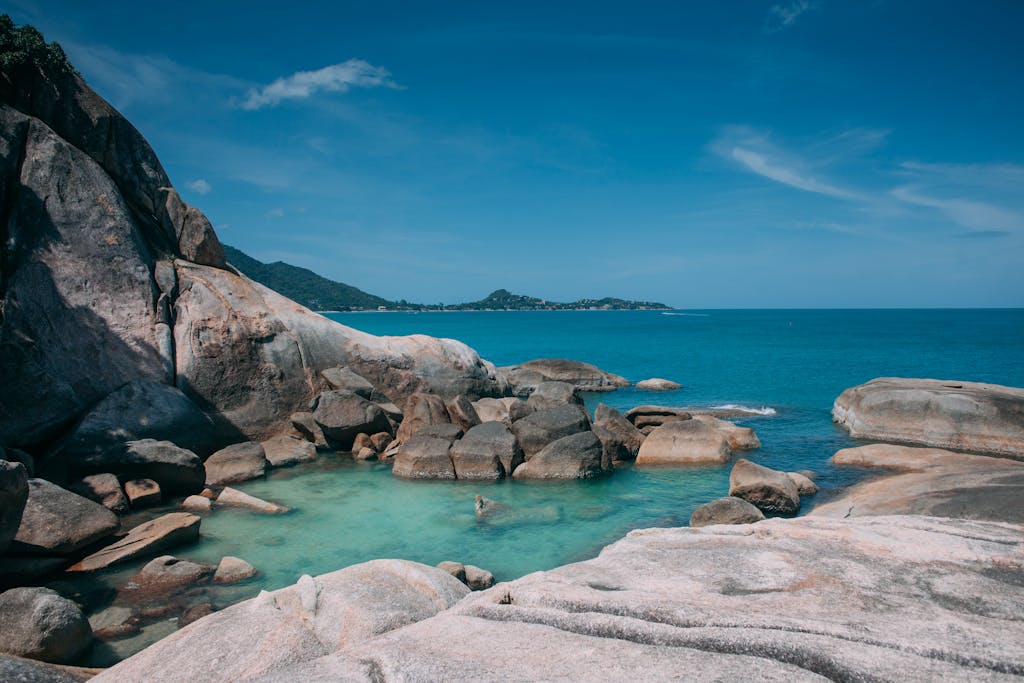
There are no large, full-service marinas on Ko Samui. Yachts operate from anchorages and a handful of private pontoons or small basins. Plan for anchoring self-sufficiency and shore transfers by dinghy, and be prepared to move if swell wraps into an otherwise protected bay.
North & North-east Samui (good in SW monsoon and calm periods)
- Bangrak (Big Buddha): Convenient for airport transfers and charter handovers. Anchor in 4–6 m on sand outside ferry approaches; holding is moderate. Be aware of a lee shore in strong NE winds and afternoon chop in sea breezes.
- Bophut (Fisherman’s Village): Sand with patches of hard; give space to moorings and longtails. Sheltered in light southerlies but can be rolly in onshore swell. The beach gives easy dinghy landings and plentiful restaurants.
- Choeng Mon: Clear water with sand patches interlaced by coral fingers. Excellent swimming; enter with a bow watch to avoid coral heads.
- Mae Nam: Broad bay of sand. Keep well clear of the ferry pier and its approach channel to the west.
These north-shore bays are ideal for first and last nights thanks to proximity to services. Afternoon sea breezes can raise a short chop; a snubber or bridle helps keep things quiet.
East & South-east Samui
- Chaweng and Lamai: Long sandy arcs with reef shelves. Attractive in settled southerlies but exposed and rolly in NE conditions. Identify sand tongues to avoid coral and expect some beach surf when landing the dinghy.
- Laem Sor / Thong Krut: Handy staging points on the south coast with protection in the NE monsoon. Mind the shallows and fishing stakes; enter with good light.
The east coast offers postcard beaches and clear water. Reefs come close to the surface, so plan your approach with the sun high and keep speed down to read the water colour.
West & South-west Samui (good in NE monsoon)
- Nathon: Primary town and ferry port. Anchor outside the pier in 4–6 m on sand. Expect constant ferry wash—functional rather than scenic but very useful for fuel and supplies.
- Lipa Noi and Taling Ngam: Pleasant sandy shelves with decent lee in NE winds. Watch for nocturnal katabatic gusts rolling off the hills.
These west-coast stops shine when the NE trades are up. They are also practical for logistics, with road links to supermarkets and services.
Koh Phangan
- Thong Nai Pan (Noi/Yai): Deep, clear bays with sandy bottoms and good swim water. Swell can wrap in during onshore winds—reassess after dusk.
- Chaloklum (Ban Chalok Lam): Sand in 4–8 m with gusts off the valley. Generally comfortable and well-served ashore.
- Haad Rin: Beautiful in calm weather; avoid during strong easterlies and around full-moon party nights due to traffic and noise.
Phangan’s variety allows you to switch coasts for comfort. Arrive early to claim the best sand patches and keep clear of swim-zone buoys.
Ang Thong National Marine Park
- Ko Wua Talap (HQ): Visitor moorings near the beach, hiking trails and ranger station. Gusty in squalls and at tide turns.
- Ko Mae Ko (Emerald Lake): Day-stop moorings only. Depths fall away quickly; superb dinghy exploration to the lagoon steps.
Ang Thong is best enjoyed by moving short distances between moorings and timing swims for slack water. Overnight only where permitted and never anchor on coral.
Koh Tao
- Mae Haad and Sairee: Mooring fields over coral; anchoring restricted. Arrive early to secure a buoy. Holding outside the fields is limited and often over reef.
- Southern bays (Chalok Baan Kao, Shark Bay): Use laid moorings where available. Shelter varies with the monsoon. Navigate with the sun overhead—reefs are shallow and intricate.
Koh Tao’s conservation focus means moorings are the norm. Have lines ready and approach slowly; if no buoy is free, be prepared to relocate rather than risk the reef.
General notes
Many bays have coral shelves with sand tongues running seaward—eyeball pilotage under a high sun is invaluable. Night entries are discouraged due to fishing gear, unlit floats and coral proximity. Expect afternoon gusts and occasional roll in otherwise protected anchorages; a bridle and a little extra scope improve comfort.
FAQs
When is the best time to sail around Ko Samui?
February to August offers the most settled mix of sunshine and manageable winds. November–December is the wettest with strong NE winds at times; October can be unsettled. Plan anchorages to suit the prevailing monsoon.
Are there proper marinas on Ko Samui?
No. You’ll anchor in bays and occasionally use small private pontoons. Fuel is typically delivered by jerrycan, and shore access is by dinghy.
Can I overnight in Ang Thong National Marine Park?
Yes, in designated areas and usually on park moorings near Ko Wua Talap. Some sites are day-use only; check with rangers on arrival and follow current instructions.
Do I need a licence to bareboat charter?
Thailand has no state-issued bareboat licence, but operators expect competence equivalent to RYA Day Skipper or ICC (Sail). A VHF certificate and experience on a similar-size yacht strengthen your application. Skippered charters are widely available if you prefer not to skipper.
Is night sailing advisable?
It is generally avoided nearshore due to coral shelves, fish traps and unlit floats. Most passages are short; depart early, arrive in good light, and keep a bow watch over reef edges.
What about jellyfish and marine hazards?
Box jellyfish can appear seasonally. Wear stinger suits when snorkelling if advised locally, and carry vinegar in the first-aid kit. Coral heads are common—use moorings where provided and avoid dropping the hook on reef.
Where can I provision and get fuel?
Big supermarkets in Chaweng and Bophut cover full provisioning. Fuel is available via delivery or jerrycans from Nathon and Bangrak. Arrange through your charter base in advance.
How strong are tides and currents?
Tidal ranges are modest (around 1–2 m on springs). Currents are generally weak but can reach 2–3 knots in Ang Thong passes and around headlands; plan snorkelling and dinghy trips for slack water.
References
Charter a Yacht
Compare crewed & bareboat charters, learn the best months to sail, and get a custom shortlist from 500+ providers.