
Sailing in Costa Brava & Cap de Creus: routes, conditions and practicalities
The Costa Brava delivers a compact, high-contrast coastline: pine-cloaked cliffs, pocket coves with startlingly clear water, and well-equipped marinas within easy day hops. Rounding Cap de Creus – Spain’s easternmost headland – adds a sense of expedition, with wild geology, gin-clear snorkelling and a microclimate shaped by the notorious Tramontana. This guide sets out where to sail, how the local winds behave, and which harbours and anchorages work in real conditions. It also explains charter options, seasonal patterns, and the paperwork you genuinely need – so you can plan with confidence and sail with purpose.
Quick links
- Why Sail in Costa Brava & Cap de Creus?
- Itineraries
- When to go
- Wind and weather
- Getting there
- Chartering
- Licences and formalities
- Anchorages and marinas
- FAQs
- References
Use these links to jump to key planning sections. Each anchor takes you to the relevant guidance for easy reference on mobile or desktop.
Why Sail in Costa Brava & Cap de Creus?
Costa Brava sailing is about precision and reward. Distances are short, yet the character of each stretch changes markedly: from the sand-fringed Gulf of Roses to the craggy amphitheatres of Begur and the raw, elemental headlands of Cap de Creus. You can stitch together sheltered marinas, managed mooring fields and secluded calas with ease, then step ashore to medieval towns and low-key seafood restaurants a few minutes’ walk from the quay.
Cap de Creus itself is different in kind, not just degree. Its granite spines create wind funnels and cat’s-paw gusts, but also carve out translucent bays – Guillola, Joncols, Montjoi – that are among the best day anchorages in mainland Spain. The marine parks at Illes Medes and Cap de Creus protect posidonia meadows and reef life; on a settled day, a mask and fins are as important as your handheld VHF.
For skippers who value good seamanship, the region is instructive without being punitive. Summer sea breezes reward timing and sail trim, while the Tramontana demands respect and planning. With reliable shoreside infrastructure and multiple safe bolt-holes, you can push to the headland when conditions are right, and step back to the marinas of Roses, Empuriabrava or Port de la Selva when they are not.
Itineraries
Below are two tried-and-tested routes that balance short hops with standout stops. Use them as templates and adjust for forecast, crew energy and mooring availability. Managed moorings operate in season at Illes Medes and in several Cap de Creus calas; book early in peak months.
7-day Palamós to Cap de Creus Return
A 7-day route. Adjust legs to forecast, moorings and crew preferences.
Day 1: Palamós to Llafranc/Tamariu (12–18 NM)
Ease into the Begur coves. Depart Marina Palamós after check-in and a quick fuel top-up, then work north with time for a swim stop off Cala S’Alguer or Sa Tuna if settled. Approach headlands with care as rock spurs extend seaward. Overnight on the small-boat pontoons at Llafranc (advance booking essential and manoeuvring tight) or on a mooring/anchor in Tamariu in calm conditions, keeping clear of posidonia and using a stern line to shore if space is limited.
Day 2: Tamariu to L’Estartit via Illes Medes (10–14 NM)
A short leg with world-class snorkelling. Pause at the Illes Medes mooring fields; permits/booking are required in season and stay times may be limited. No anchoring on seagrass. Plan a mid-morning stop before the sea breeze peaks, then enter the well-sheltered marina at L’Estartit for an easy berth, showers and chandlery. Late afternoon is perfect for a stroll to the lookout over the reserve.
Day 3: L’Estartit to Roses or Cala Montjoi (18–22 NM)
Cross the Gulf of Roses early before the sea breeze builds and sets up a short chop. If conditions allow, pick up a managed buoy in Cala Montjoi or nearby calas such as La Pelosa; expect crystal-clear water and tight swing room. Otherwise, opt for the secure facilities at Roses marina with fuel and provisioning a short walk ashore.
Day 4: Roses to Cadaqués via Cala Jóncols (12–16 NM)
Thread the scalloped south coast of Cap de Creus. Stop for a swim or lunch at Cala Jóncols, watching for dive flags and swimmers near the beach. Continue to the mooring fields in Cadaqués, where holding is mixed on sand and weed and managed buoys simplify overnighting. Go ashore for whitewashed alleys, low-key tapas and Dalí lore.
Day 5: Cap de Creus circuit to Port de la Selva (10–14 NM)
Explore Port Lligat and Cala Guillola under the headland in the morning lull. If forecast and sea state are settled, round Cap de Creus with a generous offing to clear rocks and gust lines. Finish at Port de la Selva for secure berthing, laundry and solid shelter from northerlies. It’s a practical spot to reset, provision and enjoy the seafront promenade.
Day 6: Port de la Selva to L’Escala (18–22 NM)
Choose an early departure if a northerly is forecast. The wide Gulf of Roses can be lumpy under Tramontana; reef early and keep passages conservative. L’Escala offers a compact, handy marina with fuel and good restaurants. Watch for fishing markers on the approach and moderate crosswinds at the entrance.
Day 7: L’Escala to Palamós via Aiguablava (22–26 NM)
Track the Begur headlands with a lunch stop in Aiguablava (seasonal moorings and glorious water clarity). Time your final leg to arrive at Palamós with daylight to spare for fuel, check-out and a final stroll along the fishing quay. If it’s rolly from the east, swap Aiguablava for a more protected stop or head straight for base.
4-day Cap de Creus Short Break from Empuriabrava
A 4-day route. Adjust legs to forecast, moorings and crew preferences.
Day 1: Empuriabrava to Cadaqués (14–18 NM)
Depart via the canals of Empuriabrava, allowing for traffic and crosswinds, then skirt the south shore of the cape. Stop at Almadrava or Canyelles Petites for a swim if it’s calm and free of swell. Pick up a visitor mooring in Cadaqués and enjoy an evening ashore; reserve ahead in peak season.
Day 2: Cadaqués to Port de la Selva via the Cap (12–16 NM)
Weave into Port Lligat or Cala Guillola in the morning lull for a sheltered swim. If wind and sea state are settled, round Cap de Creus with a wide berth; expect gust acceleration at the point. Overnight in Port de la Selva for solid shelter from northerlies, with reliable berths and simple provisioning near the quay.
Day 3: Port de la Selva to Roses via Cala Montjoi/Jóncols (14–18 NM)
Work back along the south side of the cape. If the Tramontana is in, keep the day conservative and head straight to Roses marina. Otherwise, enjoy a lunch stop on managed moorings in Montjoi or Jóncols, keeping clear of dive boats and swim lines. Roses offers fuel, water and a broad choice of restaurants.
Day 4: Roses to Empuriabrava via the Roses coves (6–10 NM)
A short final leg with time for a swim in Almadrava or Canyelles if conditions permit. Return up the canals of Empuriabrava, refuel and complete handover. Allow buffer time for the canal transit and any queue at the fuel dock.
When to go
The prime window is May to October. From late spring, days are long and the sea breeze builds reliably after midday, giving lively but manageable afternoon sailing and calm mornings for short hops or swimming. July and August bring the warmest sea temperatures (22–25 °C) and the busiest anchorages; book moorings and marina berths ahead. September often offers the best balance of warmth, water clarity and space, with quieter harbours and fewer thunderstorms than August.
The Tramontana (northerly) is strongest and more frequent in late autumn to early spring, but it can blow hard at any time of year. In a Tramontana episode, sea state steepens quickly across the Gulf of Roses and at the capes. Build flexibility into your plan: enjoy the Begur coves or shelter at Roses, Empuriabrava or Port de la Selva until it eases.
Shoulder months (May–June and late September–October) suit crews seeking lighter crowds and cooler nights. Water clarity is excellent after calm spells, and restaurants remain lively in the larger towns. Outside peak season some mooring fields are lifted and certain services reduce hours, so call ahead for fuel and berth availability.
Wind and weather
Local wind patterns define your day. In settled summer weather, expect a gentle morning land breeze or calm, followed by a thermal sea breeze from the S–SE that freshens through early afternoon (often 8–15 knots) and eases before dusk. This is ideal for short coastal legs and cove-hopping if you time your departures accordingly.
The Tramontana is the region’s signature wind: a dry, often gusty northerly to north-westerly accelerated by the Pyrenees and the Gulf of Lion. It brings clear skies and excellent visibility but can reach gale force, with sharp gusts, bullets in valley outflows and a short, steep chop. Gust acceleration is marked around Cap de Creus and headlands near Cadaqués and Port de la Selva. If it is forecast, shorten routes, choose harbours with deep protection and avoid lee-shore calas.
Other winds include the Llevant (E/NE), which brings swell and occasional rain; the Garbí (SW), a warm fair-weather breeze common in summer afternoons; and the Xaloc (SE). Easterlies can make many south-facing beaches rolly and uncomfortable. Fog is occasional in spring. Tides are negligible (generally under 0.3 m), but surge from wind and swell affects low, open harbours.
Use multiple forecasts: AEMET coastal bulletins, Meteocat nowcasts and, for the Gulf of Lion, Météo-France models. On the water, monitor the morning pressure gradient and cloud streets; a clear Tramontana signature to the north usually verifies early. Sea state can build quickly with wind-against-swell at the capes; reef early, keep clear of headlands in the worst of it, and plan legs to arrive with daylight in hand.
Getting there
Access is straightforward. Barcelona-El Prat (BCN) is the main international hub with year-round services; road transfer to Palamós is around 1 hr 30 mins, to Roses about 2 hrs. Girona–Costa Brava Airport (GRO) sits inland of the southern Costa Brava; transfer times are typically 40–60 mins to Palamós and under an hour to L’Estartit, Roses and Empuriabrava. From the north, Perpignan (PGF) in France is useful for Cap de Creus bases (around 1 hr 15 mins by road).
The AP-7 motorway and good secondary roads connect all coastal towns. Regional rail links serve Blanes (southern gateway) and Figueres (for Roses/Empuriabrava), with local buses onward. Most marinas offer secure parking and easy provisioning within a short walk.
For a smooth start, pre-order groceries for quay delivery where offered, and confirm late-arrival procedures with your base. Taxis are plentiful in the main towns; in smaller ports, arrange transfers via your charter company or marina reception.
Chartering
Yacht charter is well developed along the Costa Brava, with concentrations of fleets in Palamós, L’Estartit, Roses and Empuriabrava. You will find monohulls from 32–50 ft and an increasing number of catamarans. Skippered and bareboat options are available; flexible embarkation days are more common outside peak season.
Typical one-week routes range from Begur’s calas and the Illes Medes to a full Cap de Creus circuit. In summer, protected areas switch to managed mooring fields (no anchoring on posidonia), and some coves set aside lines for day use only. Book moorings for Illes Medes and certain Cap de Creus bays in advance where required. Marinas at Palamós, L’Estartit, Roses, Empuriabrava and Port de la Selva are reliable bolt-holes with fuel, water and mechanics.
Provisioning is straightforward: major supermarkets and markets are steps from the quay in Palamós, L’Escala, Roses and Empuriabrava. Many charter bases can arrange early check-in, transfers, paddleboards and snorkel sets. For Cap de Creus, carry a robust tender and long stern lines for shore tie-ups in narrow calas.
Expect a security deposit or damage waiver, and check what’s included (outboard, bed linen, gas) to avoid last-minute add-ons. If in doubt about handling a larger catamaran in tight marinas, consider a brief assisted departure/arrival or a day with a local skipper to build confidence around the capes.
Licences and formalities
For bareboat charter in Spain, most operators require an ICC (International Certificate for Operators of Pleasure Craft) with sail endorsement or an RYA Day Skipper Practical (or higher). An SRC (VHF) radio certificate is expected for the skipper where a fixed VHF is carried. Equivalent national licences (e.g., ASA 104 + IPC) may be accepted at the company’s discretion; confirm at booking.
Carry passports/ID for all crew, a crew list as provided by your operator, and a credit card for the security deposit. If you intend to cross briefly into French waters near Portbou, ensure your documentation covers international cruising, though there are ordinarily no additional formalities within Schengen for leisure craft.
Environmental rules are actively enforced: do not anchor on posidonia; use park mooring systems at Illes Medes and in designated Cap de Creus calas; observe seasonal speed and access restrictions. Waste discharge is prohibited in ports and protected zones.
Check that required safety gear is aboard and in date, including flares and lifejackets for all crew. AIS and a handheld VHF are very useful around Cap de Creus, where gusts and topography can complicate close-quarters manoeuvring.
Anchorages and marinas
Southern Costa Brava: Blanes to Palamós
High, pine-clad cliffs and limited all-weather shelter characterise this stretch. Blanes offers a capable marina and is a southern gateway if arriving by road or rail. Northwards, Port d’Aro (Platja d’Aro) and Sant Feliu de Guíxols are practical staging points. Palamós is the strongest base: deep-water berths, fuel, yards and easy provisioning.
Begur Headlands and the Calas
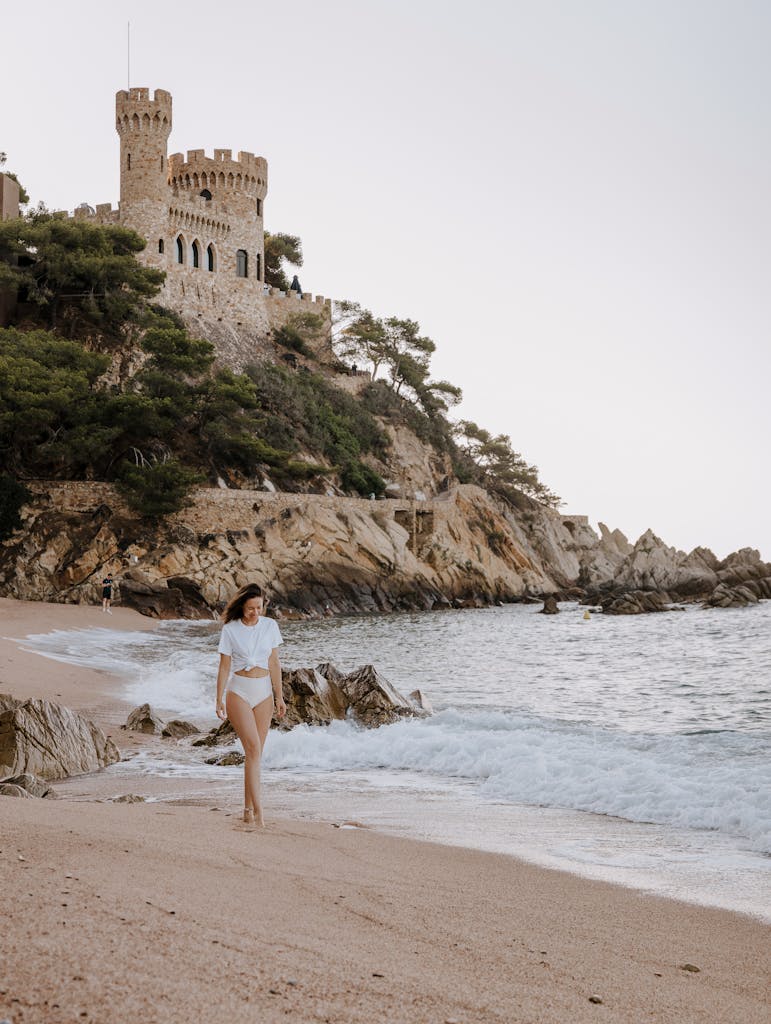
Between Palamós and L’Estartit lie the postcard coves: Llafranc (tiny marina; book ahead), Tamariu (seasonal moorings; open to easterlies), Aiguablava (managed buoys in season), Sa Tuna and Sa Riera (day stops in settled weather). Approach carefully: rock outcrops extend from headlands; enter with the sun behind you if possible. Depths are typically 3–10 m over sand patches bordered by posidonia; a tripping line and a stern line to shore help in tight spaces.
Illes Medes and L’Estartit
The Medes Marine Reserve prohibits anchoring on seagrass; visitors use colour-coded mooring buoys sized by boat length. Bookings may be required in peak months and are time-limited. L’Estartit marina immediately opposite is well sheltered, with fuel, water and chandlery.
Gulf of Roses: L’Escala to Roses and Empuriabrava
A wide, shallow gulf with long beaches. L’Escala’s compact marina is a handy stop with good dining. The bay of Roses is exposed to Tramontana and can be rolly in easterly swell; in such conditions, choose marina berths over open-roadstead moorings. Empuriabrava’s canal network offers vast berthing and repair capacity; access is straightforward in moderate weather, but allow for traffic and crosswinds.
Cap de Creus: South Shore (Roses to Cadaqués)
This is a sequence of rocky amphitheatres: Montjoi, Pelosa, Murtra, Jóncols. Several calas operate seasonal mooring fields; overnighting is often permitted, but local rules vary year to year. Protection is best from southerlies and light conditions; many become untenable in strong northerlies or easterly swell. Water clarity is superb; keep clear of dive flags and swim zones.
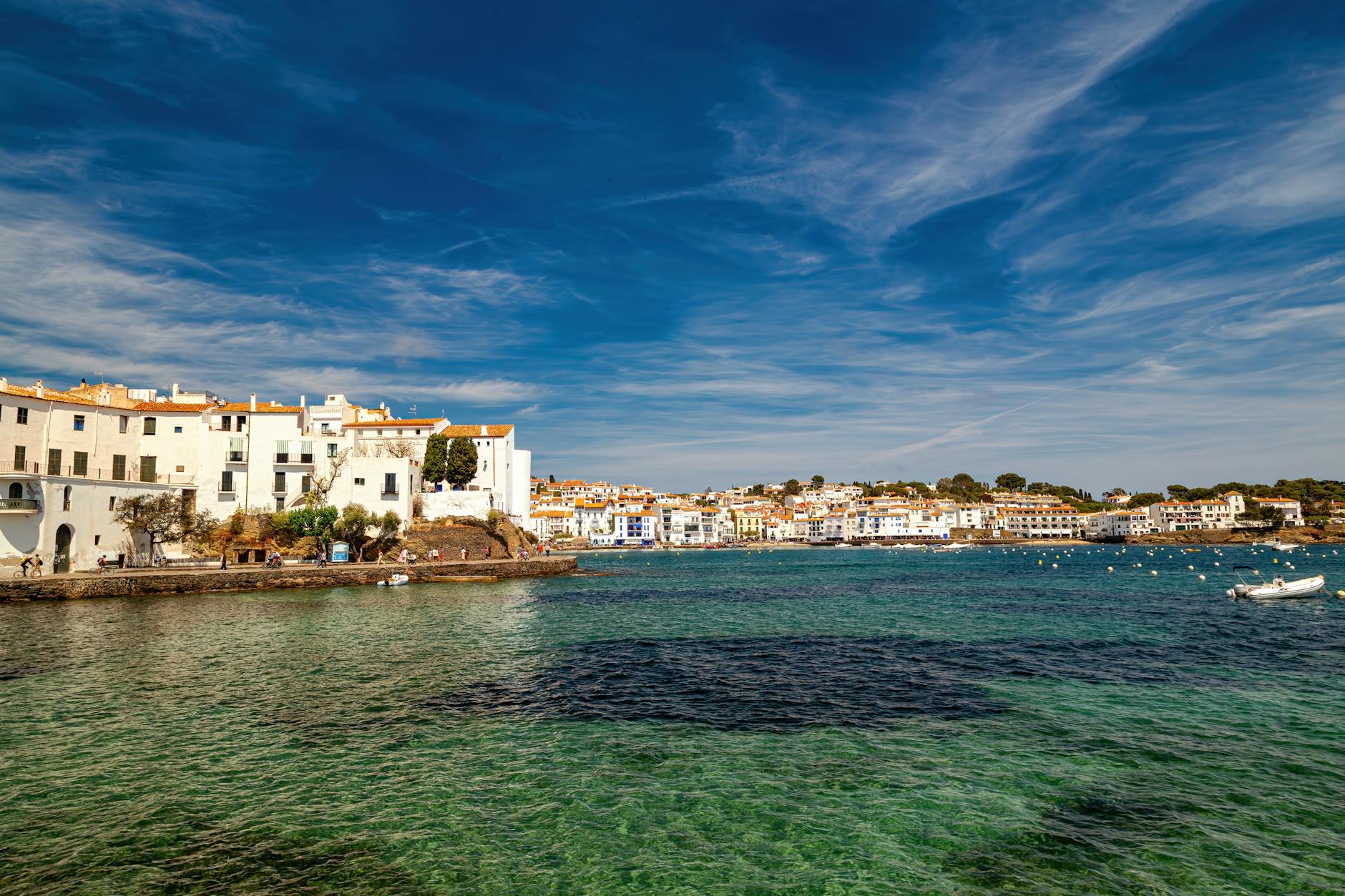
Cadaqués and Port Lligat
Cadaqués has extensive visitor moorings managed in season; anchoring is constrained to protect posidonia. Holding is mixed on sand and weed. In Tramontana, bullets descend the valleys; rig chafe protection and allow swinging room. Port Lligat and nearby Cala Guillola are among the more sheltered options under the headland in settled northerlies, but still gusty.
Cap de Creus Rounding and North Shore
Rounding the cape should be done with a conservative margin: plan on morning lulls, avoid wind-against-sea, and give the headland a wide berth to clear off-lying rocks. On the north side, Port de la Selva provides the most secure marina and anchorage options in Tramontana and is an excellent base to wait out blows. Further north, Llançà, Colera and Portbou offer additional berths and short-hop refuges near the French border.
Practical Notes
- Fuel: available at Palamós, Sant Feliu, Port d’Aro, L’Estartit, L’Escala, Roses, Empuriabrava, Port de la Selva and Llançà.
- Hazards: numerous off-lying rocks and shoals off capes; consult large-scale charts and keep a bow watch when sunlight and glare obscure the bottom. Summer traffic of small craft and divers is intense near Medes and popular calas.
- Services: most marinas have travel lifts, mechanics and sailmakers within reach; for major work, Palamós and Empuriabrava have the deepest bench.
Channel allocations and procedures vary by harbour; call on VHF when in range and follow staff directions. Seasonal moorings are often managed by concessionaires rather than port authorities, so check booking platforms and signage in situ. Carry cash as some buoy fields and smaller harbours may not accept cards.
FAQs
Is Costa Brava suitable for a first bareboat charter?
Yes, provided you plan conservatively. Distances are short and infrastructure is good, but you must respect local wind patterns, especially the Tramontana. Stick to Begur and the Gulf of Roses in marginal forecasts and choose marinas over open bays when it is breezy.
Which direction is best for rounding Cap de Creus?
Most crews round eastabout from the south (Roses/Cadaqués) to the north (Port de la Selva), timing the turn for a morning lull. Avoid wind-against-current sea states and give the headland a wide berth for off-lying rocks.
Do I need to book mooring buoys at Illes Medes and Cap de Creus?
In peak season, yes. The Medes reserve uses managed buoy fields with size limits and time controls. Several Cap de Creus calas also deploy seasonal moorings; booking systems and rules vary annually, so check current park guidance before you sail.
What licences do I need to charter here?
An ICC with sail endorsement or RYA Day Skipper Practical (or higher) is typically required for bareboat, plus an SRC (VHF) certificate. Operators may accept equivalent national qualifications at their discretion.
Are there tides to worry about?
Tidal range is very small (generally less than 0.3 m). Wind and swell, particularly from Tramontana or easterlies, have a much greater effect on harbour surges and anchorage comfort.
Where are the best all-weather refuges?
Palamós, L’Estartit, Roses, Empuriabrava and Port de la Selva are reliable in most conditions. In a strong Tramontana, prioritise Port de la Selva and the larger marinas over exposed roadsteads.
Can I anchor anywhere in Cap de Creus?
No. Anchoring is restricted to protect posidonia meadows, and some bays operate mooring-only regimes in season. Always follow park signage and current regulations.
What’s the water like for swimming and snorkelling?
Exceptionally clear around Cap de Creus and the Illes Medes. On settled days, visibility is excellent; carry snorkel gear, observe dive flags and stay clear of marked swim zones.
References
- https://www.cruiserswiki.org/wiki/Costa_Brava_&_Cap_de_Creus
- https://www.aemet.es/en/eltiempo/prediccion/maritima
- https://www.meteo.cat/
- https://meteofrance.com/previsions-meteo-marine
- https://parcsnaturals.gencat.cat/en/xarxa-de-parcs/cap-de-creus/index.html
- https://parcsnaturals.gencat.cat/en/montgri/Patrimoni-natural/Regulacio-us-public/index.html
- https://ports.gencat.cat/en
- https://www.rya.org.uk/knowledge/safety/icc
- https://www.noonsite.com/country/spain/formalities/
- https://en.wikipedia.org/wiki/Costa_Brava
- https://www.visitestartit.com/en/nautical/illes-medes-mooring-buoys/
Charter a Yacht
Compare crewed & bareboat charters, learn the best months to sail, and get a custom shortlist from 500+ providers.