
Ligurian Coast & Cinque Terre Sailing Guide
The Ligurian Coast is one of the most astonishingly beautiful coastlines that Italy and the Mediterranean has to offer. It rewards attentive skippers with a compact, cultured cruising ground where pastel villages cling to cliffs, wooded headlands funnel the breeze, and deep gulfs offer secure all‑weather refuge. Expect short, scenic passages between high‑quality marinas, interspersed with committed pilotage around dramatic capes and tightly regulated marine parks. From the French border past Sanremo and Imperia, across the Gulf of Genoa to Portofino and the Cinque Terre, and into the sheltered Gulf of La Spezia, this is Italy at its most concentrated: big‑city heritage in Genoa, yacht‑smart bays in Tigullio, and UNESCO‑listed coastlines in a single week. If you value reliable facilities, memorable landfalls and afternoon sea‑breezes rather than long open‑water slogs, Liguria is a confident choice.
Quick links
Jump to the section you need:
- Sailing the Ligurian Coast & Cinque Terre
- Why sail here
- Itineraries
- When to go
- Wind and weather
- Getting there
- Chartering
- Licences and formalities
- Anchorages and marinas
- FAQs
- References
Why Sail the Ligurian Coast?
This coastline combines high drama with high service. Granite headlands such as Portofino and Punta Mesco generate crisp sea‑breezes and textbook coastal sailing, yet just a short hop away you will find deep, well‑run harbours—Varazze, Lavagna, Porto Mirabello—equipped to superyacht standards. It is rare to enjoy such visual theatre and marina certainty so close together.
Navigation is satisfyingly hands‑on without being punitive. Summer winds are typically moderate, the fetch is limited, and distances are short, but capes, traffic separation around Genoa, ferry wash in the Cinque Terre and protected areas around Portofino sharpen your seamanship. You will reef on a gusty Tramontana day, practise accurate stern‑to mooring most evenings, and wake to a coffee within steps of medieval streets.
Ashore, Liguria’s density of culture and cuisine elevates every stop. Anchoring off the Cinque Terre under striped campaniles, dining in Portovenere’s caruggi, or provisioning under Art Nouveau arcades in Sanremo reframes routine cruising as a series of curated city breaks. With excellent rail links shadowing the coast, crews can swap joins, explore inland, or run smart one‑way routes with minimal logistics.
For mixed‑experience crews and time‑pressed weeks, Liguria delivers: manageable legs, dependable facilities, photogenic landfalls and plenty of wet‑weather fallbacks if the Levante pipes up.
Ligurian Coast Sailing Itineraries
Below are two seven‑day itineraries that showcase the best of Western Liguria, Tigullio, Portofino and the Cinque Terre. Legs are deliberately modest to suit leisurely cruising and shore time; adjust for weather windows and berth availability, especially within marine protected areas.
7 days – Gulf of La Spezia, Portofino & Cinque Terre loop (moderate, 10–25 nm legs)
A 7-day route. Adjust legs to forecast, moorings and crew preferences.
Day 1: La Spezia (Porto Mirabello) to Le Grazie via Portovenere
Cast off from well‑serviced Porto Mirabello and run the short, scenic transit to Portovenere’s channel (approximately 5–8 nm, depending on detours). Time your passage to avoid ferry clusters and keep a tight lookout for eddies and crosswinds in the narrows. Overnight in quiet Le Grazie with excellent shelter and yards for any shakedown tweaks; it’s a calm place to review systems and lines after your first Mediterranean stern‑to.
Day 2: Le Grazie to Sestri Levante (via Cinque Terre fly‑by)
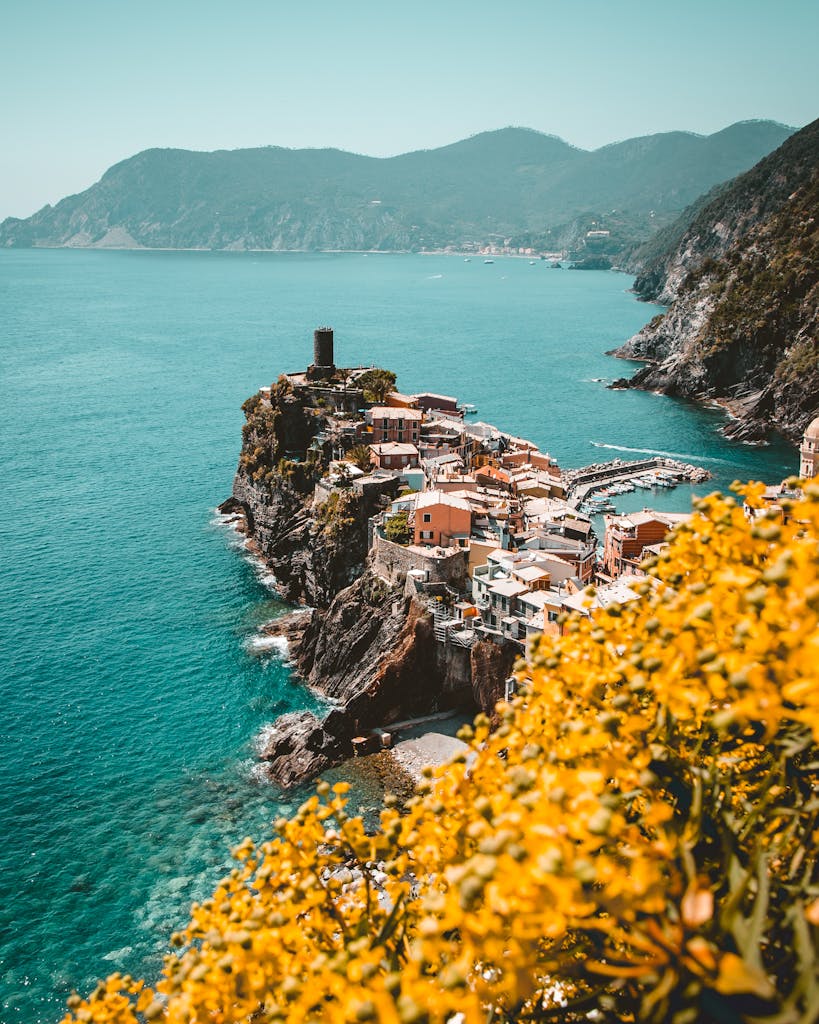
Follow the cliffs past the Cinque Terre villages in settled weather, keeping clear of restricted zones and ferry lanes. Early starts reward you with gentler wash and softer light on the villages. Round Punta Mesco and continue to Sestri Levante (roughly 22–28 nm). Anchorage options are limited and exposed—prefer a berth if any swell, and plan an early arrival as spaces go quickly in peak months.
Day 3: Sestri Levante to Rapallo or Santa Margherita Ligure
Work the afternoon sea‑breeze into the Gulf of Tigullio (10–15 nm). The Portofino MPA limits anchoring—book a berth in Rapallo or Santa Margherita. Both give easy access to Portofino by local bus or RIB (respect mooring zones). Rapallo has broader availability; Santa stacks charm with lively passeggiata and good provisioning.
Day 4: Day sail to Portofino and San Fruttuoso (mooring fields)
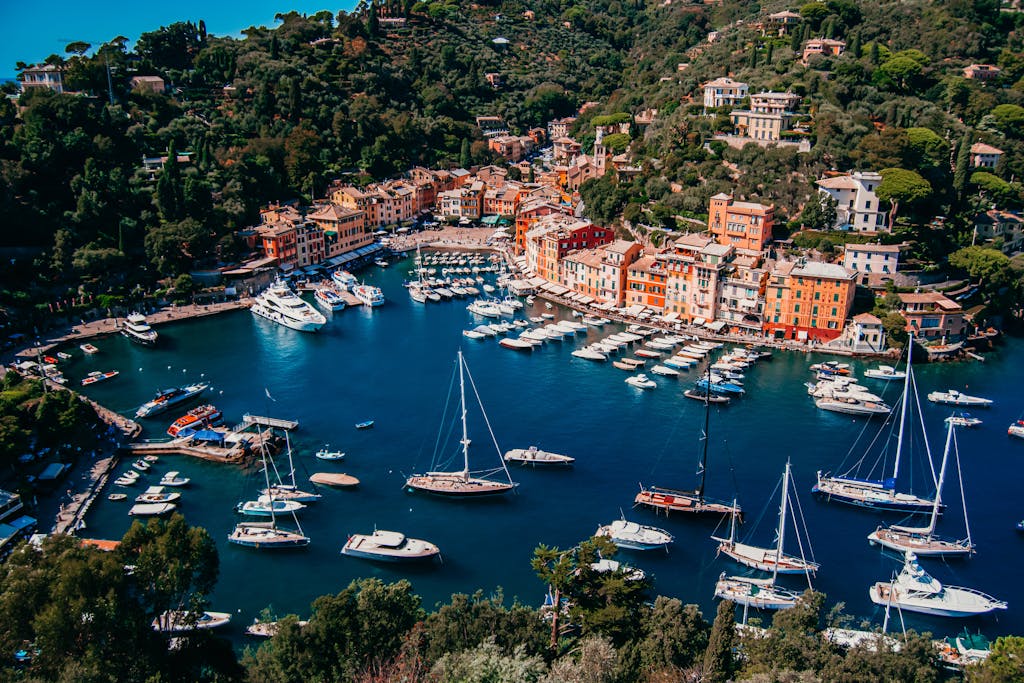
A short hop but high on theatre. Take a buoy in Paraggi or San Fruttuoso subject to MPA rules; buoys are chargeable and often pre‑booked. The harbour of Portofino is tiny and premium—visit by tender if not alongside. Watch katabatic gusts off the hills late afternoon and maintain a generous leeward gap when lying to buoys. Snorkelling is excellent over seagrass fringes—use tender lanes and observe no‑anchoring zones.
Day 5: Tigullio to Chiavari/Lavagna, then on to Moneglia (weather‑dependent)
Short coastal leg to Chiavari/Lavagna for provisioning, then continue to Moneglia if conditions are settled (6–14 nm overall). Entrance can be rolly with any easterly swell—have a fallback in Lavagna. The covered market at Chiavari is ideal for fresh produce; top up fuel here if queues in Tigullio look long.
Day 6: Moneglia to Palmaria Island moorings (Gulf of La Spezia)
Revisit the Cinque Terre early before ferries peak, then enter the La Spezia gulf (18–24 nm). Pick up a buoy off Palmaria (Pozzale) in calm weather or head straight to a marina if a Levante is running. Sunset views back to Portovenere are superb; book dinner ashore via tender if conditions allow and carry a tender light for evening returns.
Day 7: Palmaria to Lerici and return to La Spezia
Spend a final morning under Lerici’s castle before an easy reach back to your base. Refuel and debrief amid the backdrop of La Spezia’s amphitheatre hills, leaving time for checkout formalities and a last gelato on the promenade.
7 days – Western Liguria from Sanremo to Genoa (easy hops, marina‑to‑marina)
A 7-day route. Adjust legs to forecast, moorings and crew preferences.
Day 1: Sanremo (Portosole) to Imperia
Shake down from Portosole Sanremo with a short leg to Imperia’s Porto Maurizio (12–16 nm). Expect clean afternoon sea‑breezes on the beam. Ample space, good chandleries and a graceful old town for sunset make Imperia a low‑stress first night.
Day 2: Imperia to Alassio
A relaxed coastal passage past Diano Marina to Alassio’s bay (10–12 nm). Choose a berth or anchor in settled weather outside swimming zones and at least 200 m off the beach. Ashore, Alassio offers long sands, beach clubs and a compact centro storico for aperitivo.
Day 3: Alassio to Loano or Finale Ligure
Short hop to Marina di Loano (excellent facilities) or a little further to Finale Ligure (10–15 nm). Expect afternoon sea‑breeze on the beam; Loano’s breakwaters give strong protection if swell arrives, while Finale has character but can be lumpy in onshore winds.
Day 4: Finale Ligure to Savona or Varazze
Round Capo Noli with a watchful eye for acceleration and confused chop. Choose Savona for a city feel or Varazze for a purpose‑built marina hub (10–14 nm). Time your rounding for mid‑day when the thermal breeze is established but not yet piping.
Day 5: Varazze to Genoa
Coastal run into the Gulf of Genoa (18–22 nm). Monitor commercial traffic and traffic separation schemes near the port approaches and keep a sharp watch for high‑speed ferries. Berth at Porto Antico/Marina Molo Vecchio for old‑town access and the aquariums and museums along the waterfront.
Day 6: Genoa to Camogli or Santa Margherita
A shorter leg along dramatic cliffs to the quaint harbour of Camogli, or continue into the Tigullio for Santa Margherita’s broader options (12–18 nm). Camogli has very limited visitor space and is exposed to swell—arrive early and be ready with a back‑up in Santa.
Day 7: Santa Margherita to Portofino (visit) and return logistics
Make the short showcase visit to Portofino and Paraggi’s moorings before returning crew by train from nearby Rapallo or Genoa—Liguria’s coastal rail line simplifies one‑way planning. Allow time for fuel and a gentle sail back to base if returning to Western Liguria.
When to go
Late May to early October offers the most reliable conditions. June and September strike the best balance of warmth, marina availability and manageable crowds. July and August bring peak tourism, higher fees and denser ferry traffic along the Cinque Terre; book berths and moorings in advance and plan early arrivals. Spring can be crisp and bright but punctuated by frontal systems, while October–November often see the strongest gales and heavy rainfall as the season changes.
Sea temperatures reach 23–26 °C in high summer; air temperatures sit mid‑20s to low‑30s °C. Visibility is generally good, though heat haze and occasional wildfire smoke can soften headland definition. Shoulder‑season weekends coincide with local regattas and events (notably finishes of major offshore races in Genoa), which can compress marina capacity. In peak periods, aim to be berthed by mid‑afternoon and confirm fuel‑dock opening hours to avoid queues.
Ligurian Coast Wind and weather
Summer brings a predictable diurnal cycle: light morning airs filling to an 8–15‑knot sea‑breeze (typically S to SW, bending with the coast) from late morning to late afternoon, then easing to a gentle land‑breeze overnight. Expect headland effects at Capo Noli, Capo Mele, Punta Chiappa (Portofino) and Punta Mesco, where acceleration and short, confused seas are common.
Prevailing synoptic winds rotate seasonally. Northerlies (Tramontana) descend off the Apennines in sharp, dry pulses—gusty in bays and stronger than forecast in gaps and valleys. North‑westerlies (Mistral) sweep in after fronts and can raise a lumpy chop against the coastal set. Easterlies (Levante) and south‑easterlies (Scirocco) build the most awkward swell for the Ligurian shore, rolling into otherwise benign anchorages from Sestri Levante to the Cinque Terre; seek the deep shelter of the Gulf of La Spezia in these conditions. South‑westerlies (Libeccio) can be punchy with thunderstorms in late summer.
Tides are microtidal—typically under 0.3 m—and currents are weak, mainly wind‑driven. Thunderstorms are most likely late afternoons in late summer and in autumn; monitor nowcasting closely and secure early if convection is building inland. Marine forecasts from national and regional services are reliable, with regular coastal bulletins on VHF. Sea state is usually slight to moderate in summer, but expect steep, localised chop at headlands and reflected swell inside more open harbours after a Levante.
Getting there
The region is well connected. Genoa Cristoforo Colombo (GOA) serves central Liguria and has direct European links; Pisa (PSA) is convenient for the Gulf of La Spezia and Cinque Terre; Nice (NCE) works best for the western marinas around Sanremo and Imperia. Milan’s airports (MXP/LIN) offer wider long‑haul connections with a rail transfer south.
Rail is a standout strength: the coastal line runs from Ventimiglia to La Spezia with frequent regional services, enabling straightforward crew changes and one‑way charters. Motorways A10 (to the French border) and A12 (towards Tuscany) shadow the shoreline, but parking near historic harbours can be limited—coordinate with marinas for secure spaces.
Chandlery, provisioning and technical support are concentrated at Sanremo (Portosole), Imperia, Loano, Varazze, Genoa’s Porto Antico, Lavagna/Chiavari, and La Spezia (Porto Mirabello, Porto Lotti, Fezzano). For out‑of‑hours arrivals, let marinas know ETAs—gates and fuel pontoons may be restricted at night.
Chartering on the Ligurian Coast
Liguria supports a healthy mix of bareboat, skippered and crewed charters. Primary bases lie at La Spezia (Porto Mirabello, Porto Lotti), Le Grazie/Fezzano, Lavagna/Chiavari, Rapallo/Santa Margherita for Tigullio, and to the west at Sanremo, Imperia and Loano. Catamarans are available but fewer than in the Tyrrhenian islands; monohulls from 34–50 ft dominate. Saturday turnarounds are standard.
Plan itineraries that respect protected areas. The Portofino Marine Protected Area and the Cinque Terre National Park regulate anchoring and often require use of mooring fields in season; these are limited and bookable through local operators. In busy months, secure marina berths days ahead and arrive by mid‑afternoon.
Berthing is predominantly Mediterranean mooring with lazy lines. Depths are generous but swell can reverberate in open harbours under easterlies; choose all‑weather refuges (Varazze, Lavagna, Mirabello) when Levante is forecast. Fuel berths are busy on weekend mornings; carry cash and be patient. Waste disposal and black‑water rules are enforced—use pump‑out where provided and avoid discharges in MPAs.
Skippered options are sensible if you’re new to stern‑to techniques or to local restrictions. One‑way routings (e.g., Sanremo to La Spezia) are sometimes possible, assisted by the coastal rail line. Build conservative ETAs: 4–5 knots average is realistic on short legs with photo‑stops, bathing and busy approaches.
Licences and formalities
For bareboat charters in Italy, the skipper must hold an appropriate certificate of competence—commonly an ICC (International Certificate of Competence) with coastal/sail endorsement—or a recognised national equivalent (e.g., RYA Day Skipper Practical or above, though many operators prefer RYA Coastal Skipper/ICC). A VHF operator’s certificate (SRC) is routinely required. Carry originals plus passport copies for all crew.
Italy is in the Schengen Area; routine intra‑EU movements involve minimal formalities. Non‑EU citizens should carry passports and any necessary visas. Charter companies will lodge crew lists with port authorities. No cruising permit is needed, but local marine parks enforce their own rules and fees; consult the Portofino MPA and Cinque Terre park guidance before arrival. Ensure third‑party liability insurance is in force; a refundable security deposit or damage waiver is standard.
Safety kit must meet Italian requirements; check that flares, lifejackets and nav lights are in date. Night entries to small harbours can be challenging due to fishing traffic and unlit pots—plan arrivals in daylight where practical and keep a dedicated pot‑watcher on deck near harbour approaches.
Anchorages and marinas
The Ligurian shoreline alternates bold capes with deep gulfs; safe options are frequent but not evenly distributed. Identify all‑weather havens for each wind quadrant and respect marine‑park restrictions.
Western Liguria (French border to Savona)
- Sanremo – Portosole is a major base with full services and good shelter. Limited anchoring due to depth and traffic.
- Imperia – Porto Maurizio offers extensive berths and repair capacity. Oneglia is commercial. Good refuge in most conditions.
- Alassio/Laigueglia – Attractive bay but open to easterly swell; anchoring only in calm settled weather outside bathing limits.
- Loano/Finale Ligure – Marina di Loano is large and sheltered; Finale’s harbour can be lumpy under onshore winds.
- Capo Noli/Capo Mele – Expect acceleration zones and confused seas in SW–NW flows; time your roundings sensibly.
Western Liguria suits marina‑to‑marina cruising with short, predictable hops. If Levante builds, prioritise Loano and Imperia; if Mistral follows a front, delay headland roundings until seas abate or hug the coast for flatter water.
Gulf of Genoa and Tigullio (Savona to Sestri Levante)
- Varazze – Purpose‑built, well‑protected and a good stop when Levante runs.
- Genoa – Multiple facilities around Porto Antico/Molo Vecchio; monitor commercial traffic and TSS. Not a natural anchorage.
- Camogli – Small, picturesque, limited visitor space and exposed to swell; fair‑weather only.
- Portofino MPA – Anchoring is prohibited in key zones. Use bookable buoys in Paraggi and San Fruttuoso; Portofino harbour has very limited, premium berths.
- Santa Margherita Ligure & Rapallo – Practical bases with services and better availability than Portofino; good staging for the headland.
- Sestri Levante – Two bays that become untenable with any easterly swell; take a marina elsewhere if roll sets in.
This section blends world‑class scenery with tight regulation. Pre‑book moorings, check daily MPA notices and keep a respectful distance off the Portofino promontory in fresh winds to avoid reflected swell.
Cinque Terre & Gulf of La Spezia
- Cinque Terre (Monterosso to Riomaggiore) – No marinas; small harbours and seasonal moorings mainly for locals and ferries. Anchoring is heavily restricted by the National Park and frequently uncomfortable due to swell and ferry wash; plan transits in settled periods and avoid overstaying.
- Punta Mesco – Acceleration and seas on the corner; give a sensible berth in fresh winds.
- Portovenere & Palmaria – Spectacular but busy channel with ferries and eddies; mooring fields off Palmaria (Pozzale) in season. Anchoring restricted; consult local notices.
- La Spezia – A prime all‑weather refuge: Porto Mirabello, Porto Lotti, Fezzano and Le Grazie offer comprehensive facilities. Lerici and San Terenzo provide attractive anchorages/berths with shelter from westerlies but are open to prolonged easterly swell.
- Bocca di Magra/Marina di Carrara – River marinas provide shelter but mind depths and silting; useful in strong easterlies.
Use La Spezia as your weather bolt‑hole and operational hub. Treat the Cinque Terre as a daytime scenic run, lingering only when seas are glassy and ferry timetables are lighter.
General notes
- Depths drop off quickly; ensure adequate scope and avoid posidonia meadows where anchoring is restricted. Many harbours operate strict bathing zones in summer—observe seasonal buoys.
- In marine parks, book buoys ahead and carry a tender light for evening returns. Heavy ferry schedules along the Cinque Terre create significant wake; secure the boat if visiting ashore.
- Fuel, water and technical support are reliable across major marinas; smaller harbours may close fuel out of hours or in rough seas.
Carry long stern lines for quays without lazy lines, rig a snubber for swell, and brief crews on safe tender operations at night. Respect protected habitats: fines for damaging seagrass or ignoring no‑anchoring zones are actively enforced.
FAQs
Is the Cinque Terre suitable for anchoring overnight?
Generally no. Anchorage is severely restricted by the National Park, space is limited, and swell plus ferry wash make it uncomfortable. Treat the Cinque Terre as a fair‑weather daytime visit and plan overnight berths in La Spezia, Tigullio or at authorised moorings.
What winds should I plan around?
Expect a reliable summer sea‑breeze (S–SW 8–15 knots). Be alert for Tramontana bursts from the north, punchy SW squalls with thunderstorms, and easterly (Levante/Scirocco) swell that makes many open bays rolly. In strong easterlies, head for deep shelter in La Spezia or Varazze/Lavagna.
Do I need an ICC to charter here?
Most operators will request an ICC or a recognised national equivalent, plus a VHF/SRC. RYA Day Skipper may be accepted, but ICC or RYA Coastal Skipper strengthens your application. Carry originals of certificates and passports.
Are there many catamarans available?
Yes, but fewer than in the Tyrrhenian islands. Book early for high‑season weeks or consider monohulls, which are more widely available across La Spezia, Tigullio and Western Liguria bases.
How challenging is mooring?
Berthing is typically stern‑to with lazy lines. In crosswinds and ferry wash, accuracy matters. If you’re new to Mediterranean mooring, consider a skippered first day or practise in a roomy marina such as Lavagna or Mirabello.
Can I sail at night?
Offshore legs are straightforward, but many small harbours have fishing activity, unlit pots and narrow entrances. Night entries are best avoided unless you know the approach and conditions are settled.
Where can I shelter from a Levante (easterly) blow?
Head for deep harbours with eastern protection: La Spezia’s marinas (Mirabello, Lotti, Fezzano, Le Grazie), Varazze, Lavagna/Chiavari, and Imperia. Avoid open bays like Sestri Levante and the Cinque Terre.
References
- https://www.cruiserswiki.org/wiki/Ligurian_Coast_%26_Cinque_Terre_(Italy)
- https://www.marina-porto-mirabello.it/en/
- https://www.portolotti.it/en/
- https://marinavarazze.it/en/
- https://www.marinadiloano.it/en/
- https://www.portofinompa.it/en/
- https://www.parconazionale5terre.it/Eindex.php
- https://www.meteoam.it/
- https://www.arpal.liguria.it/
- https://www.lamma.rete.toscana.it/meteo/mare
Charter a Yacht
Compare crewed & bareboat charters, learn the best months to sail, and get a custom shortlist from 500+ providers.