
Sailing the Amalfi Coast and Gulf of Naples: routes, conditions and practicalities
Italy’s Amalfi Coast and the Gulf of Naples blend cliff-lined drama with island-hopping ease. Capri, Ischia and Procida sit within a compact cruising ground framed by Naples, Sorrento and Salerno, offering short passages, reliable summer breezes and a marina network that supports both first-time Mediterranean charterers and seasoned skippers. Expect cinematic villages, volcanic bays and marine parks with clear guidance on where to anchor or pick up a mooring. This guide outlines the sailing areas, seasonal winds and weather, the best marinas and anchorages, and exactly how to charter here with the right paperwork.
Quick links
- Summary
- Why Sail in Amalfi Coast & Gulf of Naples (Capri, Ischia & Procida)?
- Itineraries
- When to go
- Wind and weather
- Getting there
- Chartering
- Licences and formalities
- Anchorages and marinas
- FAQs
Why Sail in Amalfi Coast & Gulf of Naples (Capri, Ischia & Procida)?
Sailors come for the contrasts in a navigationally straightforward setting. One day you are edging beneath Capri’s limestone cliffs; the next you are tucked into the volcanic curve of Ischia or the pastel amphitheatre of Procida. Distances are short, yet the coastline turns quickly—from steep Amalfi escarpments to wide, sheltered bays around Pozzuoli.
The summer regime is reassuringly consistent. Thermal sea breezes build through the afternoon and ease in the evening, producing pleasant day-sailing conditions and predictable anchor-watch windows. Harbours such as Amalfi, Positano, Marina di Stabia and Marina di Procida form a practical lattice, so you can plan flexible itineraries that suit families, mixed-experience crews or those chasing a few iconic landfalls without long offshore legs.
Culturally, few cruising grounds deliver so much within so little mileage. World-class dining, UNESCO-listed towns and archaeological curiosities—like the submerged Roman ruins at Baia—are set within marine protected areas where water clarity, wildlife and seagrass meadows remain a feature rather than a footnote.
Itineraries
Below are suggested routes that thread together the headline islands and coastal towns with sensible daily hops. Adjust for seasonal winds, marina availability and crew preferences. Always check marine park zoning and local notices before dropping the hook.
7-day loop: Procida, Ischia, Capri and the Amalfi Coast
A 7-day route. Adjust legs to forecast, moorings and crew preferences.
Day 1: Procida to Ischia (Casamicciola)
Ease into the week with a short hop of roughly 6–8 NM. Depart Marina di Procida and round Vivara’s bridge to set a WNW course. Keep clear of MPA no-go zones and the frequent ferry lanes between Naples and the islands. Aim for Casamicciola’s harbour or the organised moorings, which are well sheltered and convenient for thermal spa towns ashore. Facilities are good, provisioning is easy, and there are several relaxed trattorie for a first night’s dinner.
Day 2: Ischia west side to Sant’Angelo
Follow Ischia’s lee around Forio for a lunch stop and swim off Citara Beach or the Forio mole. Sand patches among Posidonia meadows provide workable holding—set and snorkel-check your anchor. Continue 10–12 NM to Sant’Angelo. Anchor in settled weather outside the small harbour; note that a southerly or lingering swell can make it rolly. Ashore, lanes are car‑free and perfect for an evening stroll; hot springs and beach clubs dot the headland.
Day 3: Ischia to Capri
Enjoy a classic 18–20 NM reach across the Gulf. Capri’s Marina Grande requires advance booking in high season and has tight manoeuvring; call ahead on VHF. In fair northerlies and low swell, anchor off Marina Piccola on the south side and run the tender ashore, keeping well outside swim zones. Blue Grotto visits are by licensed local boats only and close in any swell, so plan flexibly.
Day 4: Capri to Positano and Amalfi
Skirt Punta Campanella’s marine park observing speed limits and buoyed exclusion areas. Pause off the Li Galli islets for a midday swim in clear water, then shape up for Positano’s seasonal moorings before continuing to Amalfi. Space is limited at both; reserve a berth or buoy early. Expect katabatic gusts off the cliffs late afternoon and some swell wrap with any southerly component.
Day 5: Amalfi to Cetara or Salerno
A shorter 10–18 NM leg along steep coastline where depths fall away quickly. Cetara’s compact marina offers good shelter and a traditional fishing‑village feel (famed for colatura di alici). If you prefer city amenities and plentiful berths, Salerno’s marinas—including Marina d’Arechi—provide robust shelter, reliable services and easy access to old-town dining.
Day 6: Salerno to Sorrento or Marina di Stabia
Round back past Amalfi towards the Sorrento Peninsula. Sorrento’s transient berths are limited and fetch a premium; arrive by early afternoon if aiming for a berth. If full, Marina di Stabia at Castellammare is large, modern and well‑placed with deep water and all services. It’s also convenient for a last‑night celebratory dinner and, time permitting, a quick taxi to Pompeii.
Day 7: Return via Pozzuoli Bay to Procida
Sail past the Phlegraean Fields, keeping an eye on ferry traffic near Naples. Consider a lunch stop on a buoy at Baia to see the submerged Roman villas by glass‑bottom boat, then complete the short reach back to Procida. Top up fuel before returning to the berth and allow time for check‑out formalities.
4-day taster: Castellammare, Capri and Amalfi dash
A 4-day route. Adjust legs to forecast, moorings and crew preferences.
Day 1: Castellammare di Stabia to Capri
Collect the yacht at Marina di Stabia and complete departure checks. It’s a straightforward 17–20 NM reach across to Capri. Book Marina Grande well in advance in July–August; otherwise anchor at Marina Piccola in settled conditions, landing the tender clear of swim lines. Expect accelerated wind and ferry wash near the harbour entrances.
Day 2: Capri to Amalfi via Li Galli
Follow the park speed limits off Punta Campanella and give the headlands a respectful offing. Pause off Li Galli for a swim and lunch, then continue 15–20 NM to Amalfi for a berth or mooring. Call the harbour early for allocation. With any SW swell (Libeccio), motion can creep into the roadstead—rig snubbers and extra springs for comfort.
Day 3: Amalfi to Sorrento
A short coastal run of about 12–16 NM to Sorrento, typically with a pleasant afternoon sea breeze. Keep a good lookout for fast hydrofoils and sightseeing traffic near Positano and Sorrento. Ashore, Sorrento offers excellent dining and easy provisioning, but transient berths are few—arrive early or have a fallback at Marina di Cassano.
Day 4: Sorrento to Castellammare di Stabia
Final leg back to base with time for a swim stop under the Punta Campanella cliffs if conditions are settled. Refuel at Marina di Stabia, de‑rig and complete check‑out. If schedules allow, a quick side trip to Pompeii or the thermal baths of Pozzuoli is feasible from here by taxi or train.
When to go
Peak sailing runs May to October. June and September offer the best balance of warmth, stable sea breezes and availability. July and August are hot, busy and expensive, with marinas in Capri, Amalfi and Positano often fully booked by mid‑afternoon. In spring and late autumn, expect more variable synoptic conditions and occasional thunderstorms; many seasonal moorings are lifted and some island services scale back. Winter brings frequent lows from the west and south‑west, rain and swell; only major marinas operate at full capacity.
Sea temperatures typically range from 18–21 °C in May, peaking around 25–27 °C in August, and easing back to 22–23 °C in September. Visibility is generally excellent, though hazy Scirocco days can reduce definition. To avoid crowds, aim for late May to mid‑June or mid‑September; weekend nights are busiest in Capri and Amalfi, so plan arrivals by early afternoon or overnight in Salerno or Procida and visit by day.
Wind and weather
Summer is dominated by a reliable thermal cycle. Light morning land breezes give way to W–SW sea breezes building from late morning, typically 10–18 knots, strongest mid‑afternoon and easing toward sunset. Local effects are marked: gusts roll down from the Lattari Mountains onto the Amalfi shoreline; around Capri the cliffs accelerate and bend the wind, and katabatics can descend quickly in the evening. The Maestrale (NW) brings clear, fresher spells; the Scirocco (SE) is warm and humid, raising sea state on south‑facing anchorages and reducing visibility. The Libeccio (SW) can generate uncomfortable swell along the Amalfi Coast and at Capri’s south side. Thunderstorms can pop up in late summer, especially after hot, still mornings. Tides are microtidal (commonly less than 0.3 m) and currents are generally weak, though ferry traffic generates significant wash near harbours and channels.
Plan passages to arrive at open roadsteads before the afternoon peak. Rolly anchorages can be transformed by a simple bridle and longer scope, but in any southerly component, choose marinas or buoy fields with proper shelter. Keep a weather eye on convective development inland; towering cumulus over the mountains by midday can signal evening thunderstorms. Overnight katabatics are typically brief but can be punchy—secure canvases and rig snubbers if moored in exposed positions.
Getting there
Naples International Airport (NAP) is the main gateway, 20–40 minutes by road from Naples marinas and around one hour to Castellammare di Stabia or Salerno. Regular trains connect Rome with Naples and Salerno, while hydrofoils and ferries link Naples with Capri, Ischia and Procida—useful for crew changes. Private transfers are common for charter bases; parking is limited and driving in historic centres is discouraged. Provisioning is straightforward in Naples, Salerno, Procida and Ischia’s main towns; smaller Amalfi Coast villages have boutique options at higher prices.
For smooth turnarounds, arrange a pre‑order with the base or a local supermarket delivery to the pontoon. Most bases operate Saturday changeovers with boarding from mid‑afternoon and disembarkation by 09:00; luggage storage is usually available if you arrive early. If travelling by ferry to join or leave the yacht, allow a buffer for weather or traffic delays—popular routes can sell out at peak times.
Chartering
Where to start: Popular bases include Marina di Procida (for immediate island‑hopping), Marina di Stabia at Castellammare (for quick access to both Capri and Amalfi), Naples Mergellina/Santa Lucia (city start, broad fleet choice) and Salerno or Marina d’Arechi (often better value, easy reach of Amalfi). Fleets cover modern monohulls and catamarans; crewed and skippered options are widely available.
Booking patterns: Reserve well ahead for July–August and any plan involving Capri or Amalfi berths. Many marinas require same‑day ETA updates by VHF or phone; late arrivals risk losing the slot. One‑way charters between Procida, Castellammare and Salerno are sometimes possible outside peak weeks.
Costs and extras: Expect premium berthing fees at Capri and Amalfi, especially weekends. Security deposits are standard; end‑cleaning, outboard, linens and park mooring buoys may be charged as extras. Fuel is purchased dockside at larger marinas or via bunker barges in Naples. Berthing invoices may include charges for water, electricity and waste—ask what’s included when booking.
Base routines and support: Check‑in typically covers deck gear, engine, electronics, safety kit, dinghy/outboard and local restrictions (MPAs, speed limits and buoy fields). Skippers new to the area often book a professional for the first day to learn local traffic patterns, the nuances of stern‑to mooring in chop, and how to use park moorings correctly. Most bases offer 24/7 technical support and can arrange divers if you inadvertently snag weed or line.
Licences and formalities
Skipper qualifications: For bareboat charter in Italy, a recognised sailing licence is required. The ICC with Sail endorsement (Coastal/Equivalency) is widely accepted. RYA equivalents (Day Skipper Practical or above) are typically accepted when accompanied by an ICC. For US/Canadian sailors, ASA 104 or higher with appropriate experience may be accepted by some operators, but an ICC/IPC is strongly recommended to meet legal expectations. A Short Range Certificate (VHF/SRC) is expected in addition to the skipper’s licence.
Papers and check‑in: Bring passports, crew list, skipper’s licence, VHF certificate and the charter contract. Domestic cruising does not require customs formalities. Night entry restrictions and no‑go zones may apply in certain harbours; follow local notices to mariners and respect speed limits near beaches and within marine parks.
Protected areas: The Regno di Nettuno MPA (Ischia–Procida–Vivara) and the Punta Campanella MPA (around Capri and the Sorrento tip) have zoned restrictions. Anchoring on Posidonia seagrass is prohibited; use designated moorings where provided, respect speed limits and consult the park maps before arrival. Fines for damaging seagrass can be substantial—if in doubt, call the harbour or park authority for guidance.
Anchorages and marinas
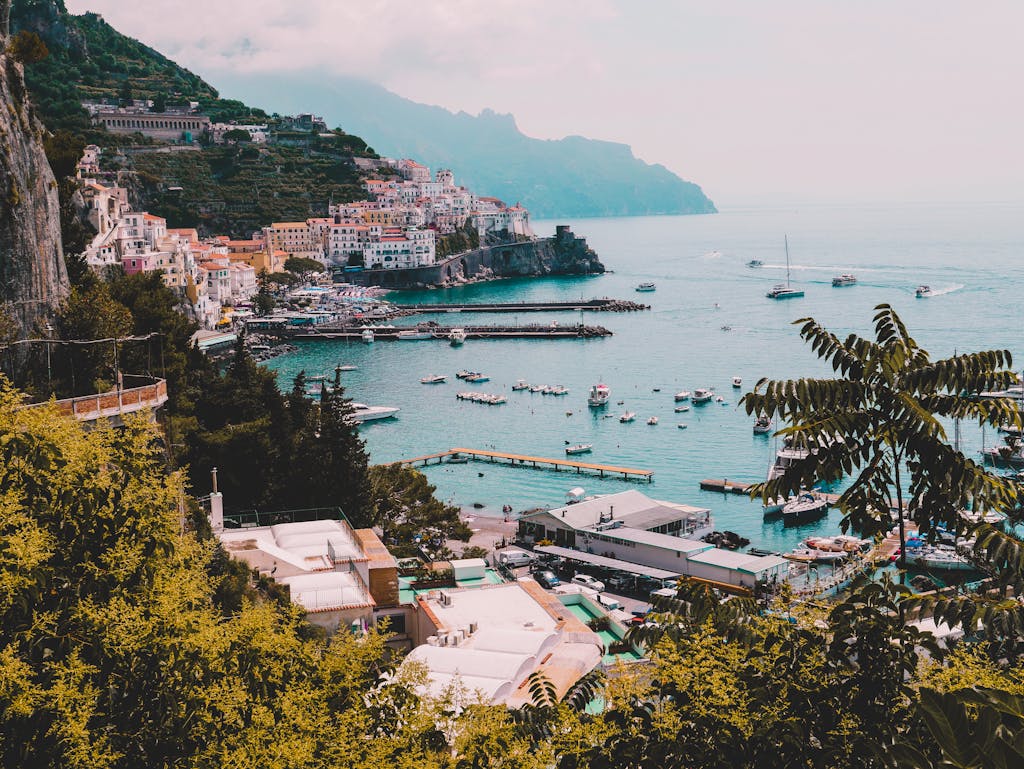
This cruising ground offers a dense network of well‑equipped marinas alongside a handful of scenic but exposed roadsteads. Depths drop away rapidly along the Amalfi cliffs, so plan to use buoy fields or berths on busier days, reserving open‑roadstead nights for settled spells.
Gulf of Naples and Phlegraean Bays
Naples offers city‑centre access and comprehensive services, while the Phlegraean bays provide calmer waters and unique archaeological interest.
- Naples city marinas include Mergellina and Santa Lucia, both close to historic quarters but exposed to ferry wash.
- Pozzuoli offers shelter and access to the Phlegraean Fields.
- Baia provides mooring buoys within sight of the submerged archaeological park—excellent in settled conditions and educational ashore.
Expect frequent commercial and high‑speed ferry movements; monitor VHF, keep a sharp lookout on approach, and minimise wake near congested quays.
Procida and Vivara
Procida is a compact, colourful base with everything within easy walking distance. Vivara’s bridge and surrounding waters fall under the Regno di Nettuno MPA, so check zoning before anchoring.
- Marina di Procida at Marina Grande is a key charter base with good services.
- On the south‑west, Marina Chiaiolella sits behind a long mole; nearby Corricella offers a photogenic roadstead for lunch stops in calm weather.
Corricella is best as a daytime call; overnighting is only advisable in glassy conditions with a vigilant anchor watch.
Ischia
Ischia combines full‑service harbours with charming anchorages tucked among Posidonia meadows. Summer demand is high—book early for secure berths.
- Ischia Porto is the main harbour with all‑weather protection; reserve well ahead in summer.
- Casamicciola Terme provides a sheltered basin and organised moorings.
- Forio on the west offers limited berths and an exposed entrance in strong westerlies.
- Sant’Angelo has a tiny harbour; most yachts anchor outside only in settled conditions.
Throughout the island, look for pale sand patches when anchoring and avoid Posidonia. After strong westerlies, residual swell can persist on the west and south coasts into the evening.
Capri
Capri is the most glamorous and most constrained stop: tiny berthing capacity, premium pricing and frequent ferry wash. The rewards are world‑class scenery and memorable evenings ashore.
- Marina Grande is small and premium‑priced; reservations are essential in season.
- Marina Piccola, on the south, is a scenic fair‑weather anchorage, open to swell in southerlies and busy with day boats.
Expect strong gusts off the cliffs. Keep clear of swim zones and day‑boat circuits, and mind tender security when landing on busy beaches.
Sorrento Peninsula and Castellammare
The peninsula provides access to both Capri and Amalfi with short day hops. Berths are limited right in Sorrento but plentiful at Castellammare.
- Sorrento’s Marina Piccola and nearby Marina di Cassano have limited transient berths.
- Marina di Stabia at Castellammare offers deep‑water berths, full services and reliable availability, making it a practical base for Amalfi and Capri runs.
In afternoon sea breezes, short steep chop can develop off headlands; time arrivals to avoid mooring stern‑to in peak gusts when possible.
Amalfi Coast and Salerno
Sheer cliffs and deep water define this coast; organised buoy fields and small marinas are the norm. When a SW swell is running, Salerno’s marinas offer the most comfortable nights.
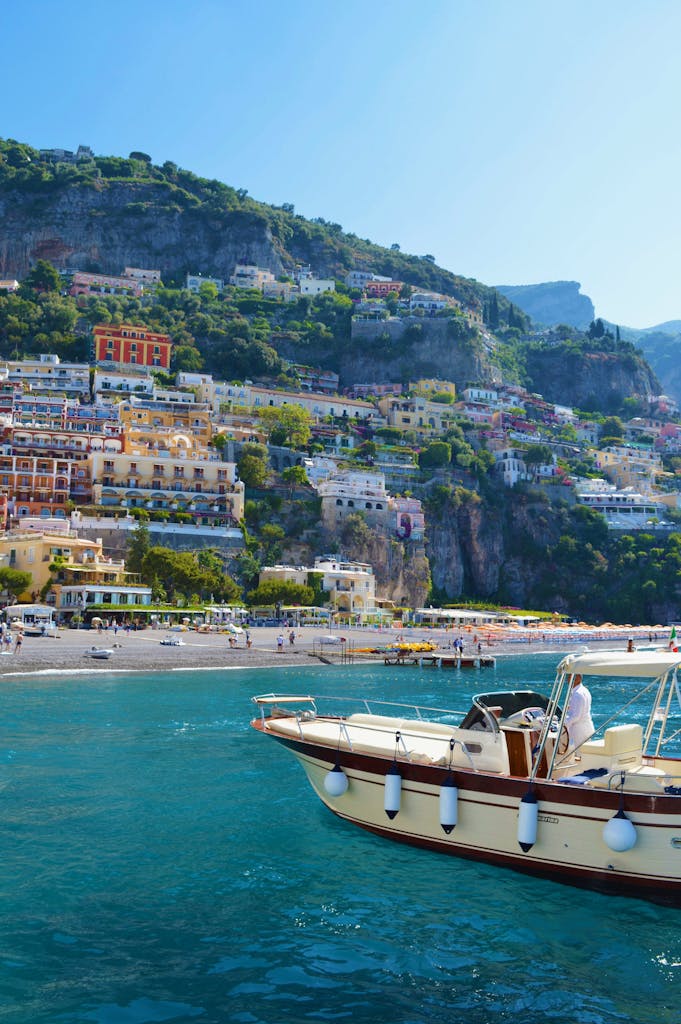
- Positano operates seasonal buoy fields with tender service; depths rise sharply close to shore.
- Amalfi combines a small marina with moorings—swell can enter with southerlies.
- Cetara and Maiori have compact marinas but few visitor berths in peak months.
- Salerno’s city harbour and Marina d’Arechi provide plentiful space, better pricing and robust shelter, with easy access to Amalfi by a short hop.
Arrive early to secure buoys, rig snubbers and extra springs for comfort, and always check the latest local guidance on buoy field procedures.
General notes
- Depths fall away steeply along much of the Amalfi Coast, limiting anchoring options.
- Afternoon sea breezes can push chop into open roadsteads; aim to arrive by early afternoon to secure berths or buoys.
- Watch for fast ferries and hydrofoils; their wake is significant near harbour entrances and in channels.
Good fendering, long stern lines and a ready passerelle make Mediterranean mooring safer and easier, especially when there is residual swell.
FAQs
Is this a suitable region for first-time Mediterranean charterers?
Yes. Distances are short, summer breezes are predictable, and there is a dense network of marinas. The main challenge is traffic and swell near popular towns. Booking berths and avoiding exposed anchorages in southerlies keeps the week relaxed.
When is the best time to avoid crowds?
Late May to mid-June and September provide warm water, steady winds and far fewer day boats. Capri and Amalfi are busiest on weekends—arrive early or choose Salerno/Procida for overnights.
Can I anchor freely around the islands?
Anchoring is regulated within marine protected areas and on Posidonia seagrass. Use designated moorings where available and consult the Regno di Nettuno and Punta Campanella zoning maps before dropping anchor.
What licence do I need to charter?
A recognised sailing licence such as the ICC with Sail endorsement is expected, plus a VHF/SRC certificate. RYA Day Skipper Practical with ICC is commonly accepted. Some operators accept ASA qualifications with experience, but an ICC/IPC avoids issues.
Are there strong tides or currents?
No. Tidal range is small and currents are generally weak. Wind, swell and ferry wash have a greater impact on comfort and approach planning.
Is English widely spoken in marinas?
Yes, particularly in charter bases and major marinas. Having basic Italian phrases helps in smaller harbours.
Can I visit the Blue Grotto by yacht?
Large yachts cannot enter. You must anchor well clear in suitable conditions and use licensed local boats. Expect closures in swell.
Where can I refuel?
Fuel docks operate at major marinas including Naples, Procida, Ischia Porto, Casamicciola, Marina di Stabia and Salerno. In high season, queues can form late afternoon—top up in the morning if possible.
References
- https://www.cruiserswiki.org/wiki/Amalfi_Coast_&_Gulf_of_Naples_(Capri,_Ischia_&_Procida)
- https://www.noonsite.com/country/italy/
- https://www.marinadiprocida.com/
- https://www.marinadistabia.it/
- https://www.marinadarechi.com/
- https://www.puntacampanella.org/english/
- https://www.areamarinaprotettaregnodinettuno.it/
- https://www.meteoam.it/
- https://www.capri.net/en/marina-grande
- https://www.comune.amalfi.sa.it/
Charter a Yacht
Compare crewed & bareboat charters, learn the best months to sail, and get a custom shortlist from 500+ providers.