
Sailing in France: routes, winds, seasons and harbours
France offers two distinct coastlines for sailors: the invigorating tides and granite headlands of the Atlantic and Channel, and the sunlit calanques, islands and protected waters of the Mediterranean and Corsica. Well-serviced marinas sit alongside wild anchorages, while dependable forecasting and meticulous charts make planning reassuringly precise. Whether you want tide-swept passages in Brittany, easy hops along the Côte d’Azur, or a week exploring Corsica’s bays, France combines variety, infrastructure and cultural depth in one compact cruising ground.
Quick links
- Why Sail in France?
- Itineraries
- When to go
- Wind and weather
- Getting there
- Chartering in France
- Licences and formalities
- Anchorages and marinas
- FAQs
- References
Why Sail in France?
France rewards curious sailors. Distances are manageable yet the scenery shifts dramatically: pink-granite coasts and powerful races in the north; soft-sand islands and sheltered inland seas in southern Brittany; vineyard-backed lagoons along Occitanie; and fjord-like limestone inlets, maquis-scented coves and clear water around Provence and Corsica. Each area has a distinct wind regime, letting you tailor challenge and comfort.
Practicalities are reassuring. Marinas and chandleries are well developed, pilotage information is excellent and forecasts are reliable. You can alternate busy historic ports with tranquil anchorages, and step ashore to world-class food markets almost everywhere. If you are new to tidal sailing, Brittany is a classroom with scenery; if you are new to Mediterranean sailing, the Côte d’Azur and the Îles d’Hyères provide forgiving day-sailing with plenty of bolt-holes.
Add swift access by air and rail, clear environmental guidance, and high charter standards, and it’s easy to see why many skippers return year after year—often moving between coasts with the seasons.
Itineraries
Below are three one-week routes showcasing France’s variety: breezy day-sailing along the Côte d’Azur and Îles d’Hyères, a tidal primer through South Brittany’s islands and inland sea, and a granite-and-limestone adventure around Southern Corsica.
Côte d’Azur and Îles d’Hyères – 7 days from Antibes
A 7-day route. Adjust legs to forecast, moorings and crew preferences.
A relaxed Riviera loop with short legs, dependable sea breezes and plentiful harbours. Swim-friendly anchorages sit beside chic ports, while the Îles d’Hyères and Port-Cros National Park add clear water, walking trails and protected moorings. Plan around Posidonia seagrass rules and arrive early in July–August.
Day 1 – Antibes to Îles de Lérins
Cast off from Port Vauban for a short shakedown sail to the Lérins. Anchor between Sainte-Marguerite and Saint-Honorat for swim stops and an easy first night. Keep clear of ferry lanes and swim zones, and use sand patches between seagrass for a secure, eco-friendly set.
Day 2 – Îles de Lérins to Saint-Tropez
Follow the Esterel’s red cliffs east-to-west, timing your approach for afternoon berths or anchoring off Pampelonne in settled weather. Expect a pleasant 20–30 NM run with a lively mid-afternoon sea breeze; Vieux Port berths are premium, with alternatives at Marines de Cogolin, Port Grimaud or Sainte-Maxime.
Day 3 – Saint-Tropez to Porquerolles
A classic leg to the Îles d’Hyères. Pick up a berth in Porquerolles or anchor in Baie d’Alicastre if conditions allow. Aim to arrive by early afternoon to secure space and enjoy shoreside bike hire, beaches and island trails.
Day 4 – Porquerolles and Port-Cros National Park
Short hop to Port-Cros. Use marine park moorings in Port-Man or Baie de la Palud; anchoring rules protect Posidonia meadows. Snorkel the marked trail and respect speed limits and no-discharge regulations within the park.
Day 5 – Port-Cros to Le Lavandou/Bormes
Return to the mainland for provisions and shore power. Both Le Lavandou and Port de Bormes offer full-service marinas. Top up fuel and water, enjoy the promenade, and book ahead for dinner in peak weeks.
Day 6 – Le Lavandou to Agay
A longer coastal run under the Esterel to the wide bay of Agay, with good shelter from westerlies and easy restaurants ashore. Arrive early to choose your spot, keeping clear of swim buoys, and expect katabatic gusts off the hills at sunset in settled conditions.
Day 7 – Agay to Antibes
An early start for a relaxed final leg back to Antibes via Cap d’Antibes’ clear-water coves if weather permits. Refuel on arrival before queues build and enjoy a final stroll around the old town.
South Brittany – 7 days from La Trinité-sur-Mer
A 7-day route. Adjust legs to forecast, moorings and crew preferences.
A superb introduction to tidal sailing with soft-sand anchorages, island hops and the enchanting Gulf of Morbihan. Streams and sills shape each day, yet distances are modest and bolt-holes plentiful. Expect excellent seafood markets and characterful ports alongside well-run marinas.
Day 1 – La Trinité to Île de Houat
Exit the Quiberon Bay fairways for a beach-lined anchorage on Houat. Excellent sand holding; watch cross-tide on approach. Keep an eye out for pot buoys and give ferries a wide berth when leaving the fairway.
Day 2 – Houat to Belle-Île (Sauzon)
Carry the tide for a short hop to Sauzon’s moorings or head to Le Palais for all-weather berthing. Sauzon fills by mid-afternoon in summer; pick up a mooring early and launch the dinghy for a scenic walk ashore.
Day 3 – Belle-Île to Île de Groix (Port Tudy)
Mind overfalls off the Teignouse and in adverse wind-over-tide. Port Tudy is lively with good repair options. Arrive near slack for a comfortable entrance and consider a stroll to the island’s wild south coast.
Day 4 – Groix to Lorient La Base
Short inside leg to Lorient for museums, fuel and laundry. The former submarine base area is well-served and sheltered. Visit the Cité de la Voile Eric Tabarly and restock for the tidal gates ahead.
Day 5 – Lorient to Port Haliguen (Quiberon)
Re-enter Baie de Quiberon via marked channels. Port Haliguen is a practical night-stop with rations and showers. Tidal streams quicken around the peninsula—time your approach and watch for training fleets.
Day 6 – Quiberon to Île-aux-Moines (Gulf of Morbihan)
Enter the Gulf of Morbihan at slack water; streams can be fierce. Berth or pick up visitor moorings off Île-aux-Moines. The islands offer sheltered waters and pretty villages—allow time for exploration by foot or bike.
Day 7 – Île-aux-Moines to La Trinité
Exit the Gulf with the stream and return to base. Allow time for pilotage and tide gates. Refuel on arrival and enjoy La Trinité’s vibrant waterfront before handover.
Southern Corsica – 7 days from Ajaccio
A 7-day route. Adjust legs to forecast, moorings and crew preferences.
Southern Corsica blends dramatic limestone and granite shores with translucent water and fragrant maquis. Expect reliable summer sea breezes, the occasional Tramontane or Levante, and a mix of well-equipped marinas and stunning sand-bottom anchorages. Park rules and seagrass protections shape mooring choices.
Day 1 – Ajaccio to Propriano
Ease into the week with a short run down the Gulf of Ajaccio and along a bold coast to Propriano’s sheltered marina. Call ahead in high season and enjoy waterfront restaurants and easy reprovisioning.
Day 2 – Propriano to Bonifacio
A highlight passage to the dramatic limestone fjord. Reserve ahead in peak months or anchor outside in settled weather. The narrow entrance funnels gusts—have lines ready and follow harbourmaster directions closely.
Day 3 – Bonifacio to Îles Lavezzi
Crystal-clear waters reward an early start. Take regulated moorings; anchoring is restricted in places to protect seagrass. Arrive by late morning for availability and snorkel in exceptional visibility.
Day 4 – Lavezzi to Porto-Vecchio
Reach north along a coastline of pale sand and granite. Porto-Vecchio offers comprehensive supplies and shelter. The outer bay has good holding; the marina provides shore power and easy access to the old town.
Day 5 – Porto-Vecchio to Golfe de Rondinara
A short, relaxed leg to one of Corsica’s most-loved bays. Arrive early for space and monitor forecasts for swell. Set the hook on sand in the centre and enjoy a calm night in light northerlies.
Day 6 – Rondinara to Tizzano
Work back west via wide sandy bights. Tizzano is small and atmospheric with limited berths—anchor if full. Expect evening katabatics and ensure scope is generous over sand patches.
Day 7 – Tizzano to Ajaccio
Follow a rugged coast back to Ajaccio, timing the afternoon sea breeze for a final sail into the Gulf. Fuel on arrival and enjoy a celebratory dinner in the old town.
When to go
Mediterranean and Corsica
May to October is the main season. July and August bring settled weather, warm seas and busy marinas with premium pricing; June and September offer excellent conditions with fewer crowds and a livelier sailing breeze. Spring brings variable fronts; late summer can see thunderstorms. The Gulf of Lion (Marseille to Spanish border) is windier than the Côte d’Azur, with frequent Tramontane events that can compress itineraries.
Atlantic, Channel and Brittany
Late May to September is best. Early summer offers long daylight and cooler temperatures; August is popular but fog can appear in early summer, and Atlantic lows still pass through. Tides and streams dictate passage planning; shoulder months are superb for quieter anchorages if you have flexibility for weather windows.
Corsica specifically
Corsica shines from June to mid-September, with water clarity at its peak. Shoulder seasons can be superb for walking and quieter harbours, but some tourist services reduce hours outside high summer. Book marinas ahead in July–August and build in margin for occasional strong-wind days.
Wind and weather
Atlantic and Channel
France’s northern and western seaboards are shaped by the North Atlantic. Expect a rhythm of frontal systems interspersed with bright spells, and plan passages around tides and headland effects.
- Prevailing south-westerlies dominate, veering northwest behind passing fronts. Expect changeable weather with frontal systems even in summer.
- Tides are a defining feature. Ranges reach 8–10 m around Saint-Malo and even higher towards Mont-Saint-Michel; streams accelerate through headlands and sounds. The Chenal du Four, Raz de Sein and Fromveur can develop steep seas in wind-over-tide. Alderney Race further north can exceed 8 knots.
- Swell from the North Atlantic enters the Bay of Biscay and the Vendée/Charente coast. Bars at inlets such as Arcachon and Capbreton can be hazardous in onshore swell.
Mediterranean and Corsica
Local sea breezes meet occasional strong synoptic winds. Routes offer many bolt-holes, but planning benefits from understanding regional wind patterns and funnelling.
- Local and synoptic winds alternate. The Mistral is a strong, dry north-westerly that funnels down the Rhône valley, affecting Provence and the western Riviera; it can blow gale force with little warning after a cold front. The Tramontane is a similar north-westerly affecting the Gulf of Lion (Occitanie), often stronger offshore than along the beach-lined lagoons.
- The Marin/Sirocco brings humid south-easterlies, longer fetch and occasional swell. In Corsica and the Bonifacio Strait, the Levante/Easterly can be persistent and steeper than expected due to funnel effects.
- Summer sees reliable sea-breeze cycles—light mornings, 10–18 knots mid-afternoon, easing towards evening—especially along the Côte d’Azur and around the Îles d’Hyères. Thunderstorms can develop late summer after hot spells.
Forecasting and data
Forecast coverage is excellent. Use multiple sources and always adjust for local acceleration zones near capes and straits.
- Météo-France provides coastal bulletins, strong-wind warnings and inshore forecasts by maritime area. SHOM charts and tidal streams are authoritative for the Atlantic coast. Local harbourmasters broadcast weather on VHF, and digital apps supplement official products. Always consider funnelling and acceleration zones near capes and straits.
Getting there
Air
The Mediterranean coast is served by Nice (NCE), Toulon–Hyères (TLN) and Marseille (MRS). Corsica has airports at Ajaccio (AJA), Figari (FSC), Bastia (BIA) and Calvi (CLY). For the Atlantic and Brittany, look to Nantes (NTE), Lorient (LRT), Brest (BES), La Rochelle (LRH), Bordeaux (BOD) and Biarritz (BIQ). Many charter bases are 30–60 minutes from the nearest airport.
Rail
High-speed TGV services connect Paris to Marseille, Nice, La Rochelle, Brest, Lorient, Vannes and Bordeaux. Many charter bases are a short taxi ride from a TGV station, making rail a reliable, low-stress option in peak season.
Ferries
From the UK to Normandy and Brittany (Cherbourg, Caen/Ouistreham, Le Havre, St-Malo, Roscoff). Ferries to Corsica run from Marseille, Toulon and Nice (and from Italy), useful for one-way charters or repositioning crews.
Road
The autoroute network provides direct access to most coastal hubs; parking and long-stay options vary by marina—book ahead in peak months and confirm height limits for multistorey car parks.
Chartering in France
Where to charter
Major bases include Antibes, Golfe-Juan, Hyères, Marseille and Toulon along the Côte d’Azur/Provence; Ajaccio, Propriano, Bonifacio, Bastia and Calvi in Corsica; and La Rochelle, Les Sables-d’Olonne, Lorient, La Trinité-sur-Mer and Brest on the Atlantic side. Occitanie bases include Port Camargue, Sète and Cap d’Agde.
Fleet and formats
Monohulls dominate on the Atlantic, while catamarans are common in the Mediterranean and Corsica for space at anchor. Bareboat, skippered and crewed options are widely available; some operators offer one-way routes between the mainland and Corsica (weather-dependent and subject to repositioning fees).
Seasonality and costs
Peak season (late June to late August) commands the highest rates and tightest berth availability; early booking is prudent. Shoulder seasons (May–June, September–October) deliver excellent value with comfortable conditions. Marina fees on the Côte d’Azur and in Corsica are notably higher in July–August; anchoring saves costs but observe seagrass rules and local bans.
Provisioning and fuel
Supermarkets are within walking distance of most marinas; fuel docks can be busy pre- and post-week. In marine parks (Port-Cros, Scandola) plan water and waste carefully; pump-out facilities are improving but not universal. Consider click-and-collect grocery services to streamline turnaround days.
What you’ll need to charter
Most companies ask for an ICC (or national equivalent) endorsed for coastal waters, a VHF/SRC operator’s certificate, and a succinct sailing CV evidencing recent, relevant experience. If you lack experience, a local skipper is easily arranged.
Licences and formalities
Skipper qualifications
For coastal bareboat charters, an International Certificate for Operators of Pleasure Craft (ICC) or recognised national equivalent is typically required by operators, along with a VHF operator’s licence (SRC/ROC). For inland waterways (e.g., Canal du Midi), a CEVNI endorsement is necessary. While local law for sailing yachts can be nuanced, charter contracts set the practical standard.
Vessel papers
Charter yachts carry a ship radio licence and insurance. As skipper, carry your passport/ID, qualifications, crew list and charter contract. Keep originals or certified copies accessible for harbour authorities.
Customs and immigration
France is in the Schengen Area. Non‑EU/EEA/Swiss nationals should check visa requirements and the need to enter/exit at a port of entry. Post‑Brexit UK crews must observe Schengen time limits; fly the Q flag and complete formalities when required.
Radio and safety
Maintain a listening watch on VHF Ch 16 and local working channels. Lifejackets and safety gear are inspected at handover; ensure you are briefed on gas systems, fire plans and emergency numbers (CROSS centres coordinate maritime rescue).
Environmental rules
Anchoring over Posidonia seagrass is restricted along parts of Provence, the Côte d’Azur and Corsica. Use designated moorings or sand patches and consult official maps and apps such as Donia. Marine parks (Port-Cros, Cerbère‑Banyuls, Scandola) have speed, fishing and waste restrictions—review notices to mariners before entry.
Anchorages and marinas
Northern coasts (Channel and Normandy)
Cherbourg is a major all-weather port with space and services, useful after Channel crossings. Eastwards lie Dieppe, Fécamp and Le Havre, with Honfleur tucked upriver for a charming lock-in stop. Tides are strong and ranges large; plan meticulously for entrances and sills. The Bay of the Seine and the Cotentin headlands generate streams and overfalls in wind-over-tide.
North Brittany
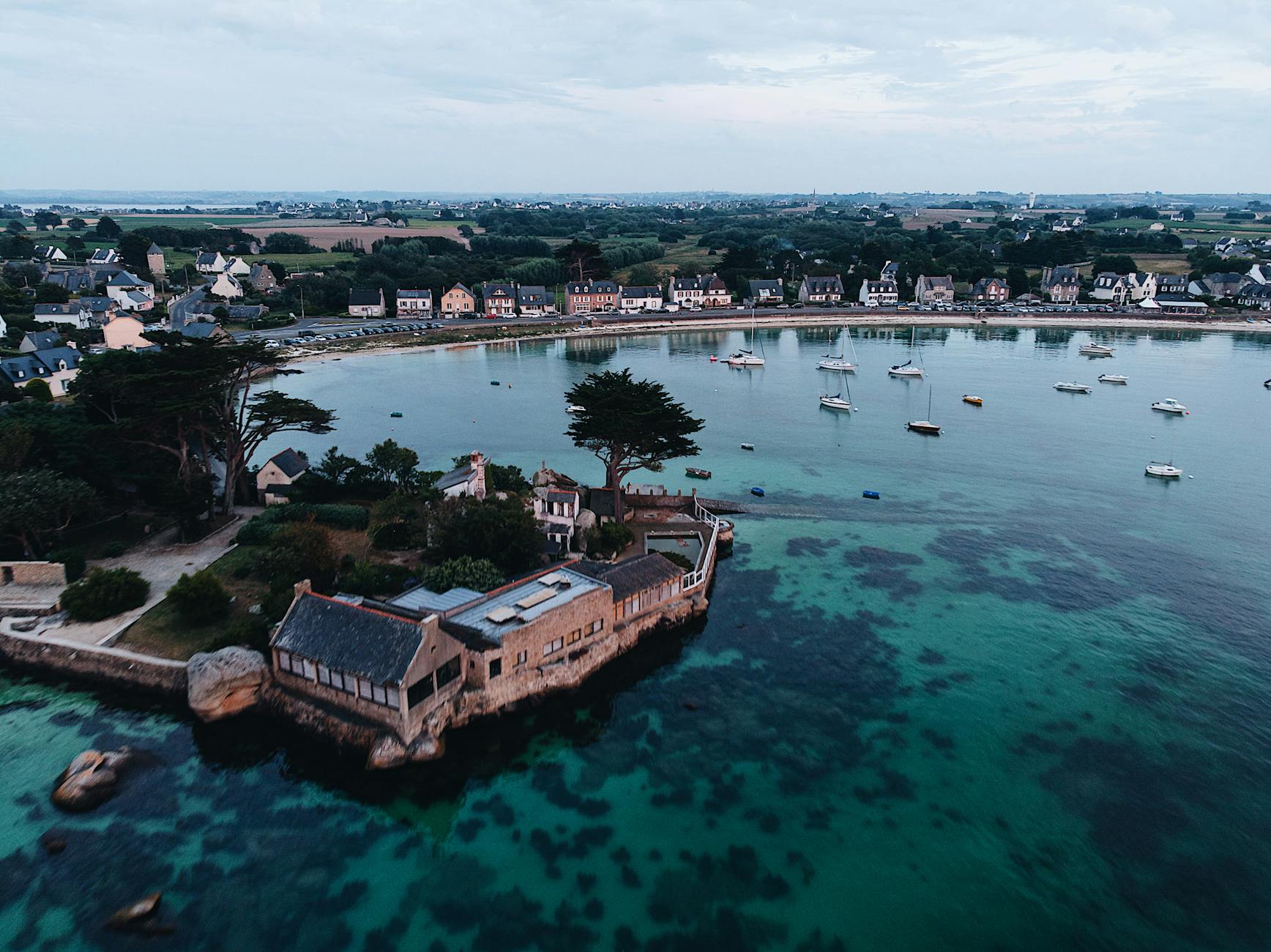
Saint-Malo, Saint-Cast and Saint-Quay-Portrieux gateway the Pink Granite Coast, with Roscoff a modern deep-water marina. Pilotage is rock-strewn but rewarding, aided by conspicuous marks. Tidal gates at the Rance and Tréguier, and sills in many basins, dictate arrival windows.
West Brittany
L’Aber Wrac’h offers a strategic pause before or after the Chenal du Four. Camaret is perfectly placed for the Raz de Sein; Douarnenez and Audierne provide character and shelter. Concarneau’s walled town basin and Loctudy/Lesconil round out options before entering South Brittany’s gentler waters.
South Brittany
La Trinité-sur-Mer, Port Haliguen (Quiberon), Lorient and Port-Louis serve Quiberon Bay and the Îles (Houat, Hoëdic, Belle‑Île, Groix). The Gulf of Morbihan offers idyllic island stops (Île‑aux‑Moines, Île d’Arz) but requires slack-water pilotage. Holding is generally good on sand; weed patches occur near island fringes.
Vendée, Charente and Biscay
Les Sables‑d’Olonne (Vendée Globe start) and La Rochelle (Les Minimes) are major hubs. Île de Ré and Île d’Yeu (Port‑Joinville) are classic stops; Royan guards the Gironde. Further south, Arcachon’s bar and Capbreton’s entrance require settled weather; Hendaye offers the Spanish border as a bolt‑hole.
Provence and Côte d’Azur
From Marseille east to Menton, harbours are frequent: Vieux‑Port de Marseille, Cassis and La Ciotat near the Calanques; Bandol and Sanary‑sur‑Mer; Toulon and Hyères for access to the Îles d’Hyères (Porquerolles, Port‑Cros, Le Levant). Eastwards are Bormes, Cavalaire, Saint‑Tropez, Sainte‑Maxime, Port Grimaud, Saint‑Raphaël, Cannes, Antibes and Nice, with Menton on the Italian frontier. Expect premium prices in July–August and book ahead. Many bays offer excellent sand patches for anchoring—check Posidonia maps.
Occitanie (Gulf of Lion)
A string of purpose-built marinas lines the lagoon-backed coast: Port Camargue, La Grande‑Motte, Sète, Cap d’Agde, Port Leucate, Gruissan, Canet‑en‑Roussillon, and Port‑Vendres/Collioure near the Spanish border. Harbours are spacious and practical; shelter is strong but Tramontane gusts can be violent—use extra lines and chafe protection.
Corsica
Harbours punctuate a spectacular coastline: Calvi and L’Île‑Rousse in the northwest; Ajaccio and Propriano on the west; Bonifacio and Porto‑Vecchio in the south; Bastia and Macinaggio in the north‑east; Saint‑Florent and Taverna along the east and north. Iconic anchorages include Girolata (mooring field within the Scandola reserve), Rondinara and the Lavezzi. Water is clear, holding is often sand over seagrass—inspect before committing the hook and observe protected areas.
In all regions, respect local speed limits, avoid wash in confined harbours, and monitor VHF for berth allocation and weather bulletins. Many marinas accept online bookings; where they do not, arrive early and have a nearby anchorage in reserve.
FAQs
Is France suitable for a first bareboat charter?
Yes—choose your area wisely. The Côte d’Azur and Îles d’Hyères offer predictable sea-breeze sailing, short hops and plentiful shelter. Brittany is superb but tidal: start with South Brittany’s Quiberon Bay before attempting headlands like the Raz de Sein.
When is the best time to sail Corsica?
June and September are ideal, balancing warm water, space in harbours and consistent breezes. July and August are stunning but crowded; book berths and arrive early at popular bays.
Which winds should I plan around in the Mediterranean?
The Mistral and Tramontane are the main players—strong, dry north-westerlies that can reach gale force, especially west of Toulon and along Occitanie. Easterlies (Levante) affect the Bonifacio Strait. Build lay days into itineraries and use Météo‑France bulletins.
Do I need special qualifications to charter in France?
Charter companies typically require an ICC (or national equivalent) and a VHF operator’s certificate (SRC/ROC). For inland cruising you’ll also need a CEVNI endorsement. Experience logs help if your certificates are newly obtained.
Are there anchoring restrictions on the Côte d’Azur and in Corsica?
Yes. To protect Posidonia seagrass, anchoring is restricted or banned in designated zones. Use sand patches, official moorings and local maps/apps (e.g., Donia) and follow harbourmaster guidance.
How busy are marinas in July and August?
Very. Popular ports often fill by mid-afternoon. Reserve where possible, arrive early, and have a nearby anchorage as Plan B.
What about tides and currents in Brittany?
Expect large ranges and strong streams, particularly around headlands and narrow channels. Time gates such as the Chenal du Four and Raz de Sein carefully and avoid wind-over-tide. SHOM data and local pilots are essential.
Can I sail from the mainland to Corsica in a week-long charter?
It’s possible but weather-dependent and mileage-heavy. Crossings from Hyères/Toulon to Corsica are 100–120 NM. Most crews prefer to charter directly in Corsica to maximise time in anchorages.
References
- https://www.cruiserswiki.org/wiki/Sailing_in_France
- https://marine.meteofrance.com
- https://www.shom.fr
- https://www.premar-mediterranee.gouv.fr
- https://www.portcros-parcnational.fr
- https://www.navily.com
- https://www.rya.org.uk/knowledge/abroad/icc
- https://www.rya.org.uk/knowledge/abroad/icc/cevni
- https://www.anfr.fr
- https://www.noonsite.com/place/france/
- https://donia.fr
Charter a Yacht
Compare crewed & bareboat charters, learn the best months to sail, and get a custom shortlist from 500+ providers.