
Sailing in Hvar: routes, winds and smart harbour choices
Hvar, one of Croatia’s many picturesque islands, rewards thoughtful skippers with luminous anchorages, short tidal-free passages and well-run marinas within easy reach of Split. The trick is timing your hops around the Maestral sea breeze, choosing bays with the right exposure to the Jugo or Bora, and knowing when to swap a rolly town quay for a calm berth across the channel. This guide sets out the practical detail you need: when to go, how the local winds behave, where to anchor or tie up, and what to expect from chartering in the area. Itineraries are designed around realistic legs and reliable shelter, so you spend more time swimming Pakleni coves and wandering Stari Grad’s marble alleys – and less time second-guessing the forecast.
Quick links
- Sailing in Hvar: routes, winds and smart harbour choices
- Why Sail in Hvar?
- Itineraries
- When to Go
- Wind and Weather
- Getting There
- Chartering
- Licences and Formalities
- Anchorages and Marinas
- FAQs
Why Sail in Hvar?
Hvar sits at the heart of Central Dalmatia’s best cruising ground. Distances are compact, navigation is largely line-of-sight, and the island is flanked by characterful stopovers: the Pakleni archipelago to the west, deep and ancient Stari Grad to the north, and vineyard-clad south-coast coves beneath Sveta Nedjelja. You can build an exhilarating week that also feels unhurried, with sheltered lunch stops and memorable evenings ashore.
Conditions are forgiving in settled weather, yet varied enough to engage experienced crews. The afternoon Maestral brings lively reaches up the Hvar Channel, while the island’s long inlets and indented bays provide options when the Jugo (SE) or Bora (NE) assert themselves. Good holding in sand pockets, plentiful mooring fields and several ACI marinas make for straightforward overnighting even at short notice outside peak weeks.
Culturally, Hvar is a standout. Venetian fortresses and stone harbours contrast with lavender slopes and pine-framed anchorages. You can dine on the quay in Vrboska, wander UNESCO-listed Stari Grad Plain, then water-taxi to Hvar Town’s glittering square from a quiet berth in Palmižana. It is a compact sailing area that still gives you the sense of a journey. Beyond the set-piece highlights, the appeal lies in the rhythm of island life: morning calm for gentle motoring, afternoons of spirited sailing, and dusky strolls through polished marble alleys with a gelato in hand.
Itineraries
These Hvar-focused routes are built around realistic daily distances, the typical Maestral sea breeze and reliable overnight shelter. Use them as a framework and adapt to wind direction and crowd levels. In all cases, plan early arrivals in July and August, and keep flexible lunch-stop options if the breeze fills in sooner than expected.
7-day Dalmatian loop via Hvar, Vis and Brač (start/finish Split area)
A 7-day route. Adjust legs to forecast, moorings and crew preferences.
A classic Central Dalmatia circuit that balances lively sailing with secure berths and standout towns. You will cross the Split Gate to Brač, hop to Hvar via the Pakleni, loop out to Vis for two contrasting harbours, then return to the north side of Hvar before an unhurried run back to base.
Day 1: Split/Kaštela to Milna, Brač (12–18 NM)
A gentle shakedown. Depart late morning and ride the building Maestral across the Split Gate. Milna offers well-protected berths, fuel and easy provisioning. If you arrive early, explore the waterfront churches and choose a quay-side konoba for dinner.
Day 2: Milna to Hvar Town/Palmižana (16–20 NM)
Aim to arrive early. Hvar Town quay is glamorous but can be rolly; many skippers berth at ACI Palmižana on Sveti Klement and take a water taxi to town. Time a swim stop in a Pakleni bay en route if the breeze is still light.
Day 3: Pakleni anchorages and Hvar evening (6–10 NM pottering)
Swim and lunch among the Pakleni islets. Vinogradišće and Ždrilca offer clear water; Taršće is quieter in a Maestral. Return to Palmižana or pick up a buoy. Keep an eye out for fast ferries and dayboats in the passes during mid-afternoon.
Day 4: Hvar to Komiža, Vis (22–28 NM)
A rewarding reach in the afternoon breeze. Komiža is atmospheric and well-sheltered from the northerlies; avoid in strong SW swell. Stroll the fishing harbour at sunset and sample local lobster if in season.
Day 5: Komiža to Vis Town via Stončica (14–18 NM)
Short hop. Pause for a swim in Stončica’s sandy-bottomed bay, then continue to Vis Town’s laid-lines on the quay or mooring field. The waterfront is ideal for an evening passeggiata and an ice cream.
Day 6: Vis to Stari Grad, Hvar (23–30 NM)
Set off early before the Maestral pipes up, then enjoy a steady reach into Hvar Channel. Stari Grad’s deep inlet and ACI marina are excellent in most winds. Explore the old quarter and the charming lanes around Tvrdalj Castle.
Day 7: Stari Grad to Split via Šolta stop (30–35 NM)
Break the return with lunch at Maslinica on Šolta, then time your arrival for an efficient fuel and handback at base. Factor queue time at the fuel dock on Friday afternoons.
4-day Hvar and Pakleni focus (start/finish Stari Grad or Palmižana)
A 4-day route. Adjust legs to forecast, moorings and crew preferences.
A compact long-weekend that keeps you close to the best of Hvar: deep shelter on the north coast, lazy swims in the Tiha and Pakleni coves, and vineyard-backed bays on the south side. Ideal for mixed-experience crews or a relaxed family escape.
Day 1: Stari Grad to Vrboska/Jelsa (10–14 NM)
Dauntless shelter up the north coast. Vrboska’s narrow inlet and ACI marina offer superb protection; Jelsa is livelier but more open to NE. Both towns have good bakeries for morning provisioning and pleasant evening promenades.
Day 2: North coast to Pakleni via Tiha bays (14–18 NM)
Work west with a morning calm. Pause in the Tiha coves for lunch, then continue to Ždrilca for a swim. Overnight in Palmižana or on a buoy. Expect a brisk water-taxi service to Hvar Town until late.
Day 3: South-coast coves and Hvar Town evening (8–14 NM)
Round the west and dip into south-facing coves beneath vineyards. Lučišće and Sveta Nedjelja are picturesque but exposed to SE; return to Pakleni to overnight. If the Jugo builds, bail out early and make for Stari Grad or Vrboska.
Day 4: Pakleni to Stari Grad (10–16 NM)
An easy final leg. Leave early to glide into Stari Grad before the breeze. Explore the old town and the Stari Grad Plain if time permits, then refuel and prepare for handback.
When to Go
The sailing season runs April to October. May and June bring pleasantly warm days (20–26 °C), reliable afternoon breezes and lighter crowds. Sea temperatures climb from around 18–20 °C in late spring to 23–25 °C by July–September. July and August are hot (often 28–32 °C), busy and expensive; popular quays fill by early afternoon and anchorages can be crowded. September provides a sweet spot of warm water and thinner crowds, though short-lived thunderstorms are more likely. By October, services reduce and nights are cooler, but sheltered cruising remains attractive in settled spells.
For quieter harbours and easier restaurant bookings, target early June or mid-September. If you plan to visit Hvar Town at the height of summer, arrive at Palmižana before midday and pre-book if possible. Cultural highlights include open-air concerts during the Hvar Summer Festival, adding atmosphere to evenings ashore; plan moorings to allow for a later return with the water taxi.
Wind and Weather
Local winds set the rhythm. In fair weather, the Maestral sea breeze (NW–W) builds late morning and peaks mid-afternoon at 12–20 knots, ideal for lively reaches along the Hvar Channel. Mornings are often calm, favouring early departures and relaxed lunch stops. The Jugo (SE–S) brings cloud, longer fetch and swell into south-facing coves; it can sit at 15–25 knots for a day or more. The Bora (NE–N), a dry gusty katabatic, arrives more abruptly and funnels across channels; it is most frequent outside high summer but can appear any time. When Bora is forecast, favour the north-coast inlets (Vrboska, Stari Grad) and avoid exposed channel anchorages.
Overnight katabatics can descend from Hvar’s ridges even in benign forecasts, so rig extra lines and choose bays with good wrap-around protection. Expect a short, steep chop in the channels with the Maestral and residual swell rolling into south-facing coves under Jugo. Currents are weak and tides negligible for most planning, but fast ferries and water taxis throw significant wake near Hvar Town and Pakleni passes. Visibility is generally excellent; fog is rare.
Check the official marine forecast daily, and supplement with local marina noticeboards and harbourmaster advice. As a rule, reef early for the afternoon leg, especially when crossing between islands, and ease back into full sail in the lee of land if conditions moderate.
Getting There
Split Airport (SPU) is the main gateway, 15–30 minutes by road to the charter marinas around Kaštela, Trogir and Split. Dubrovnik (DBV) is viable for one-way itineraries but involves a longer surface transfer to bases. If joining a boat already on Hvar, high-speed ferries and catamarans connect Split with Hvar Town, Stari Grad and Jelsa; water taxis shuttle between Hvar Town and Palmižana. Provisioning is straightforward: large supermarkets near Split marinas, plus good in-town options in Hvar, Stari Grad and Jelsa. Check-in typically starts Saturday afternoon; plan a short first leg or a nearby overnight berth.
Private transfers and ride-hailing services operate widely around Split. Allow extra time on Fridays for fuel-dock queues and changeover traffic. For baggage, most bases can store luggage prior to check-in; consider a small collapsible trolley for moving supplies along the quay. Ferry tickets in peak season are best bought in advance; water taxis can usually be arranged on demand via the marina reception.
Chartering
Hvar sits within Croatia’s most established charter hub. The widest choice of monohulls and catamarans is based around Split/Kaštela/Trogir, placing Hvar 15–25 NM away on a first day’s sail. Bareboat, skippered and fully crewed options are common; many fleets permit one-way charters by arrangement.
Booking patterns are predictable: peak July–August sells out early and commands higher rates; June and September offer better value and manageable crowd levels. Expect to pay separately for mooring buoys in Pakleni and for berths in ACI marinas; advance reservations are increasingly available via marina apps, though same-day arrival by early afternoon still secures space outside peak weekends.
Onboard equipment is typically comprehensive (chartplotter, autopilot, dinghy), but verify the presence of a Med mooring hook, ample shorelines and snorkelling gear. For visiting Hvar Town, many skippers prefer ACI Palmižana with a water taxi rather than the exposed town quay, especially when a SW swell or strong traffic is running. Clarify check-in and check-out times, fuel return policy, security deposit or damage waiver, and any paid extras such as outboard, Wi‑Fi or paddleboards. A brief refresher on stern‑to techniques and lazy lines at handover is worthwhile for less experienced crews.
Licences and Formalities
Croatia requires the skipper to hold an accepted certificate of competence plus a VHF operator’s licence. Commonly accepted are the ICC (sail) or RYA Day Skipper Practical (or higher), together with the Short Range Certificate (SRC) for VHF. If you charter locally, the operator will register the crew list and vessel documents; keep photo ID and licences readily available for harbour authorities. Tourist taxes and a security deposit are payable at check-in.
Local rules to note: respect marked swimming zones and speed limits near shore and in harbours; many bays now have no-anchoring zones to protect Posidonia seagrass—use mooring buoys where provided. Anchoring close to ferry routes or in designated traffic corridors is prohibited. Safety equipment (flares, lifejackets, navigation lights) may be spot-checked; ensure expiry dates are valid and brief your crew on use. Blackwater discharge is restricted—use marina pump-out facilities and observe signage.
Anchorages and Marinas
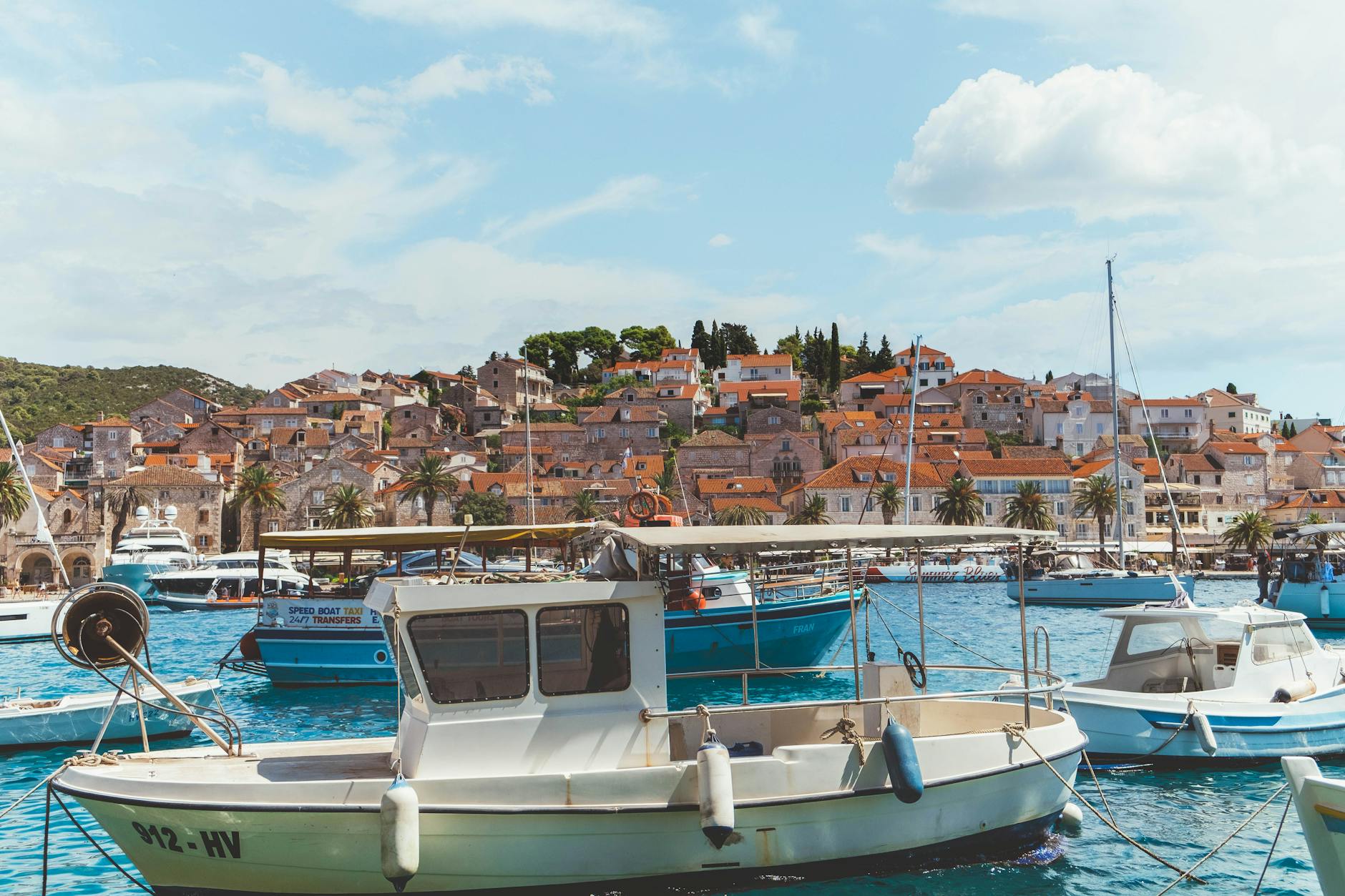
You will find an excellent mix of marinas, quays and mooring fields around Hvar. In peak weeks, arrive early and be prepared with an alternative nearby if your first choice is full.
Hvar Town
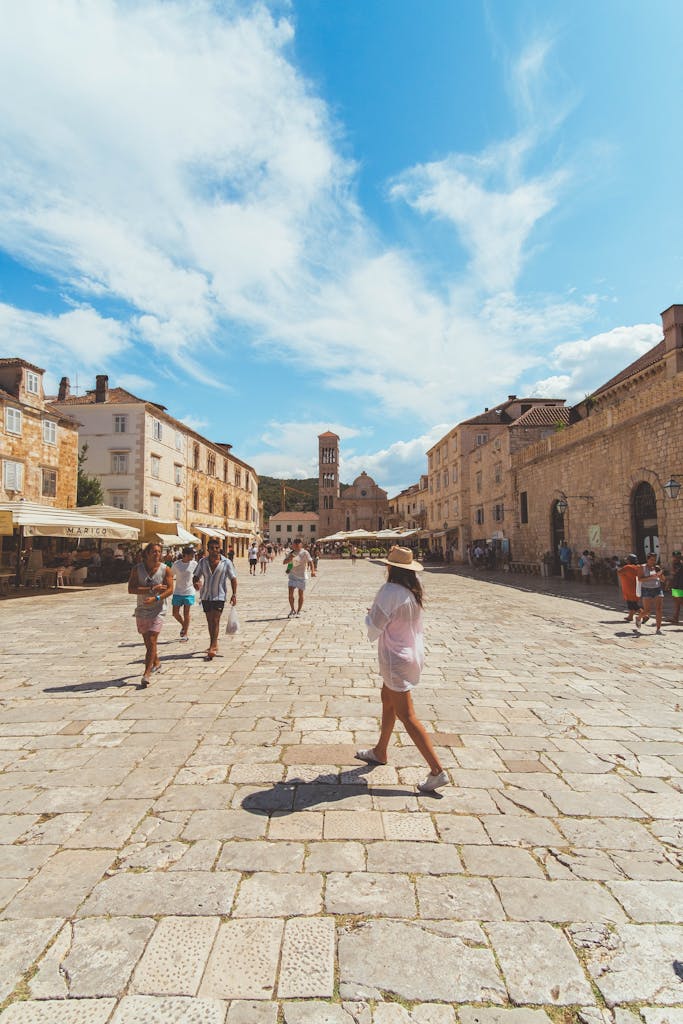
Limited stern-to berths with lazy lines line the waterfront. It is scenic but exposed to wash and any SW sea. Space is tight and evenings can be rolly; arrivals early afternoon are essential. Many crews berth elsewhere and visit by water taxi. If you do come alongside, rig long springs, keep fenders low and expect ferry wake.
ACI Marina Palmižana (Sveti Klement, Pakleni)
The default base for visiting Hvar Town. Well-run with shelter from most directions, though strong W–SW can send in a chop. Restaurants and beaches are nearby; water taxis run late into the night. Depths and approaches are straightforward by day; mind crosswinds when reversing onto lazy lines in the afternoon.
Stari Grad
A deep, fjord-like inlet with excellent all-round shelter. The ACI marina and town quays have laid lines, water and power. Approach is straightforward; in Bora, expect gusts but flat water inside. It’s an excellent bolt-hole if the Jugo or Bora sets in for a day or two.
Vrboska
A narrow, sinuous inlet leading to an ACI marina before the bridge. Outstanding shelter in NE–E winds. The charming “Little Venice” village has good bakeries and a relaxed waterfront. Depths shoal beyond the marina; larger yachts should avoid pushing past the last fairway marks.
Jelsa
Town quays and moorings offer a lively north-coast stop but can be uncomfortable in Bora or strong N–NE; choose carefully in those conditions and double up on lines. Services and dining are good, and the promenade is pleasant for an evening stroll.
Pakleni Anchorages
Vinogradišće (sand patches among weed; exposed to S–SE swell), Ždrilca (clear water, some current in the pass, busy with dayboats), Taršće (quieter, better in NW), plus Vlaka and Soline (shallow approaches, weed patches). In season, concession buoys replace anchoring in many spots—check signage and fees. Expect wakes from traffic in mid-afternoon, easing around sunset.
South-coast Coves
Lučišće, Sveta Nedjelja and Dubovica are beautiful in calm or NW, but open to the Jugo with little refuge if the wind trends SE. Holding varies—aim for sand and test set firmly. Treat these as daytime swim stops; return to Pakleni or north-coast harbours overnight if conditions change.
Sućuraj (east tip)
A small fishing harbour with limited space and frequent ferry wash. Practical as a weather bolt-hole for smaller yachts rather than a planned stop. Depths and turning room are restricted; check availability by phone if possible.
Fuel and Services
Seasonal fuel pontoons operate on Hvar (Hvar Town and Vrboska) and nearby on Brač (Milna) and Vis (Vis Town). Water and power are available at ACI marinas and most town quays. Waste and blackwater rules are enforced—use reception points in marinas. Expect queues late Friday; topping up mid-week can save time.
FAQs
Is Hvar suitable for less experienced skippers?
Yes, in settled conditions. Distances are short, navigation is largely visual and there is plenty of organised shelter. However, you must plan conservatively around the Bora and Jugo. In uncertain forecasts, base yourself in Stari Grad, Vrboska or ACI Palmižana and avoid exposed channel anchorages.
Where should I berth to visit Hvar Town in peak season?
Use ACI Palmižana on Sveti Klement and take a water taxi to the main square. The town quay is picturesque but fills early and can be uncomfortable due to swell and traffic.
Can I anchor overnight in Pakleni bays?
In many Pakleni coves, seasonal mooring buoys replace anchoring and must be used. Where anchoring is permitted, avoid Posidonia seagrass and seek sand patches. Overnighting is comfortable in settled NW; avoid during sustained SE (Jugo).
How do I manage a Bora forecast?
Shorten passages and choose north-coast harbours with good NE shelter such as Vrboska or Stari Grad. Expect sharp gusts in channels and avoid exposed south-facing bays. Reef early and rig extra springs when moored.
Do marinas take reservations?
ACI marinas (Palmižana, Stari Grad, Vrboska) increasingly accept reservations via their apps or by phone, especially outside peak weekends. In July–August, arriving by early afternoon remains the most reliable strategy.
What licences do I need to charter here?
The skipper must hold an accepted competence certificate (e.g., ICC or RYA Day Skipper Practical or higher) and a VHF operator’s licence (SRC). Charter companies will verify originals at check-in.
How much are mooring and buoy fees?
Fees vary by boat length and location. Expect ACI marina berths to be the highest; town quays are moderate; Pakleni buoys charge per night with a tender service often included. Peak-season surcharges apply.
References
- https://www.cruiserswiki.org/wiki/Hvar
- https://aci-marinas.com/marina/aci-marina-palmizana/
- https://aci-marinas.com/marina/aci-marina-stari-grad/
- https://aci-marinas.com/marina/aci-marina-vrboska/
- https://meteo.hr/
- https://mmpi.gov.hr/sea/navigation-safety-19986/19986
- https://www.noonsite.com/country/croatia/
- https://www.split-airport.hr/en
- https://www.jadrolinija.hr/en
- https://visithvar.hr/en/
Charter a Yacht
Compare crewed & bareboat charters, learn the best months to sail, and get a custom shortlist from 500+ providers.